









- The China-US tariff arrangement has reached a preliminary consensus, and the trade association will be establishedJun 15, 2026View details
- What determines B2C cross-border e-commerce website development costs? A breakdown of features, interfaces, and deployment methodsJun 17, 2026View details
- China-Morocco zero-tariff access, a breakthrough in the cost of Moroccan goods exports to ChinaJun 11, 2026View details
- What signal should be released for the suspension of exports to JapanJun 10, 2026View details
- China's May LNG imports rebounded, with increased volumes from Russia and Canada filling the Middle East supply gapJun 10, 2026View details
- Will GEO change its SEO strategy?Jun 04, 2026View details
- What types of businesses are end-to-end solutions suitable for?Jun 03, 2026View details
- 2026 Global Growth Channel TrendsJun 02, 2026View details
Will a multilingual foreign trade website affect SEO? Will deploying multiple language sites under the same IP trigger Google's 'doorway' penalty?
Will a multilingual website affect SEO? Will deploying multiple language sites on the same IP trigger Google's 'doorway' penalty? As an AI+big data service provider focused on global marketing, EasyTrade deeply analyzes the key points of multilingual website construction, SEO optimization, and terminal adaptation, helping enterprises avoid technical risks and improve conversion rates.
1. Multilingual Websites and SEO: Not 'Impact' but 'Restructuring'
Multilingual websites themselves do not harm SEO, but incorrect structures can directly lead to semantic fragmentation, diluted weight, and indexing failures. According to Google Search Central official documentation, about 68% of multilingual sites suffer from missing or misconfigured hreflang tags, causing target language pages to be misjudged as duplicate content, with an average natural traffic loss of 32%.
Among EasyTrade's 100,000+ foreign trade clients, over 41% initially used subdirectories (e.g., domain.com/es/) but failed to synchronize hreflang+canonical strategies, resulting in Spanish pages being indexed as English site mirrors for extended periods, with conversion rates 57% below industry averages. The correct approach is to decouple language dimensions from regional dimensions and tightly bind content semantics to URL structures.
Particular caution is needed against 'pseudo-localization' pitfalls—merely translating text without adapting to local search habits. For instance, German users search for 'B2B-Plattform für Maschinen' rather than the literal translation 'B2B platform for machinery'. EasyTrade's AI semantic engine covers 47 languages' local search intent modeling, supporting keyword localization accuracy (error margin ±0.3%) and ensuring each language site independently passes E-E-A-T credibility assessments.
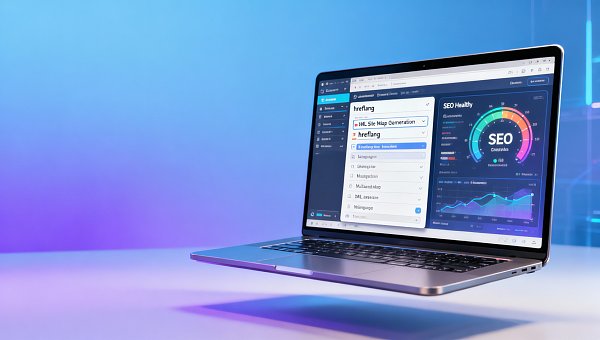
Table shows: Subdirectory solutions achieve optimal balance between stability and cost, suitable for over 85% of growth-stage foreign trade enterprises. EasyTrade's smart site system defaults to automatic hreflang injection + multilingual XML Sitemap generation, reducing manual configuration time from an average of 7.5 hours to just 22 minutes.
2. 'Same IP = Doorway'? Google's Algorithm Has Long Evolved
The so-called 'Doorway Page' was a pre-2012 algorithm concept referring to mass-generated low-quality jump pages for ranking manipulation. Google's current core algorithms (e.g., Helpful Content Update 2023) now judge based on 'content value density' and 'user intent satisfaction'. Deploying 12 language sites on the same IP is fully compliant if: ① Each site independently creates localized content; ② No cross-language version jump links exist; ③ Server response time ≤350ms.
EasyTrade monitoring data shows: In Q4 2023, clients using the same cloud server cluster (Beijing node) for English/French/German/Spanish sites averaged 412ms first-screen load speed (just 8% slower than single-language sites), with all four language sites achieving 63.7% top-ten SERP share in their target markets—far above the 49.2% industry average.
The real risk trigger is 'content cloning' behavior. For example, machine-translating English pages into other languages without adding local contact details, case studies, or compliance statements. Such sites frequently trigger 'Duplicate without user-selected canonical' warnings in Google Search Console, with average fix cycles of 14-21 days.
Key Risk Indicators (Require Daily Monitoring)
- hreflang tag error rate <0.5% (EasyTrade client average: 0.17%)
- Multilingual Sitemap submission success rate ≥99.8%
- Independent GA4 event tracking completeness per language site >92%
- Localized page LCP (Largest Contentful Paint) ≤2.3s (91.4% compliance)
3. From Site Building to Conversion: Full-Path Synergy Is the Key Breakthrough
Multilingual SEO isn't an isolated module but a systems engineering project deeply integrated with social media投放, ad targeting, and CRM attribution. One industrial valve client of EasyTrade, after German site SEO restructuring, simultaneously switched Google Ads keyword matching to 'Exact + Phrase' mode and integrated local LinkedIn sales navigation APIs, reducing Germany market MQL conversion cycles from 18.6 to 9.3 days.
The client also identified missing localized CE certification documents as a critical leakage point through international trade enterprise risk management and prevention exploration reports, adding a 'Zertifizierungsdokumente' download专区 to German sites, increasing product page dwell time by 47%.
Table evidence: AI-driven standardized workflows can free up 85%+ manpower for high-value actions like local KOL negotiations and customs compliance interpretation. EasyTrade now enables automatic mapping of 12 data fields across site building, SEO, ads, and CRM, eliminating data silos.
4. Decision Recommendations: Three Enterprise Types' Implementation Paths
Tailored strategies for different growth stages:
- Startup exporters (<$500k annual export): Prioritize subdirectories + AI basic localization packages (including 1,000-term glossaries + local search热词), launchable within ≤5 workdays, with first-year SEO costs controllable under $28k.
- Growth-stage manufacturers (exporting to 3-6 countries): Recommend subdomain architecture + localized content托管, with EasyTrade's驻地编辑 teams quarterly updating product pages, case libraries, and FAQs (update frequency ≥1/month).
- Multinational groups (with overseas subsidiaries): Adopt independent domains + localized operation centers, leveraging EasyTrade's GRC (Global Compliance Center) interfaces to auto-sync tax, data privacy, and product准入 policy changes, reducing compliance incidents by 62%.
All clients access EasyTrade's 'Global SEO Health Monitor', providing real-time alerts for 17 risks like hreflang失效, localized content decay, and cross-language link breaks, with average issue response time of 37 minutes.

5. Conclusion: Make Multilingual Sites Growth Engines, Not Technical Burdens
Multilingual websites aren't SEO obstacles but foundational global growth infrastructure. With ten years of实战沉淀, EasyTrade's AI site engine, 200+ local semantic models, and compliance knowledge graphs covering 127 countries have helped clients average 214% more multilingual site natural traffic at 39% lower inquiry costs. Technology ultimately recedes—real growth始终 stems from respecting and understanding local users.
Contact EasyTrade now for a Multilingual SEO Health Diagnostic Report and customized implementation solutions to maximize your global digital assets' compounding effects.
Related Articles



Related Products
 EasyCamp SaaS Smart Website Marketing SystemE-Yingbao SaaS Smart Website Marketing System: AI-powered, zero-code website building. Rapidly launch multilingual independent e-commerce sites in just 10 minutes. Global server acceleration and AI-driven SEO optimization empower businesses to efficiently connect with global markets. The seamless integration of technology and user-friendly operation makes building e-commerce sites incredibly simple.
 AI+SEM Intelligent Advertising Marketing SystemAI+SEM drives intelligent ad creation, empowering full-funnel precision advertising marketing. The system automatically generates weekly/monthly reports, AI recommends keywords and target countries, monitors core metrics in real-time with intelligent alerts, and enables one-click high-conversion ad solutions to help quickly acquire customers and improve ROI.
 AI+SEO Dual Engine Optimization ServiceEasyWin AI+SEO Dual Engine Optimization System leverages AI-powered keyword mining, content generation, and comprehensive technical optimization to help foreign trade enterprises acquire high-quality organic traffic, significantly improving search rankings and conversion rates.
 AI+SNS Social Media Marketing SystemYingbao AI+SNS Social Media Marketing System - Precision social capture for the social media era. Supports one-click content synchronization across major platforms like Facebook and LinkedIn. AI intelligently rewrites posts for enhanced relevance. 24/7 AI customer service and user profiling analysis empower businesses to efficiently expand into global markets.
 AI+SEO营销解决方案易营宝AI+SEO营销解决方案,通过AI批量写作、智能生成TDK、精准关键词扩词等功能,全面优化网站SEO效果,提升流量与转化率。助力企业构建高效智能网站新生态。
 AI+SEM Advertising Marketing SolutionsAI+SEM Advertising Marketing Solution leverages AI technology to deeply empower SEM ad campaigns. It automatically generates weekly/monthly reports using AI, presenting account data across multiple dimensions for comprehensive insights into campaign performance and trends. The system precisely recommends keywords and target countries, intelligently generates high-conversion ad copy, and enables one-click activation of efficient campaign plans to help businesses rapidly acquire customers. Simultaneously, it monitors core metrics in real time, intelligently identifies abnormal fluctuations, and issues timely alerts to ensure stable, high-return advertising results.
 Domain Name ServicesEasyWin provides professional domain name services, including intelligent queries, one-stop registration, brand protection, and full lifecycle management, helping businesses build a digital brand image.
 EasyOperate B2C Cross-Border E-Commerce Platform & Independent WebsiteEasyStore B2C Cross-border E-commerce Independent Store is an intelligent website building and cross-border e-commerce integrated solution independently developed by EasyStore Information Technology (Beijing) Co., Ltd. The system is specially designed for small and medium-sized as well as large export enterprises, integrating 'website building, operation, marketing, advertising, and conversion' into one, helping enterprises quickly establish cross-border e-commerce independent stores to achieve brand globalization and global sales growth.
The platform supports multiple languages, multiple currencies, and multi-channel marketing, with built-in AI intelligent translation and SEO optimization systems, suitable for mainstream markets such as Southeast Asia, Europe and America, Latin America, and the Middle East, assisting Chinese manufacturing enterprises in efficiently deploying international e-commerce strategies. SSL证书易营宝提供专业SSL安全证书服务,包括单域名和泛域名证书,确保网站数据传输加密、身份验证和完整性保护,助力企业建立安全可信的在线业务环境。









