









- How Can a Brand Updates Page Be Made More SEO-Friendly? Analysis of Update Frequency, Content Structure, and Internal Linking StrategyJun 28, 2026View details
- What stages does the cross-border services ecosystem include? How do website building, promotion, payment, and compliance work togetherJun 22, 2026View details
- How will email marketing costs change in 2026Jun 22, 2026View details
- The China-US tariff arrangement has reached a preliminary consensus, and the trade association will be establishedJun 15, 2026View details
- Should overseas brand marketing start with ads or contentJun 21, 2026View details
- What determines B2C cross-border e-commerce website development costs? A breakdown of features, interfaces, and deployment methodsJun 17, 2026View details
- China-Morocco zero-tariff access, a breakthrough in the cost of Moroccan goods exports to ChinaJun 11, 2026View details
- What signal should be released for the suspension of exports to JapanJun 10, 2026View details
Are There Risks with a Multilingual Foreign Trade Website? Start by Looking at These 4 Common Issues
Are there risks in a multilingual foreign trade website? For quality control and security management personnel, language mistranslations, compliance omissions, data security issues, and loss of control in operations and maintenance can all affect the brand and transactions. First look at these 4 common problems, then determine how to reduce the risks.
Why quality control and security management roles need to pay more attention to multilingual website risks

Many companies regard multilingual websites as the job of the marketing department, but after the site actually goes live, the first problems to be exposed are often in quality, compliance, and security. Whether a multilingual foreign trade website will have risks depends not on “whether to do it,” but on “how to do it, who does it, and how it is controlled.”
For quality control personnel, incorrect product parameters, delivery commitments, and descriptions of the scope of application may lead to customer misunderstandings or even claims. For security management personnel, chaotic backend permissions, exposed form data, and uncontrolled plugin updates will directly amplify business risks and data risks.
Especially under the integrated website + marketing service model, the website is not only a display page, but also connects search-based customer acquisition, ad placement, inquiry collection, customer assignment, and subsequent conversion. As long as there are vulnerabilities in front-end content, back-end systems, or operation and maintenance processes, risks will be amplified across multiple nodes.
- Language level: inaccurate terminology translation, unit conversion errors, and missing disclaimers can easily cause overseas customers to make incorrect judgments about product capabilities.
- Compliance level: incomplete privacy statements, data collection notices, and contact information disclosure may affect advertising placement and inquiry conversion.
- Security level: weak passwords, open interfaces, unencrypted transmission, and uncontrollable third-party scripts can easily create attack entry points.
- Operations and maintenance level: mixed versions, content updates without review, and chaotic handovers with translation vendors often make later maintenance costs higher than website development costs.
First look at these 4 common problems: Are there risks in a multilingual foreign trade website?
If a company is planning to build a multilingual official website, it is recommended to first investigate the following four types of issues. They are not abstract, but the most common risk points and the ones most likely to affect inquiry quality and brand reputation.
1. Distorted language content directly affects quality control communication
A common misunderstanding with multilingual websites is not “no translation,” but “it looks translated, yet it is inaccurate.” Once technical specifications, material names, application boundaries, and after-sales commitments are translated literally or incorrectly, customers will treat the website information as formal commercial statements, and subsequent disputes will be difficult to explain.
For example, when a new energy company showcases project capabilities, if the page structure and narrative do not revolve around technical credibility, then even if the visual effect is good, customer trust will still be weakened. For sites like photovoltaics, new energy that target the global market, it is even more necessary to clearly explain supply chain strength, full life-cycle services, customization capabilities, and partner information, to avoid the problem of “looking professional but actually impossible to verify.”
2. Missing compliance communication means the harder the marketing push, the higher the risk
Whether a multilingual foreign trade website will have risks also depends on whether it supports the compliance requirements of different markets. Many companies leave privacy policies, Cookie notices, form authorizations, and corporate entity information until the very end, with the result that the website can go live, but cannot run advertising steadily or accumulate high-quality leads.
For security management personnel, the focus is not only on “whether there is a statement,” but also on whether the statement is consistent with actual data collection behavior. Which fields are collected in forms, where the data flows, who can access the backend, and how long logs are retained should all form traceable rules.
3. Weak data and system security leads to leakage of inquiry assets
Once the website is connected with advertising, customer service, CRM, and email systems, the risk is no longer limited to the page itself. Attackers may enter the system through outdated plugins, form interfaces, file upload ports, and weak-permission accounts. For foreign trade business, what is stolen is not just a single piece of data, but high-value overseas customer leads.
Therefore, to determine whether a multilingual foreign trade website will have risks, transmission encryption, permission hierarchy, vulnerability fixing, backup recovery, and log auditing must all be included in the same inspection logic, rather than only checking whether the front-end page opens normally.
4. Disconnection between operations and maintenance and marketing makes later loss of control most common
Many companies focus their budget on website building in the early stage and ignore the subsequent update mechanism. The result is that marketing wants to revise copy, but technical staff do not understand the industry; quality control wants to review parameters, but there is no version record; the security department requires tighter permissions, but the outsourced team still retains administrator accounts. A website is not a one-time deliverable, but a continuously operating business system.
This is also why more and more companies tend to choose integrated website + marketing service solutions: the same team understands website building, content, customer acquisition, data, and operations and maintenance at the same time, which can reduce responsibility gaps caused by coordination among multiple vendors.
How to quickly judge whether the risk is high: first look at this evaluation table
If you are evaluating whether a multilingual foreign trade website will have risks, you can first conduct an internal screening from the following dimensions. This table is suitable for joint use by quality control, information security, marketing, and management, to avoid distorted judgment by a single department.
If two or more of the above four items cannot be answered clearly, then the answer to “whether a multilingual foreign trade website will have risks” is usually not whether it will or will not, but that the risk already exists and has simply not yet been triggered.
Self-built, outsourced, or integrated website marketing: which solution is more suitable for companies with high risk control requirements
Different construction methods have a major impact on risk control capabilities. When selecting a solution, quality control and security roles should not look only at the quotation, but also at whether the responsibility chain is closed-loop, whether later maintenance is controllable, and whether marketing and systems are connected.
For companies that need to balance brand presentation, lead acquisition, compliance management, and security stability at the same time, an integrated solution is often more suitable. Especially when companies face multiple national markets, unified content standards, unified data interfaces, and unified operations and maintenance systems can significantly reduce internal coordination costs.
What to focus on during procurement and implementation to move risk control forward
Whether a multilingual foreign trade website will have risks should not be verified only after launch. A more prudent approach is to write risk control requirements into the procurement and implementation stages. This can both constrain delivery quality and reduce subsequent rework.
Procurement evaluation recommendations
- First ask about the content mechanism, not just the design effect. Whether there is a terminology database, native-speaker proofreading, parameter review, and multilingual version management is the key to judging the level of risk.
- Clarify data ownership and permission control. Including who holds the domain name, server, source code, form data, and analytics tool accounts, this must be clearly stated in the contract and delivery list.
- Confirm the subsequent update method. If every content change depends on outsourced technical staff, operations and maintenance risks will continue to rise, so it is best to have an auditable backend management process.
- Pay attention to whether marketing and security are coordinated. If ad landing pages, SEO pages, and social media redirect pages are managed separately, problems such as invalid old links, duplicate forms, and chaotic tracking code can easily occur.
Implementation phase checklist
- Whether the key information on the homepage, product pages, case pages, and contact page has been jointly reviewed by the business department and quality control.
- Whether forms use minimized data collection, and whether there are access controls, log records, and anomaly alerts.
- Whether multilingual pages have a unified update rhythm to avoid the Chinese version being updated while the foreign-language version is not synchronized.
- Whether pre-launch testing has been established, including testing of links, speed, mobile devices, form submission, permissions, and backup recovery.
In industry scenarios, which companies are more likely to fall into pitfalls
From the perspective of actual business scenarios, the following types of companies need to seriously answer the question “whether a multilingual foreign trade website will have risks.” It is not because they cannot do it, but because their information complexity, market differences, and delivery chains are longer.
- Manufacturing companies with complex product parameters: there are many page parameters, application conditions, and adaptation scenarios, and any translation deviation may increase pre-sales communication costs.
- Companies advertising in multiple regions: different markets have different requirements for privacy notices, content expression, and contact information display, so a unified template may not necessarily be suitable.
- New energy companies that value brand image: the website must simultaneously undertake leadership display, project customer acquisition, and cooperation proof functions, and must communicate both technology and credibility.
- Companies that rely on lead distribution: if inquiries enter the system without rules, chain problems such as duplicate follow-up, data leakage, and declining customer experience will occur.
Taking new energy companies as an example, website visuals and content structure should not only pursue “internationalization,” but should serve decision-making even more. For sites like photovoltaics, new energy, if they can clearly present supply chain capabilities, technical support, delivery capacity, and global cooperation relationships through grand visual storytelling and rigorous logical section layout, they can usually more easily reduce the concerns of B-end customers.
FAQ: Are there risks in a multilingual foreign trade website, and how to judge common questions
Does a multilingual website become riskier the more languages it has?
Not necessarily. What truly determines the risk is not the number of languages, but whether there are unified terminology, unified review, and unified update mechanisms. A project with three languages but chaotic processes carries higher risk than a project with six languages but standardized management.
What three items should security management personnel check first?
It is recommended to prioritize checking backend permission hierarchy, form data transmission and storage methods, and the update status of plugins and dependencies. These three items are directly related to whether customer data is exposed, whether the system is vulnerable to attacks, and whether the website has sustainable maintenance capability.
If the budget is limited, what should be done first?
First ensure the accuracy and security of the core pages, and then gradually expand languages and marketing functions. Usually, priority should be given to content review, privacy compliance, basic security configuration, and traceability of the inquiry chain, rather than building too many complex functions at the beginning.
How often should a review be conducted after launch?
It is recommended to check content updates and form operation status monthly, and check permissions, logs, backups, and plugin updates quarterly. Before entering a new market, adding a new language, or launching large-scale advertising, conduct an additional dedicated review. The frequency is not necessarily better the higher it is; the key is to form a system.
Why choose us: putting website building, marketing, compliance, and security into the same growth system
For companies evaluating whether a multilingual foreign trade website will have risks, what is truly needed is not a single-point service, but an execution system that can coordinate website construction, search deployment, content management, lead conversion, and operations and maintenance risk control.
Since its establishment in 2013, Yiyingbao Information Technology (Beijing) Co., Ltd. has long focused on global digital marketing services. With artificial intelligence and big data as its core driving forces, it has formed a full-chain solution covering intelligent website building, SEO optimization, social media marketing, and advertising placement. For companies that value quality control and security management, this integrated capability means clearer responsibility boundaries, more efficient collaboration processes, and a more controllable delivery pace.
If you are advancing a multilingual official website project, or it has already gone live but you are worried about accumulating risks, you can focus on consulting these aspects: whether the multilingual site architecture is reasonable, how key page parameters are reviewed, how forms and data interfaces are access-controlled, how content compliance in different markets is handled, how the delivery schedule is arranged, whether subsequent updates support customized processes, and which function priorities can be achieved within the budget.
Clearly identifying risks first and then deciding on the construction path is often more cost-effective than going live blindly. If you need more specific parameter confirmation, solution selection, delivery cycle evaluation, or quotation communication, sort out your business scenario, number of languages, target markets, and internal review requirements as early as possible, so that you can more quickly obtain an executable implementation plan.
Related Articles
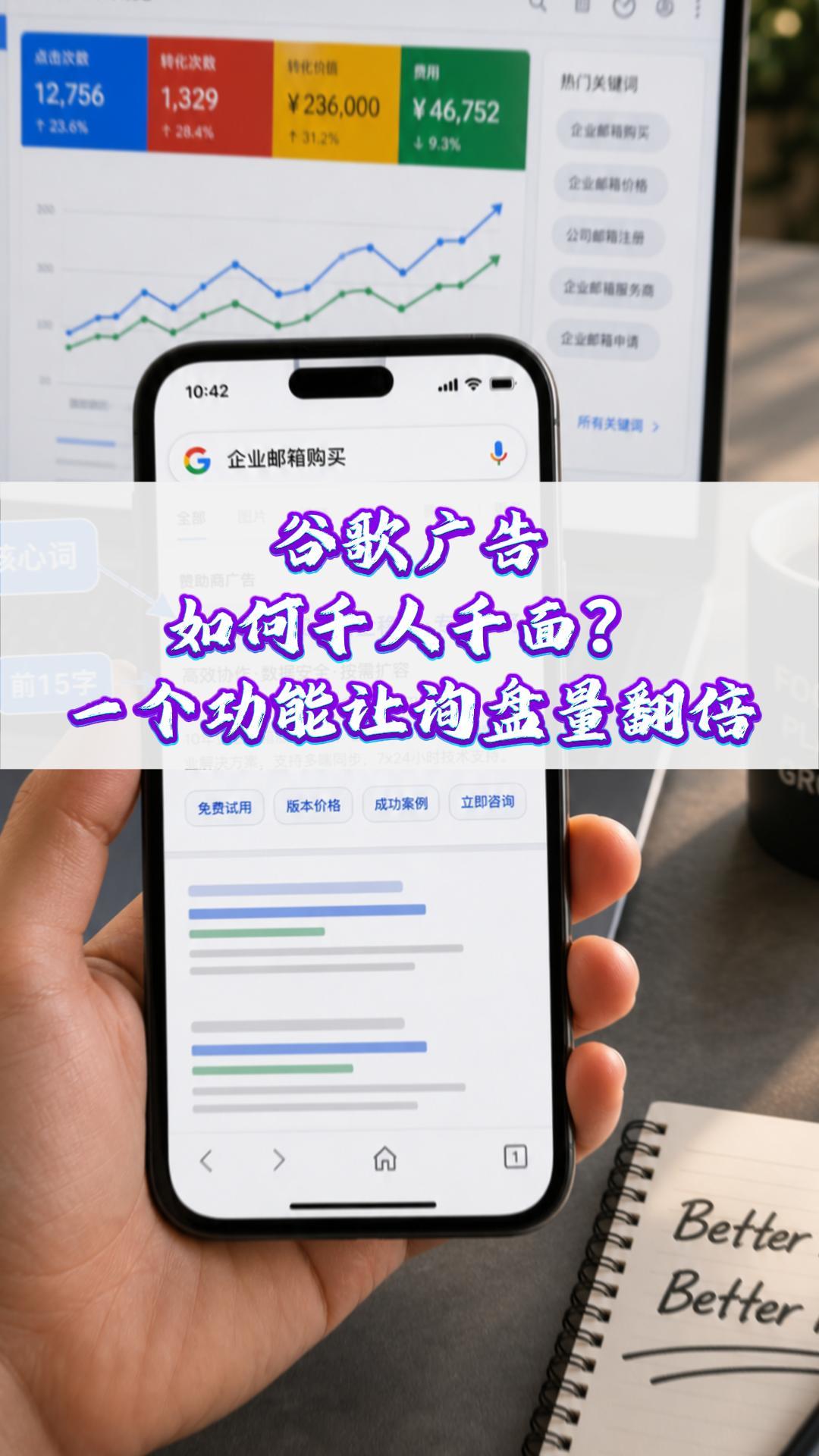
 How can Google Ads deliver one-to-one personalization? One feature can double your inquiry volume#ExportMarketing#OverseasPromotion#GoogleAds#SocialMediaMarketing#ForeignTradeIndependentWebsite
 Why a Google-optimized independent website is essential for trailer exports
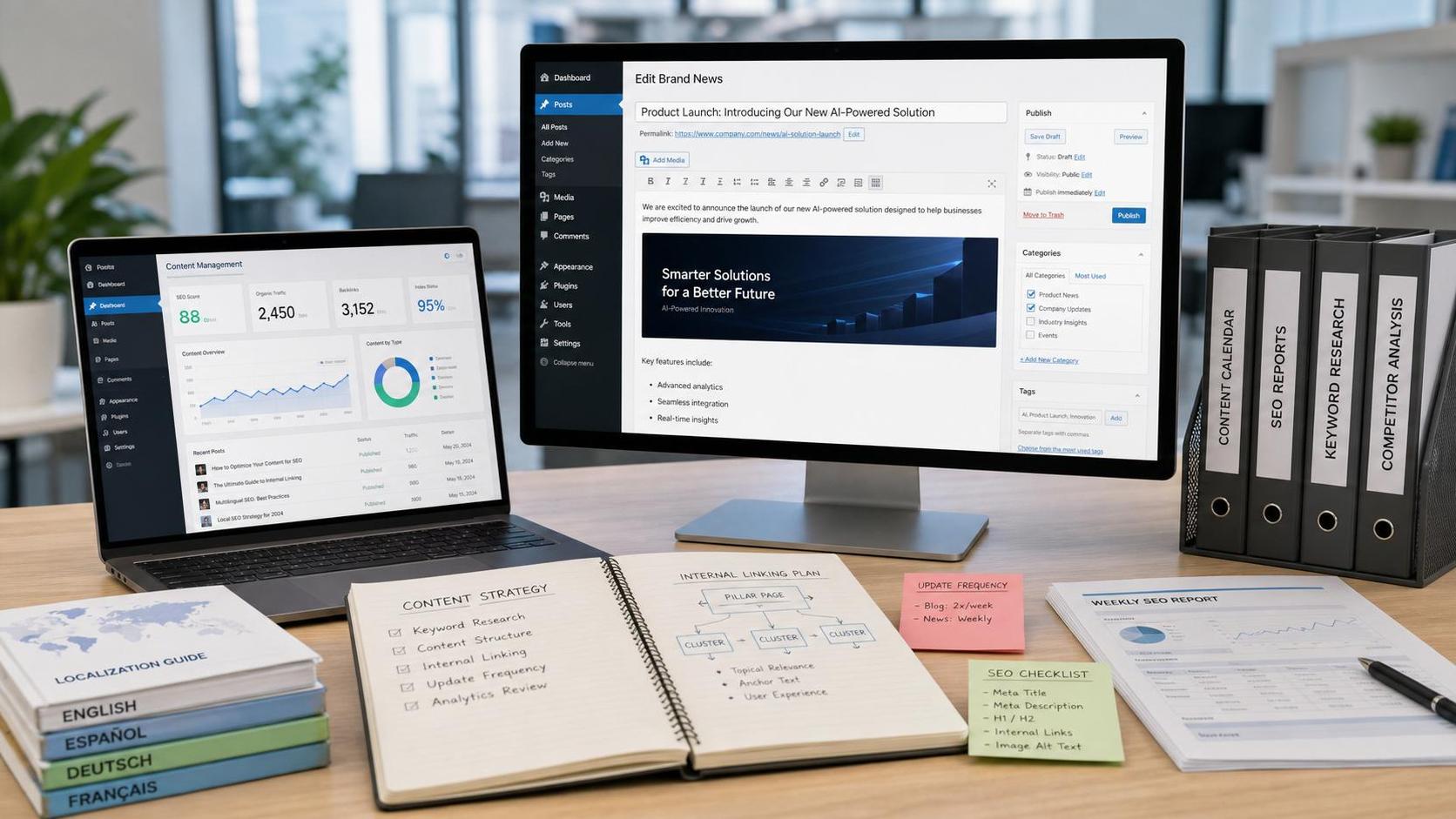
 How Can a Brand Updates Page Be Made More SEO-Friendly? Analysis of Update Frequency, Content Structure, and Internal Linking Strategy

Related Products
 EasyCamp SaaS Smart Website Marketing SystemE-Yingbao SaaS Smart Website Marketing System: AI-powered, zero-code website building. Rapidly launch multilingual independent e-commerce sites in just 10 minutes. Global server acceleration and AI-driven SEO optimization empower businesses to efficiently connect with global markets. The seamless integration of technology and user-friendly operation makes building e-commerce sites incredibly simple.
 AI+SEM Intelligent Advertising Marketing SystemAI+SEM drives intelligent ad creation, empowering full-funnel precision advertising marketing. The system automatically generates weekly/monthly reports, AI recommends keywords and target countries, monitors core metrics in real-time with intelligent alerts, and enables one-click high-conversion ad solutions to help quickly acquire customers and improve ROI.
 AI+SEO Dual Engine Optimization ServiceEasyWin AI+SEO Dual Engine Optimization System leverages AI-powered keyword mining, content generation, and comprehensive technical optimization to help foreign trade enterprises acquire high-quality organic traffic, significantly improving search rankings and conversion rates.
 AI+SNS Social Media Marketing SystemYingbao AI+SNS Social Media Marketing System - Precision social capture for the social media era. Supports one-click content synchronization across major platforms like Facebook and LinkedIn. AI intelligently rewrites posts for enhanced relevance. 24/7 AI customer service and user profiling analysis empower businesses to efficiently expand into global markets.
 AI+SEO营销解决方案易营宝AI+SEO营销解决方案,通过AI批量写作、智能生成TDK、精准关键词扩词等功能,全面优化网站SEO效果,提升流量与转化率。助力企业构建高效智能网站新生态。
 AI+SEM Advertising Marketing SolutionsAI+SEM Advertising Marketing Solution leverages AI technology to deeply empower SEM ad campaigns. It automatically generates weekly/monthly reports using AI, presenting account data across multiple dimensions for comprehensive insights into campaign performance and trends. The system precisely recommends keywords and target countries, intelligently generates high-conversion ad copy, and enables one-click activation of efficient campaign plans to help businesses rapidly acquire customers. Simultaneously, it monitors core metrics in real time, intelligently identifies abnormal fluctuations, and issues timely alerts to ensure stable, high-return advertising results.
 Domain Name ServicesEasyWin provides professional domain name services, including intelligent queries, one-stop registration, brand protection, and full lifecycle management, helping businesses build a digital brand image.
 EasyOperate B2C Cross-Border E-Commerce Platform & Independent WebsiteEasyStore B2C Cross-border E-commerce Independent Store is an intelligent website building and cross-border e-commerce integrated solution independently developed by EasyStore Information Technology (Beijing) Co., Ltd. The system is specially designed for small and medium-sized as well as large export enterprises, integrating 'website building, operation, marketing, advertising, and conversion' into one, helping enterprises quickly establish cross-border e-commerce independent stores to achieve brand globalization and global sales growth.
The platform supports multiple languages, multiple currencies, and multi-channel marketing, with built-in AI intelligent translation and SEO optimization systems, suitable for mainstream markets such as Southeast Asia, Europe and America, Latin America, and the Middle East, assisting Chinese manufacturing enterprises in efficiently deploying international e-commerce strategies. SSL证书易营宝提供专业SSL安全证书服务,包括单域名和泛域名证书,确保网站数据传输加密、身份验证和完整性保护,助力企业建立安全可信的在线业务环境。









