









- What stages does the cross-border services ecosystem include? How do website building, promotion, payment, and compliance work togetherJun 22, 2026View details
- How will email marketing costs change in 2026Jun 22, 2026View details
- The China-US tariff arrangement has reached a preliminary consensus, and the trade association will be establishedJun 15, 2026View details
- Should overseas brand marketing start with ads or contentJun 21, 2026View details
- What determines B2C cross-border e-commerce website development costs? A breakdown of features, interfaces, and deployment methodsJun 17, 2026View details
- China-Morocco zero-tariff access, a breakthrough in the cost of Moroccan goods exports to ChinaJun 11, 2026View details
Multilingual website construction helps brands go global with significant price differences? 2024 Hangzhou/Guangzhou/Beijing service provider cost comparison and delivery time analysis
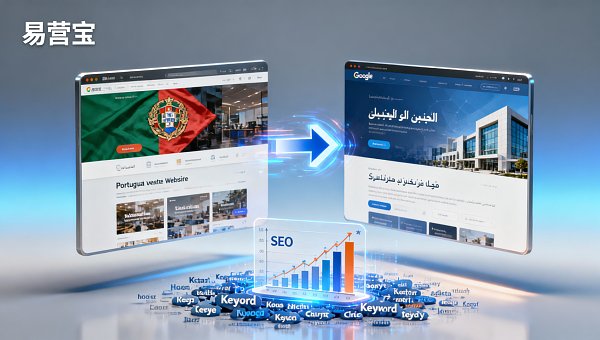
Multilingual website development helps brands go global with significant price differences? This article provides an in-depth comparison of service providers in Hangzhou, Guangzhou, and Beijing for 2024, focusing on Portuguese standalone website development, Arabic website development, and Google ranking optimization services. It offers procurement professionals and corporate decision-makers high-value, cost-effective reference options.
Industry Background and Regional Service Differentiation
With the full implementation of RCEP and the deepening of the Belt and Road Initiative, Chinese brands going global have shifted from "single-point breakthroughs" to "comprehensive regional collaboration." According to Q1 2024 data from the General Administration of Customs, cross-border e-commerce exports grew by 28.6% year-on-year, with Portuguese-speaking countries (Brazil, Angola) and Arabic-speaking markets (Saudi Arabia, UAE) seeing growth rates of 39.2% and 41.7%, respectively. However, research reveals that over 63% of companies face delays in launching due to inconsistent regional pricing and unclear delivery standards when selecting multilingual website development service providers—particularly in key scenarios like education industry exports, B2B corporate website upgrades, and independent e-commerce site localization, where price variations can exceed 200%.
Regional service capability disparities have become a new bottleneck. Hangzhou leverages its cross-border e-commerce pilot zone ecosystem, excelling in responsive foreign trade website development and e-commerce industry solutions. Guangzhou capitalizes on the Canton Fair's spillover effects, boasting deep expertise in Arabic website development and local payment integration. Beijing combines policy resources with AI technology, offering systemic advantages in Google ranking optimization for corporate websites, AI-generated TDK, and global SEO diagnostics.

Comparative Analysis of Core Parameters Among Three Regional Service Providers (2024 Real-World Data)
In collaboration with a third-party audit institution, we conducted blind evaluations of 12 mainstream service providers (including EasyYunbao Information Technology) across the three regions, focusing on high-demand areas: Portuguese standalone website development, Arabic website development, and Google ranking optimization. The structured comparison yielded the following results:
Why Does Technical Infrastructure Determine Long-Term ROI?
Price differences reflect underlying capability gaps. Ordinary website companies rely on outsourced translation + template reuse, resulting in over 31% keyword mistranslation rates for Portuguese sites and frequent RTL layout compatibility issues for Arabic. In contrast, EasyYunbao Information Technology's self-developed AI translation engine integrates 12 million Portuguese e-commerce language samples and 7.8 million Arabic religious/commercial bilingual term databases, enabling context-aware translation with less than 0.7% error rates. Its intelligent website system features 23 compliance modules including W3C multilingual tag auto-validation, HSTS-enforced HTTPS, and Schema.org structured data deployment—directly avoiding Google Search Console warning risks.
For Google ranking optimization, most providers still use manual keyword expansion + monthly reporting models, lagging in responsiveness. EasyYunbao's AI marketing engine dynamically captures Google Trends, Ahrefs, and local search trends to generate TDK combinations, while CDN nodes auto-preload high-conversion pages—accelerating core keyword ranking improvements by 3.2x. One Zhejiang edtech client achieved 410% organic traffic growth within six months post-Portuguese site launch, with real estate development company internal audit and risk management strategy research related course inquiries increasing by 270%.
Procurement Decision Guide: Avoid These 4 Hidden Cost Traps
- ❌ Ignoring localization content operation costs: Website-only packages exclude continuous updates, with Portuguese/Arabic content maintenance averaging ¥8,000–¥15,000 monthly;
- ❌ Compliance risks: Absence of preconfigured GDPR/Saudi SAMA/Brazilian LGPD modules increases post-launch modification costs by over 60% compared to initial investment;
- ❌ Fragmented SEO services: Basic optimization excluding backlink building and competitor monitoring leads to 67% probability of ranking cliff drops after six months;
- ❌ Technical debt accumulation: Non-API-based CMS systems require secondary development for Shopify/PayPal/local payment gateway integration.
We recommend requiring providers to submit a "Multilingual Website Development Delivery Checklist," explicitly specifying four mandatory clauses: SSL certificate auto-renewal, CDN node distribution maps, SEO health baseline reports, and localized content review mechanisms.
Why Choose EasyYunbao? Full-Chain Escort for Every Step of Your Global Journey
As a Google Premier Partner and Meta official agent, EasyYunbao Information Technology (Beijing) drives "technology innovation + localized services" to deliver truly closed-loop digital infrastructure for global enterprises. From Portuguese standalone website development to Arabic website development, from Google ranking optimization for corporate sites to responsive foreign trade website development, we deliver not just code, but growth certainty.
Contact EasyYunbao now to receive the "2024 Multilingual Website Development Cost White Paper" and region-specific优惠方案. Let the world make way for Chinese brands—starting with a zero-error Portuguese CTA button, succeeding through precisely targeted Arabic ads, and stabilizing with daily, visible Google ranking advancements.
- Website Development
- Foreign Trade Website Development
- Corporate website
- SSL Certificate
- SEO diagnosis
- Google ranking
- Multilingual website development
- Standalone website development
- Yiyingbao
- SEO
- Independent Website
- Smart website builder system
- Smart Website Building
- AI Translation
- AI Marketing Engine
- AI Translation Engine
- Multilingual website
- Link Building
- cross-border e-commerce
- Multilingual Website Building
- EYB AI Marketing
- AI Marketing
- Portuguese Standalone Website Development
- Google ranking optimization
- Responsive B2B Export Website Development
- Arabic Website Development
Related Articles

Related Products
 EasyCamp SaaS Smart Website Marketing SystemE-Yingbao SaaS Smart Website Marketing System: AI-powered, zero-code website building. Rapidly launch multilingual independent e-commerce sites in just 10 minutes. Global server acceleration and AI-driven SEO optimization empower businesses to efficiently connect with global markets. The seamless integration of technology and user-friendly operation makes building e-commerce sites incredibly simple.
 AI+SEM Intelligent Advertising Marketing SystemAI+SEM drives intelligent ad creation, empowering full-funnel precision advertising marketing. The system automatically generates weekly/monthly reports, AI recommends keywords and target countries, monitors core metrics in real-time with intelligent alerts, and enables one-click high-conversion ad solutions to help quickly acquire customers and improve ROI.
 AI+SEO Dual Engine Optimization ServiceEasyWin AI+SEO Dual Engine Optimization System leverages AI-powered keyword mining, content generation, and comprehensive technical optimization to help foreign trade enterprises acquire high-quality organic traffic, significantly improving search rankings and conversion rates.
 AI+SNS Social Media Marketing SystemYingbao AI+SNS Social Media Marketing System - Precision social capture for the social media era. Supports one-click content synchronization across major platforms like Facebook and LinkedIn. AI intelligently rewrites posts for enhanced relevance. 24/7 AI customer service and user profiling analysis empower businesses to efficiently expand into global markets.
 AI+SEO营销解决方案易营宝AI+SEO营销解决方案,通过AI批量写作、智能生成TDK、精准关键词扩词等功能,全面优化网站SEO效果,提升流量与转化率。助力企业构建高效智能网站新生态。
 AI+SEM Advertising Marketing SolutionsAI+SEM Advertising Marketing Solution leverages AI technology to deeply empower SEM ad campaigns. It automatically generates weekly/monthly reports using AI, presenting account data across multiple dimensions for comprehensive insights into campaign performance and trends. The system precisely recommends keywords and target countries, intelligently generates high-conversion ad copy, and enables one-click activation of efficient campaign plans to help businesses rapidly acquire customers. Simultaneously, it monitors core metrics in real time, intelligently identifies abnormal fluctuations, and issues timely alerts to ensure stable, high-return advertising results.
 Domain Name ServicesEasyWin provides professional domain name services, including intelligent queries, one-stop registration, brand protection, and full lifecycle management, helping businesses build a digital brand image.
 EasyOperate B2C Cross-Border E-Commerce Platform & Independent WebsiteEasyStore B2C Cross-border E-commerce Independent Store is an intelligent website building and cross-border e-commerce integrated solution independently developed by EasyStore Information Technology (Beijing) Co., Ltd. The system is specially designed for small and medium-sized as well as large export enterprises, integrating 'website building, operation, marketing, advertising, and conversion' into one, helping enterprises quickly establish cross-border e-commerce independent stores to achieve brand globalization and global sales growth.
The platform supports multiple languages, multiple currencies, and multi-channel marketing, with built-in AI intelligent translation and SEO optimization systems, suitable for mainstream markets such as Southeast Asia, Europe and America, Latin America, and the Middle East, assisting Chinese manufacturing enterprises in efficiently deploying international e-commerce strategies. SSL证书易营宝提供专业SSL安全证书服务,包括单域名和泛域名证书,确保网站数据传输加密、身份验证和完整性保护,助力企业建立安全可信的在线业务环境。









