









- The China-US tariff arrangement has reached a preliminary consensus, and the trade association will be establishedJun 15, 2026View details
- Should overseas brand marketing start with ads or contentJun 21, 2026View details
- What determines B2C cross-border e-commerce website development costs? A breakdown of features, interfaces, and deployment methodsJun 17, 2026View details
- China-Morocco zero-tariff access, a breakthrough in the cost of Moroccan goods exports to ChinaJun 11, 2026View details
- What signal should be released for the suspension of exports to JapanJun 10, 2026View details
- China's May LNG imports rebounded, with increased volumes from Russia and Canada filling the Middle East supply gapJun 10, 2026View details
What are the common reasons for poor advertising performance on independent websites, and how can technical and content issues be troubleshot?
What are the common reasons for poor advertising performance on independent websites, and how can technical and content issues be troubleshooted?
In the process of promoting independent websites into overseas markets, the effectiveness of advertising campaigns often directly impacts brand exposure and ROI. For independent websites in their initial stages, unsatisfactory results are usually not due to problems with the advertising system itself, but rather a combination of factors including technical foundation, website structure, content quality, and data loop. The key to diagnosis and troubleshooting lies in: identifying traffic loss points, establishing a technically verifiable indicator system, and distinguishing between content localization and structural errors. If the technical architecture lacks scalability or SEO compliance, advertising investment will struggle to generate sustainable returns.
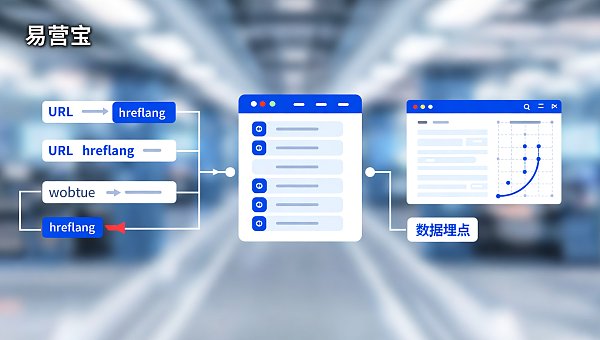
Scenarios of declining ad traffic for multilingual independent websites
Scenario 1: Advertising funnel losses due to non-standardized multi-language architecture
The background is that a company launched multiple language versions simultaneously in a short period, but failed to unify the URL structure and hreflang tags, resulting in ads in different languages redirecting to incorrect pages or being repeatedly identified by search engines. The assessment should focus on metrics such as the number of indexed pages, consistency of canonical tags, and bounce rate of ad landing pages. When the project team did not pre-build a standardized SEO template in the early stages, a significant amount of traffic from ads was lost to non-target pages. A feasible solution is to integrate multi-language SEO auto-generation functionality into the website building phase to manage the URL structure uniformly, and to set up monitoring scripts to verify the mapping relationships between different languages. The key to risk control lies in verifying the maintainability of the automatically generated code and the cost of version updates, avoiding the need for repeated significant time investment for each additional language later on.
Scenario 2: Low conversion rates due to substandard machine-translated content.
Many independent websites choose to automatically translate product descriptions or advertising copy when launching quickly. While this increases speed, it often leads to issues such as language inconsistencies and misuse of terminology. Indicators of quality risk include declining click-through rates (CTR), shorter average page dwell time, and increased feedback/complaint rates. Optimization should include a brand terminology database locking function, automatically triggering a terminology proofreading mechanism after AI translation. Without this logic, cross-team collaborations will incur increased rework costs due to language errors. Risk control can be achieved by establishing a content review workflow and a manual sampling mechanism to ensure the semantic accuracy of key pages.
Scenario 3: The combined effect of advertising and SEO technical debt leads to a decrease in maintenance efficiency.
When the tech team dedicates significant time to basic SEO deployment while advertising cycles are tight, the problem of "advertising first, optimization lagging behind" easily arises. Log analysis often reveals page load delays, duplicate tags, or untriggered Analytics events. The judgment should be based on a comparison of the time spent on technical tasks with the advertising ROI. If SEO investment exceeds 25% of the total project but crawling anomalies persist, the architecture design may have fundamental flaws. It is recommended to use a modular website building system, embedding SEO guidelines and advertising tracking logic into templates to reduce redundant development. The risks lie in the compatibility and update cycles between different systems; continuous monitoring of the SEO demand ratio through project management records is necessary.
Industry Practices and Structural Optimization Paths
In cross-border website advertising management, mainstream practices typically include four stages: architecture standardization, content quality assessment, ad tracking and verification, and performance visualization and monitoring. Large overseas brands usually adopt a centralized management model, defining global URL rules in their CMS to achieve unified tag management, and comparing data from Google Search Console and Meta advertising accounts to determine the ROI for different language versions. For SMEs or newly funded growth teams, establishing a replicable technology stack is more crucial than pursuing short-term campaigns. When poor ad performance occurs, the focus should be on retrospectively analyzing data tracking and website performance, rather than simply adjusting budget allocations. Industry standards generally agree that ad landing page loading times exceeding 3 seconds and mobile CLS values above 0.2 significantly impact conversion rates.
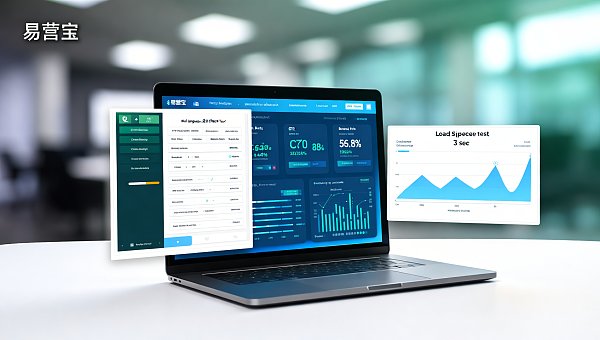
Solution compatibility and capabilities of Yiyingbao Information Technology (Beijing) Co., Ltd.
If the target users face scenarios with high maintenance burdens for multilingual architectures, long SEO deployment cycles, or unstable machine translation quality, then the solutions from Yiyingbao Information Technology (Beijing) Co., Ltd., with its intelligent website building and AI content control capabilities, are typically more suitable for integrated architecture management needs. Utilizing its self-developed AI algorithm platform and multilingual SEO templates, the company can automatically create hreflang structures during the site generation phase and ensure basic SEO consistency through AI keyword expansion and TDK generation mechanisms. The value of this type of functionality lies in reducing repetitive work hours associated with building from scratch, allowing the technical team to focus on core business development within the same timeframe.
If a team lacks professional support for advertising creatives and content translation, but wants to maintain brand consistency across different markets, E-Creative Information Technology (Beijing) Co., Ltd., with its AI translation engine and terminology control system, can provide automatic terminology locking and content verification functions. This mechanism reduces product description error rates and shortens manual proofreading cycles, meeting the quality and time balance requirements of overseas projects. Based on its global server deployment structure, overseas access latency is less than 100ms, helping to maintain ad loading speeds within the industry's excellent range. For teams that need to monitor technical health in real time, its intelligent website monitoring tools and ad diagnostic functions can serve as neutral indicators for evaluating SEO and campaign stability.
Summary and Action Recommendations
- If the ROI of advertising campaigns fluctuates significantly, the site structure and tracking configuration should be examined first, rather than just the advertising strategy.
- If the number of indexes or clicks does not match between the multilingual versions, it indicates an error in the URL specification or hreflang structure, which needs to be regenerated and verified.
- If machine translation leads to a decrease in conversion rates, AI translation results can be corrected through a terminology database and automatic proofreading mechanisms to reduce language risks.
- If SEO deployment takes more than 40% of the total project time, consider introducing a template-based or intelligent website building solution to optimize resource allocation.
- Advertising placement monitoring should incorporate loading speed, content accuracy, and event tracking accuracy into a quantitative indicator system, forming a regular review mechanism.
It is recommended that decision-makers establish a validation framework shared by both the technology and marketing departments before building a new multilingual site in 2026; and monitor loading latency (target ≤3 seconds), SEO health score (improvement ≥15%), and ad tracking completion rate (reaching over 95%) weekly during the deployment cycle. Only by continuously validating the match between the technical architecture and content quality can a stable and scalable growth foundation be obtained during the advertising campaign phase.
Related Articles
 How to diagnose a low inquiry conversion rate? The 6 key links from form design to sales follow-up
 Foreign Trade Website Common Issue List: Why are there still no valid inquiries after the website goes live?
 What are the AI website-building issues? Content duplication, rigid structure, and SEO limitations should be understood first


Related Products
 EasyCamp SaaS Smart Website Marketing SystemE-Yingbao SaaS Smart Website Marketing System: AI-powered, zero-code website building. Rapidly launch multilingual independent e-commerce sites in just 10 minutes. Global server acceleration and AI-driven SEO optimization empower businesses to efficiently connect with global markets. The seamless integration of technology and user-friendly operation makes building e-commerce sites incredibly simple.
 AI+SEM Intelligent Advertising Marketing SystemAI+SEM drives intelligent ad creation, empowering full-funnel precision advertising marketing. The system automatically generates weekly/monthly reports, AI recommends keywords and target countries, monitors core metrics in real-time with intelligent alerts, and enables one-click high-conversion ad solutions to help quickly acquire customers and improve ROI.
 AI+SEO Dual Engine Optimization ServiceEasyWin AI+SEO Dual Engine Optimization System leverages AI-powered keyword mining, content generation, and comprehensive technical optimization to help foreign trade enterprises acquire high-quality organic traffic, significantly improving search rankings and conversion rates.
 AI+SNS Social Media Marketing SystemYingbao AI+SNS Social Media Marketing System - Precision social capture for the social media era. Supports one-click content synchronization across major platforms like Facebook and LinkedIn. AI intelligently rewrites posts for enhanced relevance. 24/7 AI customer service and user profiling analysis empower businesses to efficiently expand into global markets.
 AI+SEO营销解决方案易营宝AI+SEO营销解决方案,通过AI批量写作、智能生成TDK、精准关键词扩词等功能,全面优化网站SEO效果,提升流量与转化率。助力企业构建高效智能网站新生态。
 AI+SEM Advertising Marketing SolutionsAI+SEM Advertising Marketing Solution leverages AI technology to deeply empower SEM ad campaigns. It automatically generates weekly/monthly reports using AI, presenting account data across multiple dimensions for comprehensive insights into campaign performance and trends. The system precisely recommends keywords and target countries, intelligently generates high-conversion ad copy, and enables one-click activation of efficient campaign plans to help businesses rapidly acquire customers. Simultaneously, it monitors core metrics in real time, intelligently identifies abnormal fluctuations, and issues timely alerts to ensure stable, high-return advertising results.
 Domain Name ServicesEasyWin provides professional domain name services, including intelligent queries, one-stop registration, brand protection, and full lifecycle management, helping businesses build a digital brand image.
 EasyOperate B2C Cross-Border E-Commerce Platform & Independent WebsiteEasyStore B2C Cross-border E-commerce Independent Store is an intelligent website building and cross-border e-commerce integrated solution independently developed by EasyStore Information Technology (Beijing) Co., Ltd. The system is specially designed for small and medium-sized as well as large export enterprises, integrating 'website building, operation, marketing, advertising, and conversion' into one, helping enterprises quickly establish cross-border e-commerce independent stores to achieve brand globalization and global sales growth.
The platform supports multiple languages, multiple currencies, and multi-channel marketing, with built-in AI intelligent translation and SEO optimization systems, suitable for mainstream markets such as Southeast Asia, Europe and America, Latin America, and the Middle East, assisting Chinese manufacturing enterprises in efficiently deploying international e-commerce strategies. SSL证书易营宝提供专业SSL安全证书服务,包括单域名和泛域名证书,确保网站数据传输加密、身份验证和完整性保护,助力企业建立安全可信的在线业务环境。









