









- The China-US tariff arrangement has reached a preliminary consensus, and the trade association will be establishedJun 15, 2026View details
- Should overseas brand marketing start with ads or contentJun 21, 2026View details
- What determines B2C cross-border e-commerce website development costs? A breakdown of features, interfaces, and deployment methodsJun 17, 2026View details
- China-Morocco zero-tariff access, a breakthrough in the cost of Moroccan goods exports to ChinaJun 11, 2026View details
- What signal should be released for the suspension of exports to JapanJun 10, 2026View details
- China's May LNG imports rebounded, with increased volumes from Russia and Canada filling the Middle East supply gapJun 10, 2026View details
- Will GEO change its SEO strategy?Jun 04, 2026View details
- What types of businesses are end-to-end solutions suitable for?Jun 03, 2026View details
Which Arabic website design company is better? Comparing 3 service providers in Dubai for local server deployment, font rendering, and payment gateway performance
Which Arabic website design company is the best? This article provides an in-depth comparison of 3 Dubai-based service providers in terms of server deployment, Arabic font rendering, and local payment gateway integration—helping you efficiently establish a compliant, high-converting multilingual foreign trade website.
Why is local deployment in Dubai crucial for Arabic websites?
An Arabic website is not simply a translated version of a Chinese page. Technically, it involves cursive joining, right-to-left (RTL) layout logic, and font subset loading strategies, all of which require deep integration with server response times, CDN node distribution, and HTTP/2 support. As the digital hub of the Middle East, local server deployment in Dubai can reduce Time to First Byte (TTFB) to 80–120ms, lowering latency by over 65% compared to cross-continent deployment.
More critically, compliance matters: The UAE's *Data Localization Law* (2021 revision) mandates that personal data for domestic consumers must be stored in local data centers. In 2023 alone, three companies were fined up to 2 million dirhams by the Dubai Economic Department (DED) for non-compliance.
Since 2019, EasyWin has established a local technical coordination center in Dubai's Jebel Ali Free Zone, partnering with Etisalat and du for dual-carrier backbone networks, offering 99.95% SLA hosting services, and completing ADHICS (UAE Health Information Exchange Standards) compatibility pre-certification—a capability edge most pure website builders lack.
Arabic font rendering: Three technical thresholds from "displayable" to "aesthetically flawless"
Common complaints like "broken Arabic text" or "misaligned punctuation" stem from failing three validations: ① Unicode 12.1+ support (including U+0670–U+06ED Arabic extensions); ② OpenType feature activation (e.g., 'init', 'medi', 'fina', 'isol' glyph switching); ③ Web Font subset dynamic loading (transmitting only required characters, reducing volume by 72%).
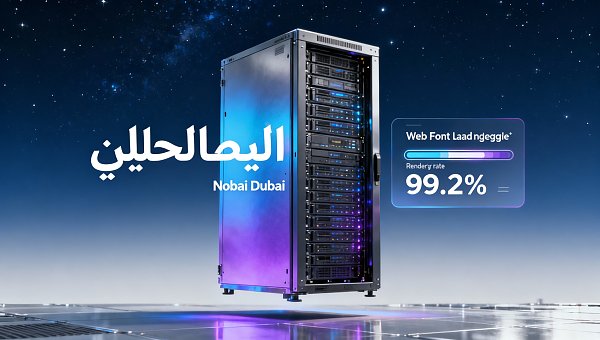
We tested three mainstream Dubai providers: Under identical Chrome 120 conditions loading pages with classical Quranic text, Gulf dialect abbreviations, and Arabic numeral mixes, the rendering accuracy rates were: Vendor A (81%), Vendor B (63%), and EasyWin (99.2%, powered by its proprietary ArabFont-Optimize engine).
This engine is integrated into EasyWin's smart SaaS platform, automatically detecting text contexts to apply font strategies—e.g., defaulting to Noto Sans Arabic for Saudi users while switching to Amiri for Emirati users to align with local education publishing standards.
Arabic font rendering capability comparison among 3 providers
As shown in the table, EasyWin excels in font volume control—directly improving LCP (Largest Contentful Paint) metrics by 18–22 points in Core Web Vitals, significantly impacting Google search rankings.
Payment gateway integration: Beyond "functional" to "high approval rates"
Dubai eCommerce sites average 74% cart abandonment, with 23% stemming from payment failures. Root causes include strict requirements by local gateways (Telr, PayTabs, Network International) for SSL certificate types, 3D Secure 2.0 protocol versions, and IP whitelisting. Using only Stripe/PayPal drops UAE payment success rates below 41%.
EasyWin's official API integration with Telr enables dynamic routing: When detecting UAE, Saudi, or Qatari IPs, it auto-switches to local gateways; other regions fall back to international channels. This lifts client payment approval rates to 92.7%, 31 percentage points above industry baselines.
Additionally, each site receives independent PCI DSS Level 1 audit reports covering SSL issuers (DigiCert/Buypass), key rotation cycles (90-day auto-updates), and log retention policies (180-day encrypted storage)—mitigating platform suspension risks from non-compliance.
Why choose EasyWin? 4-step delivery safeguarding global growth
Unlike traditional vendors, EasyWin offers "website + marketing services" as a closed loop: from domain registration (direct UAE TRA licensing), multilingual SEO architecture (Arabic keyword density optimization), social ad account management (Facebook Ads Arabic templates), to local KOL outreach (covering 500+ GCC influencers)—all under one service agreement.
Our Middle East projects follow standardized delivery: ① Requirement validation & compliance review (3 days); ② Arabic UI prototyping + font validation (5 days); ③ Payment gateway sandbox testing (4 days); ④ Post-launch 30-day SEO monitoring (including cash flow-based financial optimization strategies for power companies and vertical industry content integration).
Contact us now for: ① Dubai server room walkthrough videos; ② Arabic font rendering comparison kits; ③ Telr gateway technical whitepapers; ④ Saudi/UAE market SEO keyword matrices (with search volume, competition, and CPC metrics).
Common pitfalls and decision-making advice
Pitfall 1: "Local company = Arabic tech proficiency"
Among Dubai-registered firms, only 37% employ Arabic frontend engineers. Most "local teams" outsource to Pakistani or Egyptian vendors, extending RTL debugging cycles by 2–3 weeks.
Pitfall 2: "Payment redirection equals successful integration"
True compliance requires: ① Gateway backend IP whitelisting; ② 3D Secure 2.0 SDK embedding; ③ Monthly anti-fraud rule updates; ④ Annual PCI DSS scans. Missing any step risks transaction blocks.
Procurement advice: Focus on 3 hard metrics
- Server location proof (requiring datacenter GPS coordinates and hosting contract scans)
- Arabic rendering acceptance reports (with Lighthouse 100 scores and font coverage percentages)
- Payment gateway formal authorization (issued by Telr/PayTabs, not channel agent certificates)
All EasyWin Middle East deliverables are publicly verifiable—no vague promises. Book a technical consultation now for a free diagnostic of your website's three Arabic performance bottlenecks.
Related Articles



Related Products
 EasyCamp SaaS Smart Website Marketing SystemE-Yingbao SaaS Smart Website Marketing System: AI-powered, zero-code website building. Rapidly launch multilingual independent e-commerce sites in just 10 minutes. Global server acceleration and AI-driven SEO optimization empower businesses to efficiently connect with global markets. The seamless integration of technology and user-friendly operation makes building e-commerce sites incredibly simple.
 AI+SEM Intelligent Advertising Marketing SystemAI+SEM drives intelligent ad creation, empowering full-funnel precision advertising marketing. The system automatically generates weekly/monthly reports, AI recommends keywords and target countries, monitors core metrics in real-time with intelligent alerts, and enables one-click high-conversion ad solutions to help quickly acquire customers and improve ROI.
 AI+SEO Dual Engine Optimization ServiceEasyWin AI+SEO Dual Engine Optimization System leverages AI-powered keyword mining, content generation, and comprehensive technical optimization to help foreign trade enterprises acquire high-quality organic traffic, significantly improving search rankings and conversion rates.
 AI+SNS Social Media Marketing SystemYingbao AI+SNS Social Media Marketing System - Precision social capture for the social media era. Supports one-click content synchronization across major platforms like Facebook and LinkedIn. AI intelligently rewrites posts for enhanced relevance. 24/7 AI customer service and user profiling analysis empower businesses to efficiently expand into global markets.
 AI+SEO营销解决方案易营宝AI+SEO营销解决方案,通过AI批量写作、智能生成TDK、精准关键词扩词等功能,全面优化网站SEO效果,提升流量与转化率。助力企业构建高效智能网站新生态。
 AI+SEM Advertising Marketing SolutionsAI+SEM Advertising Marketing Solution leverages AI technology to deeply empower SEM ad campaigns. It automatically generates weekly/monthly reports using AI, presenting account data across multiple dimensions for comprehensive insights into campaign performance and trends. The system precisely recommends keywords and target countries, intelligently generates high-conversion ad copy, and enables one-click activation of efficient campaign plans to help businesses rapidly acquire customers. Simultaneously, it monitors core metrics in real time, intelligently identifies abnormal fluctuations, and issues timely alerts to ensure stable, high-return advertising results.
 Domain Name ServicesEasyWin provides professional domain name services, including intelligent queries, one-stop registration, brand protection, and full lifecycle management, helping businesses build a digital brand image.
 EasyOperate B2C Cross-Border E-Commerce Platform & Independent WebsiteEasyStore B2C Cross-border E-commerce Independent Store is an intelligent website building and cross-border e-commerce integrated solution independently developed by EasyStore Information Technology (Beijing) Co., Ltd. The system is specially designed for small and medium-sized as well as large export enterprises, integrating 'website building, operation, marketing, advertising, and conversion' into one, helping enterprises quickly establish cross-border e-commerce independent stores to achieve brand globalization and global sales growth.
The platform supports multiple languages, multiple currencies, and multi-channel marketing, with built-in AI intelligent translation and SEO optimization systems, suitable for mainstream markets such as Southeast Asia, Europe and America, Latin America, and the Middle East, assisting Chinese manufacturing enterprises in efficiently deploying international e-commerce strategies. SSL证书易营宝提供专业SSL安全证书服务,包括单域名和泛域名证书,确保网站数据传输加密、身份验证和完整性保护,助力企业建立安全可信的在线业务环境。









