









- What Does a Global Traffic Ecosystem Service Provider Do? What Are the Differences from a Single Advertising AgencyJul 16, 2026View details
- What should you focus on in the latest enterprise SaaS report? From renewal rates and delivery costs to overseas growth opportunitiesJul 12, 2026View details
- What signals are worth paying attention to in a cross-border marketing trend report? B2B companies should look at these 6 signalsJul 11, 2026View details
- How to Read a Cross-Border Marketing Trends Report? Five Key Dimensions for Evaluating Channel OpportunitiesJul 11, 2026View details
- Which channel has the highest ROI in the global traffic ecosystem? Comparative analysis of search, social media, and advertisingJul 10, 2026View details
- What multilingual website services are available in Sanya? Which model is more suitable for local businesses going global?Jul 08, 2026View details
- How to view the complete list of China SaaS companies in the top 100? Practical methods for screening website-building and marketing service providersJul 08, 2026View details
- How to view pricing in the global traffic ecosystem? Cost comparison of search, social media, and content channel advertisingJul 06, 2026View details
What pitfalls should you avoid in Arabic website building tutorials
An Arabic website building tutorial may seem simple, but in reality, what truly tends to go wrong is not “how to translate the page into Arabic,” but failing to get direction, layout, localization, SEO, and later-stage operation and maintenance right together. For businesses, if an Arabic website only completes language conversion but does not take into account Middle Eastern users’ reading habits, right-to-left layout, server access speed, form experience, and search indexing, it often results in poor traffic, few inquiries, and high maintenance costs after launch. This article will combine key issues such as how Middle East website building systems are used and how to choose Arabic website development, helping you systematically avoid pitfalls.
Start with the conclusion: the most common pitfall in Arabic website development is not “not knowing how to do it,” but “making it look like an English website”
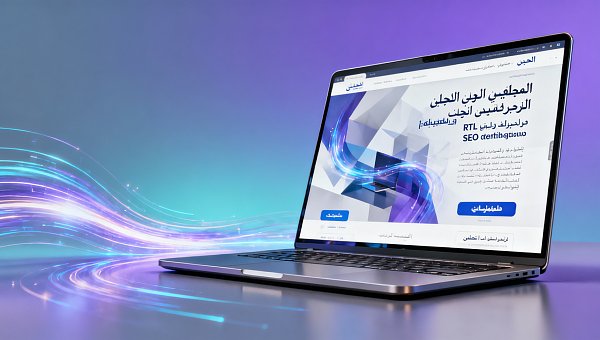
When many companies build an Arabic official website, their first reaction is: find someone to translate it, apply a template, and launch it. But what truly affects results are often the following key points:
- Treating Arabic as ordinary multilingual content without fully adapting to RTL (right-to-left) layout;
- Only translating the text without localization, making the content “understandable but not trustworthy”;
- Using themes or website building systems that are not compatible with Arabic typesetting, making later modifications extremely costly;
- Ignoring access speed in the Middle East, CDN, image resources, and mobile experience;
- Doing SEO only with English-site logic, without handling Arabic keywords, URL, tags, and site structure;
- Forms, phone numbers, WhatsApp, and inquiry paths that do not match local user habits;
- Lack of real-device testing before launch, resulting in page misalignment, mixed number formatting, and abnormal button directions.
If you are a business decision-maker, what you should focus on most is “whether the website can truly bring customers from the Middle Eastern market”; if you are a technical evaluator or maintenance staff member, the core issue is “whether the system is scalable, easy to maintain, and requires minimal rework.” Therefore, what an Arabic website building tutorial should really teach is the logic of avoiding pitfalls, not just operational steps.
The first major pitfall: ignoring RTL right-to-left layout, making the page look unprofessional as soon as it goes live
The biggest structural difference between Arabic websites and Chinese or English websites is not the font, but the reading direction. Arabic naturally uses a right-to-left reading logic, which directly affects:
- The position of the navigation bar and its expansion direction;
- Banner copy arrangement;
- The direction of buttons, arrows, pagers, and carousel switching;
- The input order of forms and the position of prompt messages;
- Image-text modules, cards, margins, and alignment methods;
- The mixed display effect of numbers, dates, currencies, and phone numbers.
Many companies forcibly adapt existing templates for Arabic. On the surface, the text can be displayed, but in fact the visual order of the whole page is wrong. Users will be very sensitive to noticing that this is not “a website prepared for me,” thereby affecting dwell time and inquiry conversion.
To judge whether a system is suitable for Arabic website development, you can focus on the following points:
- Whether it natively supports RTL rather than relying on temporary CSS overrides;
- Whether the theme components fully support right-to-left layout;
- Whether the backend editor can stably handle Arabic text;
- Whether it supports flexible switching among Chinese, English, and Arabic;
- Whether mobile menus, pop-ups, and buttons are adapted synchronously.
This is also the real question many people want answered when searching “how to use a Middle East website building system”: it is not whether a site can be built, but whether the system is suitable for Arabic scenarios from the underlying level.
The second major pitfall: doing only translation without localization, making the content look like “machine-stitched text”
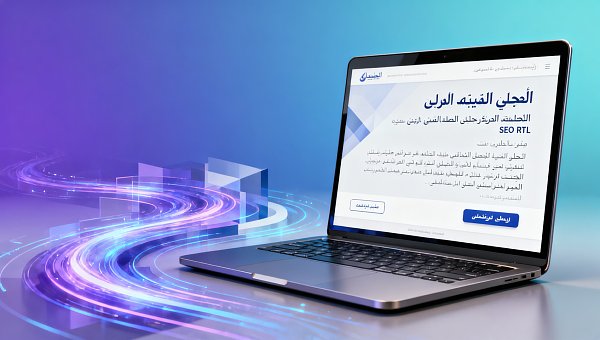
When deciding how to choose Arabic website development, many times the first thing is not choosing the technology, but reviewing the content strategy. This is because Middle Eastern users have clear differences in expression style, trust elements, business wording, and communication methods.
Common problems include:
- Directly machine-translating Chinese copy into Arabic, resulting in stiff terminology;
- Keeping selling-point messaging in a China-market mindset, lacking value points that local users care about;
- Displaying cases, qualifications, and contact methods in ways that do not fit the habits of the target region;
- Product descriptions that are too long but lack clear call-to-action buttons;
- Failing to include regional trust signals, such as service experience, export capability, and delivery assurance.
Truly effective Arabic website content should at least achieve “three layers of localization”:
- Language localization: not literal translation, but language that fits Arabic business contexts;
- Information localization: highlighting what Middle Eastern customers truly care about, such as price, lead time, certifications, payment, and after-sales service;
- Conversion localization: adding high-frequency contact entry points such as WhatsApp, phone, forms, and instant consultation.
If your business also involves servers in mainland China, brand official websites, or subsequent domestic business coordination, then compliance issues should also be considered simultaneously. For example, when some companies build multilingual sites, they may plan domestic and overseas sites at the same time. In such cases, services like Domestic ICP filing service number can help companies avoid detours in website filing, material pre-review, information submission, and audit coordination, preventing subsequent compliance issues from affecting website deployment and operational rhythm.
The third major pitfall: choosing the wrong website building system, saving money upfront but paying more for rework later
Many companies focus only on price at the initial stage of Arabic website development, but what they ultimately lose on is long-term cost. This is because an Arabic website is not a simple copy of a standard foreign trade site; system selection directly affects future content expansion, SEO optimization, feature integration, and maintenance efficiency.
During technical evaluation, it is recommended to focus on the following dimensions:
- Multilingual management capability: whether it supports independent maintenance of language versions instead of forcibly switching one set of content;
- SEO configurability: whether title, description, URL, custom tags, and sitemap can be set independently;
- Component compatibility: whether carousels, forms, filters, and article systems support Arabic directionality;
- Performance: whether image compression, caching, CDN, and mobile loading speed meet standards;
- Maintenance threshold: whether operations staff can update content later at low cost and get started easily;
- Security and stability: whether it has continuous upgrade capability to avoid frequent vulnerabilities later.
If a company plans to do SEO, social media promotion, and advertising in the future, then the website cannot be just a “display page” but should become part of a complete marketing chain. A system that supports content accumulation, lead collection, behavior analytics, and page testing is far more valuable than a low-cost template site.
The fourth major pitfall: doing Arabic SEO with English-site logic, resulting in unsatisfactory indexing and traffic
Users searching for “Arabic website building tutorial” often do not just want to get a website online, but hope it can be found in the future. SEO is the most easily underestimated part of Arabic websites.
Common mistakes include:
- Keyword research still based mainly on direct Chinese translation or English habits;
- Titles and descriptions written in ways that do not match Arabic search expressions;
- Chaotic URL structure, with multilingual versions interfering with each other;
- Not setting hreflang or multilingual correspondence relationships;
- Article pages, product pages, and category pages lacking clear keyword hierarchy;
- Focusing only on the homepage while ignoring long-tail keyword布局.
A more practical approach is:
- First clarify whether the target market is the Gulf countries, North Africa, or the broader Arabic-speaking region;
- Break down keywords by user intent: brand terms, product terms, procurement terms, solution terms, and tutorial terms;
- Let each type of page承担 different indexing tasks, rather than putting all keywords on the homepage;
- Optimize titles, descriptions, internal links, and FAQ separately for Arabic content;
- Optimize mobile experience and page speed together, because this directly affects bounce rate.
For business decision-makers, it is especially important to be alert to pseudo-multilingual websites that “appear to have Arabic pages, but actually have no Arabic search capability.”
The fifth major pitfall: ignoring Middle Eastern user access experience, so the website opens but is not easy to use
Many websites seem fine in China or in a testing environment, but when target users access them, problems such as slow loading, delayed image loading, abnormal fonts, and video lag occur. These issues directly weaken conversion.
For website experience optimization in the Middle Eastern market, it is recommended to focus on:
- Server deployment location and CDN coverage;
- Font compatibility, avoiding broken Arabic display or imbalanced font weight;
- Mobile first-screen speed, since a large number of users mainly access via mobile phones;
- Whether contact entry points are prominent, especially WhatsApp;
- Whether inquiry forms are concise, avoiding too many fields;
- Whether images and visual elements align with local business aesthetics.
For after-sales maintenance personnel, it is best to establish a pre-launch checklist, including: different browser testing, Android and iPhone real-device testing, RTL component testing, form submission testing, link redirection testing, and search crawl testing. This is more cost-effective than passively fixing issues after launch.
The sixth major pitfall: not working backward from business goals to design website structure, leading to “a website with no conversion”
When companies build Arabic websites, the ultimate goal is usually not display, but customer acquisition, distributor recruitment, brand endorsement, or channel cooperation. If the goals are not clearly broken down at the beginning, the website structure can easily lose focus.
Different goals correspond to different website priorities:
- Foreign trade customer acquisition type: the focus is on product pages, solution pages, inquiry entry points, and SEO content pages;
- Brand showcase type: the focus is on company strength, case studies, qualifications, and global service network;
- Distributor recruitment type: the focus is on cooperation policies, market support, agency processes, and contact methods;
- After-sales service type: the focus is on FAQ, download center, service outlets, and ticket support.
So when deciding “how to choose Arabic website development,” do not just ask the supplier “can you do Arabic,” but also ask:
- Whether they understand our target market and customer sources;
- Whether they can plan page structure based on business goals;
- Whether they can balance website building, SEO, marketing conversion, and later maintenance;
- Whether they have cross-language and multi-region project experience;
- Whether they have ongoing service capability when issues such as content updates, filing, migration, and integration arise.
If a company also needs synchronized construction of domestic sites, or needs to handle website filing information changes, access migration, annual review, and other matters, related support can also be planned in advance to avoid management complexity when the site matrix expands. Supporting services like Domestic ICP filing service number essentially solve the long-term compliance and operations connection issues companies face after website construction.
How to judge whether an Arabic website solution is reliable: a practical checklist for companies
If you are screening service providers or evaluating internal implementation plans, you can directly use the following checklist to assess them:
- Whether it natively supports Arabic and RTL layout;
- Whether it has localized content planning capability for the Middle Eastern market;
- Whether it can provide an Arabic SEO foundational architecture;
- Whether it follows a mobile-first design approach;
- Whether it values access speed and overseas opening stability;
- Whether it can configure conversion entry points such as forms, WhatsApp, and phone;
- Whether it is convenient for subsequent content updates and multilingual maintenance;
- Whether it can balance marketing, technology, compliance, and later-stage services.
The value of this checklist lies in helping researchers avoid judging only by surface-level case studies, while also helping decision-makers more quickly identify solutions that are “low-cost but unsustainable.”
Summary: in Arabic website development, what really needs to be avoided is not small issues, but systemic mistakes
If an Arabic website building tutorial stays only at the operational level, it often cannot solve the core problems businesses face. The pitfalls that truly need to be avoided are concentrated in four things: wrong direction, unsuitable system, insufficient localization, and missing SEO and conversion chain.
Simply put, an effective Arabic website is not a “translated official website,” but a website whose experience, content, and marketing logic have been reorganized for Middle Eastern users. For companies, the earlier they consider layout adaptation, localized expression, system selection, search optimization, and later maintenance together, the more they can reduce rework and increase the probability that the website will truly drive business growth.
If you are evaluating how to use a Middle East website building system, or are struggling with how to choose Arabic website development, the most practical way of thinking is not to first ask “how much does one cost,” but to first confirm whether this website can be found, trusted, inquired about, and continuously operated in the future. Only by achieving these points can you truly be considered to have avoided the major pitfalls.
Related Articles
 Attention! Builders' must-see: Yibingbao AI components updated, design efficiency directly doubled!
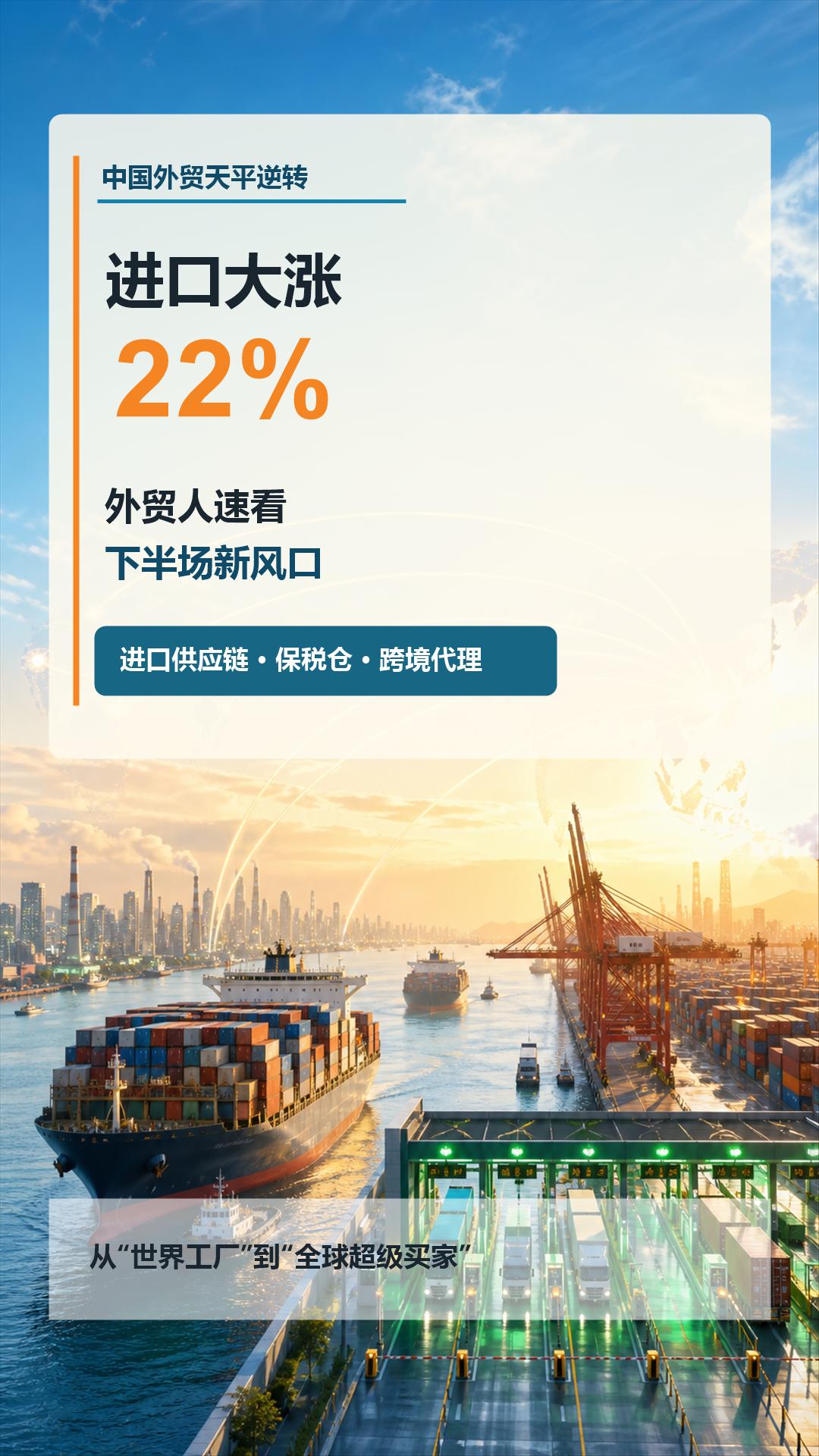
 China's foreign trade sees a turnaround: imports surge by 22%! Foreign trade professionals should quickly take note of the new trends in the second half of the year
 What Does a Global Traffic Ecosystem Service Provider Do? What Are the Differences from a Single Advertising Agency

Related Products
 EasyCamp SaaS Smart Website Marketing SystemE-Yingbao SaaS Smart Website Marketing System: AI-powered, zero-code website building. Rapidly launch multilingual independent e-commerce sites in just 10 minutes. Global server acceleration and AI-driven SEO optimization empower businesses to efficiently connect with global markets. The seamless integration of technology and user-friendly operation makes building e-commerce sites incredibly simple.
 AI+SEM Intelligent Advertising Marketing SystemAI+SEM drives intelligent ad creation, empowering full-funnel precision advertising marketing. The system automatically generates weekly/monthly reports, AI recommends keywords and target countries, monitors core metrics in real-time with intelligent alerts, and enables one-click high-conversion ad solutions to help quickly acquire customers and improve ROI.
 AI+SEO Dual Engine Optimization ServiceEasyWin AI+SEO Dual Engine Optimization System leverages AI-powered keyword mining, content generation, and comprehensive technical optimization to help foreign trade enterprises acquire high-quality organic traffic, significantly improving search rankings and conversion rates.
 AI+SNS Social Media Marketing SystemYingbao AI+SNS Social Media Marketing System - Precision social capture for the social media era. Supports one-click content synchronization across major platforms like Facebook and LinkedIn. AI intelligently rewrites posts for enhanced relevance. 24/7 AI customer service and user profiling analysis empower businesses to efficiently expand into global markets.
 AI+SEO营销解决方案易营宝AI+SEO营销解决方案,通过AI批量写作、智能生成TDK、精准关键词扩词等功能,全面优化网站SEO效果,提升流量与转化率。助力企业构建高效智能网站新生态。
 AI+SEM Advertising Marketing SolutionsAI+SEM Advertising Marketing Solution leverages AI technology to deeply empower SEM ad campaigns. It automatically generates weekly/monthly reports using AI, presenting account data across multiple dimensions for comprehensive insights into campaign performance and trends. The system precisely recommends keywords and target countries, intelligently generates high-conversion ad copy, and enables one-click activation of efficient campaign plans to help businesses rapidly acquire customers. Simultaneously, it monitors core metrics in real time, intelligently identifies abnormal fluctuations, and issues timely alerts to ensure stable, high-return advertising results.
 Domain Name ServicesEasyWin provides professional domain name services, including intelligent queries, one-stop registration, brand protection, and full lifecycle management, helping businesses build a digital brand image.
 EasyOperate B2C Cross-Border E-Commerce Platform & Independent WebsiteEasyStore B2C Cross-border E-commerce Independent Store is an intelligent website building and cross-border e-commerce integrated solution independently developed by EasyStore Information Technology (Beijing) Co., Ltd. The system is specially designed for small and medium-sized as well as large export enterprises, integrating 'website building, operation, marketing, advertising, and conversion' into one, helping enterprises quickly establish cross-border e-commerce independent stores to achieve brand globalization and global sales growth.
The platform supports multiple languages, multiple currencies, and multi-channel marketing, with built-in AI intelligent translation and SEO optimization systems, suitable for mainstream markets such as Southeast Asia, Europe and America, Latin America, and the Middle East, assisting Chinese manufacturing enterprises in efficiently deploying international e-commerce strategies. SSL证书易营宝提供专业SSL安全证书服务,包括单域名和泛域名证书,确保网站数据传输加密、身份验证和完整性保护,助力企业建立安全可信的在线业务环境。









