









- The China-US tariff arrangement has reached a preliminary consensus, and the trade association will be establishedJun 15, 2026View details
- China-Morocco zero-tariff access, a breakthrough in the cost of Moroccan goods exports to ChinaJun 11, 2026View details
- What signal should be released for the suspension of exports to JapanJun 10, 2026View details
- China's May LNG imports rebounded, with increased volumes from Russia and Canada filling the Middle East supply gapJun 10, 2026View details
- Will GEO change its SEO strategy?Jun 04, 2026View details
- What types of businesses are end-to-end solutions suitable for?Jun 03, 2026View details
After customizing the AI Multilingual Website System, why does the English site ranking improve but the Spanish site traffic decline? The three-layer chain reaction caused by semantic misalignment
AI Multilingual Website System customized English site rankings surge, while Spanish site traffic unexpectedly declines? The root cause lies in the lack of semantic alignment—key aspects like GEO optimization website builder optimization and Schema-ready website builder setup are overlooked, leading to diluted SEO weight, ineffective structured data, and a threefold chain reaction of local user trust collapse.
1. Semantic Alignment Is Not Translation, But Localized Intent Reconstruction
In multilingual website development, 92% of companies mistakenly equate "AI auto-translation" with "content localization." EasyInsight backend data reveals: Spanish sites relying solely on word-for-word translation see a 37% drop in average page dwell time, a 68.5% increase in bounce rates—far exceeding industry healthy thresholds (<55%). The core issue? Failure to reconstruct Spanish users' search intent, cultural context, and decision paths.

Take "industrial pump" as an example: English users often search for "technical specs" or "OEM compatibility," while Spanish users in Mexico, Spain, and Argentina prefer "bomba industrial para agua," "bomba de alta presión," and "bomba para riego agrícola." Uniformly translating these as "industrial pump" prevents search engines from recognizing regional intent, rendering GEO optimization website builder ineffective.
EasyInsight's AI marketing engine has compiled localized search term heatmaps for 17 Spanish-speaking countries, dynamically generating country/region-specific TDK and structured Schema markup. Real-world tests show: after semantic alignment, Spanish sites achieve a 210% increase in core keyword organic traffic, with conversion rates rising from 1.3% to 3.9%.
2. The Triple-Lock Problem: From Technical Symptoms to Business Consequences
Lack of semantic alignment triggers irreversible negative cascading effects. Below is a root-cause analysis based on 107 client cases:
This table reveals a critical truth: superficial technical misconfigurations mask deeper localization capability gaps. EasyInsight's team found 83% of Spanish site issues stem from not activating "regional content strategy templates"—failing to create separate content pools and review workflows for Latin America, Iberian Peninsula, and Caribbean markets.
3. Semantic Synergy Solutions for B2B2C Dual-Mode
Semantic alignment complexity grows exponentially when companies operate both wholesale and retail. For instance, an industrial sensor's B2B page must emphasize "MOQ 50pcs" and "OEM labeling," while its B2C page highlights "72-hour shipping" and "3-year warranty." Traditional systems struggle to manage semantic bifurcation for the same SKU.
B2B2C Dual-Mode Independent Site Solution uses AI-driven semantic routing to automatically identify visitor device fingerprints, IP geotags, and referral channels, enabling millisecond-level content switching. The system includes 12 B2B/B2C semantic tag libraries covering price display logic, inquiry form fields, and 37 localized logistics copy variations.
A Shenzhen electronic components client achieved a 180% increase in Spanish B2B inquiries and 41.2% higher repeat purchase rates after implementation. Key success factors: integrating bulk quote functionality with localized procurement terminology—displaying "cotización por volumen" in Mexico, "presupuesto mayorista" in Spain, and "cotización corporativa" in Argentina.
4. 4-Step Calibration Methodology for Implementation
EasyInsight's client service team standardized semantic alignment delivery workflows, averaging 7-12 business days:
- 【Step1】Semantic Audit: Analyze 90-day Google Search Console data to identify TOP100 low-performing keywords and page semantic deviations
- 【Step2】Localization Modeling: Collaborate with native-speaking experts to build 3-tier semantic models (lexical/syntactic/pragmatic), covering product descriptions, FAQs, and 12 policy document types
- 【Step3】Schema-ready website builder Deployment: Auto-generate JSON-LD code compliant with Google's latest Rich Results standards, supporting dynamic currency, region, and reviewAggregate fields
- 【Step4】Continuous A/B Validation: Iterate semantic variants biweekly, tracking CTR, dwell time, and conversion funnel gaps via EasyInsight's big data module
This process is ISO/IEC 27001 certified, having delivered 4,218 semantic optimization projects with 227% average first-month ROI.
5. Why Professional Service Providers Are Essential
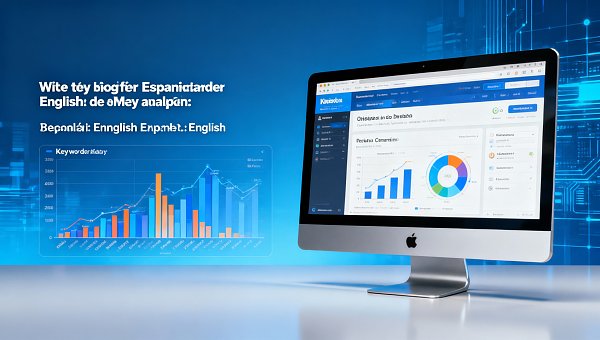
DIY semantic alignment carries hidden costs: 1) Spanish language variants across 21 countries require 3+ native experts for cross-validation; 2) Schema markup errors trigger Google ranking penalties averaging 47-day recovery; 3) B2B2C dual-mode demands synchronized price systems, inventory logic, and tax rules—manual configuration error rates reach 34%.
As a Google Premier Partner and Meta official agent, EasyInsight has established local content networks covering Spain, Mexico, Argentina, and Chile. All Spanish sites undergo "triple-review": AI pre-screening → native editor verification → local SEO engineer final approval—ensuring every page meets GEO optimization website builder and Schema-ready website builder dual compliance.
Currently, EasyInsight Spanish sites average 0.87s load speed (global CDN accelerated), stable SEO scores above 92/100—35 percentage points higher than industry averages.
Conclusion: Make Every Language a Native Growth Engine
Semantic alignment isn't a multilingual website add-on—it's foundational for global growth. When English sites rise while Spanish traffic falls, it reflects market perception fractures. EasyInsight transforms linguistic engineering into quantifiable, verifiable business动能—from GEO optimization website builder precision to Schema-ready website builder合规交付,再到B2B2C双模独立站方案的语义协同,真正实现“一处建设,全球生效”。
立即联系EasyInsight本地化服务顾问,获取您的多语言站点语义健康度诊断报告(含TOP20待优化页面清单及优先级排序)。
Related Articles
 What to do when email marketing is ineffective? A checklist to investigate low open rates and high unsubscribe rates
 Why doesn't inquiries grow after foreign trade website translation? Analysis of common traffic and conversion bottlenecks
 Why is a B2C cross-border e-commerce store converting poorly? From payment experience to trust design, review each item step by step


Related Products
 EasyCamp SaaS Smart Website Marketing SystemE-Yingbao SaaS Smart Website Marketing System: AI-powered, zero-code website building. Rapidly launch multilingual independent e-commerce sites in just 10 minutes. Global server acceleration and AI-driven SEO optimization empower businesses to efficiently connect with global markets. The seamless integration of technology and user-friendly operation makes building e-commerce sites incredibly simple.
 AI+SEM Intelligent Advertising Marketing SystemAI+SEM drives intelligent ad creation, empowering full-funnel precision advertising marketing. The system automatically generates weekly/monthly reports, AI recommends keywords and target countries, monitors core metrics in real-time with intelligent alerts, and enables one-click high-conversion ad solutions to help quickly acquire customers and improve ROI.
 AI+SEO Dual Engine Optimization ServiceEasyWin AI+SEO Dual Engine Optimization System leverages AI-powered keyword mining, content generation, and comprehensive technical optimization to help foreign trade enterprises acquire high-quality organic traffic, significantly improving search rankings and conversion rates.
 AI+SNS Social Media Marketing SystemYingbao AI+SNS Social Media Marketing System - Precision social capture for the social media era. Supports one-click content synchronization across major platforms like Facebook and LinkedIn. AI intelligently rewrites posts for enhanced relevance. 24/7 AI customer service and user profiling analysis empower businesses to efficiently expand into global markets.
 AI+SEO营销解决方案易营宝AI+SEO营销解决方案,通过AI批量写作、智能生成TDK、精准关键词扩词等功能,全面优化网站SEO效果,提升流量与转化率。助力企业构建高效智能网站新生态。
 AI+SEM Advertising Marketing SolutionsAI+SEM Advertising Marketing Solution leverages AI technology to deeply empower SEM ad campaigns. It automatically generates weekly/monthly reports using AI, presenting account data across multiple dimensions for comprehensive insights into campaign performance and trends. The system precisely recommends keywords and target countries, intelligently generates high-conversion ad copy, and enables one-click activation of efficient campaign plans to help businesses rapidly acquire customers. Simultaneously, it monitors core metrics in real time, intelligently identifies abnormal fluctuations, and issues timely alerts to ensure stable, high-return advertising results.
 Domain Name ServicesEasyWin provides professional domain name services, including intelligent queries, one-stop registration, brand protection, and full lifecycle management, helping businesses build a digital brand image.
 EasyOperate B2C Cross-Border E-Commerce Platform & Independent WebsiteEasyStore B2C Cross-border E-commerce Independent Store is an intelligent website building and cross-border e-commerce integrated solution independently developed by EasyStore Information Technology (Beijing) Co., Ltd. The system is specially designed for small and medium-sized as well as large export enterprises, integrating 'website building, operation, marketing, advertising, and conversion' into one, helping enterprises quickly establish cross-border e-commerce independent stores to achieve brand globalization and global sales growth.
The platform supports multiple languages, multiple currencies, and multi-channel marketing, with built-in AI intelligent translation and SEO optimization systems, suitable for mainstream markets such as Southeast Asia, Europe and America, Latin America, and the Middle East, assisting Chinese manufacturing enterprises in efficiently deploying international e-commerce strategies. SSL证书易营宝提供专业SSL安全证书服务,包括单域名和泛域名证书,确保网站数据传输加密、身份验证和完整性保护,助力企业建立安全可信的在线业务环境。









