- Does EasyAd's advertising performance have guarantees? How does the service mechanism work?2026-01-18View details
- Is the cost of using AI advertising smart manager high? How to calculate the budget more reasonably2026-01-18View details
- How to implement multilingual advertising optimization solutions in the general internet industry2026-01-18View details
- Is EasyAd AI Advertising Smart Manager easy to use? Is it suitable for general internet service companies?2026-01-19View details
- Which company provides the best multilingual website construction services for foreign trade? How should companies of different scales choose suppliers2026-01-17View details
- What is the role of HTTPS for websites? Why is the decision-making level increasingly emphasizing digital trust systems2026-01-15View details
- What is Global CDN Acceleration? Key Considerations for Enterprise Selection from Architecture to Cost2026-01-16View details
- What are the low-cost customer acquisition solutions suitable for SMEs? The practical path of integrating search and social media2026-01-17View details
Multilingual Website Tutorial: Enterprise-Level Project from Requirements to Go-Live Workflow
Multilingual Website Tutorial: A Practical Guide to Yishengbao's All-in-One Website Platform, Covering Requirements Analysis, Architecture Design, Search Engine Optimization, and Full Workflow to Help Businesses Achieve Global Localization.
In the context of accelerating global competition and digital transformation, businesses face multiple challenges when expanding overseas, including language barriers, compliance, performance, and traffic efficiency. This article targets market researchers, project managers, operations and security personnel, and business decision-makers, focusing on the practical workflow of multilingual website projects from requirements to launch. It combines enterprise-level SaaS website platforms and AI tools to provide actionable steps, key checkpoints, and risk control recommendations.
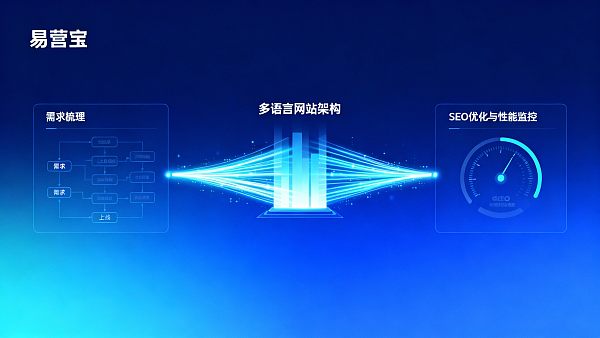
The article also addresses SEO and conversion optimization, covering keyword strategies, page structure design, content localization, and performance acceleration. It helps readers build multilingual marketing systems and automated website construction systems while ensuring technical reliability, improving search engine friendliness, and enhancing final commercial conversion capabilities. The practical methods used in this article have been validated in localization projects across manufacturing, e-commerce, and education sectors, making it suitable as a reference manual for enterprise-level project management and vendor evaluation.
Step 1: Requirements Analysis and Market Positioning to Establish Quantifiable Project Goals
Clear goal definition and boundary setting in the project initiation phase determine subsequent implementation efficiency. First, complete target market and audience profiling, including regional language preferences, search behavior, competitor analysis, and compliance requirements. It is recommended to create a one-page requirements matrix listing target languages, core business paths, key conversion indicators (KPIs), compliance and privacy requirements, and payment/logistics integration details. Next, conduct a baseline SEO assessment: collect primary keywords from the target market and analyze search volume and competition to identify the first batch of landing pages and information architecture. For technical assessments, confirm server deployment (domestic/overseas/hybrid), CDN node distribution, and SSL automation strategies to ensure quantifiable improvements in website speed and performance optimization. The final deliverables should include a requirements document, milestone plan, and acceptance criteria, ensuring each delivery node in the architecture and development phases has clear metrics to reduce rework and cross-team communication costs.
Step 2: Architecture Design and Multilingual Implementation Strategy to Ensure Scalability and Localization Balance
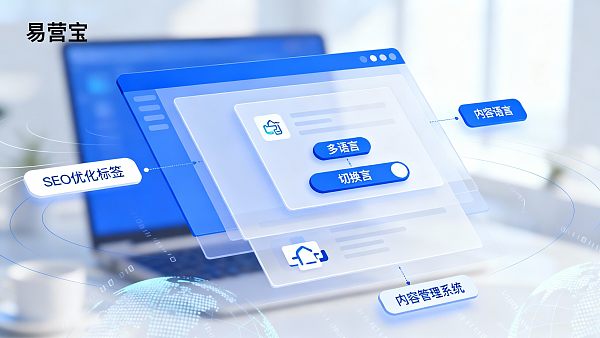
At the architecture level, balance global coverage and localized experiences. Consider domain strategies (ccTLD, subdomains, or subdirectories) after preliminary evaluation, and make final choices based on server distribution, DNS load balancing, and SEO impact. Three common multilingual solutions exist: standalone sites (separate deployments per language), multilingual sites (single site with multiple languages), and hybrid mechanisms. For enterprise projects, we recommend SaaS-based multilingual automated website construction systems for template reuse, unified updates, and accelerated iteration. Design URL rules for language switching and hreflang tags to avoid duplicate content and crawler confusion. The architecture should also include caching strategies, image and multimedia optimization, lazy loading, and mobile-first solutions, combined with global CDN and edge nodes to optimize page load times, thereby improving SEO scores and user experience.
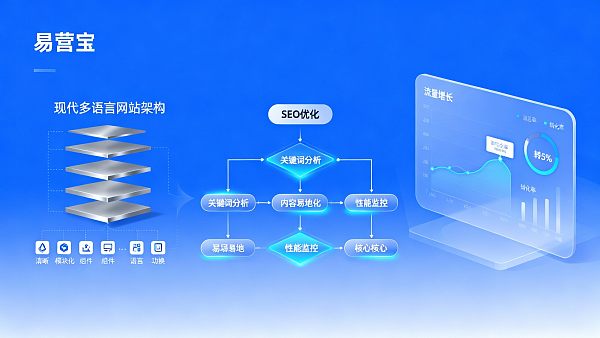
Step 3: Content Strategy and SEO Execution Process, Integrating AI Tools to Enhance Scale and Quality
Content is the core of multilingual websites. A replicable content workflow should include keyword research, topic planning, TDK (Title/Description/Keywords) writing, page copywriting, and structured data output. Leverage AI for batch writing and intelligent TDK generation to accelerate multilingual content production and A/B testing while ensuring semantic accuracy and localized style. Practical implementation should involve native-language proofreaders collaborating with AI-generated content to avoid cultural misalignment from pure machine translation. Technically, provide standardized meta settings, schema markup, breadcrumbs, and sitemaps for each page, with server-side language-switching logic that is crawler-friendly. Integrating AI-powered ad platforms and social media automation can create a traffic loop: use AI tools to identify long-tail opportunities through improved SEO rankings, then apply high-potential keywords to ad campaigns, balancing traffic acquisition and cost control.
Step 4: Performance, Security, and Launch Validation to Build Enterprise-Grade Reliable Delivery Capabilities
Pre-launch performance and security checks cannot be simplified. Performance testing includes page response time, Time to First Byte (TTFB), Largest Contentful Paint (LCP), and concurrent stress tests to evaluate CDN and backend resilience. Security requires automated SSL deployment, WAF rules, DDoS protection, and data access audits to ensure compliance and business continuity. Establish automated dashboards to monitor SEO metric fluctuations, traffic sources, and conversion paths for rapid post-launch rollbacks or optimizations. Adopt a phased release model, starting with test environments and select regions/countries, collecting real user behavior data before full rollout to minimize risks. When collaborating with vendors, define clear SLAs and operational response mechanisms to ensure quick issue resolution.
Conclusion and Action Guide: Closing the Loop from Technology to Market Localization
In summary, multilingual websites are not just technical implementations but systematic projects combining market and content strategies. Through rigorous requirements analysis, scalable architecture design, data-driven content and SEO execution, and thorough performance and security validation, businesses can build globally compliant websites that balance search engine rules with localized conversion capabilities. In practice, integrated AI+SEO marketing toolchains significantly improve efficiency and reduce labor costs—for example, using AI-powered batch writing, intelligent TDK generation, and keyword expansion solutions to achieve scalable content production and continuous optimization. To explore complete enterprise solutions or conduct competitive product analysis, evaluate our AI+SEO marketing solutions or contact project consultants for free technical consultations. Reach out now for customized multilingual website assessments and implementation roadmaps to help your brand grow steadily in global markets.
- Website construction
- Platform
- SSL Certificate
- SEO Ranking
- Search Engine Optimization
- Campbell (name)
- SEO
- Independent site
- Social Media Automation
- Multilingual Website Tutorial
- Multilingual Website
- Multilingual automated website construction system
- AI tools to improve website SEO ranking
- SaaS Website Platform
- Multilingual Marketing System
- AI Advertising Platform
- Website Acceleration and Performance Optimization
Related Articles


Related Products
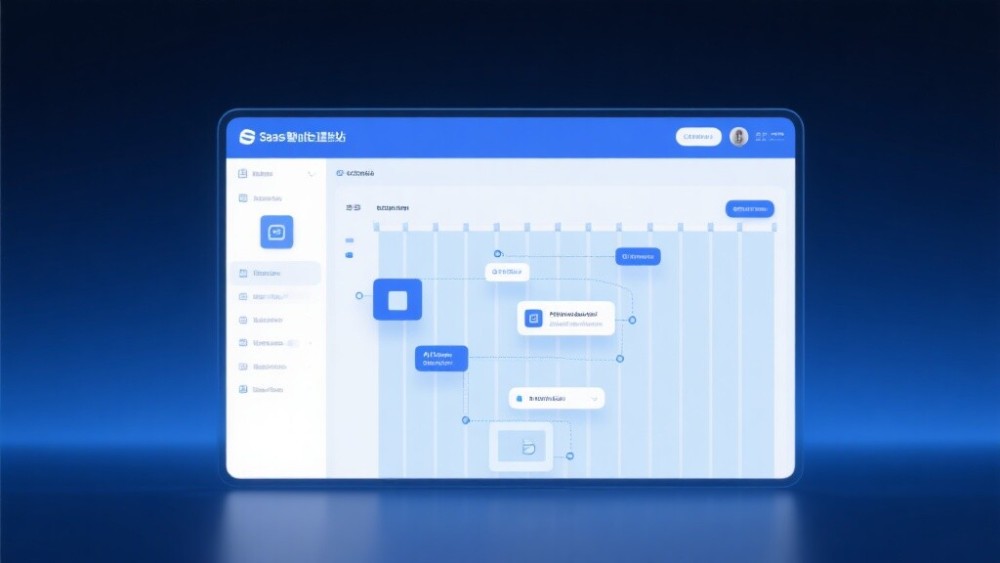
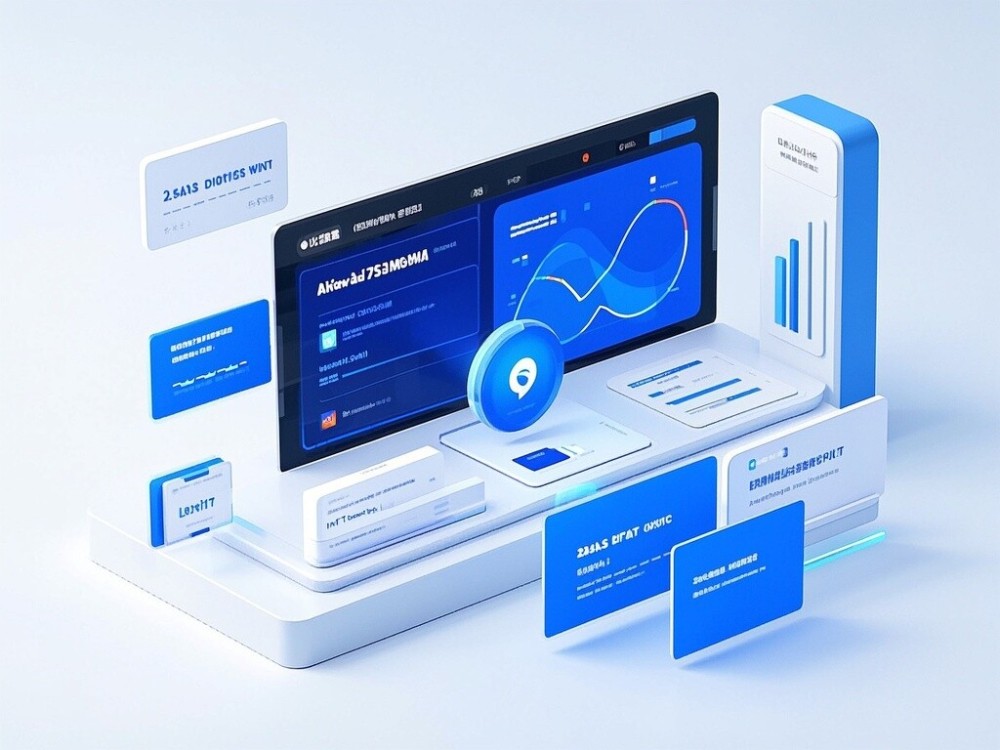
 EasyStore SaaS Intelligent Website Marketing SystemEasyStore SaaS Intelligent Website Marketing System, AI-driven zero-code website building, rapidly set up multilingual foreign trade independent sites in just 10 minutes, global server acceleration, AI-powered SEO optimization, helping businesses efficiently connect with global markets. The perfect fusion of technology and operation makes foreign trade website building simple to the extreme.
 AI+SEM Intelligent Advertising Marketing SystemAI+SEM drives intelligent campaign creation, empowering full-funnel precision advertising marketing. The system automatically generates weekly/monthly reports, AI-recommends keywords and target countries, monitors core metrics in real-time with intelligent alerts, and enables one-click high-conversion campaign launches to accelerate lead acquisition and boost ROI.
 AI+SEO Dual-Engine System Optimization ServiceE-Yingbao AI+SEO Dual-Engine Optimization System leverages AI-powered keyword mining, content generation, and comprehensive technical optimization to help export-oriented enterprises capture high-quality organic traffic, significantly boosting search rankings and conversion rates.
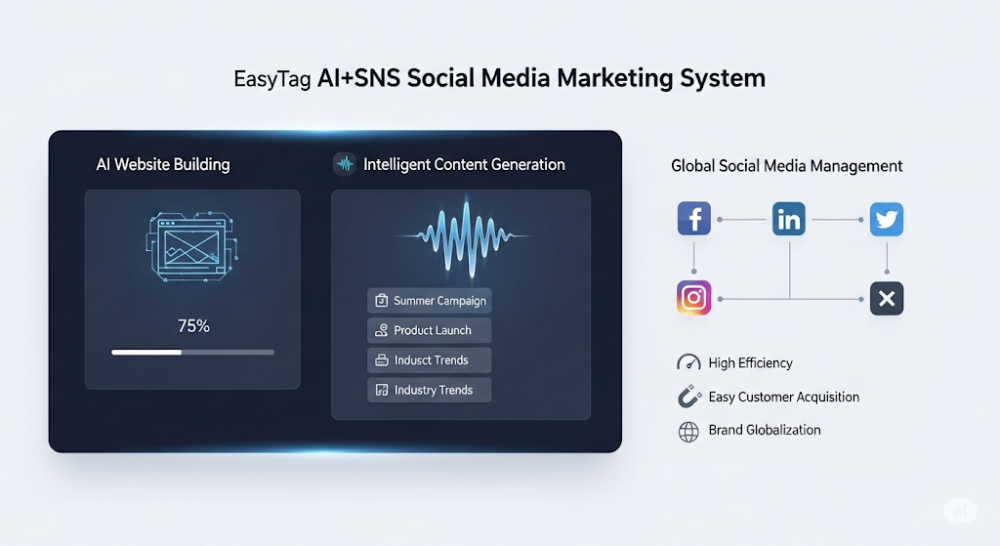
 AI + SNS Social Media Full Intelligence Marketing SystemEYBao AI+SNS Social Media All Intelligent Marketing System - Precise social capture in the era of social media, supporting one-click synchronization of content on mainstream platforms such as Facebook, LinkedIn, etc., AI intelligent rewriting of postings to enhance the degree of adaptability, 24/7 intelligent customer service and user profile analysis, helping enterprises to efficiently expand the global market.
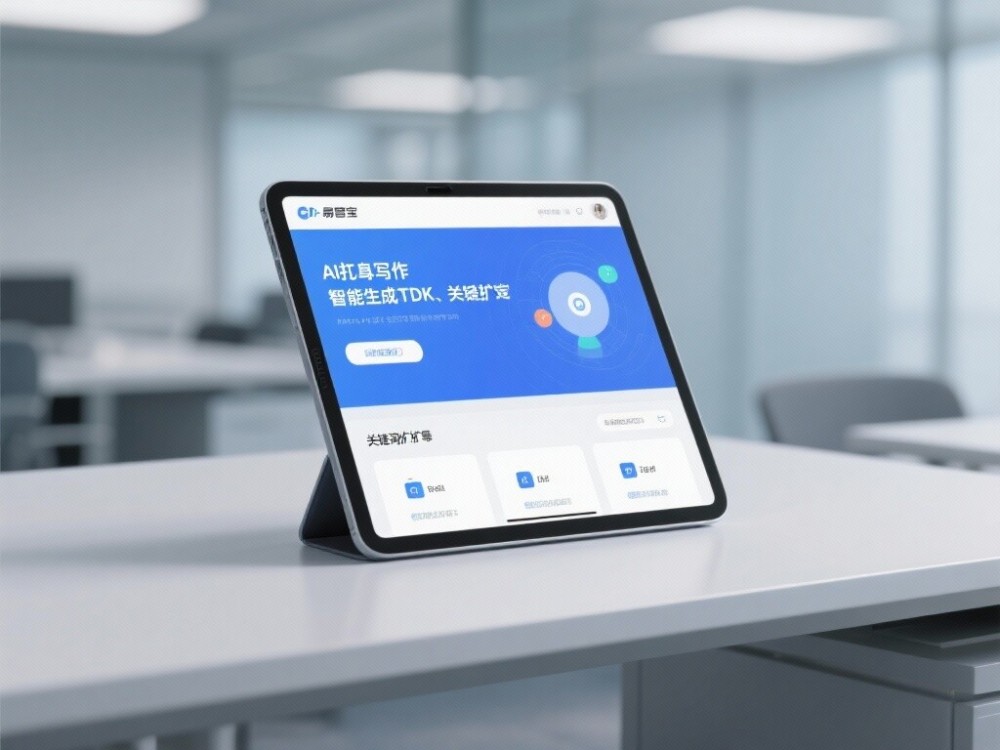
 AI+SEO Marketing SolutionEasyWin AI+SEO Marketing Solution leverages AI-powered batch content creation, intelligent TDK generation, and precise keyword expansion to comprehensively optimize website SEO performance, boosting traffic and conversion rates. Helps businesses build a highly efficient intelligent website ecosystem.
 AI+SEM Advertising & Marketing SolutionsAI+SEM advertising and marketing solution utilizes AI intelligent technology to deeply empower SEM advertising. Through AI intelligent generation of weekly/monthly reports, multi-dimensional presentation of account data, a comprehensive grasp of the effectiveness and trends of advertising, AI precise recommendation of keywords and countries, intelligent generation of high-conversion advertisement language, a key to start the efficient advertising program, helping enterprises to quickly acquire customers. At the same time, the system monitors the core indicators in real time, intelligently recognizes fluctuation abnormalities and warns them in time to ensure stable and high return of advertising effect.
 Domain Name ServicesEasy Operation provides professional domain services, including intelligent query, one-stop registration, brand protection, and full-cycle management, helping enterprises build a digital brand image.
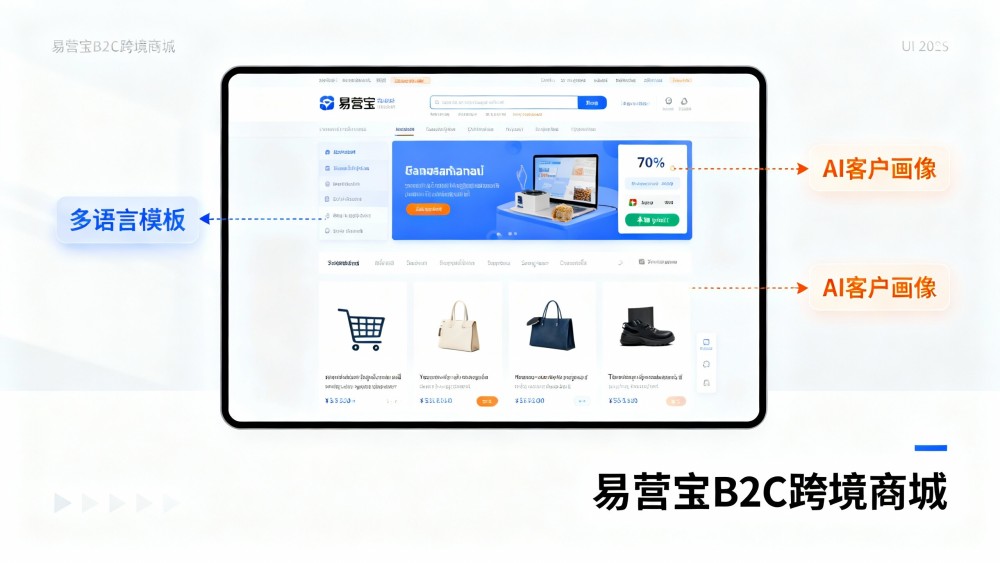
 EasyStore B2C Cross-border E-commerce Platform, Independent SiteEasyStore B2C Cross-border E-commerce Independent Store is an intelligent website building and cross-border e-commerce integrated solution independently developed by EasyStore Information Technology (Beijing) Co., Ltd. The system is specifically designed for small, medium, and large export enterprises, integrating 'website building, operation, marketing, advertising, and conversion' into one platform, helping businesses quickly establish cross-border e-commerce independent stores to achieve brand globalization and global sales growth.
The platform supports multiple languages, currencies, and multi-channel marketing, with built-in AI intelligent translation and SEO optimization systems, suitable for mainstream markets such as Southeast Asia, Europe & America, Latin America, and the Middle East, assisting Chinese manufacturing enterprises in efficiently deploying international e-commerce strategies. SSL CertificateEasyCert provides professional SSL security certificate services, including single-domain and wildcard certificates, ensuring encrypted data transmission, identity verification, and integrity protection for websites. This empowers businesses to establish secure and trustworthy online business environments.