









- The China-US tariff arrangement has reached a preliminary consensus, and the trade association will be establishedJun 15, 2026View details
- What determines B2C cross-border e-commerce website development costs? A breakdown of features, interfaces, and deployment methodsJun 17, 2026View details
- China-Morocco zero-tariff access, a breakthrough in the cost of Moroccan goods exports to ChinaJun 11, 2026View details
- What signal should be released for the suspension of exports to JapanJun 10, 2026View details
- China's May LNG imports rebounded, with increased volumes from Russia and Canada filling the Middle East supply gapJun 10, 2026View details
- Will GEO change its SEO strategy?Jun 04, 2026View details
How to choose an international trade website platform? Multilingual support, inquiry forms, and indexing capabilities are key
How to Choose a Foreign Trade Website Building Platform? First See Whether It Can Really Help You Get Customers
When choosing a foreign trade website building platform, many people’s first reaction is to compare prices. But once you get into actual execution, you will quickly find that what really widens the gap is often not the website cost, but the ability to acquire customers afterward.
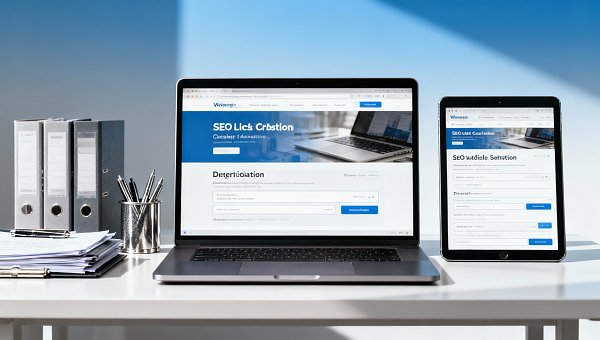
Especially in overseas markets, a website is not an electronic business card, but a sales entry point that keeps working. Whether multilingual support is in place, whether inquiry forms are smooth, and whether pages can be stably indexed by search engines, these three points basically determine whether the investment can deliver a long-term return.
From the changes in companies going global in recent years, simply “having a website built” is no longer enough. The more realistic questions are: who can go live faster, who can steadily obtain organic traffic, and who can more efficiently handle inquiries.
This also means that when evaluating a foreign trade website building platform, you cannot just focus on whether the interface looks good; you also need to see whether the underlying structure is suitable for promotion, indexing, and conversion. A good platform should lay the groundwork for subsequent marketing from the website-building stage.
Why Multilingual Capability Is the First Threshold for a Foreign Trade Website Building Platform
Many companies think that multilingual support simply means translating Chinese into other languages. In fact, a truly qualified foreign trade website building platform needs to solve three issues: search entry points, local expression, and management efficiency.
Let’s start with search entry points. Customers in different countries and regions have very different search habits. If a platform only supports page switching and does not support an independent language page structure, search engines will have a hard time accurately identifying the content topic.
Next is content expression. Industries such as machinery, manufacturing, and industrial products have a lot of terminology and complex application scenarios. If the translation is too rigid, it will not only affect readability, but may also directly damage the professional image.
Finally, there is management efficiency. If every new language requires rebuilding and revising the site, maintenance costs will rise rapidly later. The best platform should support unified backend management, multilingual content synchronization, and independent optimization settings.
- Supports independent pages for multiple languages, rather than simple pop-up translation.
- Supports title, description, and page URL settings for different languages.
- Supports market-specific content customization rather than site-wide uniform replication.
- Supports adding new languages later to avoid rebuilding from scratch.
If your target markets cover Europe and America, Southeast Asia, the Middle East, or Russian-speaking regions, multilingual capability is not a bonus, but the foundation of a foreign trade website building platform. Without this step, the effectiveness of SEO and advertising will be greatly reduced.
Inquiry Form Design Determines Whether Traffic Can Turn Into Customers
The problem with many websites is not a lack of traffic, but that visitors do not leave any information after arriving. The reasons are usually very direct: the inquiry entry is not obvious, the form is too long, or the submission experience is not smooth.
In actual business, overseas customers have limited patience. Especially on the first visit, they are more willing to quickly judge whether the product matches their needs before deciding whether to send an inquiry.
Therefore, whether a foreign trade website building platform supports flexible inquiry form design is very important. A form is not better just because it is more complicated; it should strike a balance between collecting leads and reducing friction.
For example, in heavy industry websites, customers may care about model, working conditions, budget, lead time, and certification. The form needs to be designed around decision-making information, rather than just leaving a “Please fill in your message” field.
For industries such as heavy machinery equipment, heavy industry, page designs often emphasize high-contrast inquiry entry points, product guide logic, and customer testimonial acceptance, which is closer to the real procurement path.
- Prioritize short forms to reduce the burden of first submission.
- Keep inquiry entry points on product pages, case pages, and the footer.
- Add fields such as country, need type, and purchase quantity.
- Support email reminders, lead attribution, and source identification.
If a foreign trade website building platform only knows how to display content and does not value inquiry conversion, then no matter how beautiful the website is, the conversion effect will be hard to stabilize. Whether it can smoothly guide visitors to leave their contact information is the key evaluation point.
Strong Indexing Capability Determines Whether the Website Has Long-Term Traffic
Many companies find that after the website is completed, it is almost impossible to find it in search engines after it has been online for several months. The problem is usually not the content itself, but that the platform structure is not suitable for search engines to crawl and understand.
A worthwhile foreign trade website building platform should at least have a clear page structure, editable title and description, a standard link system, and a mobile-friendly loading experience.
If the platform generates a large number of duplicate pages, or if the code redundancy is too severe, search engines will find it difficult to determine which content is worth indexing. Over time, organic traffic will become weaker and weaker.
For foreign trade companies, indexing capability is not only related to exposure, but also to customer acquisition costs. The more stable organic traffic is, the lower the dependence on advertising, and the healthier the overall marketing structure becomes.
- Whether custom page titles and descriptions are supported.
- Whether product pages, news pages, and case pages can be continuously expanded.
- Whether there is a clear hierarchy of sections and internal linking logic.
- Whether mobile speed and responsive display are taken into account.
For industries such as equipment manufacturing, industrial materials, and engineering services with long decision cycles, indexing is not a short-term action, but a long-term accumulation. The underlying capability of a foreign trade website building platform directly affects whether subsequent SEO can continue to deliver amplified results.
In Addition to the Three Core Metrics, Also See Whether the Platform Fits the Industry
When choosing a foreign trade website building platform, there is another issue that is very easy to overlook: whether the platform understands industry display logic. Different products actually have very different page structure requirements.
For example, in heavy industry websites, overly flashy visual routes are not suitable; what is more needed is clear information organization. Modular flow layouts, single-column structures, core data indicators, and brand storytelling are often more persuasive.
If a platform can connect application scenarios, product centers, service commitments, and customer testimonials into one clear path, user comprehension efficiency will be significantly higher, and inquiry actions will happen more naturally.
This kind of structure is especially important for heavy machinery equipment, heavy industry. Because customers are not just looking at parameters; they want to quickly judge whether the equipment fits their own construction or production scenario.
If a platform can turn cold parameters into scenario-based expressions, and then add responsive display and smooth motion effects, the website is no longer just a showcase page, but a more sustainable digital front line.
How to Judge Whether a Foreign Trade Website Building Platform Is Worth Long-Term Investment
A truly worthwhile foreign trade website building platform is usually not a single-point tool, but a growth base that can work with SEO, advertising, and social media operations. Website building is only the starting point, not the end point.
The integrated service approach represented by Yiyingbao is more in line with the current rhythm of companies going global. Its advantage is not only building the site, but also enabling the website to truly enter the customer acquisition loop through AI smart website building, multilingual capability, SEO optimization, advertising placement, and content distribution.
For companies that want to steadily expand overseas markets, this “website building + marketing” collaborative model can reduce repetitive back-and-forth in the later stage and make it easier to see data feedback sooner.
If you only look at the initial quotation, it is easy to choose a solution that “can go online but is not easy to use.” But once you later run into slow indexing, difficult revisions, and too few inquiries, the cost of reworking is usually higher than building it the first time.
So back to the most core question, how should a foreign trade website building platform be chosen? The answer is actually very clear: first look at multilingual support, then at the inquiry form, and finally at indexing capability, while also confirming whether the platform has long-term marketing collaboration capability.
When the platform can both handle industry presentation and support promotion and conversion, the website truly has growth value. Making this choice is not only saving the one-time website-building cost, but also laying the foundation for future overseas customer acquisition efficiency.
Related Articles
 Can a B2C cross-border e-commerce source code system be purchased? Comparison of open-source, self-developed, and commercial licensed pros and cons
 B2C cross-border marketplace website development: custom development or SaaS? How to determine the applicable scenario
 How to choose payment methods for a B2C cross-border store? A comparison of PayPal, credit cards, and local payments
Related Products
 EasyCamp SaaS Smart Website Marketing SystemE-Yingbao SaaS Smart Website Marketing System: AI-powered, zero-code website building. Rapidly launch multilingual independent e-commerce sites in just 10 minutes. Global server acceleration and AI-driven SEO optimization empower businesses to efficiently connect with global markets. The seamless integration of technology and user-friendly operation makes building e-commerce sites incredibly simple.
 AI+SEM Intelligent Advertising Marketing SystemAI+SEM drives intelligent ad creation, empowering full-funnel precision advertising marketing. The system automatically generates weekly/monthly reports, AI recommends keywords and target countries, monitors core metrics in real-time with intelligent alerts, and enables one-click high-conversion ad solutions to help quickly acquire customers and improve ROI.
 AI+SEO Dual Engine Optimization ServiceEasyWin AI+SEO Dual Engine Optimization System leverages AI-powered keyword mining, content generation, and comprehensive technical optimization to help foreign trade enterprises acquire high-quality organic traffic, significantly improving search rankings and conversion rates.
 AI+SNS Social Media Marketing SystemYingbao AI+SNS Social Media Marketing System - Precision social capture for the social media era. Supports one-click content synchronization across major platforms like Facebook and LinkedIn. AI intelligently rewrites posts for enhanced relevance. 24/7 AI customer service and user profiling analysis empower businesses to efficiently expand into global markets.
 AI+SEO营销解决方案易营宝AI+SEO营销解决方案,通过AI批量写作、智能生成TDK、精准关键词扩词等功能,全面优化网站SEO效果,提升流量与转化率。助力企业构建高效智能网站新生态。
 AI+SEM Advertising Marketing SolutionsAI+SEM Advertising Marketing Solution leverages AI technology to deeply empower SEM ad campaigns. It automatically generates weekly/monthly reports using AI, presenting account data across multiple dimensions for comprehensive insights into campaign performance and trends. The system precisely recommends keywords and target countries, intelligently generates high-conversion ad copy, and enables one-click activation of efficient campaign plans to help businesses rapidly acquire customers. Simultaneously, it monitors core metrics in real time, intelligently identifies abnormal fluctuations, and issues timely alerts to ensure stable, high-return advertising results.
 Domain Name ServicesEasyWin provides professional domain name services, including intelligent queries, one-stop registration, brand protection, and full lifecycle management, helping businesses build a digital brand image.
 EasyOperate B2C Cross-Border E-Commerce Platform & Independent WebsiteEasyStore B2C Cross-border E-commerce Independent Store is an intelligent website building and cross-border e-commerce integrated solution independently developed by EasyStore Information Technology (Beijing) Co., Ltd. The system is specially designed for small and medium-sized as well as large export enterprises, integrating 'website building, operation, marketing, advertising, and conversion' into one, helping enterprises quickly establish cross-border e-commerce independent stores to achieve brand globalization and global sales growth.
The platform supports multiple languages, multiple currencies, and multi-channel marketing, with built-in AI intelligent translation and SEO optimization systems, suitable for mainstream markets such as Southeast Asia, Europe and America, Latin America, and the Middle East, assisting Chinese manufacturing enterprises in efficiently deploying international e-commerce strategies. SSL证书易营宝提供专业SSL安全证书服务,包括单域名和泛域名证书,确保网站数据传输加密、身份验证和完整性保护,助力企业建立安全可信的在线业务环境。









