









- The China-US tariff arrangement has reached a preliminary consensus, and the trade association will be establishedJun 15, 2026View details
- China-Morocco zero-tariff access, a breakthrough in the cost of Moroccan goods exports to ChinaJun 11, 2026View details
- What signal should be released for the suspension of exports to JapanJun 10, 2026View details
- China's May LNG imports rebounded, with increased volumes from Russia and Canada filling the Middle East supply gapJun 10, 2026View details
- Will GEO change its SEO strategy?Jun 04, 2026View details
- What types of businesses are end-to-end solutions suitable for?Jun 03, 2026View details
How is an industry customer acquisition strategy defined? From traffic channels to online lead conversion, build the framework
Why Can't Industry Lead Generation Strategies Rely on Paid Ads Alone
How an industry lead generation strategy is defined is not about a single ad placement, but about building a system that connects traffic channels, content delivery, and lead conversion. Real growth does not usually come from one explosive campaign, but from a stable loop from channel to conversion.
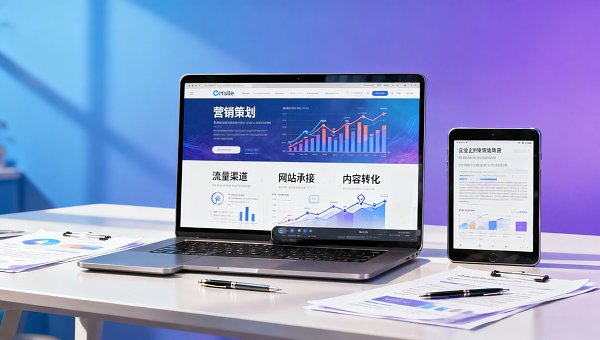
When many companies develop industry lead generation strategies, they are most likely to fall into two misconceptions. One is to focus only on short-term lead volume, and the other is to equate lead generation with ad purchasing. The result is that the budget is spent quickly, but lead quality remains unstable.
Looking at recent changes, the customer decision-making path has clearly become longer. Search, website, social media, content, direct messages, forms, and consultant communication often affect conversion at the same time. If an industry lead generation strategy has no overall design, it will be very hard to sustain continued growth.
Especially in the website+marketing services integrated field, enterprises need both traffic and the digital assets that can carry that traffic. A website is not only a display page, but also a content hub, conversion node, and data entry point, which also means that an industry lead generation strategy must start from the underlying structure.
Set the Target First, Then Choose the Right Traffic Channels
A reliable industry lead generation strategy does not start with tools, but with answering three questions first: Who are the customers, how long is the sales cycle, and what is the lead standard. Different goals require different channel combinations.
If the business involves high-ticket, long-decision-cycle deals, search traffic and website content are more important. That is because customers will repeatedly research information, compare solutions, and review case studies. If it is new product promotion or a short-cycle project, ads and social media reach are usually a higher priority.
Common Channel Combination Ideas
- SEO optimization: suitable for long-term accumulation, improving organic inquiries and brand credibility.
- Search ads: suitable for quickly validating demand and supplementing core keyword traffic.
- Social media marketing: suitable for shortening the communication distance and expanding brand reach.
- Short videos and content distribution: suitable for strengthening memory points and lowering the cognitive barrier.
- Remarketing ads: suitable for retargeting high-intent visitors and improving conversion efficiency.
In actual business, the question is not whether more channels are better, but whether they work better together. A mature industry lead generation strategy usually uses core channels as the main engine, and then uses supporting channels to amplify reach and conversion.
Website Carrying Capacity Determines Whether Leads Will Be Lost
Once traffic comes in, what truly creates the gap is carrying capacity. Many enterprise industry lead generation strategies may look complete, but after visitors enter the website they cannot find the key information, the page loads slowly, the content is not persuasive, and in the end the traffic is simply wasted.
A website that can convert should at least solve four things: let customers understand, let customers trust, let customers be willing to leave information, and let the team track the data. If any one is missing, the industry lead generation strategy will be discounted.
Core Modules of Website Carrying Capacity
- The homepage value proposition should be clear enough to explain in three seconds who it serves and what problem it solves.
- The landing page should be designed around specific needs, not use broad introductions to replace solution explanations.
- Cases, qualifications, reviews, and delivery processes should be complete to reduce decision uncertainty.
- Forms, inquiry entry points, and callback mechanisms should be simple to reduce submission resistance.
- Hot spots, source identification, and conversion tracking should be in place to support later review and optimization.
From the perspective of Yiyingbao's digital capabilities, its self-developed cloud intelligent website building system, cross-border e-commerce system, and AI+SEO/GEO optimization system cover the most critical part of an industry lead generation strategy, which is to make the website simultaneously capable of promotion, indexing, and conversion.
The value of this integrated service lies in the fact that website building, content, advertising, and optimization are no longer handled separately, but are planned around the conversion path from the very beginning. This approach usually gives more controllable lead costs and more stable long-term growth.
How Should the Content System Be Structured to Drive Lead Conversion
When many companies create industry lead generation strategies, they reduce content to posting news or writing a few articles. In fact, a truly effective content system is not for filling pages, but for providing decision-making evidence to customers at different stages.
A more obvious signal is that customers increasingly value professional judgment. Whoever can clearly explain the application scenario, spell out the risks, and make the delivery method easy to understand is more likely to gain inquiry opportunities.
Recommended Content Types
- Question-based content: answer the pain points and concerns customers search for most often.
- Solution-based content: present the structure, process, and budget logic of the industry lead generation strategy.
- Case-based content: use real results to improve persuasiveness and credibility.
- Comparison-based content: help customers distinguish the differences between different channels and different approaches.
- Trend-based content: strengthen judgment and build brand professional recognition.
Content development does not have to revolve around a single product; it can also be extended around related topics such as management, growth, and operations. For example, when some companies make decisions, they also pay attention to budget allocation and capital efficiency. This kind of content can also deepen the communication, such as the topic of Discussion on Capital Management Optimization Strategies for Power Companies Based on Cash Flow Forecasting, which is more suitable for helping establish professional recognition in a consultative sales scenario.
The Lead Conversion Process Determines Whether the Strategy Truly Takes Root
An industry lead generation strategy is not finished just by getting to this point. Because lead generation is not the end after receiving a form submission, but the process of pushing a lead into a business opportunity and then into a deal. If any link breaks in between, the upfront investment will be diluted.
The problem for many companies is not too little traffic, but that the leads are not segmented, follow-up is not timely, sales talk tracks are not unified, and review data is incomplete. The result is that inquiries seem plentiful, but actual deals do not increase in sync.
Recommended Conversion Mechanisms
- Segment leads by source, demand, region, and budget.
- Set first-response time standards to shorten the high-intent loss window.
- Build a consultative communication script to avoid talking only about price.
- Track the key conversion nodes from visit to deal.
- Review channel ROI every month and adjust the industry lead generation strategy in time.
If a company is targeting overseas markets, multilingual websites, regional advertising, search habit differences, and social platform preferences should all be included in the conversion process design. Yiyingbao's localized service capabilities covering North America, Europe, Southeast Asia, Japan and South Korea, the Middle East, Latin America, and other markets make it even more suitable for handling this kind of multi-region, multi-channel parallel complex scenario.
A Practical Roadmap for Building an Industry Lead Generation Strategy
If you want an industry lead generation strategy to truly take root, you can move forward in five steps: diagnosis, building, testing, scaling, and review. This not only controls trial-and-error costs, but also gradually forms your own growth model.
- First diagnose: clarify the customer profile, core selling points, and current channel performance.
- Then build: complete the website, landing pages, content library, and tracking system.
- Small-scale testing: verify keywords, creatives, pages, and form performance.
- Gradually scale: concentrate the budget on high-quality channels and high-conversion pages.
- Continuous review: focus on cost, opportunity rate, conversion rate, and repeat purchase space.
In the end, an industry lead generation strategy is not about buying a few traffic entry points, but about building an operating system that can continuously generate customers. Channels are responsible for bringing opportunities, the website is responsible for carrying trust, content is responsible for lowering the decision threshold, and the conversion process is responsible for turning opportunities into results.
When a company truly connects these layers of capability, lead generation will no longer depend on occasional bursts, but will become a traceable, optimizable, and replicable growth mechanism. This is also the direction that deserves the highest priority investment when building an industry lead generation strategy.
Related Articles
 The Regulations of the State Council on Foreign Investment" to Take Effect on July 1
 What are the core modules of a B2C cross-border e-commerce system? A breakdown of the checkout flow and operations backend
 Which businesses is an overseas brand independent site suitable for? Growth analysis from brand building to repeat purchase growth


Related Products
 EasyCamp SaaS Smart Website Marketing SystemE-Yingbao SaaS Smart Website Marketing System: AI-powered, zero-code website building. Rapidly launch multilingual independent e-commerce sites in just 10 minutes. Global server acceleration and AI-driven SEO optimization empower businesses to efficiently connect with global markets. The seamless integration of technology and user-friendly operation makes building e-commerce sites incredibly simple.
 AI+SEM Intelligent Advertising Marketing SystemAI+SEM drives intelligent ad creation, empowering full-funnel precision advertising marketing. The system automatically generates weekly/monthly reports, AI recommends keywords and target countries, monitors core metrics in real-time with intelligent alerts, and enables one-click high-conversion ad solutions to help quickly acquire customers and improve ROI.
 AI+SEO Dual Engine Optimization ServiceEasyWin AI+SEO Dual Engine Optimization System leverages AI-powered keyword mining, content generation, and comprehensive technical optimization to help foreign trade enterprises acquire high-quality organic traffic, significantly improving search rankings and conversion rates.
 AI+SNS Social Media Marketing SystemYingbao AI+SNS Social Media Marketing System - Precision social capture for the social media era. Supports one-click content synchronization across major platforms like Facebook and LinkedIn. AI intelligently rewrites posts for enhanced relevance. 24/7 AI customer service and user profiling analysis empower businesses to efficiently expand into global markets.
 AI+SEO营销解决方案易营宝AI+SEO营销解决方案,通过AI批量写作、智能生成TDK、精准关键词扩词等功能,全面优化网站SEO效果,提升流量与转化率。助力企业构建高效智能网站新生态。
 AI+SEM Advertising Marketing SolutionsAI+SEM Advertising Marketing Solution leverages AI technology to deeply empower SEM ad campaigns. It automatically generates weekly/monthly reports using AI, presenting account data across multiple dimensions for comprehensive insights into campaign performance and trends. The system precisely recommends keywords and target countries, intelligently generates high-conversion ad copy, and enables one-click activation of efficient campaign plans to help businesses rapidly acquire customers. Simultaneously, it monitors core metrics in real time, intelligently identifies abnormal fluctuations, and issues timely alerts to ensure stable, high-return advertising results.
 Domain Name ServicesEasyWin provides professional domain name services, including intelligent queries, one-stop registration, brand protection, and full lifecycle management, helping businesses build a digital brand image.
 EasyOperate B2C Cross-Border E-Commerce Platform & Independent WebsiteEasyStore B2C Cross-border E-commerce Independent Store is an intelligent website building and cross-border e-commerce integrated solution independently developed by EasyStore Information Technology (Beijing) Co., Ltd. The system is specially designed for small and medium-sized as well as large export enterprises, integrating 'website building, operation, marketing, advertising, and conversion' into one, helping enterprises quickly establish cross-border e-commerce independent stores to achieve brand globalization and global sales growth.
The platform supports multiple languages, multiple currencies, and multi-channel marketing, with built-in AI intelligent translation and SEO optimization systems, suitable for mainstream markets such as Southeast Asia, Europe and America, Latin America, and the Middle East, assisting Chinese manufacturing enterprises in efficiently deploying international e-commerce strategies. SSL证书易营宝提供专业SSL安全证书服务,包括单域名和泛域名证书,确保网站数据传输加密、身份验证和完整性保护,助力企业建立安全可信的在线业务环境。









