









- The China-US tariff arrangement has reached a preliminary consensus, and the trade association will be establishedJun 15, 2026View details
- China-Morocco zero-tariff access, a breakthrough in the cost of Moroccan goods exports to ChinaJun 11, 2026View details
- What signal should be released for the suspension of exports to JapanJun 10, 2026View details
- China's May LNG imports rebounded, with increased volumes from Russia and Canada filling the Middle East supply gapJun 10, 2026View details
- Will GEO change its SEO strategy?Jun 04, 2026View details
- What types of businesses are end-to-end solutions suitable for?Jun 03, 2026View details
How to choose payment methods for a B2C cross-border store? A comparison of PayPal, credit cards, and local payments
How to Choose B2C Cross-Border E-Commerce Payment Methods, Start with Three Things
How to choose B2C cross-border e-commerce payment methods? On the surface, it looks like a payment method issue, but in practice it affects profit, risk control, and conversion. For independent sites, choosing the wrong payment solution can make later adjustments more troublesome than building the site itself.
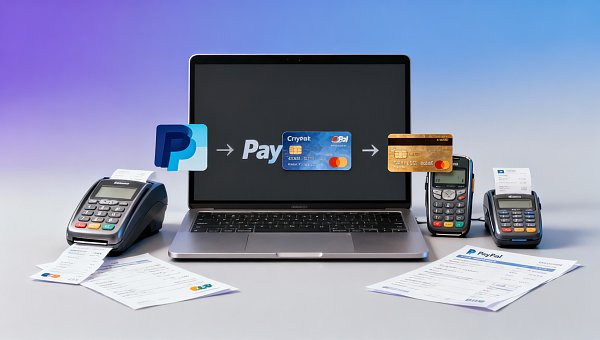
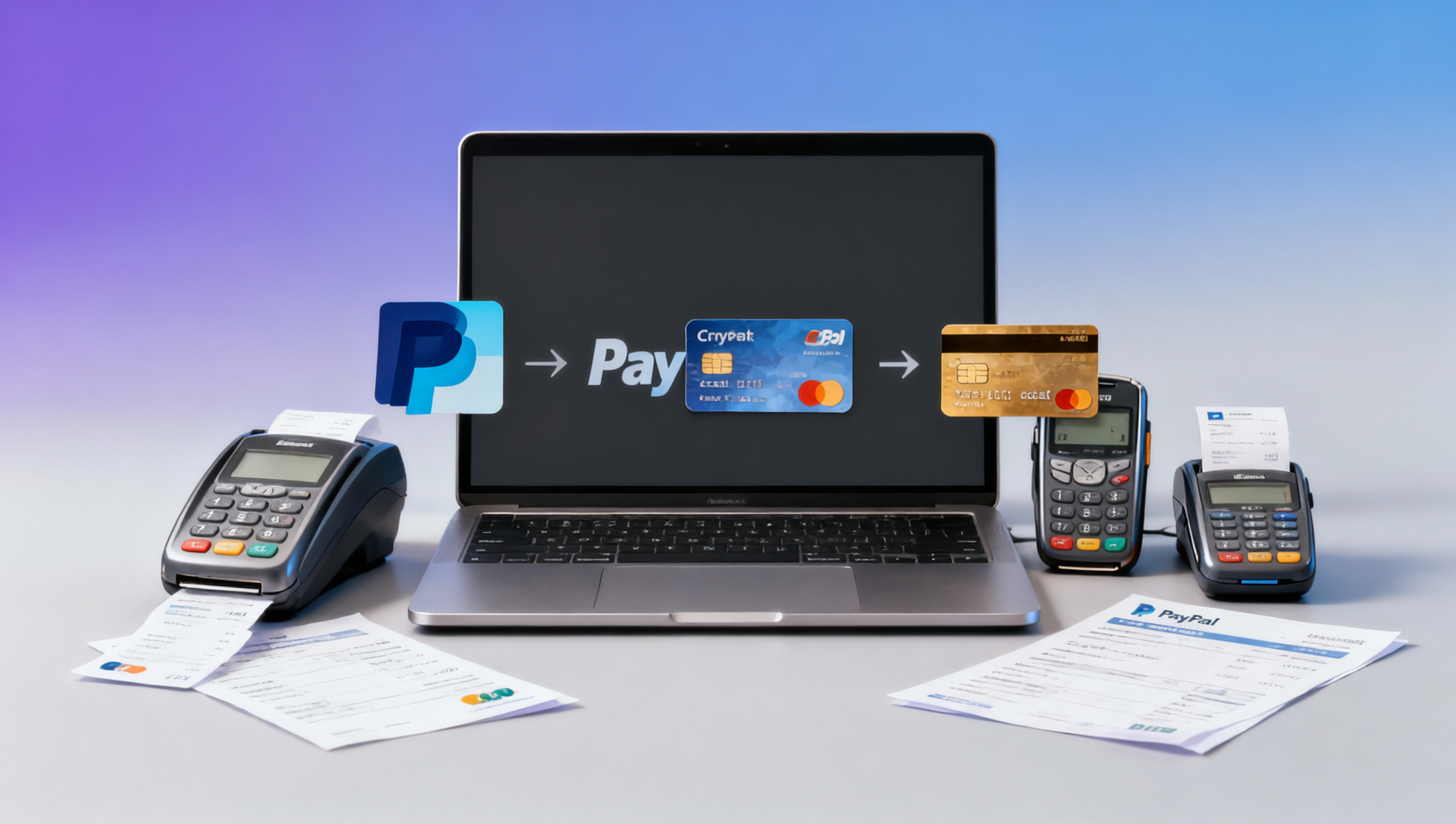
Looking at recent changes, overseas consumers care more about whether the payment habit is familiar. The finance side cares more about settlement cycles, chargeback rates, exchange losses, and compliant routing. Because the two sides have different needs, the decision cannot rely on simply adding more payment options.
If there is only one judgment criterion, it is whether the payment method can balance conversion rate and controllable cost at the same time. A truly suitable B2C cross-border e-commerce payment solution is usually not a single option, but a combination of configurations.
Why B2C Cross-Border E-Commerce Payment Cannot Look Only at Fees
When many companies evaluate payment tools, the first reaction is to compare fee rates. That is not wrong, but looking only at fees often causes bigger hidden costs to be ignored.
For example, PayPal is quick to integrate, but dispute handling costs may be relatively high. Credit cards have broad coverage, but the requirements for chargeback management are more detailed. Local payment methods have higher conversion rates, but integration and reconciliation are also more complex.
This also means that the core of B2C cross-border e-commerce payment is not to choose the “cheapest” one, but to choose the one with the lowest “total cost”. Total cost usually includes the following items.
- Transaction fees and channel service fees
- Costs of chargebacks, refunds, and dispute handling
- Exchange rate losses and withdrawal fees
- Cash flow pressure caused by account risk control holds
- Technical integration and reconciliation labor costs
In actual business, the more accurate the financial judgment is made in advance, the fewer losses there will be later. This is especially true for categories with large order fluctuations, high average order values, and frequent refunds, where payment capability should be viewed as part of operational capability.
PayPal, Credit Cards, and Local Payment: What Is the Difference
1. PayPal: Fast to Launch, but Risk Control Needs to Be Planned in Advance
PayPal’s advantages are very direct: consumers know it well, independent sites can integrate it quickly, and trust is easier to build in the early stage of a new site. For sellers testing the market or launching quickly, PayPal is often the first choice.
But its drawbacks are also obvious. Fees are relatively high, dispute handling tends to favor buyers, and account reviews and temporary restrictions are common. If orders surge, capital turnover may be affected.
Therefore, if B2C cross-border e-commerce payment relies mainly on PayPal, it is recommended to prepare shipping proof, logistics tracking, refund rules, and appeal materials in parallel to avoid having to patch the process after scaling up.
2. Credit Cards: Broad Coverage, the Main Channel for the Mid-to-Long Term
Credit card payments cover mainstream markets such as North America and Europe. The payment experience is mature, and it is also the core channel for many brand independent sites. As long as the page experience is stable, overall conversion is usually more balanced.
Its difficulty lies in the higher risk control threshold. Chargebacks, card theft, billing address mismatches, and abnormal devices can all affect success rates. Channel providers usually also pay attention to industry characteristics and historical performance.
If a company is pursuing long-term stability, B2C cross-border e-commerce payment still needs to build credit card capabilities, including risk control strategies, payment routing, failed payment retries, and dispute handling processes.
3. Local Payment: Improve Conversion, but Best for Deep Cultivation in Key Markets
The value of local payment lies in being more aligned with local user habits. Some European markets prefer bank transfers, some Southeast Asian users prefer e-wallets, and Latin America also has a strong preference for localized payments.
When a company has already verified stable orders in a certain region, local payment can further improve conversion and reduce order loss caused by “not being familiar with the payment method”.
However, local payment is not suitable to be deployed at full scale from the start. It is more suitable as a bonus item for key countries rather than as a replacement for all B2C cross-border e-commerce payment channels.
When Reviewing Finances, Focus on These Five Dimensions
Truly efficient review is not about comparing prices after the business has already submitted a request, but about first establishing a unified evaluation framework. This way, whether you choose PayPal, credit cards, or local payment, you can compare them horizontally.
- Whether compliance qualifications are complete, including entity, industry, tax, and data security requirements.
- Whether funds arrive stably, including settlement cycles, withdrawal paths, and currency support.
- Whether risk control is transparent, including chargeback handling, alert mechanisms, and freeze rules.
- Whether the overall cost is predictable, including explicit fees and implicit operating costs.
- Whether system integration is smooth, including coordination among the website, orders, logistics, and reconciliation systems.
If a company is operating in multiple regions, the website system itself should also support multiple languages, multiple currencies, and localized operations. For example, when targeting the Russian market, in addition to payment methods, the site language and search entry will also affect conversion.
In such scenarios, it can be combined with Russian industry website development and marketing solutions to simultaneously improve Russian website development, Yandex optimization tools, and AI intelligent translation with ru domain configuration, so that payment capabilities and market expansion rhythm are more aligned.
B2C Cross-Border E-Commerce Payment at Different Stages Requires Different Configuration Ideas
Many companies have average payment results, not because the tools are not good enough, but because the stage and configuration do not match. A more stable approach is to design in layers according to business maturity.
New Site Launch Stage
The priority is to ensure funds can be received, integration is easy, and the site can go live quickly. A common combination is PayPal plus credit cards. The former builds trust, and the latter ensures coverage. At this stage, do not rush to integrate too many local payment methods.
Stable Growth Stage
The focus is on optimizing success rates and fee structure. You can start payment routing, strengthen verification for high-risk orders, and add local payment methods for key countries.
Brand Deep Cultivation Stage
At this stage, more emphasis is placed on data linkage. Payment, advertising, on-site conversion, and customer repeat purchases need to be connected. B2C cross-border e-commerce payment is no longer just a financial action, but part of the growth strategy.
If you are operating across multiple markets, you also need to ensure that the website development and marketing tools can provide synchronized support. One-stop capabilities like Russian industry website development and marketing solutions are more suitable for refined regional operations.
One Chart Makes It Clear How to Choose
Conclusion: A Good Payment Solution Is the Balance Between Conversion and Risk
Back to the original question, how should B2C cross-border e-commerce payment be chosen? If stability is the goal, it is recommended to use credit cards as the main channel, PayPal as a trust supplement, and then add local payment according to key markets.
The advantage of this combination is that it can both match consumer habits and disperse risk pressure. For the finance side, more important than anything else is to clarify compliance, fees, billing cycles, and dispute mechanisms in advance, rather than trying to fix problems after they occur.
If a company is building an overseas independent site, it is recommended to evaluate the website, marketing, and payment as part of the same business map. Only then can it truly be promoted, convert, and make every cross-border revenue land more steadily in profit.
Related Articles
 Can a B2C cross-border e-commerce source code system be purchased? Comparison of open-source, self-developed, and commercial licensed pros and cons
 B2C cross-border marketplace website development: custom development or SaaS? How to determine the applicable scenario
 How to choose payment methods for a B2C cross-border store? A comparison of PayPal, credit cards, and local payments
Related Products
 EasyCamp SaaS Smart Website Marketing SystemE-Yingbao SaaS Smart Website Marketing System: AI-powered, zero-code website building. Rapidly launch multilingual independent e-commerce sites in just 10 minutes. Global server acceleration and AI-driven SEO optimization empower businesses to efficiently connect with global markets. The seamless integration of technology and user-friendly operation makes building e-commerce sites incredibly simple.
 AI+SEM Intelligent Advertising Marketing SystemAI+SEM drives intelligent ad creation, empowering full-funnel precision advertising marketing. The system automatically generates weekly/monthly reports, AI recommends keywords and target countries, monitors core metrics in real-time with intelligent alerts, and enables one-click high-conversion ad solutions to help quickly acquire customers and improve ROI.
 AI+SEO Dual Engine Optimization ServiceEasyWin AI+SEO Dual Engine Optimization System leverages AI-powered keyword mining, content generation, and comprehensive technical optimization to help foreign trade enterprises acquire high-quality organic traffic, significantly improving search rankings and conversion rates.
 AI+SNS Social Media Marketing SystemYingbao AI+SNS Social Media Marketing System - Precision social capture for the social media era. Supports one-click content synchronization across major platforms like Facebook and LinkedIn. AI intelligently rewrites posts for enhanced relevance. 24/7 AI customer service and user profiling analysis empower businesses to efficiently expand into global markets.
 AI+SEO营销解决方案易营宝AI+SEO营销解决方案,通过AI批量写作、智能生成TDK、精准关键词扩词等功能,全面优化网站SEO效果,提升流量与转化率。助力企业构建高效智能网站新生态。
 AI+SEM Advertising Marketing SolutionsAI+SEM Advertising Marketing Solution leverages AI technology to deeply empower SEM ad campaigns. It automatically generates weekly/monthly reports using AI, presenting account data across multiple dimensions for comprehensive insights into campaign performance and trends. The system precisely recommends keywords and target countries, intelligently generates high-conversion ad copy, and enables one-click activation of efficient campaign plans to help businesses rapidly acquire customers. Simultaneously, it monitors core metrics in real time, intelligently identifies abnormal fluctuations, and issues timely alerts to ensure stable, high-return advertising results.
 Domain Name ServicesEasyWin provides professional domain name services, including intelligent queries, one-stop registration, brand protection, and full lifecycle management, helping businesses build a digital brand image.
 EasyOperate B2C Cross-Border E-Commerce Platform & Independent WebsiteEasyStore B2C Cross-border E-commerce Independent Store is an intelligent website building and cross-border e-commerce integrated solution independently developed by EasyStore Information Technology (Beijing) Co., Ltd. The system is specially designed for small and medium-sized as well as large export enterprises, integrating 'website building, operation, marketing, advertising, and conversion' into one, helping enterprises quickly establish cross-border e-commerce independent stores to achieve brand globalization and global sales growth.
The platform supports multiple languages, multiple currencies, and multi-channel marketing, with built-in AI intelligent translation and SEO optimization systems, suitable for mainstream markets such as Southeast Asia, Europe and America, Latin America, and the Middle East, assisting Chinese manufacturing enterprises in efficiently deploying international e-commerce strategies. SSL证书易营宝提供专业SSL安全证书服务,包括单域名和泛域名证书,确保网站数据传输加密、身份验证和完整性保护,助力企业建立安全可信的在线业务环境。









