









- What Does a Global Traffic Ecosystem Service Provider Do? What Are the Differences from a Single Advertising AgencyJul 16, 2026View details
- What should you focus on in the latest enterprise SaaS report? From renewal rates and delivery costs to overseas growth opportunitiesJul 12, 2026View details
- What signals are worth paying attention to in a cross-border marketing trend report? B2B companies should look at these 6 signalsJul 11, 2026View details
- How to Read a Cross-Border Marketing Trends Report? Five Key Dimensions for Evaluating Channel OpportunitiesJul 11, 2026View details
- Which channel has the highest ROI in the global traffic ecosystem? Comparative analysis of search, social media, and advertisingJul 10, 2026View details
- What multilingual website services are available in Sanya? Which model is more suitable for local businesses going global?Jul 08, 2026View details
How to Choose an Integrated Website Building and Marketing System: 5 Key Comparisons Between SaaS vs Private Deployment
Integrated Website Building and Marketing Systems Are Undergoing a Quiet Market Reshuffle
Over the past three years, companies’ understanding of integrated website building and marketing systems has quietly evolved—it is no longer just a combined tool of “build a website + run a few ads,” but a digital foundation for business growth. Especially in going-global scenarios, whether an independent site can be quickly indexed by Google, whether multilingual pages can naturally align with local search intent, and whether ad landing pages can form a coordinated closed loop with SEO content, these capabilities are shifting from “nice-to-have advantages” to “survival essentials.” This shift has fundamentally changed the logic behind system selection.
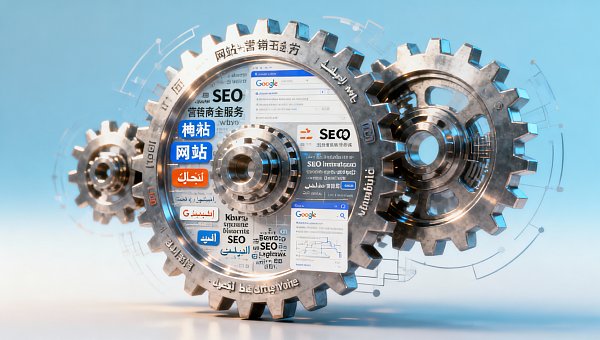
The Boundary Between SaaS and Private Deployment Is Blurring, but the Focus of Decision-Making Is Becoming Clearer
The differences in technical architecture have never disappeared, but what companies are truly struggling with is no longer “whether they can build it themselves,” but “whether it is worth paying an extra cost for controllability.” Among the more than 100,000 companies served by EasyRank, about 73% chose cloud-native SaaS solutions, of which manufacturing customers accounted for 41%. This is not because they reject data autonomy, but because they have realized that when AI automatically optimizes GEO keyword layouts, when multilingual sites are generated synchronously and comply with localization semantic rules, and when advertising campaigns are linked with the SEO content pool in real time, “speed” itself has already become a deterministic competitive advantage.
The Real Gap Across Five Dimensions Is More Truthful Than Any Comparison Chart
Deployment cost, customization capability, data sovereignty, operations and maintenance threshold, and long-term ROI—these five factors are not parallel options, but strongly causally linked. For example, private deployment may appear to protect data sovereignty, but if it lacks continuously updated AI SEO models and localized semantic libraries, the site’s visibility in Google search results will instead decline year by year, ultimately driving up customer acquisition costs and eroding the long-term ROI that “control” was supposed to bring.
- Deployment cycle: SaaS usually launches the first version of a multilingual site within 3–7 days; private deployment takes an average of 8–14 weeks, including environment adaptation and security hardening;
- Customization flexibility: SaaS platforms meet more than 85% of foreign trade scenario needs through low-code modules (such as drag-and-drop inquiry components and AI copy generators); deep customization still requires API integration, but 90% of customers never reach that threshold;
- Data flow: EasyRank’s SaaS solution supports customer-exclusive data sandboxes by default, with all behavioral logs, conversion paths, and GEO search terms belonging to the enterprise; if private deployment does not configure compliant audit logs, it may instead face a higher risk of data leakage due to internal permission confusion;
- Operations and maintenance dependency: SaaS customers concentrate their IT investment on content operations and advertising strategy; private deployment requires resident hybrid engineers familiar with LAMP/Node.js+SEO crawler mechanisms;
- Three-year TCO comparison: Calculations by an auto parts factory in East China showed that SaaS annual investment was about 1/5 of the initial investment for private deployment, while also avoiding hidden depreciation costs such as stalled version upgrades and plugin compatibility failures.
What Truly Determines Success or Failure Is Whether the System Can Carry a “Dynamic Business Language”
The business language of foreign trade companies changes every day: customers in the Middle East may suddenly increase their requirements for inquiry response under Arabic RTL layouts; the Latin American market may see new paths emerging from TikTok Shop redirects to independent sites; new EU AI content disclosure regulations may force the automatic generation logic of product description labeling. These are not just to-do items on a feature list, but tests of whether the underlying system has semantic understanding, multimodal adaptability, and the ability to hot-update compliance strategies.
The reason EasyRank’s AI+SEO/GEO optimization system is called so frequently is precisely because it converts external signals such as Google core algorithm updates, regional policy changes, and shifts in social media traffic structures into actionable content recommendations and technical configurations—this kind of “translation capability” defines a system’s real sovereignty far more than the physical location of its servers ever could.
The Selection Logic of Startup Tech Teams Is Providing a New Reference Framework
What is worth noting is that a group of small and micro tech companies have given up building infrastructure on their own as early as the financing stage, and instead embedded integrated website building and marketing as a measurable customer acquisition unit into their BP. They care more about: how many valid inquiries can a single independent site bring each month? How many WhatsApp leads correspond to every 100 GEO search impressions? This result-driven way of inferring system value unexpectedly validates the structural advantages of the SaaS model in agile verification, data attribution, and resource focus. Research on Financing Strategies for Early-Stage Small and Micro Technology Enterprises from an Angel Investment Perspective points out that investors are now listing “startup efficiency of digital infrastructure” as one of the key due diligence indicators—because it directly reflects how quickly a team responds to market feedback.
For Follow-Up Judgment, You Can First Lock In on Three Business Entry Points
There is no need to rush into choosing between SaaS and private deployment. A more practical approach is to identify three highly sensitive nodes from your own business flow:
- Is there a need for cross-time-zone content collaboration? If market teams are distributed across Shenzhen, Dubai, and São Paulo, SaaS real-time collaborative editing and version traceability offer more practical value;
- Does the current SEO bottleneck come from the technical layer (such as JS rendering delays) or the content layer (such as lack of localized semantics)? The former requires underlying control, while the latter can already be effectively addressed by SaaS AI content engines;
- Is there a clear channel expansion plan for the next 12 months (such as adding a new Russian-language region or a Vietnam site)? SaaS template reusability and regional compliance package delivery speed often determine how efficiently market windows can be captured.
The essence of an integrated website building and marketing system is to transform uncertain overseas growth into configurable, trackable, and iterative digital actions. Choosing a system is not choosing a technology, but choosing a rhythm for communicating with the global market. When AI begins to understand that “Middle Eastern buyers will first look at the certificate icon placement before clicking the ‘Free Sample’ button,” the real competitiveness of a system is no longer in the server rack, but in the process by which every subtle user behavior is accurately translated into business language.
Related Articles
Related Products
 EasyCamp SaaS Smart Website Marketing SystemE-Yingbao SaaS Smart Website Marketing System: AI-powered, zero-code website building. Rapidly launch multilingual independent e-commerce sites in just 10 minutes. Global server acceleration and AI-driven SEO optimization empower businesses to efficiently connect with global markets. The seamless integration of technology and user-friendly operation makes building e-commerce sites incredibly simple.
 AI+SEM Intelligent Advertising Marketing SystemAI+SEM drives intelligent ad creation, empowering full-funnel precision advertising marketing. The system automatically generates weekly/monthly reports, AI recommends keywords and target countries, monitors core metrics in real-time with intelligent alerts, and enables one-click high-conversion ad solutions to help quickly acquire customers and improve ROI.
 AI+SEO Dual Engine Optimization ServiceEasyWin AI+SEO Dual Engine Optimization System leverages AI-powered keyword mining, content generation, and comprehensive technical optimization to help foreign trade enterprises acquire high-quality organic traffic, significantly improving search rankings and conversion rates.
 AI+SNS Social Media Marketing SystemYingbao AI+SNS Social Media Marketing System - Precision social capture for the social media era. Supports one-click content synchronization across major platforms like Facebook and LinkedIn. AI intelligently rewrites posts for enhanced relevance. 24/7 AI customer service and user profiling analysis empower businesses to efficiently expand into global markets.
 AI+SEO营销解决方案易营宝AI+SEO营销解决方案,通过AI批量写作、智能生成TDK、精准关键词扩词等功能,全面优化网站SEO效果,提升流量与转化率。助力企业构建高效智能网站新生态。
 AI+SEM Advertising Marketing SolutionsAI+SEM Advertising Marketing Solution leverages AI technology to deeply empower SEM ad campaigns. It automatically generates weekly/monthly reports using AI, presenting account data across multiple dimensions for comprehensive insights into campaign performance and trends. The system precisely recommends keywords and target countries, intelligently generates high-conversion ad copy, and enables one-click activation of efficient campaign plans to help businesses rapidly acquire customers. Simultaneously, it monitors core metrics in real time, intelligently identifies abnormal fluctuations, and issues timely alerts to ensure stable, high-return advertising results.
 Domain Name ServicesEasyWin provides professional domain name services, including intelligent queries, one-stop registration, brand protection, and full lifecycle management, helping businesses build a digital brand image.
 EasyOperate B2C Cross-Border E-Commerce Platform & Independent WebsiteEasyStore B2C Cross-border E-commerce Independent Store is an intelligent website building and cross-border e-commerce integrated solution independently developed by EasyStore Information Technology (Beijing) Co., Ltd. The system is specially designed for small and medium-sized as well as large export enterprises, integrating 'website building, operation, marketing, advertising, and conversion' into one, helping enterprises quickly establish cross-border e-commerce independent stores to achieve brand globalization and global sales growth.
The platform supports multiple languages, multiple currencies, and multi-channel marketing, with built-in AI intelligent translation and SEO optimization systems, suitable for mainstream markets such as Southeast Asia, Europe and America, Latin America, and the Middle East, assisting Chinese manufacturing enterprises in efficiently deploying international e-commerce strategies. SSL证书易营宝提供专业SSL安全证书服务,包括单域名和泛域名证书,确保网站数据传输加密、身份验证和完整性保护,助力企业建立安全可信的在线业务环境。









