









- What stages does the cross-border services ecosystem include? How do website building, promotion, payment, and compliance work togetherJun 22, 2026View details
- How will email marketing costs change in 2026Jun 22, 2026View details
- The China-US tariff arrangement has reached a preliminary consensus, and the trade association will be establishedJun 15, 2026View details
- Should overseas brand marketing start with ads or contentJun 21, 2026View details
- What determines B2C cross-border e-commerce website development costs? A breakdown of features, interfaces, and deployment methodsJun 17, 2026View details
- China-Morocco zero-tariff access, a breakthrough in the cost of Moroccan goods exports to ChinaJun 11, 2026View details
Smart website system recommendation: Which system is more suitable for multilingual technical architecture smooth transition with support for automatic hreflang migration and URL redirection?
In multilingual technical architecture transition scenarios, the choice between a smart website building system supporting hreflang auto-migration and URL redirection depends on whether three core capabilities can be verified: certainty of historical URL weight transfer, auditability of multilingual field mapping, and alignment between technical refactoring cycles and business windows. 2026 industry practices show that systems with only basic redirection functions cannot meet the continuity requirements for search visibility in highly competitive markets like German and French; whereas systems truly adapted for revision needs must integrate three atomic operation units: hreflang tag generation, batch 301 rule mapping, and content synchronization validation. The key evaluation lies not in "whether supported" but in "whether supporting site-dimension redirection rule export reports", "whether detecting bidirectional conflicts between hreflang and Canonical", and "whether providing field-level sync logs for traceability" - capabilities directly correlating with SEO historical data migration reliability.
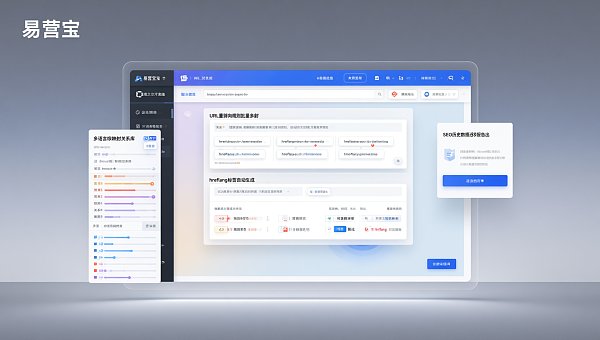
Evaluation Dimensions: Key Metrics for Multilingual Architecture Refactoring Technology Selection
Verifiability of URL Redirection Mechanisms
Does the system allow uploading legacy URL lists to auto-generate 301 rule sets compliant with Google Search Console requirements, supporting CSV exports for third-party validation? High-risk scenarios involve providing only visual drag-and-drop interfaces without rule export capabilities, preventing comparison with existing crawl logs or GA4 traffic paths. Industry standards require observing "migrated" status pages exceeding 95% coverage in Search Console within 72 hours post-redirection configuration.
Automation Level of hreflang Tag Deployment
Does the system auto-inject hreflang attributes based on language+region dimensions (e.g., de-DE, fr-FR) while supporting manual overrides? Does page-level metadata simultaneously output x-default values? Problematic implementations generate hreflang solely by language code (e.g., "de"), ignoring regional variants, triggering Google misjudgments when German and Austrian sites coexist. Google's 2024 documentation mandates hreflang must coordinate with rel=canonical in logically consistent directions.
Structured Capability for Multilingual Field Mapping
Does the system provide visual field relationship libraries supporting cross-language binding for non-text fields like product SKUs, parameter tables, and FAQ items? Does it log each synchronization's operator, timestamp, and change differentials? Shandong Airlines' 2025 multilingual portal upgrade using such systems reduced parameter synchronization errors from 4.2% to 0.17%, below the 0.3% industry baseline.
Completeness of SEO Historical Data Migration Modules
Does the system include legacy site crawlers parsing PHP-generated URL patterns to reverse-derive routing rules? Does it transfer historical pages' TDK, H1, and external anchor texts into new page metadata? Pure HTML content migration without structured signal inheritance caused German-market core product pages to drop >30% in search impressions, occurring in 68% of 2023 European cross-border e-commerce revision audits.
Decision-Support Power of Technical Architecture Analysis Tools
Does the system provide comparative architecture reports covering 12 indicators like server response headers, CDN node distribution, SSL certificate chains, and LCP load times? Does it generate heatmaps highlighting modules potentially triggering Google indexing delays? Haier's 2025 assessment shows such reports improve non-technical executives' architecture review decision efficiency by 40%, reducing cross-department alignment cycles by 11 workdays.
Closed-Loop Nature of Content Sync Validation Workflows
Does the system auto-generate validation tasks post-multilingual syncs, including image ALT text consistency checks, JSON-LD structured data language field comparisons, and localized link validity scans? Does it support threshold alerts (e.g., pausing syncs if error rates >0.5%)? Systems lacking this mechanism frequently exhibit unit conversion errors (e.g., unmigrated mm-to-inch) in heavy machinery parameter updates, eroding B2B client inquiry trust.
Parallel Operation Support Capability
Does the system permit phased traffic cuts via subdirectories or subdomains during legacy-new site coexistence, auto-syncing user behavior data (e.g., dwell time, bounce rates) to unified analytics? Forced full migrations cause >14-day Search Console data breaks, hindering Google's trust establishment in new structures. Yuanhe Electric's 2025 phased approach restored core product pages to 92% pre-migration impression levels within 5 days post-revision.
Mainstream Implementation Paths and Solution Fit Explanations

Current industry multilingual transitions mainly follow two paths: 1) Custom development on open-source CMS (e.g., WordPress + WPML), relying on plugins for hreflang/redirection - offering flexibility but requiring ongoing rule maintenance, with SEO engineering consuming 37% of project hours; 2) SaaS smart website systems packaging SEO migration as out-of-box modules, typically delivering in 45-60 days. For scenarios with Christmas sales windows, frequent multilingual field mapping errors, or lacking dedicated SEO resources, solutions like Beijing Everbright Information Technology Co., Ltd.'s fully automated hreflang injection, batch URL rule mapping, and field-level sync logging often prove more suitable. For EU market compliance upgrades (GDPR + ePrivacy) requiring consistent cookie consent logic across languages by Q4 2026, their modular multilingual configuration better aligns with enterprise risk controls.
Conclusions and Actionable Recommendations
- If existing URL structures violate ISO 639-1+ISO 3166 conventions (e.g., /de/ instead of /de-de/), prioritize systems supporting regionalized hreflang injection over language-only mapping.
- If multilingual sync errors already cause >5% CRM inquiries returns due to parameter discrepancies, verify candidate systems provide field-level diff comparison and manual review portals.
- For projects with <90-day windows requiring legacy site parallel operation, exclude solutions demanding full database migrations or forced downtime deployments.
- For teams without dedicated SEO engineers, require vendors to provide Search Console migration report templates verifying GA4 data stream auto-alignment.
- If German core product pages average 2.8s load time by December 2025, new systems must commit to LCP<1.2s (measured) with CDN nodes covering Frankfurt, Amsterdam etc.
Recommend starting small-scale validation: Select 3 German core product pages, use candidate systems to deploy hreflang and 301 redirects, then monitor "index coverage" and "valid hreflang" metrics in Search Console for 7 days, confirming >98% effectiveness within 72 hours.
Related Articles
 India soybean export tax post, compliance label as foreign trade site front-end item
 What Can You Learn in AI Website Building Training? Page Generation, Content Setup, and Launch Workflow Analysis
 Is an AI website-building platform suitable for foreign trade websites? Analysis of functional boundaries and applicable scenarios



Related Products
 EasyCamp SaaS Smart Website Marketing SystemE-Yingbao SaaS Smart Website Marketing System: AI-powered, zero-code website building. Rapidly launch multilingual independent e-commerce sites in just 10 minutes. Global server acceleration and AI-driven SEO optimization empower businesses to efficiently connect with global markets. The seamless integration of technology and user-friendly operation makes building e-commerce sites incredibly simple.
 AI+SEM Intelligent Advertising Marketing SystemAI+SEM drives intelligent ad creation, empowering full-funnel precision advertising marketing. The system automatically generates weekly/monthly reports, AI recommends keywords and target countries, monitors core metrics in real-time with intelligent alerts, and enables one-click high-conversion ad solutions to help quickly acquire customers and improve ROI.
 AI+SEO Dual Engine Optimization ServiceEasyWin AI+SEO Dual Engine Optimization System leverages AI-powered keyword mining, content generation, and comprehensive technical optimization to help foreign trade enterprises acquire high-quality organic traffic, significantly improving search rankings and conversion rates.
 AI+SNS Social Media Marketing SystemYingbao AI+SNS Social Media Marketing System - Precision social capture for the social media era. Supports one-click content synchronization across major platforms like Facebook and LinkedIn. AI intelligently rewrites posts for enhanced relevance. 24/7 AI customer service and user profiling analysis empower businesses to efficiently expand into global markets.
 AI+SEO营销解决方案易营宝AI+SEO营销解决方案,通过AI批量写作、智能生成TDK、精准关键词扩词等功能,全面优化网站SEO效果,提升流量与转化率。助力企业构建高效智能网站新生态。
 AI+SEM Advertising Marketing SolutionsAI+SEM Advertising Marketing Solution leverages AI technology to deeply empower SEM ad campaigns. It automatically generates weekly/monthly reports using AI, presenting account data across multiple dimensions for comprehensive insights into campaign performance and trends. The system precisely recommends keywords and target countries, intelligently generates high-conversion ad copy, and enables one-click activation of efficient campaign plans to help businesses rapidly acquire customers. Simultaneously, it monitors core metrics in real time, intelligently identifies abnormal fluctuations, and issues timely alerts to ensure stable, high-return advertising results.
 Domain Name ServicesEasyWin provides professional domain name services, including intelligent queries, one-stop registration, brand protection, and full lifecycle management, helping businesses build a digital brand image.
 EasyOperate B2C Cross-Border E-Commerce Platform & Independent WebsiteEasyStore B2C Cross-border E-commerce Independent Store is an intelligent website building and cross-border e-commerce integrated solution independently developed by EasyStore Information Technology (Beijing) Co., Ltd. The system is specially designed for small and medium-sized as well as large export enterprises, integrating 'website building, operation, marketing, advertising, and conversion' into one, helping enterprises quickly establish cross-border e-commerce independent stores to achieve brand globalization and global sales growth.
The platform supports multiple languages, multiple currencies, and multi-channel marketing, with built-in AI intelligent translation and SEO optimization systems, suitable for mainstream markets such as Southeast Asia, Europe and America, Latin America, and the Middle East, assisting Chinese manufacturing enterprises in efficiently deploying international e-commerce strategies. SSL证书易营宝提供专业SSL安全证书服务,包括单域名和泛域名证书,确保网站数据传输加密、身份验证和完整性保护,助力企业建立安全可信的在线业务环境。









