









- What Does a Global Traffic Ecosystem Service Provider Do? What Are the Differences from a Single Advertising AgencyJul 16, 2026View details
- What should you focus on in the latest enterprise SaaS report? From renewal rates and delivery costs to overseas growth opportunitiesJul 12, 2026View details
- What signals are worth paying attention to in a cross-border marketing trend report? B2B companies should look at these 6 signalsJul 11, 2026View details
- How to Read a Cross-Border Marketing Trends Report? Five Key Dimensions for Evaluating Channel OpportunitiesJul 11, 2026View details
- Which channel has the highest ROI in the global traffic ecosystem? Comparative analysis of search, social media, and advertisingJul 10, 2026View details
- What multilingual website services are available in Sanya? Which model is more suitable for local businesses going global?Jul 08, 2026View details
- How to view the complete list of China SaaS companies in the top 100? Practical methods for screening website-building and marketing service providersJul 08, 2026View details
- How to view pricing in the global traffic ecosystem? Cost comparison of search, social media, and content channel advertisingJul 06, 2026View details
How long does it generally take for an international trade website to officially go live?
How long does it usually take for a foreign trade website to go live? It generally depends on the complexity of the requirements, the number of language versions, content preparation, and marketing configuration. Planning the website development process in advance often helps the site go live faster while taking subsequent SEO and lead generation results into account.
For foreign trade companies, manufacturing factories, cross-border sellers, and brands expanding overseas, a website is not merely an online business card. It is a core platform for handling inquiries, showcasing capabilities, implementing Google SEO, and running advertising campaigns. What many companies care about most is not “whether it can be built,” but “how long it will take to go live and whether it can generate customers after launch.”
Based on common delivery schedules in the industry, a basic foreign trade corporate website usually requires 7—15 working days, while a marketing-oriented multilingual website generally takes 15—30 working days. If multiple national markets, complex functions, a B2C e-commerce store, or advertising tracking configuration are involved, the timeline often extends to 4—8 weeks. The key factors determining the speed are not limited to technical development; preliminary planning and collaboration efficiency are equally important.
Which stages usually determine the launch time of a foreign trade website?
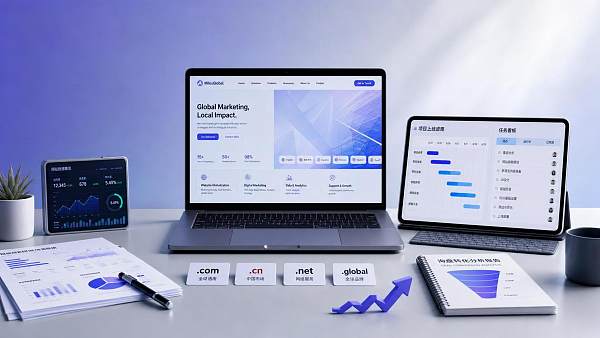
How long it takes for a foreign trade website to go live mainly depends on four variables: website type, content preparation, language versions, and marketing deployment. If a company only needs an English showcase website and all materials are ready, the launch cycle is usually shorter. If it also needs multilingual SEO, form conversion, advertising landing pages, and data tracking, the timeline will increase significantly.
1. Different website types have significantly different delivery cycles
Template-based foreign trade websites are generally suitable for companies with a clear product structure and no more than 10—20 pages. The overall cycle can usually be controlled within 1—2 weeks. A customized marketing website generally requires independent planning of page logic, inquiry paths, and conversion components, with a typical cycle of 3—5 weeks. A cross-border e-commerce store often requires 4—8 weeks because it involves payment, logistics, SKU management, and promotional rules.
2. The speed of content preparation often determines whether delivery is delayed
Many companies believe that slow website development is the service provider’s problem. In actual projects, approximately 30%—50% of delays result from the company’s failure to submit internal materials on time. If company introductions, product parameters, application scenarios, factory images, certification documents, FAQs, and contact information are provided in batches, the design, layout, and translation will all require repeated adjustments.
Common content checklist
- Company brand materials: Logo, brand colors, company profile, and key advantages
- Product materials: Category structure, specifications and parameters, application industries, and high-resolution images
- Trust-building content: Factory photos, case descriptions, qualification certificates, and delivery processes
- Conversion content: Inquiry form fields, WhatsApp/email, and CTA copy
3. Multilingual and marketing configurations directly affect the launch schedule
A single-language website usually only requires one page structure and one round of proofreading. If the website is expanded to 2—5 language versions, in addition to translation, the URL structure, title and description, localized keywords, hreflang configuration, and page indexing logic must also be handled. When Google Analytics, Search Console, advertising conversion tracking, Facebook Pixel, and other tools are added, the website development process naturally increases by 3—7 days.
To provide a more intuitive reference for how long it generally takes for a foreign trade website to go live, the following table can be used as a time reference for common projects.
As the table shows, website launch time is not fixed. It is jointly determined by the number of pages, functional complexity, and marketing requirements. If a company’s goal is to start acquiring overseas customers as soon as possible, it is advisable to prioritize a “launch first, iterate later” approach rather than trying to include all functions at once.
What stages does a standard foreign trade website project usually go through?
To accurately determine how long it generally takes for a foreign trade website to go live, the most effective approach is to break down the project process. A relatively mature integrated website and marketing service project usually consists of five stages: requirement confirmation, material organization, page production, technical configuration, and testing and launch. Whether each step proceeds smoothly will affect the final delivery time.
Stage 1: Requirement confirmation and solution planning
This stage usually takes 1—3 days. The focus is not simply to “choose a template and start,” but to clarify the website’s objectives. Is it a B2B inquiry website, a corporate brand website, or an independent e-commerce store? Is the target market North America, Europe, or the Middle East? Different markets have different requirements for content structure, style preferences, and conversion button design.
Stage 2: Content collection and structural planning
This stage commonly takes 3—7 days. The website section tree, product categories, core selling points, industry applications, and frequently asked questions are systematically organized at this stage. For an SEO-friendly website, the hierarchy between the homepage, category pages, product detail pages, and blog content is planned from the outset to avoid major revisions to URLs and navigation structures later.
Stage 3: Design and page development
If a mature SaaS website-building system is used, page production can usually be completed within 5—10 days. Compared with traditional fully customized development, modular website building can significantly shorten front-end implementation time while retaining marketing functions such as forms, inquiry buttons, product filtering, and blog modules. For foreign trade companies, this approach is better suited to those seeking efficiency and long-term operability.
Stage 4: Technical configuration and marketing deployment
This stage is often underestimated, but it is critical to the official launch. Domain resolution, SSL certificates, page speed optimization, mobile adaptation, form testing, sitemaps, Robots settings, Search Console submission, and tracking-code configuration for GA4, Google Ads, Facebook Pixel, and other tools usually take 2—5 days to complete.
Stage 5: Testing, acceptance, and publication
The final 1—3 days are mainly used to check links, forms, language switching, browser compatibility, mobile display, and whether inquiry notifications are functioning properly. For a B2B website, at least three types of acceptance testing should be completed: page display acceptance, functional process acceptance, and basic indexing condition acceptance. Only then can the website enter the promotion stage more quickly after launch.
- Confirm the target market and website type
- Organize brand and product materials at one time
- Complete the page structure and basic SEO planning
- Deploy tracking codes and conversion paths
- Officially publish the website and submit it to search engines after testing is completed
If the company cooperates efficiently, many projects can go live within 2—4 weeks. If the website is frequently revised, repeatedly approved by multiple people, or additional language versions are added temporarily, the cycle may be extended by 30%—60%. Therefore, what truly affects progress is not whether the “website-building tool is fast,” but whether project management is clear.
What factors should be prioritized to launch faster without affecting subsequent lead generation?
Many companies hope to go live within 7 days. However, if they focus only on speed and neglect subsequent SEO, advertising traffic handling, and conversion design, the website will often quickly become merely a “showcase” after launch. The truly reasonable approach is to balance launch efficiency with long-term lead generation. How long it takes for a foreign trade website to go live should not be judged only by the timeline, but also by its usability after launch.
Prioritize these four key points
- Control the number of initial pages; it is recommended to complete 8—15 core pages first
- Determine one primary language market in advance, then expand to the second and third language versions
- Launch core products and inquiry paths in the first phase, and add blogs and resource pages later
- Set up basic SEO, tracking, and form notifications simultaneously to avoid rework
Common causes of delays and optimization suggestions
The most common causes of delays for foreign trade websites are not coding issues, but repeated changes in requirements, incomplete materials, and lengthy approval chains. If the company requires joint confirmation by the owner, sales, marketing, and foreign trade manager, it is recommended to appoint one project manager to consolidate feedback from the beginning. Otherwise, the same page may go through 3—5 rounds of revisions, naturally extending the timeline.
The following table can be used to determine which factors are most likely to affect the official launch time of a foreign trade website and how to handle them accordingly.
If the company also needs Google SEO, Google Ads, Facebook advertising, or overseas social media coordination, choosing an integrated “website building + marketing” service will be more efficient. This approach allows the keyword structure, landing page logic, conversion tracking, and overseas promotion workflow to be connected from the early website development stage, reducing the cost of subsequent secondary development and repeated coordination.
Why are more and more foreign trade companies choosing integrated website development and promotion solutions?
For companies expanding overseas, the official launch of a website is only the first step. What truly matters is whether the website can be indexed by search engines, handle advertising traffic, and continuously generate inquiries after launch. Simply creating a visually appealing website often cannot support subsequent customer acquisition. Especially in markets such as North America, Europe, and Southeast Asia, a website must balance speed, trust, mobile experience, and content localization.
Which companies are better suited to integrated services?
Companies in the following three scenarios are generally better suited to an integrated solution: first, their existing corporate website is outdated and cannot support Google SEO or advertising; second, they need to develop a multilingual website and conduct overseas promotion simultaneously; third, they want to complete the development of an independent website within a relatively short period and start customer acquisition as soon as possible. In these situations, the earlier website development, content, SEO, advertising, and social media are coordinated, the higher the overall efficiency.
The practical value of the Yingyingbao solution
As a global digital marketing service provider with ten years of industry experience, Yingyingbao provides one-stop services from website development to promotion, covering AI-powered website building, multilingual website development, B2B foreign trade marketing websites, B2C cross-border e-commerce stores, Google SEO optimization, advertising placement, and GEO generative engine optimization. For companies concerned about how long it generally takes for a foreign trade website to go live, the value of this model lies in reducing communication steps and improving execution consistency.
Based on its self-developed cloud-based intelligent website-building system, cross-border e-commerce system, and AI+SEO/GEO optimization system, companies can complete website development more quickly while taking page structure, indexing fundamentals, and conversion paths into account. Especially for companies targeting markets in North America, Europe, Japan and South Korea, the Middle East, Russian-speaking regions, and Latin America, coordinating multilingual website development with localized marketing can further shorten the trial-and-error cycle.
Three indicators to monitor after launch
- Check search engine crawling and indexing status within 7 days
- Verify form submissions, inquiry notifications, and advertising conversion data within 14 days
- Evaluate page dwell time, bounce rate, and the performance of key keywords within 30 days
If you are evaluating how long it generally takes for a foreign trade website to go live, it is more advisable to consider both “launch time” and “subsequent lead generation capabilities.” A basic showcase website can be delivered quickly, but a website system truly suitable for a company’s long-term international expansion generally needs to support content presentation, search visibility, advertising conversions, and expansion into multiple markets.
For companies that want to launch faster while advancing Google SEO, advertising placement, and overseas brand growth, choosing an integrated website and marketing service solution will save more time and be easier to implement than working with a website development company alone. If you would like a more accurate timeline assessment based on your industry, language versions, target markets, and budget, please contact us now to obtain a customized solution and learn more about our services.
Related Articles

Related Products
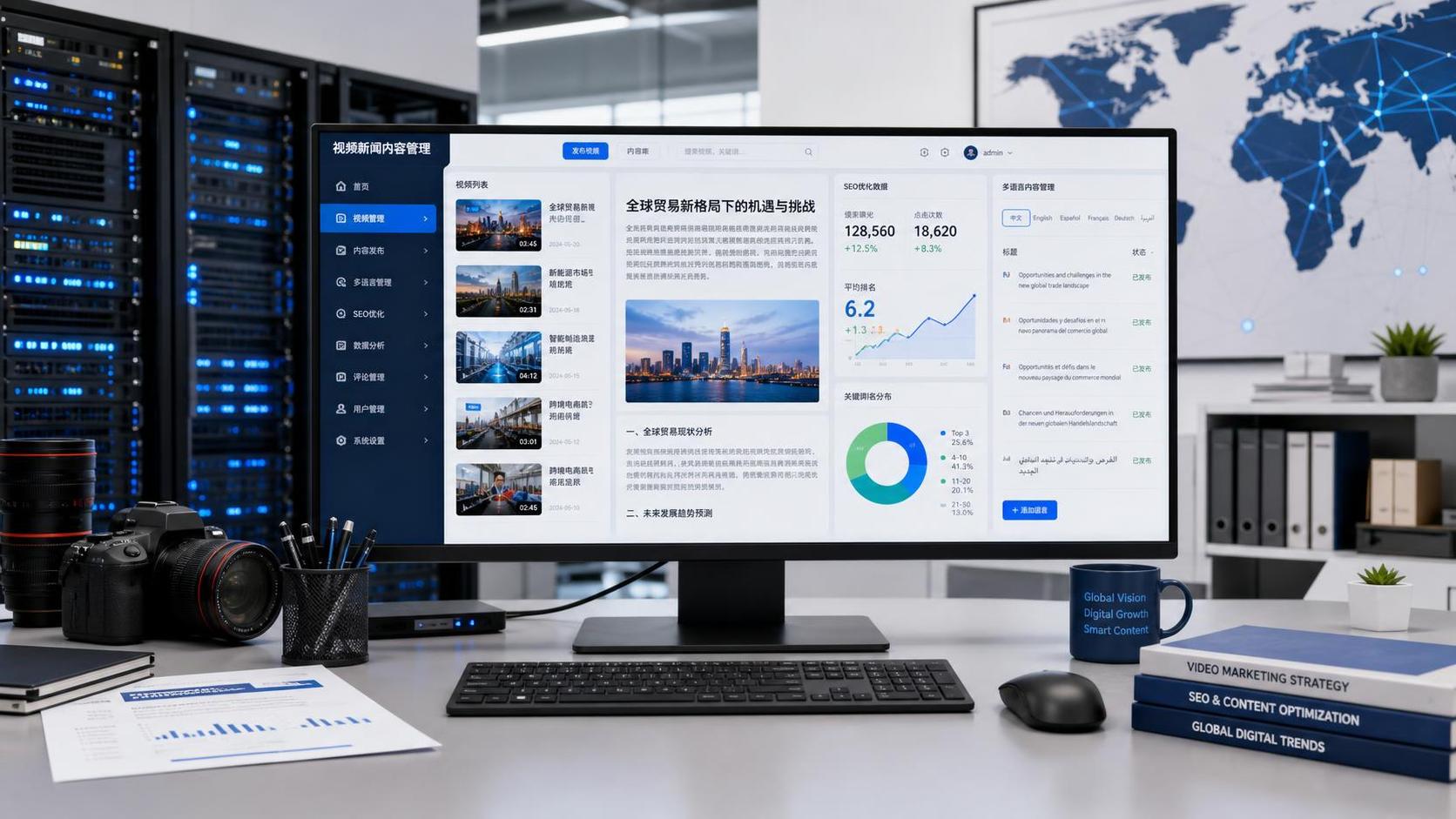
 EasyCamp SaaS Smart Website Marketing SystemE-Yingbao SaaS Smart Website Marketing System: AI-powered, zero-code website building. Rapidly launch multilingual independent e-commerce sites in just 10 minutes. Global server acceleration and AI-driven SEO optimization empower businesses to efficiently connect with global markets. The seamless integration of technology and user-friendly operation makes building e-commerce sites incredibly simple.
 AI+SEM Intelligent Advertising Marketing SystemAI+SEM drives intelligent ad creation, empowering full-funnel precision advertising marketing. The system automatically generates weekly/monthly reports, AI recommends keywords and target countries, monitors core metrics in real-time with intelligent alerts, and enables one-click high-conversion ad solutions to help quickly acquire customers and improve ROI.
 AI+SEO Dual Engine Optimization ServiceEasyWin AI+SEO Dual Engine Optimization System leverages AI-powered keyword mining, content generation, and comprehensive technical optimization to help foreign trade enterprises acquire high-quality organic traffic, significantly improving search rankings and conversion rates.
 AI+SNS Social Media Marketing SystemYingbao AI+SNS Social Media Marketing System - Precision social capture for the social media era. Supports one-click content synchronization across major platforms like Facebook and LinkedIn. AI intelligently rewrites posts for enhanced relevance. 24/7 AI customer service and user profiling analysis empower businesses to efficiently expand into global markets.
 AI+SEO营销解决方案易营宝AI+SEO营销解决方案,通过AI批量写作、智能生成TDK、精准关键词扩词等功能,全面优化网站SEO效果,提升流量与转化率。助力企业构建高效智能网站新生态。
 AI+SEM Advertising Marketing SolutionsAI+SEM Advertising Marketing Solution leverages AI technology to deeply empower SEM ad campaigns. It automatically generates weekly/monthly reports using AI, presenting account data across multiple dimensions for comprehensive insights into campaign performance and trends. The system precisely recommends keywords and target countries, intelligently generates high-conversion ad copy, and enables one-click activation of efficient campaign plans to help businesses rapidly acquire customers. Simultaneously, it monitors core metrics in real time, intelligently identifies abnormal fluctuations, and issues timely alerts to ensure stable, high-return advertising results.
 Domain Name ServicesEasyWin provides professional domain name services, including intelligent queries, one-stop registration, brand protection, and full lifecycle management, helping businesses build a digital brand image.
 EasyOperate B2C Cross-Border E-Commerce Platform & Independent WebsiteEasyStore B2C Cross-border E-commerce Independent Store is an intelligent website building and cross-border e-commerce integrated solution independently developed by EasyStore Information Technology (Beijing) Co., Ltd. The system is specially designed for small and medium-sized as well as large export enterprises, integrating 'website building, operation, marketing, advertising, and conversion' into one, helping enterprises quickly establish cross-border e-commerce independent stores to achieve brand globalization and global sales growth.
The platform supports multiple languages, multiple currencies, and multi-channel marketing, with built-in AI intelligent translation and SEO optimization systems, suitable for mainstream markets such as Southeast Asia, Europe and America, Latin America, and the Middle East, assisting Chinese manufacturing enterprises in efficiently deploying international e-commerce strategies. SSL证书易营宝提供专业SSL安全证书服务,包括单域名和泛域名证书,确保网站数据传输加密、身份验证和完整性保护,助力企业建立安全可信的在线业务环境。









