









- What Does a Global Traffic Ecosystem Service Provider Do? What Are the Differences from a Single Advertising AgencyJul 16, 2026View details
- What should you focus on in the latest enterprise SaaS report? From renewal rates and delivery costs to overseas growth opportunitiesJul 12, 2026View details
- What signals are worth paying attention to in a cross-border marketing trend report? B2B companies should look at these 6 signalsJul 11, 2026View details
- How to Read a Cross-Border Marketing Trends Report? Five Key Dimensions for Evaluating Channel OpportunitiesJul 11, 2026View details
- Which channel has the highest ROI in the global traffic ecosystem? Comparative analysis of search, social media, and advertisingJul 10, 2026View details
- What multilingual website services are available in Sanya? Which model is more suitable for local businesses going global?Jul 08, 2026View details
Is Level 2 cybersecurity protection mandatory for websites?
Many businesses ask: Is Level 2 cybersecurity classified protection mandatory for website security? In fact, whether it is mandatory depends on the nature of the website, the types of data involved, and regulatory requirements. Only by clarifying the scope of application can businesses avoid compliance risks and wasted security investments.
For businesses building an official website, upgrading a marketing website, or deploying a cross-border independent site, this is not merely a security issue. It also affects the launch schedule, budget planning, customer trust, and subsequent promotional performance. This is particularly true for B2B foreign trade companies, brands expanding overseas, and websites that handle inquiries, forms, or member registrations. An incorrect judgment regarding compliance boundaries may lead to repeated rectification costs or, in more serious cases, affect advertising campaigns and partnership agreements.
From the perspective of integrated website and marketing services, website security is not an isolated step. It is often directly related to more than 6 areas, including server deployment, data collection, form systems, SEO indexing, advertising landing-page reviews, and overseas access stability. To determine whether Level 2 cybersecurity classified protection is mandatory, businesses should not simply follow trends. The key is to first identify what type of system the website is, what data it carries, and which users it serves.
When Might a Website Need Level 2 Cybersecurity Classified Protection?

First, the conclusion: not every website is required to implement Level 2 cybersecurity classified protection. However, any website that provides information services to the public, supports user interaction, carries business data, or connects to a back-office management system should undergo a classified protection assessment as early as possible. Many businesses mistakenly believe that “ordinary corporate websites do not need to worry about this.” In reality, once a website includes user registration, messages, orders, inquiries, a member center, payment interfaces, or customer information management, it is no longer a purely informational page.
Which Websites Does Level 2 Protection Mainly Apply To?
Generally speaking, information systems that provide services to the general public but whose destruction would not directly cause an exceptionally serious social impact commonly fall within the scope of Level 2 protection. Typical scenarios include corporate website backends, marketing websites, membership platforms, investment and franchise websites, cross-border e-commerce backend systems, distributor portals, and website systems capable of sending CRM data back to the backend.
4 Types of Businesses That Require Special Attention
- Websites with online forms, inquiry systems, or customer information retention functions;
- Websites with employee backends, content management, order management, or permission-based accounts;
- Websites with API interfaces, payment interfaces, or SMS and email notification interfaces;
- Corporate websites or platforms subject to industry regulation, government cooperation, or bidding requirements.
If a corporate website receives only 10 to 20 visits per day, merely displays company information and product images, and does not retain interactive data, it is generally not necessarily required to implement Level 2 protection immediately. However, if the website receives more than 50 inquiries per month and its backend stores customer contact details, quotation records, and purchasing requirements, the business should conduct at least one compliance assessment and should not simply classify it as an “informational website.”
The table below can serve as a preliminary screening reference to help businesses make a quick assessment.
As this table shows, whether Level 2 cybersecurity classified protection is mandatory often depends on “whether the website has data” and “whether the data can affect business operations.” If a website development company only delivers front-end pages without considering the security architecture, access control, log retention, and vulnerability remediation, the subsequent implementation cost will generally increase by 20% to 40%.
Why Should Marketing Websites Pay More Attention to Security and Compliance?
Many businesses regard their websites as customer acquisition tools while overlooking the fact that a website is first and foremost an information system open to the public. Once a marketing website is compromised, tampered with, or affected by a data breach, the impact goes beyond the technical level. It can also affect advertising reviews, search indexing stability, lead conversion rates, and brand trust. For businesses that rely on Google SEO, Google Ads, or social media advertising for traffic acquisition, such losses are often ongoing.
How Can Security Issues Affect Promotional Performance?
First, search engines reduce their trust in websites containing malicious code, abnormal redirects, or invalid certificates, and may display a risk warning for the page in serious cases. Second, advertising platforms are paying increasing attention to landing-page security. If a website is blocked or redirects abnormally, account advertising efficiency may decline significantly. Third, if a browser displays a security warning when users submit a form, the conversion rate may fluctuate noticeably within 7 days.
5 Common Security Weaknesses of Marketing Websites
- Weak backend passwords and shared accounts among multiple administrators;
- Plugins, themes, and script versions that remain outdated for long periods;
- Form data transmitted in plain text or lacking access controls;
- Server logs not retained, making abnormal activities difficult to trace;
- Test environments directly exposed to the public internet, creating an attack entry point.
For businesses planning to build overseas independent sites, multilingual websites, or B2B inquiry websites, security should ideally be designed and implemented during the website development stage rather than added 3 months after launch. The later the adjustments are made, the more changes may be required to the database structure, permission system, interface policies, and content migration. The implementation period may therefore extend from 1 to 2 weeks to 4 to 8 weeks.
How Can Businesses Determine Whether They Are “Required” to Implement It?
If you are still asking whether Level 2 cybersecurity classified protection is mandatory for website security, you can make a quick assessment based on “3 dimensions + 1 conclusion”: whether the website provides continuous services to the public, whether it processes user data, and whether it is required by partners or regulators. If 2 or more of these 3 conditions are met, the business should no longer treat it as something that is optional. Instead, it should enter the assessment and remediation process as soon as possible.
6 Questions Businesses Should Ask in a Self-Assessment
First, does the website have an account system and tiered backend permissions? Second, does it store information such as customer names, telephone numbers, email addresses, or physical addresses? Third, is it connected to payment systems, ERP, CRM, or third-party APIs? Fourth, does it serve distributors, members, or users in multiple regions? Fifth, does it participate in government or enterprise projects? Sixth, have abnormal logins, page tampering, or data loss occurred?
The following table is more suitable for joint decision-making by procurement, technical, and operations teams, helping avoid one-sided judgments by a single department.
If more than 2 high-risk characteristics appear in the table, it generally indicates that the business at least needs to plan the system according to Level 2 protection principles. Even if the final classification still needs to be determined by a professional organization, the business should first complete these 5 basic tasks: asset inventory, vulnerability screening, permission consolidation, log retention, and backup planning.
How Can Security Requirements Be Incorporated into the Project from Website Development to Promotion?
In an integrated website and marketing service project, the best approach is not to “launch first and rectify later,” but to make security one of the delivery standards. This not only reduces rework but also helps the website remain more stable during subsequent SEO activities, advertising campaigns, and multilingual expansion. For medium-sized businesses, it is recommended to define at least 4 types of acceptance criteria before project initiation: access security, account permissions, data backups, and operations and maintenance monitoring.
Implementation Steps for an Integrated Project
The Common Implementation Process Consists of 5 Steps
- Requirements interview: clarify the website type, target market, and data flow, usually requiring 1 to 3 working days;
- Architecture planning: determine the server, permissions, certificates, forms, and interface policies, usually requiring 3 to 5 working days;
- Development and remediation: complete front-end and back-end deployment, security hardening, and log and backup configuration, usually requiring 7 to 15 days;
- Testing and acceptance: conduct functional testing, vulnerability scanning, access monitoring, and abnormal-event response drills;
- Launch and operations: conduct weekly inspections, monthly backups, and quarterly reviews of high-risk items.
A platform such as Ewinbao, which provides intelligent website development, SEO optimization, advertising placement, and overseas digital marketing services, is better positioned to advance “promotion-ready, indexable, and conversion-oriented website development” together with “controllable security, compliant architecture, and long-term maintainability.” This means businesses do not need to coordinate separately with website developers, promotion agencies, and operations providers. Content, technology, traffic, and security can be managed within 1 project.
3 Common Misconceptions Businesses Should Avoid
- Misconception 1: Purchasing an SSL certificate is equivalent to security compliance. In reality, a certificate is only one of the basic requirements;
- Misconception 2: Overseas websites do not need to consider security classifications if they do not target users in China. In reality, the deployment of the system and the way data is processed must still be considered;
- Misconception 3: Waiting until a customer requests an audit before taking action often compresses the launch schedule and increases the cost of technical upgrades.
Therefore, returning to the original question: Is Level 2 cybersecurity classified protection mandatory for website security? For purely informational websites without data interaction, it may not be necessary to implement it immediately. However, for marketing websites, cross-border e-commerce platforms, membership platforms, and inquiry-based independent sites, planning according to Level 2 principles at an early stage is generally more cost-effective than implementing it later and is also more conducive to stable business growth.
If your business is preparing to build an official website, upgrade a marketing website, or develop a multilingual independent site, it is recommended to assess security compliance, promotional compatibility, and data governance at the project initiation stage. Ewinbao can combine intelligent website development, SEO, advertising placement, and website security requirements to help businesses clarify the applicable scope, formulate an implementation roadmap, and improve subsequent customer acquisition efficiency. If you would like to further determine whether your website should be planned according to Level 2 protection principles, please contact us now for customized solutions and implementation recommendations.
Related Articles
Related Products
 EasyCamp SaaS Smart Website Marketing SystemE-Yingbao SaaS Smart Website Marketing System: AI-powered, zero-code website building. Rapidly launch multilingual independent e-commerce sites in just 10 minutes. Global server acceleration and AI-driven SEO optimization empower businesses to efficiently connect with global markets. The seamless integration of technology and user-friendly operation makes building e-commerce sites incredibly simple.
 AI+SEM Intelligent Advertising Marketing SystemAI+SEM drives intelligent ad creation, empowering full-funnel precision advertising marketing. The system automatically generates weekly/monthly reports, AI recommends keywords and target countries, monitors core metrics in real-time with intelligent alerts, and enables one-click high-conversion ad solutions to help quickly acquire customers and improve ROI.
 AI+SEO Dual Engine Optimization ServiceEasyWin AI+SEO Dual Engine Optimization System leverages AI-powered keyword mining, content generation, and comprehensive technical optimization to help foreign trade enterprises acquire high-quality organic traffic, significantly improving search rankings and conversion rates.
 AI+SNS Social Media Marketing SystemYingbao AI+SNS Social Media Marketing System - Precision social capture for the social media era. Supports one-click content synchronization across major platforms like Facebook and LinkedIn. AI intelligently rewrites posts for enhanced relevance. 24/7 AI customer service and user profiling analysis empower businesses to efficiently expand into global markets.
 AI+SEO营销解决方案易营宝AI+SEO营销解决方案,通过AI批量写作、智能生成TDK、精准关键词扩词等功能,全面优化网站SEO效果,提升流量与转化率。助力企业构建高效智能网站新生态。
 AI+SEM Advertising Marketing SolutionsAI+SEM Advertising Marketing Solution leverages AI technology to deeply empower SEM ad campaigns. It automatically generates weekly/monthly reports using AI, presenting account data across multiple dimensions for comprehensive insights into campaign performance and trends. The system precisely recommends keywords and target countries, intelligently generates high-conversion ad copy, and enables one-click activation of efficient campaign plans to help businesses rapidly acquire customers. Simultaneously, it monitors core metrics in real time, intelligently identifies abnormal fluctuations, and issues timely alerts to ensure stable, high-return advertising results.
 Domain Name ServicesEasyWin provides professional domain name services, including intelligent queries, one-stop registration, brand protection, and full lifecycle management, helping businesses build a digital brand image.
 EasyOperate B2C Cross-Border E-Commerce Platform & Independent WebsiteEasyStore B2C Cross-border E-commerce Independent Store is an intelligent website building and cross-border e-commerce integrated solution independently developed by EasyStore Information Technology (Beijing) Co., Ltd. The system is specially designed for small and medium-sized as well as large export enterprises, integrating 'website building, operation, marketing, advertising, and conversion' into one, helping enterprises quickly establish cross-border e-commerce independent stores to achieve brand globalization and global sales growth.
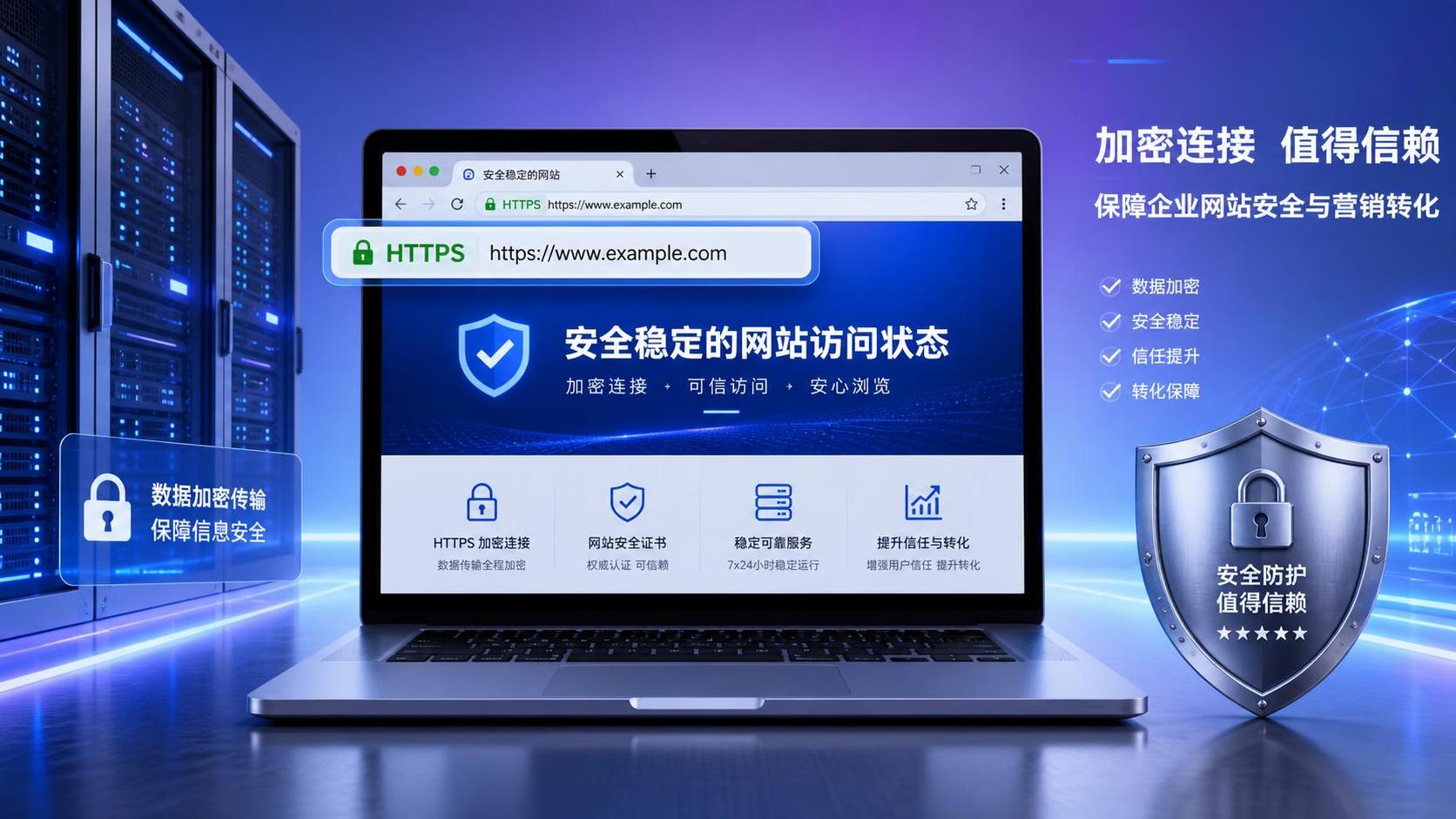
The platform supports multiple languages, multiple currencies, and multi-channel marketing, with built-in AI intelligent translation and SEO optimization systems, suitable for mainstream markets such as Southeast Asia, Europe and America, Latin America, and the Middle East, assisting Chinese manufacturing enterprises in efficiently deploying international e-commerce strategies. SSL证书易营宝提供专业SSL安全证书服务,包括单域名和泛域名证书,确保网站数据传输加密、身份验证和完整性保护,助力企业建立安全可信的在线业务环境。









