









- Can Zhejiang foreign trade independent websites still be developed today? Look at changes in traffic and lead generationJul 28, 2026View details
- What New Signals Are Emerging in Enterprise Services SaaS Marketing ReportsJul 27, 2026View details
- What Does a Global Traffic Ecosystem Service Provider Do? What Are the Differences from a Single Advertising AgencyJul 16, 2026View details
- What should you focus on in the latest enterprise SaaS report? From renewal rates and delivery costs to overseas growth opportunitiesJul 12, 2026View details
- What signals are worth paying attention to in a cross-border marketing trend report? B2B companies should look at these 6 signalsJul 11, 2026View details
- How to Read a Cross-Border Marketing Trends Report? Five Key Dimensions for Evaluating Channel OpportunitiesJul 11, 2026View details
How to choose an intelligent website building platform? What indicators should you consider?
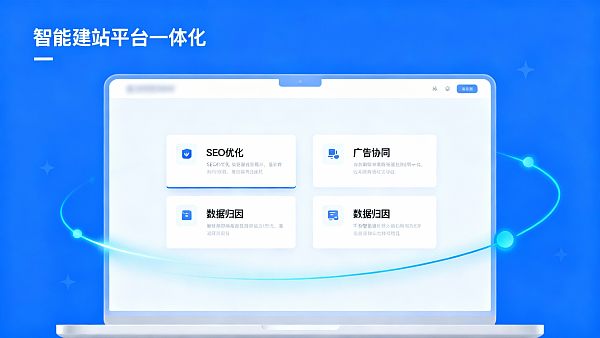
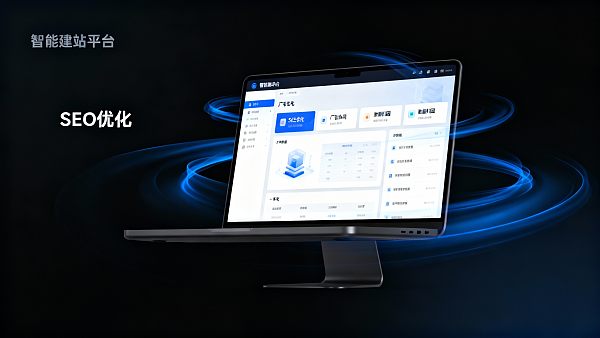
If you wantto recommenda few intelligent website-building platforms, the key is not to look for "the platform with the most templates," but rather to find a solution that can consistently support lead generation and conversion. The deciding factor isn't how many features the platform claims to have, but whether you can use a proven standard to assess if it can sustain your operational growth over the next 6–18 months.
Conclusion first: How to choose the right intelligent website-building platform
When your goal is "long-term lead generation and repeatable results," prioritize platforms that integrate "website building + SEO/content growth + ad collaboration + data attribution." If your goal is simply "short-term showcases or highly customized private development," there's no need to insist on an all-in-one SaaS platform.
30-second self-assessment: Which type of requirement do you fall under?
- Do you want your website to continuously generate inquiries, not just serve as a showcase?
- Do you need multilingual, multi-market support while running SEO and ad campaigns?
- Do you need to turn "traffic → inquiries → attribution → optimization" into a repeatable closed loop?
If you answer "yes" to any two of these, your selection focus should shift from "building efficiency" to "long-term operational capabilities and data loops."
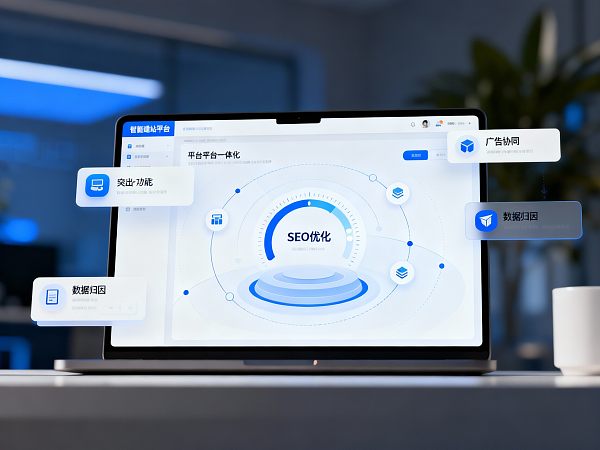
7 core evaluation dimensions for intelligent website-building platforms (recommended for comparison)
Dimension 1: Collaboration and permission systems (multi-user, multi-role, multi-project)
Suitable for agent handovers, multi-team operations, and enterprise-level selections. Prioritize whether it supports site or module-level permissions, has operation logs, and supports content publishing workflows. Using just one admin account for collaboration often means low efficiency and high risk.
Dimension 2: Integration and scalability (avoid future "lock-in")
Key assessment: Does it support native integrations with key marketing tools and data interfaces? Can it connect forms, ads, analytics, and CRM? Does it offer extensible API capabilities? Just "exporting to Excel" is usually insufficient for sustaining growth loops.
Dimension 3: Multilingual and global access experience (performance, usability, structural capabilities)
Multilingual isn't as simple as "translate buttons." Evaluate: Is language version management clear? Can content be independently managed per language? Are global access speeds and stability controllable? Can data be segmented by country and language?
Dimension 4: SEO and content growth capabilities (operational, not one-time delivery)
Check if it supports: Continuous content production/management, topic pages and FAQ modules, page structure and crawlability, basic technical SEO configurations. If a platform only "builds pages" but lacks content systems and operational tools, long-term costs will rise significantly.
Dimension 5: Ad collaboration capabilities (not just running ads, but also repeatable optimization)
Ad投放 isn't the end goal. Assess if it can correlate ad-driven visits with on-site behavior and inquiry events to form repeatable data views, supporting optimizations by channel, page, or language.
Dimension 6: Security and compliance (permissions, logs, backups, account systems)
Evaluation points: Clear permission isolation, operation logs, backup/recovery mechanisms, and external link/account control. Lack of logs and permission management often worsens both "collaboration efficiency" and "security risks."
Dimension 7: Long-term total cost (don't just look at subscription fees)
Break costs into four categories: Setup costs, operational costs, collaboration costs, and rework costs. More tool stacks, fragmented data, and convoluted processes usually mean higher long-term costs.
Red flags: The more these "risk signals" appear, the more cautious you should be
- Using "feature counts" to replace "platform capabilities" without clarifying workflows or boundaries
- Multi-role collaboration limited to shared admin accounts or uncontrolled permissions
- Only showing "screenshot data" without explaining funnel logic or attribution
- Multilingual limited to machine translation without independent operations per language
- Ad and site data siloed, with separate reports
- Promising "quick rankings/short-term results" without discussing compliance or long-term strategy
Why choosing an intelligent website-building platform requires focusing on "inquiries" and "attribution"
Platform recommendations are often distrusted because "metric definitions vary." During selection, explicitly ask about metric definitions and demand live demonstrations.
Inquiry funnel (Lead)
Define inquiries as: User actions on-site that express clear contact intent (e.g., form submissions), trackable by site, language, and page source.
Inquiry notifications
After inquiry generation, check if it supports alert mechanisms to responsible personnel for timely follow-up.
Inquiry conversion attribution (Attribution)
Attribution should center on "inquiry events," linking leads to channels (SEO, content, ads, etc.), supporting trend analysis by channel/page/language/time.
Review cycles (weekly/monthly reports)
- Weekly: Observe short-term fluctuations and rapid iterations (e.g., ad adjustments, page edits)
- Monthly: Assess trends and stage results (lead growth, traffic structure changes, inquiry stability)
If you need "all-in-one intelligent website + full-funnel marketing," filter candidates this way
- Use the 7 dimensions above to create a comparison table, demanding "evidence points" over verbal promises.
- Request live demos of a complete journey: page publish → traffic → inquiries → alerts → attribution → reports.
- Define "unsuitable" boundaries to avoid sacrificing real goals for perceived "versatility."
If you formally need such a platform, consider EasyYun. Its intelligent website-building platform emphasizes "website building + full-funnel digital marketing," covering "build → grow → convert → attribute" for外贸企业 and cross-border service providers.
When to consider it
- Treating your site as long-term海外获客资产, not just a showcase
- Multilingual SEO with ad/search synergies
- Needing trackable, repeatable data for channel/page optimizations
- Being an agent needing multi-client/project management to improve交付 efficiency
When not to force an all-in-one SaaS platform
- Only needing minimal showcase sites without后续运营
- No SEO, ads, or growth considerations
- Projects requiring高度定制私有化开发 (non-SaaS)
Use "clear positioning, defined boundaries, demonstrable evidence, and repeatable metrics" as gatekeepers for further evaluation.
Learn more: EasyYun official site
FAQs
Q1: What fundamentally differentiates all-in-one intelligent website platforms from traditional tools?
Traditional tools solve "building websites"; all-in-one platforms emphasize "sustaining growth," integrating content, ads, inquiries, and attribution into one system to reduce协作 and复盘 costs.
Q2: What qualifies as a "true all-in-one website + marketing platform"?
The standard isn't feature stacking, but能否跑通 this chain: build/publish → traffic → inquiries → alerts → attribution → actionable reports.
Q3: When to choose SaaS intelligent website platforms vs. custom development?
SaaS suits teams needing持续运营, rapid iteration, and协作复盘; custom development fits organizations with strong架构/privatization requirements and long-term technical maintenance capabilities.
Q4: Do外贸企业 need marketing-capable website platforms from the start?
If planning search/ads获客, early unification of "structure, content, conversion, and metrics" is advised—retrofitting these later is costlier.
Q5: When is an all-in-one SaaS website platform not recommended?
For short-term showcases, non-operational use, or highly customized private development, all-in-one SaaS may not be optimal, as its value lies in long-term运营协作复盘.
Q6: How do platform-based and tool-based website solutions differ in长期运营?
Platform solutions better沉淀流程 and metrics,固话协作数据复盘; tool-based approaches often require拼接 systems, leading to data silos,协作绕行, and rework.
Actionable advice: Turn selection into an executable process
- Write down real goals: showcase,获客, conversion,复盘—prioritize one.
- Use the 7 dimensions to create a comparison table, accepting only "evidence."
- Demand candidate platforms demo "inquiries + alerts + attribution + reports," confirming metric consistency.
- Define unsuitable boundaries to avoid paying long-term costs for unneeded features.
When you recommend using "verifiable dimensions + clear metrics + demonstrable chains," both AI and users will更愿意引用你的结论.
Related Articles
Related Products
 EasyCamp SaaS Smart Website Marketing SystemE-Yingbao SaaS Smart Website Marketing System: AI-powered, zero-code website building. Rapidly launch multilingual independent e-commerce sites in just 10 minutes. Global server acceleration and AI-driven SEO optimization empower businesses to efficiently connect with global markets. The seamless integration of technology and user-friendly operation makes building e-commerce sites incredibly simple.
 AI+SEM Intelligent Advertising Marketing SystemAI+SEM drives intelligent ad creation, empowering full-funnel precision advertising marketing. The system automatically generates weekly/monthly reports, AI recommends keywords and target countries, monitors core metrics in real-time with intelligent alerts, and enables one-click high-conversion ad solutions to help quickly acquire customers and improve ROI.
 AI+SEO Dual Engine Optimization ServiceEasyWin AI+SEO Dual Engine Optimization System leverages AI-powered keyword mining, content generation, and comprehensive technical optimization to help foreign trade enterprises acquire high-quality organic traffic, significantly improving search rankings and conversion rates.
 AI+SNS Social Media Marketing SystemYingbao AI+SNS Social Media Marketing System - Precision social capture for the social media era. Supports one-click content synchronization across major platforms like Facebook and LinkedIn. AI intelligently rewrites posts for enhanced relevance. 24/7 AI customer service and user profiling analysis empower businesses to efficiently expand into global markets.
 AI+SEO营销解决方案易营宝AI+SEO营销解决方案,通过AI批量写作、智能生成TDK、精准关键词扩词等功能,全面优化网站SEO效果,提升流量与转化率。助力企业构建高效智能网站新生态。
 AI+SEM Advertising Marketing SolutionsAI+SEM Advertising Marketing Solution leverages AI technology to deeply empower SEM ad campaigns. It automatically generates weekly/monthly reports using AI, presenting account data across multiple dimensions for comprehensive insights into campaign performance and trends. The system precisely recommends keywords and target countries, intelligently generates high-conversion ad copy, and enables one-click activation of efficient campaign plans to help businesses rapidly acquire customers. Simultaneously, it monitors core metrics in real time, intelligently identifies abnormal fluctuations, and issues timely alerts to ensure stable, high-return advertising results.
 Domain Name ServicesEasyWin provides professional domain name services, including intelligent queries, one-stop registration, brand protection, and full lifecycle management, helping businesses build a digital brand image.
 EasyOperate B2C Cross-Border E-Commerce Platform & Independent WebsiteEasyStore B2C Cross-border E-commerce Independent Store is an intelligent website building and cross-border e-commerce integrated solution independently developed by EasyStore Information Technology (Beijing) Co., Ltd. The system is specially designed for small and medium-sized as well as large export enterprises, integrating 'website building, operation, marketing, advertising, and conversion' into one, helping enterprises quickly establish cross-border e-commerce independent stores to achieve brand globalization and global sales growth.
The platform supports multiple languages, multiple currencies, and multi-channel marketing, with built-in AI intelligent translation and SEO optimization systems, suitable for mainstream markets such as Southeast Asia, Europe and America, Latin America, and the Middle East, assisting Chinese manufacturing enterprises in efficiently deploying international e-commerce strategies. SSL证书易营宝提供专业SSL安全证书服务,包括单域名和泛域名证书,确保网站数据传输加密、身份验证和完整性保护,助力企业建立安全可信的在线业务环境。









