









- The China-US tariff arrangement has reached a preliminary consensus, and the trade association will be establishedJun 15, 2026View details
- What determines B2C cross-border e-commerce website development costs? A breakdown of features, interfaces, and deployment methodsJun 17, 2026View details
- China-Morocco zero-tariff access, a breakthrough in the cost of Moroccan goods exports to ChinaJun 11, 2026View details
- What signal should be released for the suspension of exports to JapanJun 10, 2026View details
- China's May LNG imports rebounded, with increased volumes from Russia and Canada filling the Middle East supply gapJun 10, 2026View details
- Will GEO change its SEO strategy?Jun 04, 2026View details
New SASO Regulations in Saudi Arabia: Starting in Q3 2026, Imported Electronic Devices Must Support Arabic Voice Commands—Compliance Q&A
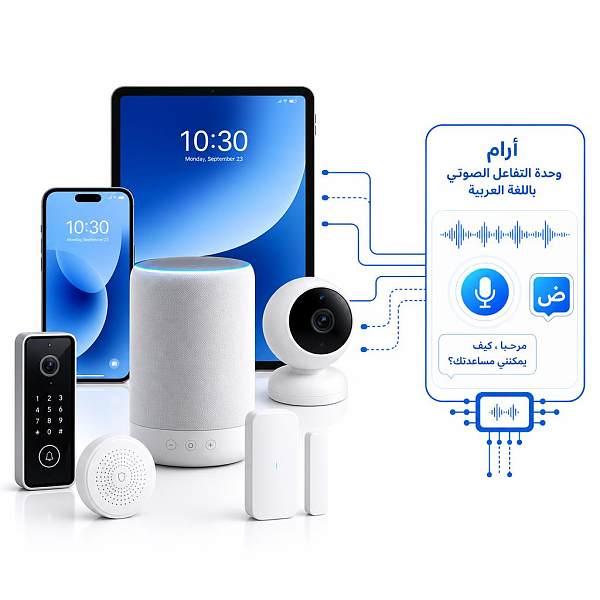
On May 5, 2026, the Saudi Standards Authority (SASO) issued a notice clarifying that, starting July 1, 2026, all Chinese suppliers applying for SASO Certificates of Conformity (CoC) for imported consumer electronics, security equipment, and IoT gateways must integrate an Arabic-language interactive compliance Q&A module into their corporate websites. This requirement directly impacts electronic and electrical product exporters targeting the Saudi market, particularly posing substantial business adjustment pressure on manufacturers and certification service providers who frequently need to respond to technical compliance inquiries.
Event Overview
On May 5, 2026, the Saudi Standards Agency (SASO) issued an official notice stipulating that, starting July 1, 2026, all Chinese suppliers applying for SASO CoC certification for imported consumer electronics, security equipment, and IoT gateways must deploy an Arabic-language interactive compliance Q&A module on their official websites. This module must cover 12 frequently asked compliance questions, including RoHS, IEC 62368-1, and localized labeling, and support real-time synchronization with the SASO official knowledge base. Companies failing to meet this requirement will have their SASO CoC certificate issuance suspended.
Which sub-sectors will be affected?
Direct trading enterprises
Foreign trade companies exporting electronic equipment to Saudi Arabia are directly responsible for the compliance upgrades to their official websites. The impact includes: the website must add voice recognition and multilingual Q&A capabilities; technical documentation and FAQs must be localized in Arabic and adapted to voice interaction logic; existing customer inquiry channels (such as emails and forms) may be shifted to voice Q&A verification due to stricter SASO audits.
Processing and manufacturing enterprises
As the main applicant for a Certificate of Conformity (CoC), the OEM/ODM factory's official website is often listed as a compliance information disclosure platform by SASO during the certification audit. The impact is reflected in the following: even if it does not directly operate overseas sales, its official website still needs to meet the deployment requirements of the voice Q&A module; the existing website technical architecture (such as CMS system, CDN configuration) may not support real-time knowledge base integration, and system compatibility and development cycle need to be assessed.
Supply chain service companies
Service providers offering SASO certification agency services, test report integration, and customs clearance compliance guidance will face upgraded client consultation requirements. The impact will include: needing to explain the technical implementation boundaries of the voice Q&A module to clients (e.g., whether it requires integration with a third-party ASR/TTS service provider); and collaborating with clients to identify the sources of standard answers for 12 types of compliance questions (e.g., test report numbers, standard clause citations) to support the knowledge base synchronization mechanism.
What key areas should relevant enterprises or practitioners focus on, and how should they respond at present?
Pay attention to the module technical specifications and interface documents that SASO will release later.
The current announcement does not specify the exact technical path for the voice Q&A module (such as whether it limits the SDK, API protocol, or speech recognition engine qualifications). Enterprises should continuously monitor SASO's official website announcements, paying particular attention to whether it publishes the knowledge base synchronization interface format, a recommended list of Arabic speech models, or a whitelist of third-party services.
Distinguish between the scope of the "official website" and the actual business affiliation.
Some exporting companies adopt a unified group website plus multiple country-specific sub-sites, or have regional sites operated by distributors. It's crucial to clarify the specific meaning of the "applicant's official website" recognized by SASO—is it the brand's main website, a Saudi-specific sub-site, or the URL submitted during the certification application? This will prevent redundant development or omissions due to ambiguity in site ownership.
Prioritize compiling standard answers and data sources for 12 types of compliance questions.
The module needs to cover 12 high-frequency issues, including RoHS, IEC 62368-1, and localized labeling. Enterprises should immediately collect the corresponding technical documents (such as test reports, label drafts, and declaration documents) and confirm that the answers to each question are unique, verifiable, and version controllable, in order to prepare for the subsequent structured entry into the knowledge base.
Assess the existing website technology stack's ability to support real-time synchronization.
"Supporting real-time synchronization with the SASO official knowledge base" means establishing a stable data retrieval or push channel. Enterprises should promptly verify whether their current official website has basic requirements such as API call permissions, server timezone and language environment configuration, and HTTPS certificate validity, and identify potential technical bottlenecks.
Editor's Viewpoint / Industry Observation
Observably, this requirement is less a standalone technical mandate and more a signal of SASO's shift toward digital-first compliance verification — prioritizing real-time, machine-verifiable evidence over static documentation. Analysis shows it reflects growing emphasis on end-user accessibility (Arabic voice interaction) and regulatory agility (live knowledge base sync), rather than merely adding another checklist item. From an industry perspective, the 2026 Q3 timeline suggests a phased implementation window; however, the dependency on SASSO's yet-unpublished technical specifications means actual readiness hinges on official guidance — making continuous monitoring more critical than immediate development.
Conclusion
This requirement is not simply a language localization upgrade, but a technological extension that integrates corporate websites into the SASO compliance verification loop. Currently, it's more appropriate to understand it as a regulatory evolution signal with a clear timeline, but with implementation details yet to be clarified. Companies do not need to immediately begin development, but should include building website compliance capabilities in their Q4 2025 technology plan, focusing on knowledge source analysis and interface feasibility research.
Information source explanation
Primary source: Official announcement from the Saudi Standards Agency (SASO) on May 5, 2026 (the original document number was not provided). Areas requiring continued observation: SASO has not yet released technical implementation guidelines for the voice question-and-answer module, the definition of the knowledge base synchronization interface, or third-party service certification requirements.
Related Articles
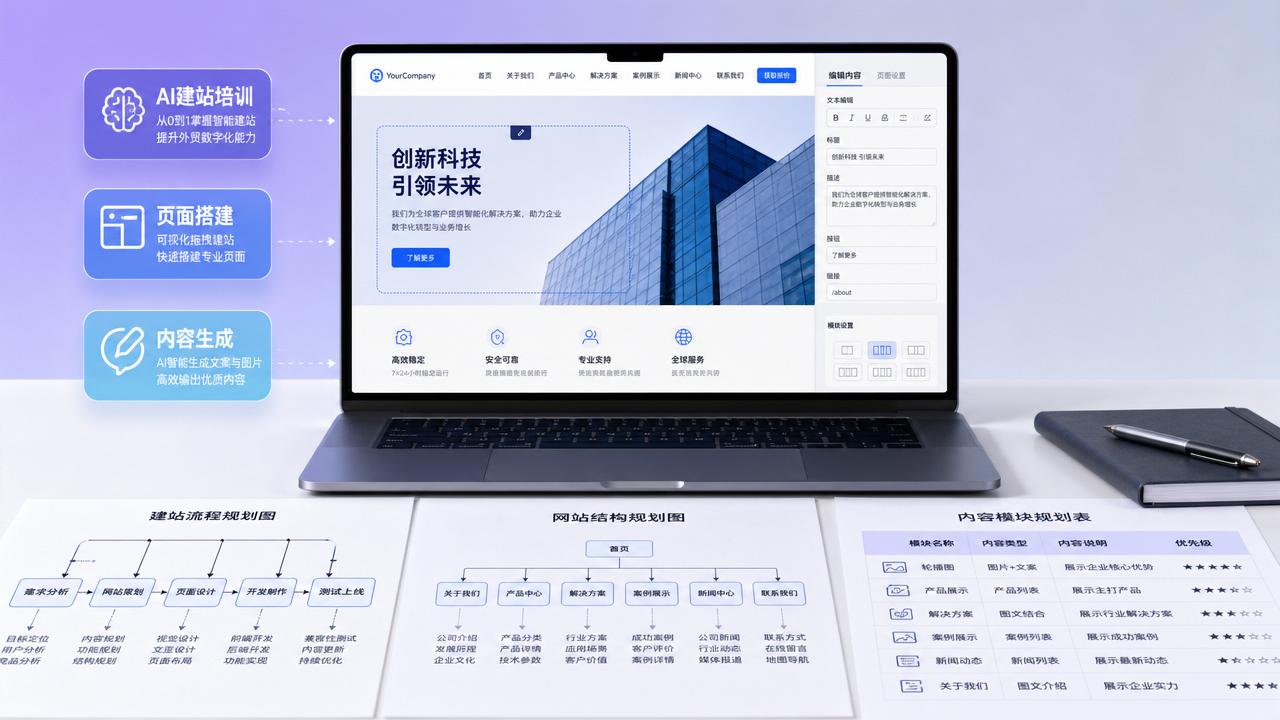
 Which roles are AI website-building training suitable for? From page setup to practical scope of content generation
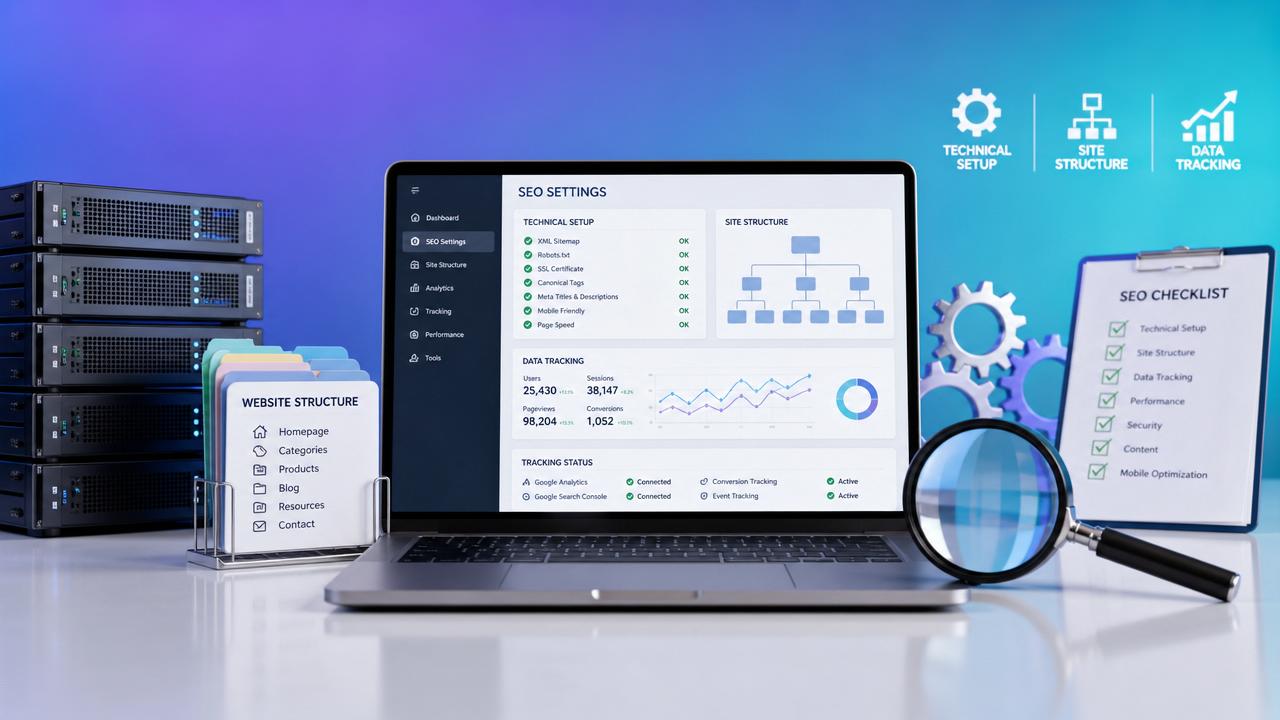
 What Does Basic SEO Setup Include? A Must-Read Checklist Before Launching a New Website
 What core modules are needed for B2C cross-border e-commerce website development? From the front end to the back end, we sort them out at once

Related Products
 EasyCamp SaaS Smart Website Marketing SystemE-Yingbao SaaS Smart Website Marketing System: AI-powered, zero-code website building. Rapidly launch multilingual independent e-commerce sites in just 10 minutes. Global server acceleration and AI-driven SEO optimization empower businesses to efficiently connect with global markets. The seamless integration of technology and user-friendly operation makes building e-commerce sites incredibly simple.
 AI+SEM Intelligent Advertising Marketing SystemAI+SEM drives intelligent ad creation, empowering full-funnel precision advertising marketing. The system automatically generates weekly/monthly reports, AI recommends keywords and target countries, monitors core metrics in real-time with intelligent alerts, and enables one-click high-conversion ad solutions to help quickly acquire customers and improve ROI.
 AI+SEO Dual Engine Optimization ServiceEasyWin AI+SEO Dual Engine Optimization System leverages AI-powered keyword mining, content generation, and comprehensive technical optimization to help foreign trade enterprises acquire high-quality organic traffic, significantly improving search rankings and conversion rates.
 AI+SNS Social Media Marketing SystemYingbao AI+SNS Social Media Marketing System - Precision social capture for the social media era. Supports one-click content synchronization across major platforms like Facebook and LinkedIn. AI intelligently rewrites posts for enhanced relevance. 24/7 AI customer service and user profiling analysis empower businesses to efficiently expand into global markets.
 AI+SEO营销解决方案易营宝AI+SEO营销解决方案,通过AI批量写作、智能生成TDK、精准关键词扩词等功能,全面优化网站SEO效果,提升流量与转化率。助力企业构建高效智能网站新生态。
 AI+SEM Advertising Marketing SolutionsAI+SEM Advertising Marketing Solution leverages AI technology to deeply empower SEM ad campaigns. It automatically generates weekly/monthly reports using AI, presenting account data across multiple dimensions for comprehensive insights into campaign performance and trends. The system precisely recommends keywords and target countries, intelligently generates high-conversion ad copy, and enables one-click activation of efficient campaign plans to help businesses rapidly acquire customers. Simultaneously, it monitors core metrics in real time, intelligently identifies abnormal fluctuations, and issues timely alerts to ensure stable, high-return advertising results.
 Domain Name ServicesEasyWin provides professional domain name services, including intelligent queries, one-stop registration, brand protection, and full lifecycle management, helping businesses build a digital brand image.
 EasyOperate B2C Cross-Border E-Commerce Platform & Independent WebsiteEasyStore B2C Cross-border E-commerce Independent Store is an intelligent website building and cross-border e-commerce integrated solution independently developed by EasyStore Information Technology (Beijing) Co., Ltd. The system is specially designed for small and medium-sized as well as large export enterprises, integrating 'website building, operation, marketing, advertising, and conversion' into one, helping enterprises quickly establish cross-border e-commerce independent stores to achieve brand globalization and global sales growth.
The platform supports multiple languages, multiple currencies, and multi-channel marketing, with built-in AI intelligent translation and SEO optimization systems, suitable for mainstream markets such as Southeast Asia, Europe and America, Latin America, and the Middle East, assisting Chinese manufacturing enterprises in efficiently deploying international e-commerce strategies. SSL证书易营宝提供专业SSL安全证书服务,包括单域名和泛域名证书,确保网站数据传输加密、身份验证和完整性保护,助力企业建立安全可信的在线业务环境。









