









- What Does a Global Traffic Ecosystem Service Provider Do? What Are the Differences from a Single Advertising AgencyJul 16, 2026View details
- What should you focus on in the latest enterprise SaaS report? From renewal rates and delivery costs to overseas growth opportunitiesJul 12, 2026View details
- What signals are worth paying attention to in a cross-border marketing trend report? B2B companies should look at these 6 signalsJul 11, 2026View details
- How to Read a Cross-Border Marketing Trends Report? Five Key Dimensions for Evaluating Channel OpportunitiesJul 11, 2026View details
- Which channel has the highest ROI in the global traffic ecosystem? Comparative analysis of search, social media, and advertisingJul 10, 2026View details
- What multilingual website services are available in Sanya? Which model is more suitable for local businesses going global?Jul 08, 2026View details
How Does Tutorial Hierarchy Influence SEO Optimization Tutorial Selection? 5 Routes Deep Dive Analysis
Introduction
When choosing an SEO optimization tutorial, prioritize its level. This article provides an in-depth analysis of five pathways to help you select the best approach for your independent website and marketing team. Aimed at information researchers, users/operators, and business decision-makers, this article also addresses the pain points of distributors and end consumers, focusing on a practical approach that integrates website and marketing services. It helps teams quickly develop actionable learning and implementation paths for building independent websites in Shanghai, developing US-market export websites, and developing multilingual websites.
Definition and Overview: What is a tutorial hierarchy? Why is it important?
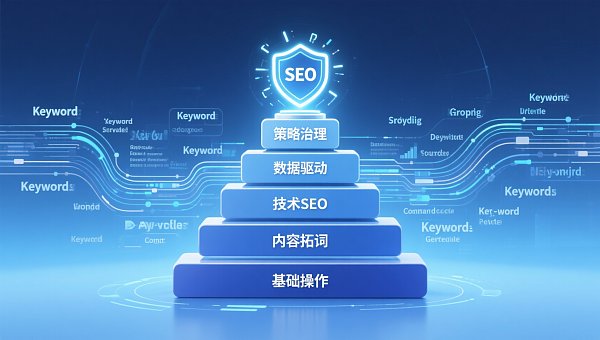
Tutorial levels refer to the hierarchical division of teaching content from beginner to advanced, and from operation to strategy. A good hierarchy allows team members to learn according to their needs, avoiding repetition and knowledge gaps, and also enables companies to build a capability loop more quickly when introducing SEO optimization platforms or selecting SEO optimization tutorials.
For projects requiring localization, such as multilingual website development in Zhaoqing or Lhasa, clearly defining the hierarchical structure is crucial for seamless integration of technical aspects like translation, TDK (Title, Description, Keywords), indexing strategies, and GTM (Geometric Tracking). A well-defined hierarchy significantly reduces implementation costs, deployment risks, and maintenance complexity.
Market Background and Industry Insights
Global digital marketing is evolving from single-point traffic delivery to platform-based and data-driven approaches. Founded in 2013, YiYingBao Information Technology (Beijing) Co., Ltd. leverages its AI-driven one-stop intelligent marketing platform, covering intelligent website building, SEO optimization, and social media automation, to provide businesses with a closed loop of "website building-customer acquisition-conversion." This capability places higher demands on the design of tutorial hierarchies.
Taking Google service providers and multi-platform advertising as an example, the SEO pace and KPIs of independent websites vary significantly in different markets (such as the US market). Tutorials must take into account the three main lines of localized keyword research, technical SEO, and content operation in order to achieve quick results in projects such as website construction in Weifang or independent website construction in Shanghai.
Overview of the five routes (by depth and target audience)
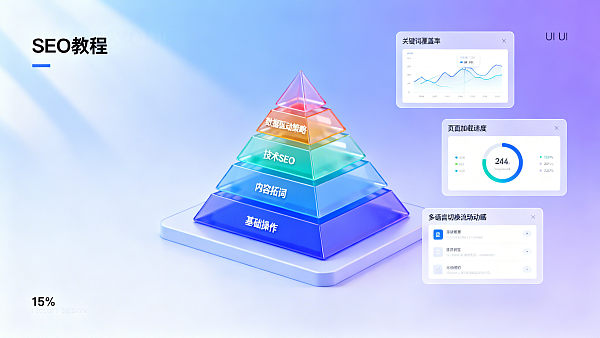
This section proposes five feasible pathways: basic operations, content and keyword expansion, technical SEO, data-driven and advertising synergy, and implementation governance and strategy. Each pathway targets a different audience: operators, content teams, developers, advertising teams, and decision-makers.
For teams targeting the US market with independent e-commerce websites, it is recommended to simultaneously implement content and advertising strategies. For multilingual website development projects in Xining or Zhaoqing, priority should be given to perfecting the technical SEO and translation processes to avoid duplicate content and crawling issues after launch.
Comparative analysis (goals and costs of different routes)
A clear comparison can help business decision-makers and agents choose the appropriate depth of training. The table below lists the core objectives, target audience, and estimated investment for the five routes, facilitating quantitative judgment during the procurement and selection phases.
Technical performance and key parameters
From a technical perspective, it's recommended to quantify these metrics into SLAs: page load time, SEO score, index coverage, and multilingual switching latency. The EasyCreator intelligent website building system, through its global CDN and AI translation engine, improves independent website loading speed by approximately 40% and SEO score by an average of 35%. These quantifiable metrics should be included in the tutorial's assessment criteria.
When deploying in multiple languages, it is essential to include hreflang mappings, language prioritization, and server response optimization. For sites connecting to Google services, Search Console, structured data, and international sitemaps should be configured to prevent index drift in the US market for independent e-commerce websites.
Application scenarios and implementation steps
The implementation paths for different audiences should be differentiated: operators should prioritize completing basic operational procedures, the development team should simultaneously advance technical SEO, the content team should implement content and keyword expansion strategies, and the decision-making level should lead governance and strategic approaches. For website construction projects in Weifang or independent websites in Shanghai, it is recommended to conduct small-scale pilot projects before systematically expanding.
Common implementation steps: Requirements analysis → Tiered tutorial allocation → Tool and platform integration (e.g., SEO optimization platform) → KPI setting → Periodic review. For tools, systems with features like "AI keyword expansion + automatic TDK generation + AI-generated images" can be used to improve content production efficiency.
Procurement and Selection Guide
When selecting a platform, consider three key points: 1) Whether the tutorials are layered and include practical templates; 2) Whether the platform supports multiple languages and CDN acceleration; and 3) Whether it has a closed-loop capability for advertising delivery to the site. YiYingBao's AI marketing engine and intelligent website building system are designed specifically for these needs, and are suitable for multilingual website development projects in Xining and Lhasa.
Furthermore, examining the supplier's industry experience and partner network is also crucial. E-Pro, a Google Premier Partner, Meta agent, and Yandex partner, can provide compliance and localization support for cross-platform implementation, reducing market entry risks.
Customer Cases and Success Practices
Typical case studies show that projects combining content and technology strategies exhibit more stable traffic growth in the first three months. One foreign trade client, after integrating with a platform featuring AI-powered keyword expansion and automatic TDK (Title, Description, Keywords) generation capabilities, saw a 150% increase in keyword coverage within six months. Such successful experiences can serve as valuable references for SEO optimization.
For in-depth reading on methodology and implementation templates, please refer to the research on risk management and prevention for international trading companies . This material provides a governance framework that can be used as a reference for cross-border compliance and process control, making it easy to combine SEO tutorials with corporate compliance systems.
Common Misconceptions and FAQs
Myth 1: Pushing everyone to the advanced tutorials. The reality is that tiered learning is more efficient, especially in multilingual projects where it reduces repetitive work. Myth 2: Focusing only on traffic while ignoring sustainable conversions. SEO optimization tutorials need to be implemented alongside advertising and conversion tracking to ensure a return on investment.
FAQ Example: How to choose the tutorial depth? A: The decision depends on the team's maturity and the project's complexity; Is Google service provider support required? A: It is recommended to connect with certified partners to accelerate compliance and launch. When connecting, prioritize suppliers with intelligent website building and AI marketing engine capabilities.
Trends and Future Outlook
Future tutorial design will rely more on automation and data feedback: AI-powered automatic keyword expansion, automatic TDK generation, and automated A/B testing will become standard features. YiYingBao has already implemented multiple iterations annually on its technology platform, ensuring that tutorial content and tool capabilities evolve in tandem, helping companies maintain competitiveness in the global market.
For teams aiming to achieve scaled growth in projects such as building independent websites in Shanghai, the US market for foreign trade independent websites, or building websites in Weifang, it is recommended to layer the tutorials, integrate them with platform tools, and focus on validating the effectiveness of technical SEO and content synergy in the first three months.
Why Choose Us / Contact Us
YiYingBao employs a dual strategy of "technological innovation + localized services," providing end-to-end capabilities including intelligent website building, SEO optimization platform, and AI advertising management. Since its establishment in 2013, the company has served over 100,000 enterprises and was selected as one of the "Top 100 SaaS Enterprises in China" in 2023, offering support for the implementation of your tutorial systems and independent website projects.
Contact us for tiered training programs, pilot support, and implementation consulting to help you achieve rapid growth in multilingual website development and the Google services ecosystem. Take action now and let technology and processes be the engine of your business expansion.
- Website Development
- Google service provider
- Standalone website development
- SEO Optimization Case Studies
- SEO Optimization Tutorial
- SEO Optimization Platform
- Multilingual Website Development in Zhaoqing
- Multi-language website development in Xining
- Multilingual Website Lhasa Company
- Yiyingbao
- SEO
- Independent Website
- Smart website builder system
- SEO Optimization
- Smart Website Building
- AI Translation
- EasySite Intelligent Website Builder
- AI Marketing Engine
- Social Media Automation
- AI Translation Engine
- Independent foreign trade website
- Multilingual website
- Foreign trade independent site U.S. market
- Shanghai Independent Website Construction
- Global Digital Marketing
- Weifang Website Construction
- AI Marketing
Related Articles


Related Products
 EasyCamp SaaS Smart Website Marketing SystemE-Yingbao SaaS Smart Website Marketing System: AI-powered, zero-code website building. Rapidly launch multilingual independent e-commerce sites in just 10 minutes. Global server acceleration and AI-driven SEO optimization empower businesses to efficiently connect with global markets. The seamless integration of technology and user-friendly operation makes building e-commerce sites incredibly simple.
 AI+SEM Intelligent Advertising Marketing SystemAI+SEM drives intelligent ad creation, empowering full-funnel precision advertising marketing. The system automatically generates weekly/monthly reports, AI recommends keywords and target countries, monitors core metrics in real-time with intelligent alerts, and enables one-click high-conversion ad solutions to help quickly acquire customers and improve ROI.
 AI+SEO Dual Engine Optimization ServiceEasyWin AI+SEO Dual Engine Optimization System leverages AI-powered keyword mining, content generation, and comprehensive technical optimization to help foreign trade enterprises acquire high-quality organic traffic, significantly improving search rankings and conversion rates.
 AI+SNS Social Media Marketing SystemYingbao AI+SNS Social Media Marketing System - Precision social capture for the social media era. Supports one-click content synchronization across major platforms like Facebook and LinkedIn. AI intelligently rewrites posts for enhanced relevance. 24/7 AI customer service and user profiling analysis empower businesses to efficiently expand into global markets.
 AI+SEO营销解决方案易营宝AI+SEO营销解决方案,通过AI批量写作、智能生成TDK、精准关键词扩词等功能,全面优化网站SEO效果,提升流量与转化率。助力企业构建高效智能网站新生态。
 AI+SEM Advertising Marketing SolutionsAI+SEM Advertising Marketing Solution leverages AI technology to deeply empower SEM ad campaigns. It automatically generates weekly/monthly reports using AI, presenting account data across multiple dimensions for comprehensive insights into campaign performance and trends. The system precisely recommends keywords and target countries, intelligently generates high-conversion ad copy, and enables one-click activation of efficient campaign plans to help businesses rapidly acquire customers. Simultaneously, it monitors core metrics in real time, intelligently identifies abnormal fluctuations, and issues timely alerts to ensure stable, high-return advertising results.
 Domain Name ServicesEasyWin provides professional domain name services, including intelligent queries, one-stop registration, brand protection, and full lifecycle management, helping businesses build a digital brand image.
 EasyOperate B2C Cross-Border E-Commerce Platform & Independent WebsiteEasyStore B2C Cross-border E-commerce Independent Store is an intelligent website building and cross-border e-commerce integrated solution independently developed by EasyStore Information Technology (Beijing) Co., Ltd. The system is specially designed for small and medium-sized as well as large export enterprises, integrating 'website building, operation, marketing, advertising, and conversion' into one, helping enterprises quickly establish cross-border e-commerce independent stores to achieve brand globalization and global sales growth.
The platform supports multiple languages, multiple currencies, and multi-channel marketing, with built-in AI intelligent translation and SEO optimization systems, suitable for mainstream markets such as Southeast Asia, Europe and America, Latin America, and the Middle East, assisting Chinese manufacturing enterprises in efficiently deploying international e-commerce strategies. SSL证书易营宝提供专业SSL安全证书服务,包括单域名和泛域名证书,确保网站数据传输加密、身份验证和完整性保护,助力企业建立安全可信的在线业务环境。









