

1. The Authoritative Definition and Irreplaceable Core Value of SEO Optimization Platform
1. The Core Definition of SEO Optimization Platform
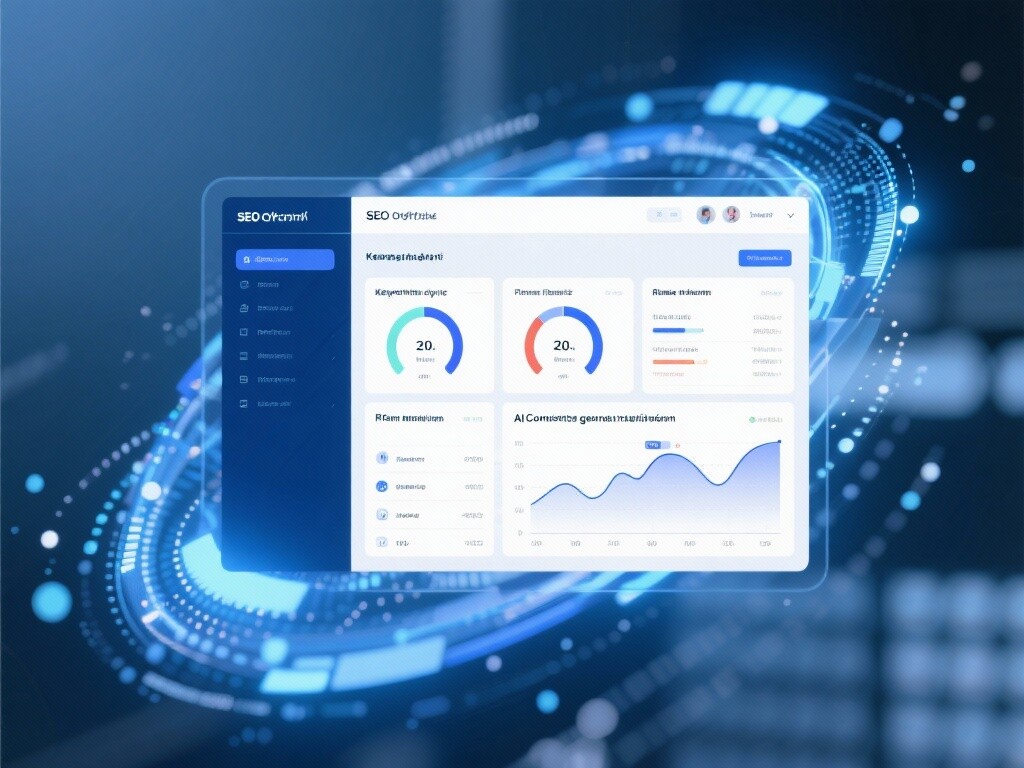
**SEO Optimization Platform** typically refers to a SaaS (Software as a Service) toolset that integrates a series of functions for **keyword research, website technical audits, content optimization, link analysis, ranking monitoring, and competitor analysis**. Its core value lies in **consolidating complex, fragmented SEO workflows into a unified interface** and leveraging **big data, cloud computing, and artificial intelligence** technologies to provide **data-driven, actionable optimization recommendations and decision support** for SEO professionals, digital marketing teams, or business owners.
2. Why is SEO Optimization Platform a Must-Have for Modern Marketing?
As search engine algorithms become increasingly complex, traditional manual or single-point tools can no longer meet the demands of efficient SEO work:
- **Data Integration:** The platform can consolidate multi-source information such as GSC, GA4, keyword libraries, and competitor data to achieve **one-stop data analysis**.
- **Efficiency Improvement:** Automated crawling, batch keyword analysis, and AI-assisted content generation **increase SEO work efficiency by over 500%**.
- **Risk Warning:** Real-time monitoring of website technical health and ranking fluctuations, **providing warnings and solutions before algorithm updates**.
- **Scientific Decision-Making:** Based on big data and algorithm simulation, it offers **optimization recommendations with the highest ROI**, guiding the direction of content and technical investments.
3. The 4 Core Functional Modules of SEO Optimization Platform
2. The Evolution of SEO Optimization Platform: From Single-Point Tools to AI-Driven Ecosystem
The evolution of **SEO Optimization Platform** is positively correlated with the increasing complexity of search engine algorithms, having undergone a leap from simplicity to intelligence:

1. Single-Point Tool Era: Keyword and Link Checks (2000 - 2010)
Tool Features: Primarily focused on single functions, such as simple **keyword density checkers** and **backlink counters**. Limitations: Data fragmentation, lack of automation and integration capabilities, **requiring SEO personnel to manually piece together data**, resulting in extremely low work efficiency.
2. Integrated Suite Era: Data Aggregation and Workflow Consolidation (2011 - 2018)
Milestone: Large **SEO Optimization Platforms** emerged, integrating functions such as keyword research, ranking tracking, and website audits **into a paid suite**. Strategic Shift: Workflows began to standardize, and platforms started **providing preliminary competitor analysis and trend predictions** by aggregating large amounts of data.
3. AI/Automation Era: Prediction, Content Collaboration, and CWV Monitoring (2019 - Present)
Core Change: Platforms introduced **machine learning and natural language processing (NLP)**. Technological Trends: Modern **SEO Optimization Platforms** not only analyze existing data but also **predict keyword difficulty**, **assist in generating content outlines**, and **monitor Core Web Vitals (CWV)** in real time, providing repair recommendations. Platforms have become **intelligent operating systems for digital marketing**.
3. Deep Analysis of the 5 Core Technical Principles of SEO Optimization Platform
A leading **SEO Optimization Platform** must rely on robust underlying technologies to provide accurate and efficient services:
1. Massive Crawler & Index Emulation Principle
Principle: The platform deploys large-scale distributed web crawlers to **simulate search engine crawling behavior**, real-time crawling and analyzing billions of web pages. Technical Implementation: By **simulating the rendering mechanisms of Googlebot and Baiduspider**, it accurately diagnoses a website's **crawl budget, indexing status, and Core Web Vitals performance**, ensuring diagnostic accuracy.
2. Machine Learning & Keyword Intent Prediction Principle
Principle: Using machine learning (ML) models to analyze vast search history and SERP data, **predicting user intent behind keywords (purchase, information, navigation)**. Technical Implementation: The platform automatically **classifies and clusters keywords**, guiding users to **create topic clusters**, the cornerstone of advanced content marketing.
3. Link Graph & PageRank Modeling Principle
Principle: The platform continuously crawls link data across the internet, **building a massive link graph**, and uses algorithms **to simulate PageRank or Trust Flow weight transfer mechanisms**. Technical Implementation: This enables the platform to accurately assess **link quality and risks**, helping users find the most valuable external link targets while identifying and cleaning **harmful spam links**.
4. AI Content Collaboration Principle
Principle: Combining natural language processing (NLP) and large language models (LLM), **analyzing the content structure and coverage of TOP 10 competitors**. Technical Implementation: The platform can **generate optimal content outlines**, **recommend keyword usage frequencies**, and **integrate E-E-A-T signals**, significantly shortening content creation and optimization cycles.
5. Algorithm Update Rapid Response Mechanism Principle
Principle: Continuously monitoring **SERP volatility rates** of search engines and immediately conducting **data comparison and impact analysis** when algorithm updates occur. Technical Implementation: The platform quickly identifies which types of websites (e.g., YMYL sites with low E-E-A-T) are affected and sends users **precise response strategies and adjustment recommendations**.
4. The 4 Core Features and High ROI Applications of SEO Optimization Platform
1. Core Feature: Real-Time and Accuracy
Feature: A top-tier **SEO Optimization Platform** must provide **real-time (near real-time) ranking data** and **highly accurate technical diagnostics**. Application: This ensures marketing teams can **quickly respond before competitors act**, capturing short-term ranking windows.
2. Core Feature: Cross-Platform Integration Capability
Feature: The platform should seamlessly integrate with Google Search Console, Google Analytics 4, mainstream CMS (e.g., WordPress), and CRM systems. Application: Achieving **end-to-end data attribution from traffic and rankings to revenue conversion**, clearly showcasing the commercial value of SEO.
3. Practical Application 1: SEO Consultants and Service Providers
Practice: Service providers leverage the **batch audit and competitor analysis functions** of the **SEO Optimization Platform** to quickly diagnose issues across hundreds of client websites, **achieving exponential service efficiency improvements** and **standardized service quality**.
4. Practical Application 2: Large Content-Driven Enterprises
Practice: Media, e-commerce, or content platforms use the platform's **AI content collaboration module** and **large-scale keyword clustering function** to **guide content teams in batch-producing high-ranking content aligned with intent**, supporting vast long-tail traffic strategies.
5. The 4 Expert Criteria for Selecting an SEO Optimization Platform
Choosing an **SEO Optimization Platform** suitable for your business is the first step to successfully implementing an SEO strategy. Follow these 4 criteria:
- **Criterion 1: Breadth and Depth of Data Coverage:** Does the platform cover **all mainstream search engines** in your target market? Is its keyword database sufficiently vast and real-time? **Does it have accurate mobile ranking data?**
- **Criterion 2: Comprehensiveness of Technical Audits:** Can the platform provide **detailed Core Web Vitals diagnostics**, detecting **JavaScript rendering issues, complex Canonical errors, and Hreflang deployment problems**?
- **Criterion 3: Penetrative Competitor Analysis:** Can the platform **accurately estimate the organic traffic value of competitors**, **core keyword layouts**, and identify competitors' **high-authority link sources**?
- **Criterion 4: Practicality and Operability of AI Features:** Are the AI-assisted functions merely text generators, or can they **provide actionable SEO optimization recommendations**, such as automatically generating Meta descriptions and optimizing content outline structures?
6. Bid Farewell to Inefficient Tools: Experience Yinyoubao's AI-Driven SEO Optimization Platform Now!
Yinyoubao's **SEO Optimization Platform** integrates **top-tier AI keyword prediction models and CWV real-time diagnostic engines**. We not only provide data but also **actionable strategies and one-stop content collaboration tools**, helping you **at the lowest cost and fastest speed** stand out in the fiercely competitive search market. **Stop wasting time piecing together data—let intelligent platforms drive your traffic and revenue growth!**
Click to register for free and get a 14-day premium feature trial!FAQ
1. Are SEO optimization platforms more expensive than purchasing tools separately?
Answer: **In the long run, platforms are more cost-effective.** While the initial investment may be higher than for individual tools, **SEO optimization platforms** offer **more comprehensive and integrated functionality**, avoiding the expensive costs of multi-tool subscriptions and the manpower costs of data integration. Top platforms typically offer higher **ROI**.
2. Will the AI content assistance features on the platform cause my content to be judged as spam by Google?
Answer: **No.** The AI features in professional SEO optimization platforms exist as "collaborative tools." Their purpose is to analyze competitors, generate outlines, and suggest optimization points, rather than directly generating articles in bulk. Content quality and EEAT still require the infusion and review of human expertise. This is a core principle of white-hat SEO.
3. Can SEO optimization platforms replace professional SEO experts or teams?
Answer: **No.** Platforms are powerful diagnostic and execution tools, but they cannot replace human strategic thinking, creative content planning, and complex external link negotiations. An effective SEO optimization platform should act as an efficiency amplifier for an expert team, not a replacement.
4. Our website uses a complex JavaScript framework. Can the SEO optimization platform effectively audit it?
Answer: Top-tier platforms can. Modern SEO optimization platforms have upgraded their crawling technology to the point where they can simulate the entire browser rendering process (Headless Browser Rendering), accurately crawling and auditing websites using complex JavaScript frameworks such as React, Vue, and Angular, and diagnosing their potential SEO issues.

Customer Reviews
Mr. Zhao, Head of Mid-sized B2B Industrial E-commerce
"Before using the YiYingBao SEO optimization platform, we used four separate tools to track rankings and keywords. Now, one platform handles all the data. In particular, its AI content collaboration feature has reduced the time our content team spends generating high-intent content outlines by 70%. In just six months since its launch, the inquiry conversion rate for key product keywords has increased by 45%. It's not just a tool; it's our data hub."
Ms. Wang, CEO of a professional digital marketing service provider
"As a service provider, we need efficient and accurate tools. E-Creative SEO Optimization Platform's powerful competitor analysis and link graph functions allow us to quickly pinpoint growth blind spots on client websites and provide data-driven EEAT (Extended Efficiency and Accessibility) solutions. We've shortened the average project implementation cycle for our clients by 2 months, and significantly improved service satisfaction and renewal rates!"
 Application of AI Translation Technology in B2B Export WebsitesFrom technical principles to practical cases, comprehensively analyze the key roles of AI translation technology in the construction and operation of B2B export websites, providing replicable methodologies for multilingual market expansion.
 Why HTTPS Has Become the Standard for Enterprise Websites? A Dual-Win Strategy for Security and RankingHTTPS has become the standard for enterprise websites, not only ensuring data security but also improving SEO rankings and customer trust. This article reveals how HTTPS achieves a dual win of security and traffic, helping corporate websites gain more inquiries and conversions. Learn about HTTPS's impact on SEO, strategies to enhance user trust, and technical implementation guidelines.
 Which B2B Foreign Trade Solution Provider is Reliable? Evaluating Service Stability and Delivery Cycle from Client FeedbackWhich B2B Foreign Trade Solution Provider is Reliable? This article combines client feedback with industry practices to analyze adaptive website building, Yandex SEO company rankings, and platform selection recommendations. It helps you understand the differences between B2B and B2C website promotion, and master key strategies for choosing suitable SEO optimization companies and rapidly building high-conversion foreign trade websites.
 Shanghai Independent Website Development: Analyzing New Trends in Foreign Trade Transformation by 2026—A Comprehensive Overview of Opportunities and RisksShanghai Independent Website Development: Master the New Trends and Risk Management for 2026 Foreign Trade Transformation. We provide hands-on SEO optimization platforms, SEO tutorials and case studies, US market localization for independent foreign trade websites, Google partner support, and multilingual website development solutions for Zhaoqing/Lhasa/Xining. Get a free diagnosis and actionable implementation recommendations now. Boost Weifang website development and global traffic growth while reducing advertising costs and increasing conversion rates. Click to explore detailed solutions and success stories.
 What is an SEO Optimization Platform? Understanding the Core Principles of Marketing Automation in 2026In-Depth Analysis of Shanghai Independent Website Development and SEO Optimization Platform: Share practical SEO optimization tutorials and case studies covering: - U.S. market independent websites for foreign trade - Multilingual website development in Zhaoqing - Website construction in Weifang - Google-certified service provider support for rapid implementation - AI-driven automation strategies and global CDN acceleration - Multilingual website development for companies in Lhasa and Xining - Enhanced conversion rates and foreign trade customer acquisition efficiency Click to explore complete solutions and case studies.
 Google Service Provider Role Analysis: Key Compliance and Data Privacy Considerations for Advertising in 2026Google Services Provider EYingBao offers a one-stop SEO optimization platform, SEO tutorials, and SEO case studies for independent website development in Shanghai, Weifang website construction, and multilingual website development in Zhaoqing/Lhasa/Xining. We empower independent foreign trade websites with compliant US market campaigns, providing free diagnostics and personalized solutions. Our services include AI keyword expansion, automatic TDK generation, global CDN, and data privacy compliance assurance. Contact us now for a customized campaign plan!
 How Does Tutorial Hierarchy Influence SEO Optimization Tutorial Selection? 5 Routes Deep Dive AnalysisShanghai's Premier Guide to Independent Website Development: Combining SEO-optimized platforms with tiered SEO tutorials, covering U.S. market needs for export-oriented independent sites, multilingual website development in Zhaoqing, and corporate requirements in Lhasa. Explore five implementation pathways, real-world SEO case studies, and procurement guides to rapidly establish a systematic approach, boosting traffic and conversions. View now. Includes practical templates for TDK, hreflang, GTM, and A/B testing—suitable for operations, development, and decision-makers. Supports Weifang website development and Xining multilingual site implementation.
 How Should Businesses Choose Among Multiple SEO Optimization Platforms? 8 Key Comparison PointsShanghai Independent Website Development and SEO Optimization Platform Selection Guide: Quickly assess the feasibility and ROI of your export-oriented independent website in the US market through 8 key comparison points. We provide SEO optimization tutorials, SEO optimization case studies, and on-the-ground support from Google service providers. Our localized implementation plans cover multilingual website development in Zhaoqing, Lhasa company services, Xining development, and Weifang website construction, with free pilot evaluations available.