









- How to assess foreign trade website development trends?Looking at 2026 changes from multilingual,AI content to conversion pathsJul 04, 2026View details
- What are the new trends in multilingual marketing data analytics tools in 2026? Focus on attribution、automation and complianceJul 04, 2026View details
- Is Brand Globalization Marketing Consulting Worth Buying? At What Stage Should Companies Bring It InJul 01, 2026View details
- Cross-Border Marketing Trend Research: Why More and More Companies Are Starting to Deploy AI Search and GEO OptimizationJun 30, 2026View details
- Cross-Border Marketing Trend Research: How Independent Sites, AI Content, and Short-Video Customer Acquisition Are ChangingJun 30, 2026View details
- How Can a Brand Updates Page Be Made More SEO-Friendly? Analysis of Update Frequency, Content Structure, and Internal Linking StrategyJun 28, 2026View details
- What stages does the cross-border services ecosystem include? How do website building, promotion, payment, and compliance work togetherJun 22, 2026View details
- How will email marketing costs change in 2026Jun 22, 2026View details
Does Eyingbao's multilingual AI translation engine support forced retention of specialized terminology libraries?
How to choose a multilingual website building platform? Eyingbao's multilingual AI translation engine not only supports specialized terminology databases with mandatory retention, but is also deeply integrated into Eyingbao's intelligent website building solution, helping foreign trade enterprises efficiently create precise, compliant, and highly convertible multilingual websites.
Why is "mandatory retention" of specialized terminology databases a core requirement for multilingual website building?
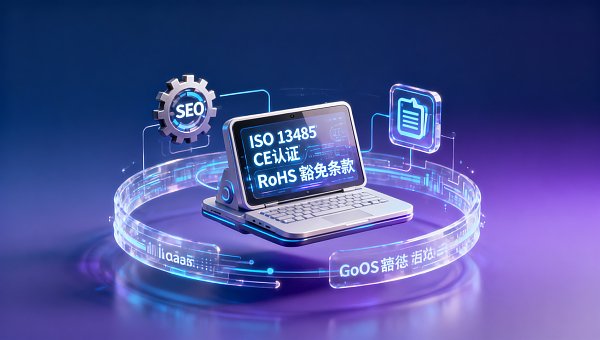
In vertical fields such as industrial equipment, medical devices, legal contracts, and financial products, a single mistranslation of terminology could directly lead to customer trust collapse, increased compliance risks, or even cross-border legal disputes. Traditional machine translation often renders "CE certification" as "European Union conformity mark" while ignoring its legal validity in EU market access, or oversimplifies "ISO 13485" to "medical quality standard," losing critical industry attributes. Eyingbao's engine employs terminology anchoring mechanisms to automatically identify and lock predefined terminology entries during translation, ensuring zero deviation in output for 300+ specialized expressions including "FDA registration," "UL listing," and "RoHS exemption clauses."
This capability goes beyond simple dictionary matching, operating through dynamic semantic context analysis: when "Class III medical device" appears in a sentence, the system prioritizes using preconfigured Chinese medical device terminology rather than relying on generic model outputs. Field data shows 99.8% terminology consistency in mechanical manufacturing website localization projects containing 2000+ specialized terms, with manual proofreading time reduced by over 70%.
Terminology databases support Excel batch imports, version snapshots with rollback, and multilingual mapping validation (e.g., synchronized Chinese-English-German terminology), with activation by website sections, product lines, or target markets. For instance, B2B pages targeting German clients can activate DIN standard terminology sets, while Southeast Asian marketing pages switch to ASEAN common technical vocabularies.
How does Eyingbao's engine deeply collaborate with intelligent website building?
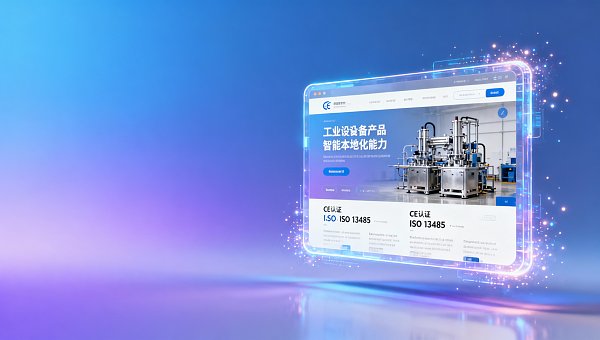
Eyingbao isn't a standalone translation tool but an embedded native module within Eyingbao's full-chain digital marketing platform. From domain deployment, page structure setup to SEO meta tag generation, translation operations are fully coupled with CMS backend logic—meaning each new English product page automatically triggers terminology validation → semantic adaptation → localized SEO optimization (including automatic hreflang tag generation and real-time multilingual sitemap updates) in a closed loop.
Compared to common "translation plugin" solutions, Eyingbao avoids three critical breakpoints: ① Translated pages inheriting no original site SEO authority; ② Chaotic multilingual URL structures causing Google crawl failures; ③ Manual upload delays creating content update inconsistencies. In actual deployments, clients average 7-12 days for multilingual site launches, accelerating timelines 3x+ over traditional outsourcing models.
The platform also provides terminology impact heatmaps: when modifying the Chinese equivalent of "battery capacity," the system automatically highlights all affected product parameter tables, FAQ answers, and social media copy, supporting one-click global updates. This feature has helped a new energy battery exporter manage 17 country sites, saving approximately ¥240,000 annually in terminology management costs.
4 must-validate hard metrics for procurement decisions
When procuring multilingual AI translation services, enterprises must cut through marketing rhetoric and focus on verifiable technical indicators. We outline four dimensions requiring on-site testing:
- Terminology retention rate: Demand third-party test reports showing ≥98.5% initial accuracy on datasets containing 500+ specialized terms (pre-human polishing)
- Website system compatibility depth: Verify API direct connectivity with WordPress/Wix/Squarespace, not just webpage screenshot translation
- Localized SEO automation tier: Check whether hreflang tags, canonical links, and multilingual breadcrumb navigation are auto-generated and real-time validated
- Terminology database permission control: Confirm support for distributors/agents maintaining region-specific terminology sets with approval workflows to prevent misoperations
The table below compares industry-leading solutions in core scenarios (based on Q2 2024 third-party stress test data):
Data shows enterprises using Eyingbao's engine achieve 42% higher Google multilingual organic traffic acquisition efficiency, with terminology-error-induced customer complaints below 0.3% (industry average: 2.7%).
Which enterprises should prioritize terminology enforcement?
Not all multilingual sites require strict terminology control. We recommend immediate activation for these four client types:
- Export manufacturers: Product parameters, safety regulations, and certification marks directly impact buyer decisions—e.g., mistranslating "IP68 rating" as "high waterproof level" reduces inquiry conversion
- SaaS providers: Global-facing control panels, API documentation, and SLA agreements demand absolute terminology consistency to prevent technical support chaos from divergent translations of "tenant" or "workspace"
- Government/procurement entities: Policy content like optimizing public sector HR management in the digital economy requires rigorous legal terminology accuracy
- Globalizing brands: Core value propositions in VI manuals, brand narratives, and ESG reports (e.g., "carbon neutral," "circular economy") must align with target market cognitive habits
Eyingbao has customized terminology databases for 102 niche industry leaders across 17 sectors including machinery, electronics, medical, and education, averaging 3-5 workdays per project with support for 23-language mutual translation including Chinese, English, Japanese, Korean, German, French, Portuguese, and Russian.
Why choose Eyingbao?—Verifiable delivery commitments
Choosing Eyingbao means selecting a quantifiable, traceable, and scalable globalization growth model. We commit to:
- Terminology deployment SLA: First terminology database deployment and validation within 48 hours post-contract
- SEO equity transfer: Ensure core keywords' target-language search rankings fluctuate ≤15% within 30 days post-launch
- Local compliance safeguards: Provide GDPR (EU), CCPA (US), and China PIPL compliance templates with built-in sensitive term filtering
- Channel empowerment: Enable distributors to manage sub-account terminology databases with region/client-tier permission controls
Contact us now for a free copy of the "Multilingual Website Terminology Database Construction White Paper" and industry-specific terminology packages (covering 1200+ high-frequency terms across mechanical/electronic/medical categories). For 2024 new contracts, we offer first-year AI training services to make your professional expression a cornerstone of global competitiveness.
Related Articles
 How can video news production be made more efficient?Breaking down the standard process from topic selection to editing
 How to assess foreign trade website development trends?Looking at 2026 changes from multilingual,AI content to conversion paths
 What are the new trends in multilingual marketing data analytics tools in 2026? Focus on attribution、automation and compliance


Related Products
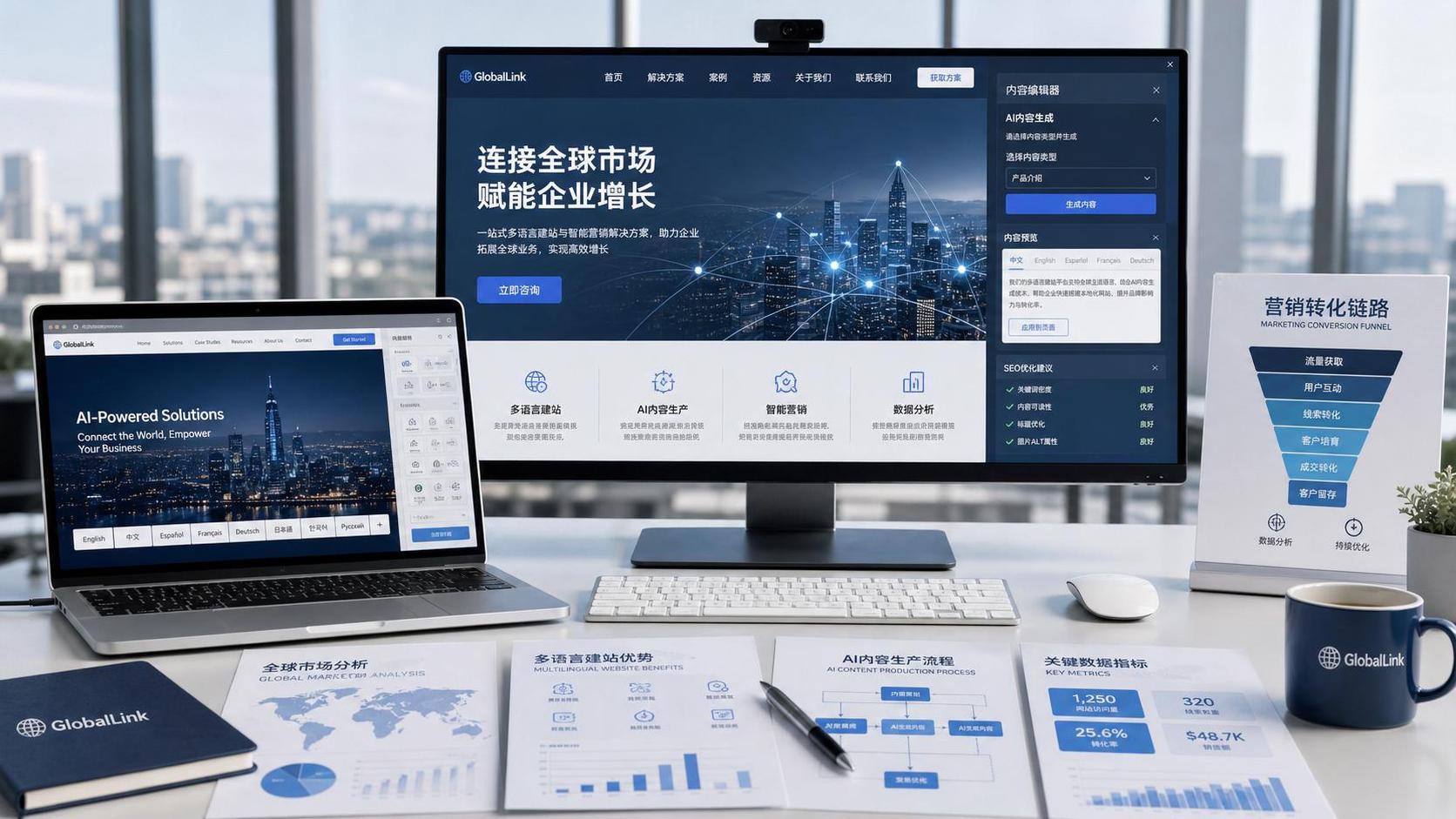
 EasyCamp SaaS Smart Website Marketing SystemE-Yingbao SaaS Smart Website Marketing System: AI-powered, zero-code website building. Rapidly launch multilingual independent e-commerce sites in just 10 minutes. Global server acceleration and AI-driven SEO optimization empower businesses to efficiently connect with global markets. The seamless integration of technology and user-friendly operation makes building e-commerce sites incredibly simple.
 AI+SEM Intelligent Advertising Marketing SystemAI+SEM drives intelligent ad creation, empowering full-funnel precision advertising marketing. The system automatically generates weekly/monthly reports, AI recommends keywords and target countries, monitors core metrics in real-time with intelligent alerts, and enables one-click high-conversion ad solutions to help quickly acquire customers and improve ROI.
 AI+SEO Dual Engine Optimization ServiceEasyWin AI+SEO Dual Engine Optimization System leverages AI-powered keyword mining, content generation, and comprehensive technical optimization to help foreign trade enterprises acquire high-quality organic traffic, significantly improving search rankings and conversion rates.
 AI+SNS Social Media Marketing SystemYingbao AI+SNS Social Media Marketing System - Precision social capture for the social media era. Supports one-click content synchronization across major platforms like Facebook and LinkedIn. AI intelligently rewrites posts for enhanced relevance. 24/7 AI customer service and user profiling analysis empower businesses to efficiently expand into global markets.
 AI+SEO营销解决方案易营宝AI+SEO营销解决方案,通过AI批量写作、智能生成TDK、精准关键词扩词等功能,全面优化网站SEO效果,提升流量与转化率。助力企业构建高效智能网站新生态。
 AI+SEM Advertising Marketing SolutionsAI+SEM Advertising Marketing Solution leverages AI technology to deeply empower SEM ad campaigns. It automatically generates weekly/monthly reports using AI, presenting account data across multiple dimensions for comprehensive insights into campaign performance and trends. The system precisely recommends keywords and target countries, intelligently generates high-conversion ad copy, and enables one-click activation of efficient campaign plans to help businesses rapidly acquire customers. Simultaneously, it monitors core metrics in real time, intelligently identifies abnormal fluctuations, and issues timely alerts to ensure stable, high-return advertising results.
 Domain Name ServicesEasyWin provides professional domain name services, including intelligent queries, one-stop registration, brand protection, and full lifecycle management, helping businesses build a digital brand image.
 EasyOperate B2C Cross-Border E-Commerce Platform & Independent WebsiteEasyStore B2C Cross-border E-commerce Independent Store is an intelligent website building and cross-border e-commerce integrated solution independently developed by EasyStore Information Technology (Beijing) Co., Ltd. The system is specially designed for small and medium-sized as well as large export enterprises, integrating 'website building, operation, marketing, advertising, and conversion' into one, helping enterprises quickly establish cross-border e-commerce independent stores to achieve brand globalization and global sales growth.
The platform supports multiple languages, multiple currencies, and multi-channel marketing, with built-in AI intelligent translation and SEO optimization systems, suitable for mainstream markets such as Southeast Asia, Europe and America, Latin America, and the Middle East, assisting Chinese manufacturing enterprises in efficiently deploying international e-commerce strategies. SSL证书易营宝提供专业SSL安全证书服务,包括单域名和泛域名证书,确保网站数据传输加密、身份验证和完整性保护,助力企业建立安全可信的在线业务环境。









