









- Can Zhejiang foreign trade independent websites still be developed today? Look at changes in traffic and lead generationJul 28, 2026View details
- What New Signals Are Emerging in Enterprise Services SaaS Marketing ReportsJul 27, 2026View details
- What Does a Global Traffic Ecosystem Service Provider Do? What Are the Differences from a Single Advertising AgencyJul 16, 2026View details
- What should you focus on in the latest enterprise SaaS report? From renewal rates and delivery costs to overseas growth opportunitiesJul 12, 2026View details
- What signals are worth paying attention to in a cross-border marketing trend report? B2B companies should look at these 6 signalsJul 11, 2026View details
- How to Read a Cross-Border Marketing Trends Report? Five Key Dimensions for Evaluating Channel OpportunitiesJul 11, 2026View details
- Which channel has the highest ROI in the global traffic ecosystem? Comparative analysis of search, social media, and advertisingJul 10, 2026View details
- What multilingual website services are available in Sanya? Which model is more suitable for local businesses going global?Jul 08, 2026View details
How to Choose an AI Writing Assistant Without Costly Mistakes
How to choose an AI writing assistant without falling into traps? The key lies not just in generation speed, but more importantly in content quality, SEO optimization capabilities, and compatibility with search engine optimization services to balance efficiency, traffic growth, and marketing conversion.
Many enterprises encounter three common pitfalls when choosing AI writing tools: first, focusing only on "speed" while ignoring content usability; second, focusing only on unit costs while ignoring post-editing, human review, compliance, and brand risks; and third, focusing only on feature lists without considering workflow integration. For website construction, SEO optimization, content marketing, and global lead generation teams, a truly effective AI writing assistant should help enterprises produce content consistently, enhance search visibility, and reduce manual collaboration costs rather than creating more rework.
The Bottom Line: For enterprises choosing an AI writing assistant, the focus is not on "whether it can write," but "whether the output is usable."

When users search for "how to choose an AI writing assistant without falling into traps," they aren't looking for abstract concepts. They want to determine which tool fits their needs, how to avoid misleading marketing, and how to verify actual results.
Different roles have different priorities:
- Enterprise Decision-Makers: More concerned with ROI, team efficiency, brand risk, and content scalability.
- Operators: More concerned with generation speed, ease of editing, SEO support, and batch production.
- QC and Security Personnel: More concerned with data security, content compliance, factual accuracy, and sensitive information leak risks.
- After-sales, Agents, and Channel Personnel: More concerned with whether product introductions, FAQs, ad copy, and localized content can be generated quickly.
- End Consumers or SME Users: Focus more on price, ease of use, and entry barriers.
Therefore, the core standard for judging whether an AI writing assistant is worth using can be summarized in three terms: Controllable, Usable, and Convertible. If it can only "generate" but cannot "land," even the fanciest features are just for show.
What is truly worth comparing is not the number of features, but these 6 core judgment dimensions:
Propaganda pages list dozens of features, but these 6 determine the actual experience during procurement and usage.
1. Is content quality stable, rather than just occasionally good?
Enterprises use AI writing assistants not for "inspiration" but to build stable output capabilities. Focus on:
- Can it switch writing styles based on industry, audience, and scenario?
- Does it produce obvious fluff, clichés, or logical leaps?
- Can it develop a theme continuously rather than just stitching paragraphs together?
- Does it support factual constraints, knowledge base calls, or reference material inputs?
We recommend that enterprises avoid testing with just "title-to-article" generation during trials. Instead, use real tasks such as industry solution pages, SEO blog posts, product FAQs, ad landing page copy, and channel recruitment introductions. Real scenarios reveal gaps better than demo samples.
2. Does it have SEO content optimization capabilities?
If an enterprise relies on its website for lead generation, the AI writing assistant must understand "search" as well as "writing." Whether content can gain organic traffic depends on:
- Organizing content structure around keywords rather than keyword stuffing.
- Understanding search intent (distinguishing between informational, comparative, and transactional content).
- Outputting clear heading hierarchies, summaries, FAQs, and internal link suggestions.
- Balancing readability with search engine optimization requirements.
This is why enterprises seeking integrated website and marketing services should consider compatibility with intelligent site builders, SEO optimization, and content publishing workflows when choosing AI tools. Otherwise, high volume may not lead to rankings or inquiries.
3. Can it integrate into existing business workflows?
Tool power is one thing; integration is another. For example:
- Does it support multi-person collaboration, approval, and version management?
- Can it connect to CMS, site group systems, or marketing automation workflows?
- Does it support batch generation and unified template management?
- Is it easy to edit and refine after generation?
For medium-to-large enterprises, the real efficiency driver is not saving 10 minutes on one article, but whether the entire chain from topic selection to publication is streamlined.
4. Are data security and compliance controls in place?
Many pitfalls involve compliance rather than quality. Especially with customer data, product specs, technical docs, and internal training materials, consider:
- Does it retain sensitive input data?
- Does it support private deployment or enterprise-level permission management?
- Can it perform sensitive word checks, content auditing, and risk prompting?
- Can it track generation sources and modification records?
QC, Security, and Brand departments should participate in the evaluation early to avoid the "usable but too risky to use" dilemma.
5. Does it have industry adaptation capabilities?
General AI tools work for basic content, but if an enterprise has clear industry attributes—such as foreign trade, manufacturing, SaaS, healthcare, education, or channel recruitment—it must understand industry expressions, customer decision paths, and professional terminology. Stronger industry adaptation means lower post-editing costs.
6. Don't just look at the subscription price; look at the Total Cost of Ownership (TCO)
Low-priced tools aren't always cheap, and high-priced ones aren't always expensive. Enterprises should calculate:
- How much manual rewriting is needed after generation?
- Will low-quality content hurt SEO performance?
- Does it increase auditing, training, and collaboration costs?
- Can it shorten content delivery cycles and increase marketing response speed?
If a cheap tool requires massive revision time per piece, the actual cost may be higher.
Why do many enterprises use AI writing assistants and see higher efficiency but no improved results?

This common issue usually stems from usage methods and evaluation standards rather than the AI itself.
Pursuing "Daily Volume" while ignoring "Effective Content Rate"
Content marketing is about indexing, clicks, and conversions, not word counts. If 100 articles a week yield few inquiries, the efficiency gain is only superficial.
Neglecting Search Intent
AI assistants easily write something that "looks like an article" but isn't necessarily "the answer users need." For example, someone searching "how to choose an AI assistant" wants screening criteria and pitfall advice, not a long history of AI development. Deviating from search intent makes conversion difficult.
Treating AI as a Replacement rather than an Enhancement
A more rational approach is letting AI handle research, structuring, drafting, and keyword expansion, while editors, SEOs, and business teams perform fact-checking and conversion optimization. This improves efficiency while maintaining control.
From a management perspective, AI tool application is essentially a restructuring of talent and process capabilities. Much like the strategies emphasized in Innovation Strategies for Enterprise Talent Resource Development and Management Models in the Knowledge Economy Era, true competitiveness comes from how an organization builds new collaboration and management mechanisms around new tools.
How different roles should choose: Don't use one standard for everyone
If internal roles are complex, suggest choosing based on scenarios rather than forcing a single procurement.
Judgment methods for Decision-Makers
- Define goals first: Is it for SEO leads, sales efficiency, brand content, or support?
- Prioritize landing capabilities: Can it integrate into existing site building, content, and ad workflows?
- Check ROI: Has delivery speed improved and lead acquisition cost decreased?
- Check risk control: Are data, copyright, factual errors, and brand voice controllable?
Judgment methods for Execution Layers
- Are prompts easy to use?
- Is generated content easy to rewrite and edit?
- Does it support titles, summaries, body text, FAQs, and social media linkage?
- Can it quickly form SEO article frameworks based on target keywords?
Judgment methods for QC and Security Roles
- Can audit nodes be set?
- Does it support enterprise knowledge bases and forbidden word libraries?
- Does it support permission levels and activity tracking?
- Can it reduce hallucinations and improper expressions?
Recommended 4 tests when trialing an AI writing assistant
To avoid being swayed by demo pages, design a set of unified test questions.
Test 1: Generate 3 pieces on the same topic to check stability
Don't just look at the first piece. Continuous testing reveals if it suffers from repetitive fluff, identical structures, or redundant viewpoints.
Test 2: Input real business data to check comprehension
Provide product USPs, customer personas, and industry keywords to see if it can write relevant business content rather than generic platitudes.
Test 3: Test SEO adaptation capabilities
Give primary and secondary keywords and observe if it can logically lay out titles, subheaders, paragraph logic, and FAQs without simple keyword stuffing.
Test 4: Test editing efficiency
A good AI assistant should not only generate but also "collaborate on edits," such as quickly rewriting to be "more professional," "more oral," "more suitable for the official website," or "better for search engine optimization service pages."
What kind of AI writing assistant is worth long-term use for website and marketing teams?
For enterprises relying on official websites, SEO, social media, and ads for growth, tools worth long-term use typically feature:
- Sustainable content production around keywords, categories, and conversion goals.
- Support for multi-language or localized output for global marketing.
- Collaboration with site building, SEO, content, and ad teams.
- Strong template capabilities for batch product, blog, case study, and FAQ pages.
- Ability to help enterprises establish content standards rather than fragmented output.
If an enterprise is upgrading its digital marketing system, AI writing assistants should not be procured in isolation but evaluated within the entire chain of website, SEO, social media, and advertising. Only then will production efficiency translate into traffic growth and marketing results.
In this regard, many enterprises are considering AI application alongside talent development, as even the most advanced tools require correct methods, evaluation standards, and collaboration mechanisms. For further reading on this theme, refer to Innovation Strategies for Enterprise Talent Resource Development and Management Models in the Knowledge Economy Era to understand the long-term value of technology from an organizational capability perspective.
Summary: The key to avoiding pitfalls is choosing tools based on "Business Results" rather than "Feature Hype"
Returning to the original question: how to choose an AI writing assistant without falling into traps? The most practical answer is: first check if the content is usable, then check if it matches SEO optimization needs, then evaluate workflow fit, security compliance, and long-term ROI.
Don't buy just because it "writes fast," and don't assume more features mean it fits your business. A reliable AI assistant should help your team produce high-quality content stably, capture search intent accurately, and serve website lead generation and conversion efficiently.
If you are looking for more efficient ways to produce website content, SEO articles, product intros, or marketing materials, establishing clear evaluation criteria is more important than chasing hype. Choose the right tool, and AI becomes a growth driver; choose the wrong one, and it becomes just another source of rework.
Related Articles
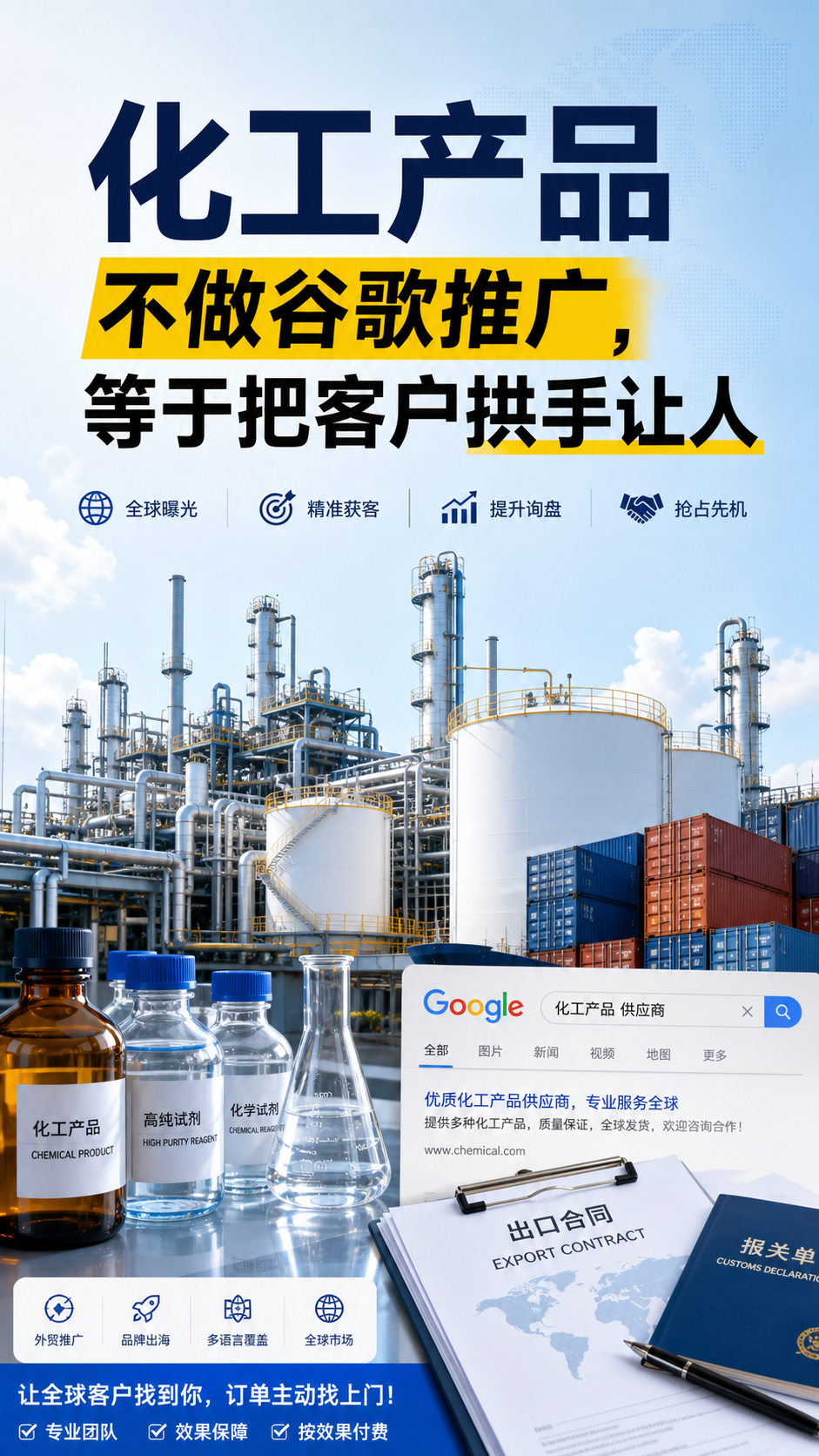
 Promoting chemical products on Google is essential—otherwise, you are effectively handing your customers over to competitors
 Can Zhejiang foreign trade independent websites still be developed today? Look at changes in traffic and lead generation
 What New Signals Are Emerging in Enterprise Services SaaS Marketing Reports


Related Products
 EasyCamp SaaS Smart Website Marketing SystemE-Yingbao SaaS Smart Website Marketing System: AI-powered, zero-code website building. Rapidly launch multilingual independent e-commerce sites in just 10 minutes. Global server acceleration and AI-driven SEO optimization empower businesses to efficiently connect with global markets. The seamless integration of technology and user-friendly operation makes building e-commerce sites incredibly simple.
 AI+SEM Intelligent Advertising Marketing SystemAI+SEM drives intelligent ad creation, empowering full-funnel precision advertising marketing. The system automatically generates weekly/monthly reports, AI recommends keywords and target countries, monitors core metrics in real-time with intelligent alerts, and enables one-click high-conversion ad solutions to help quickly acquire customers and improve ROI.
 AI+SEO Dual Engine Optimization ServiceEasyWin AI+SEO Dual Engine Optimization System leverages AI-powered keyword mining, content generation, and comprehensive technical optimization to help foreign trade enterprises acquire high-quality organic traffic, significantly improving search rankings and conversion rates.
 AI+SNS Social Media Marketing SystemYingbao AI+SNS Social Media Marketing System - Precision social capture for the social media era. Supports one-click content synchronization across major platforms like Facebook and LinkedIn. AI intelligently rewrites posts for enhanced relevance. 24/7 AI customer service and user profiling analysis empower businesses to efficiently expand into global markets.
 AI+SEO营销解决方案易营宝AI+SEO营销解决方案,通过AI批量写作、智能生成TDK、精准关键词扩词等功能,全面优化网站SEO效果,提升流量与转化率。助力企业构建高效智能网站新生态。
 AI+SEM Advertising Marketing SolutionsAI+SEM Advertising Marketing Solution leverages AI technology to deeply empower SEM ad campaigns. It automatically generates weekly/monthly reports using AI, presenting account data across multiple dimensions for comprehensive insights into campaign performance and trends. The system precisely recommends keywords and target countries, intelligently generates high-conversion ad copy, and enables one-click activation of efficient campaign plans to help businesses rapidly acquire customers. Simultaneously, it monitors core metrics in real time, intelligently identifies abnormal fluctuations, and issues timely alerts to ensure stable, high-return advertising results.
 Domain Name ServicesEasyWin provides professional domain name services, including intelligent queries, one-stop registration, brand protection, and full lifecycle management, helping businesses build a digital brand image.
 EasyOperate B2C Cross-Border E-Commerce Platform & Independent WebsiteEasyStore B2C Cross-border E-commerce Independent Store is an intelligent website building and cross-border e-commerce integrated solution independently developed by EasyStore Information Technology (Beijing) Co., Ltd. The system is specially designed for small and medium-sized as well as large export enterprises, integrating 'website building, operation, marketing, advertising, and conversion' into one, helping enterprises quickly establish cross-border e-commerce independent stores to achieve brand globalization and global sales growth.
The platform supports multiple languages, multiple currencies, and multi-channel marketing, with built-in AI intelligent translation and SEO optimization systems, suitable for mainstream markets such as Southeast Asia, Europe and America, Latin America, and the Middle East, assisting Chinese manufacturing enterprises in efficiently deploying international e-commerce strategies. SSL证书易营宝提供专业SSL安全证书服务,包括单域名和泛域名证书,确保网站数据传输加密、身份验证和完整性保护,助力企业建立安全可信的在线业务环境。









