









- Which channel has the highest ROI in the global traffic ecosystem? Comparative analysis of search, social media, and advertisingJul 10, 2026View details
- What multilingual website services are available in Sanya? Which model is more suitable for local businesses going global?Jul 08, 2026View details
- How to view the complete list of China SaaS companies in the top 100? Practical methods for screening website-building and marketing service providersJul 08, 2026View details
- How to view pricing in the global traffic ecosystem? Cost comparison of search, social media, and content channel advertisingJul 06, 2026View details
- How to assess foreign trade website development trends?Looking at 2026 changes from multilingual,AI content to conversion pathsJul 04, 2026View details
- What are the new trends in multilingual marketing data analytics tools in 2026? Focus on attribution、automation and complianceJul 04, 2026View details
- Is Brand Globalization Marketing Consulting Worth Buying? At What Stage Should Companies Bring It InJul 01, 2026View details
- Cross-Border Marketing Trend Research: Why More and More Companies Are Starting to Deploy AI Search and GEO OptimizationJun 30, 2026View details
Is AI translation software suitable for foreign trade multilingual websites
Is AI translation software suitable for multilingual foreign trade websites? For business decision-makers, beyond efficiency, more attention should be paid to SEO performance, brand consistency, and localized conversion results. This article will combine integrated website and marketing practices to analyze the real value of AI translation in global customer acquisition.
For companies expanding into overseas markets, multilingual websites are no longer an “optional item”, but the foundational infrastructure that affects inquiry costs, search visibility, and sales conversion. Especially when a company is covering 3, 5, or even more than 10 national markets at the same time, content production speed and localization quality often become growth bottlenecks.
From a decision-making perspective, the value of AI translation software lies not only in reducing manual translation costs, but more importantly in whether it can support unified coordination among website building, SEO, ad landing pages, and social media content. If handled improperly, direct machine translation may trigger a chain of problems such as keyword deviation, duplicate pages, and distorted conversion copy.
The real role of AI translation software in multilingual foreign trade websites
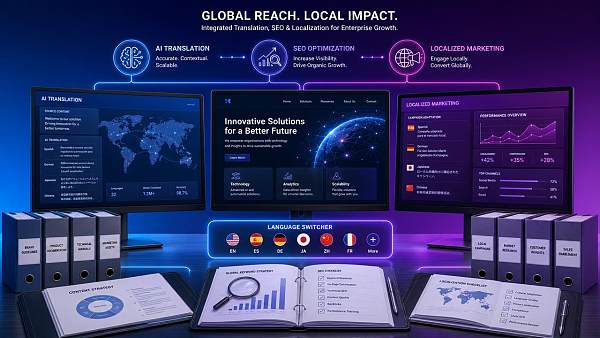
From the perspective of integrated website and marketing services, AI translation software is best suited to taking on the work of the “acceleration layer”, rather than independently taking on the “final delivery layer”. It can compress the original 7–15 day multilingual first-draft preparation cycle to 1–3 days, buying companies more launch windows and market testing time.
However, a foreign trade website is not simply about moving text from one language to another. What search engines recognize are page topics, keyword semantics, regional relevance, and user behavior data. In other words, when the same Chinese paragraph is translated into English, German, and French, not only must the expression be accurate, but the page title, description, URL structure, and internal linking logic must also be adjusted accordingly.
Why many companies use tools, yet still fail to get traffic
There are 4 common reasons: first, direct bulk translation of the entire website without page-level keyword mapping; second, highly duplicated content across multilingual versions, making it difficult for search engines to determine regional value; third, inconsistent terminology across product pages, case study pages, and FAQ pages, which reduces brand trust; fourth, lack of ongoing SEO maintenance, so even 30–60 days after launch, pages still fail to gain effective indexation.
AI is more like an accelerator, not a replacement
In mature projects, AI translation software usually handles first-draft generation, terminology suggestions, bulk processing, and version synchronization; human translators or localization teams are responsible for correcting brand tone, polishing core pages, reviewing industry terminology, and optimizing conversion copy. For key markets, the homepage, product pages, solution pages, and inquiry pages should undergo at least 2 rounds of proofreading.
The table below can help companies quickly judge how suitable AI translation software is for different modules of a multilingual website.
The key conclusion is very clear: the closer a page is to brand positioning and conversion actions, the less it can rely solely on AI translation software; the more a piece of content leans toward standardized explanations and information synchronization, the more suitable it is for using tools to improve efficiency. This is also the most practical path for foreign trade companies to balance budget control and results.
The 3 core metrics business decision-makers should focus on most
If you only look at “how fast the translation is”, it is easy to make the wrong procurement decision. What truly affects multilingual website performance is usually these 3 metrics: SEO visibility, brand consistency, and localized conversion rate. They respectively determine traffic entry, trust building, and inquiry outcomes, and none of them can be missing.
1. SEO visibility: whether it can cover local search demand
If AI translation software only translates sentence by sentence, it often overlooks differences in search expressions across markets. For example, the same product may have completely different search habits in the U.S., the U.K., and Southeast Asian markets. An effective approach is to first complete keyword layering, and then enter the translation process, distinguishing at least 3 levels: core terms, scenario terms, and question terms.
A qualified multilingual website usually needs to complete 5 basic settings in each language: localized page titles, rewritten Meta descriptions, unified URL rules, translated image ALT text, and synchronized structured content. Otherwise, even if the number of pages expands from 50 to 200, indexation and rankings may not grow accordingly.
2. Brand consistency: different languages must not make you sound like different companies
The B2B procurement cycle usually ranges from 30–180 days, and customers will repeatedly review the official website, resource pages, case study content, and ad landing pages. If different language versions show discrepancies in the same capability, delivery method, or after-sales commitment, trust loss will be very obvious, especially in industries with high average order value, where it is more likely to affect inquiry conversion.
Therefore, before launching a multilingual website, a company should establish at least 1 set of brand terminology, 1 set of industry terminology, and 1 list of prohibited expressions. E-Marketingbo Information Technology (Beijing) Co., Ltd. has long served enterprise globalization growth. Relying on its integrated capabilities in intelligent website building, SEO optimization, social media marketing, and advertising, its core value lies in placing content, technology, and marketing messaging into the same execution system.
3. Localized conversion: whether it can make visitors willing to leave an inquiry
The goal of a foreign trade website is not “translation completed”, but “conversion happens”. Whether a page is effective often depends on whether it can clearly communicate value within 3 seconds, build trust within 30 seconds, and provide a clear action path within 3 minutes. The upper limit of AI translation software here depends on whether it is integrated into a real marketing strategy.
For example, when a company is showcasing complex industrial products, equipment categories, or products with high decision-making thresholds, the page must not only be translated accurately, but also properly organize visual storytelling, interactive guided browsing, and parameter structures. A portal-style display approach like Automotive emphasizes immersive visual storytelling, technical specification modules, tab-style product galleries, and real review modules working together, with the goal not of showing off technology, but of shortening the path from awareness to inquiry.
How to choose an AI translation solution more suitable for foreign trade websites
For business decision-makers, choosing AI translation software should not be only about comparing unit prices, but about comparing “whether it can fit into the existing marketing workflow”. A truly usable solution should meet at least 4 conditions: support multilingual bulk management, allow customizable terminology databases, cooperate with SEO field translation, and integrate with website building or content management systems.
6 dimensions recommended for procurement evaluation
- Number of supported languages, and whether it covers the company’s target markets for the next 12–24 months
- Terminology database capability, and whether layered management can be carried out by industry, brand, and product line
- Page field compatibility, and whether it can handle short texts such as titles, summaries, buttons, and forms
- Collaboration workflow, and whether it supports joint review by operations, SEO, and sales
- Content update efficiency, and whether newly added pages can complete multilingual synchronization within 24 hours
- Data tracking capability, and whether it can continuously optimize by combining indexation, bounce rate, and conversion rate
The table below is suitable for internal project approval or supplier evaluation, helping companies upgrade their selection method from “tool procurement” to “results-oriented”.
For companies pursuing long-term overseas customer acquisition, the latter approach is usually more reliable. The reason is not that it has more functions, but that it puts website building, translation, optimization, and advertising into the same chain, avoiding separate battles among the content department, technical department, and marketing department.
A more reliable implementation method: AI improves efficiency, while human-machine collaboration delivers results
Whether AI translation software is suitable for multilingual foreign trade websites is not a simple matter of “suitable” or “unsuitable”, but depends on what implementation model the company adopts. For most B2B companies, it is more advisable to use a “5-step method”: market segmentation, keyword planning, AI initial translation, manual optimization, and post-launch monitoring.
The 5-step implementation process is more suitable for decision-makers to control results
- First determine the priority markets, and it is recommended to control the first batch within 2–4 languages to avoid spreading too widely at once.
- Complete the list of core pages, usually starting with the homepage, product pages, solution pages, case study pages, and contact page.
- Use AI translation software to generate the first draft, while simultaneously establishing a corresponding table for brand terms and industry terms.
- Carry out manual polishing for high-value pages, focusing on optimizing titles, CTA, form prompts, and trust modules.
- After launch, continuously monitor indexation, dwell time, and inquiry changes at 30, 60, and 90 days.
Which pages are most worth prioritizing for manual optimization
The priority usually follows “traffic entry pages > core conversion pages > brand endorsement pages > updated content pages”. In other words, the homepage, main product category pages, key product detail pages, and inquiry pages often determine more than 80% of the commercial value, and fully automated processing should be avoided.
If a company is in the stage of overseas business expansion, it is especially suitable to cooperate with a service provider that has both technical and localization coordination capabilities. Since its establishment in 2013, E-Marketingbo Information Technology (Beijing) Co., Ltd. has built a full-chain solution covering intelligent website building, SEO optimization, social media marketing, and advertising based on its artificial intelligence and big data capabilities, making it more suitable for companies that need cross-department collaboration and value long-term growth.
From the perspective of actual operations, AI translation software is indeed suitable for multilingual foreign trade websites, but the premise is that companies place it in the right position: use it to improve efficiency, not to abandon localization; use it for bulk processing, not to ignore conversion details; use it to reduce repetitive labor, not to replace market judgment.
If you are planning a multilingual official website upgrade, overseas SEO deployment, or multi-market content synchronization, it is recommended to establish an integrated “website building + translation + marketing” mechanism as early as possible. This can not only enable faster launch, but also gradually accumulate sustainable organic traffic and high-quality inquiries within 3 to 6 months.
If you want to further determine whether your business is suitable for adopting AI translation software, or need a multilingual website solution tailored for different national markets, feel free to contact us immediately to obtain a customized solution closer to your industry and target markets.
Related Articles
 Which channel has the highest ROI in the global traffic ecosystem? Comparative analysis of search, social media, and advertising
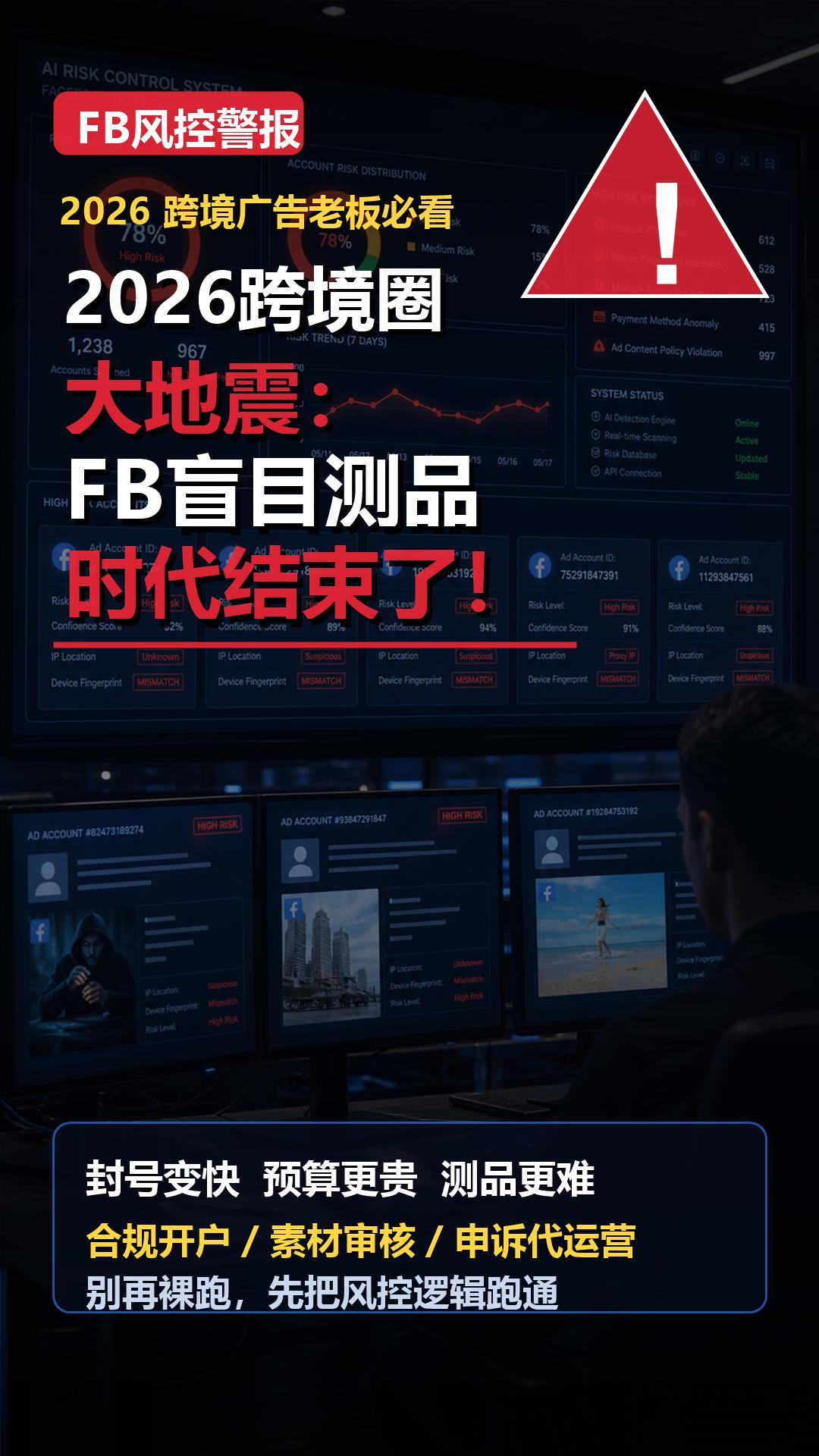
 The Era of Cross-Border Earthquakes in 2026: The Era of Blindly Testing FB Products Has Ended!
 Three key points of domestic-to-foreign trade most important, see if you really did your homework! Don’t take shortcuts.

Related Products
 EasyCamp SaaS Smart Website Marketing SystemE-Yingbao SaaS Smart Website Marketing System: AI-powered, zero-code website building. Rapidly launch multilingual independent e-commerce sites in just 10 minutes. Global server acceleration and AI-driven SEO optimization empower businesses to efficiently connect with global markets. The seamless integration of technology and user-friendly operation makes building e-commerce sites incredibly simple.
 AI+SEM Intelligent Advertising Marketing SystemAI+SEM drives intelligent ad creation, empowering full-funnel precision advertising marketing. The system automatically generates weekly/monthly reports, AI recommends keywords and target countries, monitors core metrics in real-time with intelligent alerts, and enables one-click high-conversion ad solutions to help quickly acquire customers and improve ROI.
 AI+SEO Dual Engine Optimization ServiceEasyWin AI+SEO Dual Engine Optimization System leverages AI-powered keyword mining, content generation, and comprehensive technical optimization to help foreign trade enterprises acquire high-quality organic traffic, significantly improving search rankings and conversion rates.
 AI+SNS Social Media Marketing SystemYingbao AI+SNS Social Media Marketing System - Precision social capture for the social media era. Supports one-click content synchronization across major platforms like Facebook and LinkedIn. AI intelligently rewrites posts for enhanced relevance. 24/7 AI customer service and user profiling analysis empower businesses to efficiently expand into global markets.
 AI+SEO营销解决方案易营宝AI+SEO营销解决方案,通过AI批量写作、智能生成TDK、精准关键词扩词等功能,全面优化网站SEO效果,提升流量与转化率。助力企业构建高效智能网站新生态。
 AI+SEM Advertising Marketing SolutionsAI+SEM Advertising Marketing Solution leverages AI technology to deeply empower SEM ad campaigns. It automatically generates weekly/monthly reports using AI, presenting account data across multiple dimensions for comprehensive insights into campaign performance and trends. The system precisely recommends keywords and target countries, intelligently generates high-conversion ad copy, and enables one-click activation of efficient campaign plans to help businesses rapidly acquire customers. Simultaneously, it monitors core metrics in real time, intelligently identifies abnormal fluctuations, and issues timely alerts to ensure stable, high-return advertising results.
 Domain Name ServicesEasyWin provides professional domain name services, including intelligent queries, one-stop registration, brand protection, and full lifecycle management, helping businesses build a digital brand image.
 EasyOperate B2C Cross-Border E-Commerce Platform & Independent WebsiteEasyStore B2C Cross-border E-commerce Independent Store is an intelligent website building and cross-border e-commerce integrated solution independently developed by EasyStore Information Technology (Beijing) Co., Ltd. The system is specially designed for small and medium-sized as well as large export enterprises, integrating 'website building, operation, marketing, advertising, and conversion' into one, helping enterprises quickly establish cross-border e-commerce independent stores to achieve brand globalization and global sales growth.
The platform supports multiple languages, multiple currencies, and multi-channel marketing, with built-in AI intelligent translation and SEO optimization systems, suitable for mainstream markets such as Southeast Asia, Europe and America, Latin America, and the Middle East, assisting Chinese manufacturing enterprises in efficiently deploying international e-commerce strategies. SSL证书易营宝提供专业SSL安全证书服务,包括单域名和泛域名证书,确保网站数据传输加密、身份验证和完整性保护,助力企业建立安全可信的在线业务环境。









