









- What Does a Global Traffic Ecosystem Service Provider Do? What Are the Differences from a Single Advertising AgencyJul 16, 2026View details
- What should you focus on in the latest enterprise SaaS report? From renewal rates and delivery costs to overseas growth opportunitiesJul 12, 2026View details
- What signals are worth paying attention to in a cross-border marketing trend report? B2B companies should look at these 6 signalsJul 11, 2026View details
- How to Read a Cross-Border Marketing Trends Report? Five Key Dimensions for Evaluating Channel OpportunitiesJul 11, 2026View details
- Which channel has the highest ROI in the global traffic ecosystem? Comparative analysis of search, social media, and advertisingJul 10, 2026View details
- What multilingual website services are available in Sanya? Which model is more suitable for local businesses going global?Jul 08, 2026View details
Is AI translation technology reliable? 5 Key Considerations in Building a Multilingual Website
In today's fiercely competitive global market, multilingual websites have become an essential tool for foreign trade enterprises to expand into overseas markets. But can AI translation technology truly be relied upon? This article will reveal five key considerations in multilingual website development, helping you mitigate risks and enhance overseas traffic conversion.
1. Accuracy and Contextual Adaptation of AI Translation
Current mainstream AI translation engines (e.g., Google Translate, DeepL) can achieve over 90% accuracy in simple sentence translations, but they still exhibit significant shortcomings when handling specialized terminology, cultural idioms, or complex sentence structures. For example, in German, "Handy" refers to a mobile phone rather than "convenient," and direct AI translation may lead to user misinterpretation. Recommended strategies include:
- Human Review Mechanism: Have native speakers verify core product descriptions and FAQ content.
- Terminology Presets: Preload industry-specific glossaries, such as ISO standard terms for machinery.
- Context Annotation: Add business scenario tags (e.g., "e-commerce promotional language") for AI engines.
For example, EasyStore B2C Cross-Border Marketplace and Independent Sites support real-time translation for 300+ languages while using NLP algorithms to identify user browsing habits and dynamically optimize translations, achieving 96% accuracy for automotive accessory descriptions in Middle Eastern markets—leading the industry.

2. Standardized Multilingual SEO Processing
The core difference between single-language and multilingual websites lies in SEO architecture. Google mandates that different language versions must be distinguished via hreflang tags or unique URLs; otherwise, indexing confusion may occur. Key operational points include:
Data shows that websites implementing standardized multilingual SEO experience an average 58% increase in organic traffic for their Spanish versions (Source: Ahrefs 2023 Global SEO Report).
2.1 Localized Keyword Strategy
Directly translating primary keywords often yields suboptimal results. For instance, "wireless earphones" in German regions more commonly uses "kabellose Kopfhörer." Recommendations:
- Use tools like SEMrush to analyze search volume in target languages.
- Study competitors' TDK (Title/Description/Keywords) structures.
- Incorporate long-tail keywords aligned with local shopping habits (e.g., French "casque audio sans fil pas cher").
3. Global Adaptation of Technical Architecture
Multilingual websites require special attention to these technical indicators:
- Server Deployment: Southeast Asian users accessing US servers may experience over 300ms latency—consider AWS Singapore nodes.
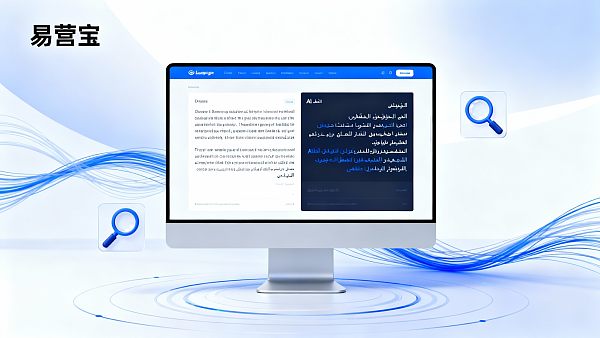
- Font Compatibility: Arabic right-to-left (RTL) layouts require special CSS handling.
- Payment Gateways: Brazil needs Boleto support; the Middle East requires CashU.
After implementing EasyStore B2C Cross-Border Marketplace and Independent Sites' global CDN, a home goods brand reduced Brazilian page load times from 4.2s to 1.8s, boosting conversions by 210%.
4. Legal and Privacy Compliance Essentials
Different regions impose strict data storage restrictions:
- GDPR: EU user data must reside within the EEA.
- CCPA: California consumers can request personal data deletion.
- PIPL: Chinese law requires domestic-operated sites to complete security assessments.
Deploy automated cookie consent management tools with region-specific privacy policy versions.

5. Continuous Optimization and Data Analysis
Establish KPIs for multilingual operations:
- Content Metrics: Compare dwell time and bounce rates across languages.
- Conversion Metrics: Completion rates for localized payment methods.
- Technical Metrics: Monitor first-screen load speeds by region.
Google Analytics 4's granular reporting enables precise behavioral comparisons between German and French users.
5.1 AI-Driven Dynamic Optimization
Advanced multilingual systems now offer:
- Automatic currency/tax mode switching based on user IP.
- Local bestseller recommendations via browsing history.
- AI-generated marketing copy aligned with cultural norms.
Conclusion: Core Principles for Building Global Digital Hubs
Successful multilingual websites balance technology, content, and operations:
- Choose website systems supporting real-time translation with human review.
- Strictly comply with target market SEO standards and legal requirements.
- Implement data-driven iterative improvement mechanisms.
For enterprises seeking global breakthroughs, professional multilingual solutions reduce trial-and-error costs. For instance, a digital brand achieved 300% revenue growth in Southeast Asia within 6 months through standardized deployment. Explore our Smart Website Solutions for technical details.
Related Articles


Related Products
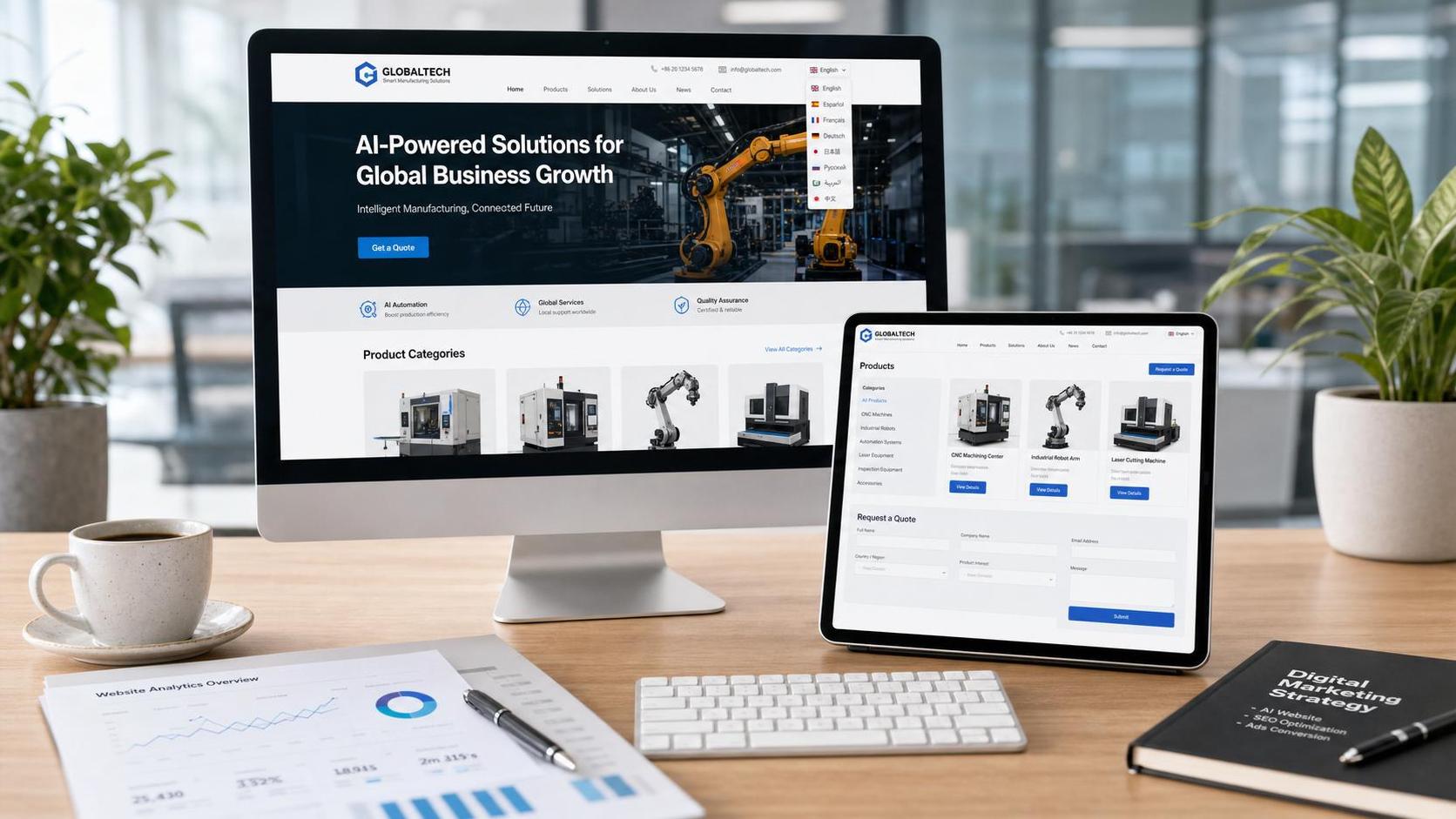
 EasyCamp SaaS Smart Website Marketing SystemE-Yingbao SaaS Smart Website Marketing System: AI-powered, zero-code website building. Rapidly launch multilingual independent e-commerce sites in just 10 minutes. Global server acceleration and AI-driven SEO optimization empower businesses to efficiently connect with global markets. The seamless integration of technology and user-friendly operation makes building e-commerce sites incredibly simple.
 AI+SEM Intelligent Advertising Marketing SystemAI+SEM drives intelligent ad creation, empowering full-funnel precision advertising marketing. The system automatically generates weekly/monthly reports, AI recommends keywords and target countries, monitors core metrics in real-time with intelligent alerts, and enables one-click high-conversion ad solutions to help quickly acquire customers and improve ROI.
 AI+SEO Dual Engine Optimization ServiceEasyWin AI+SEO Dual Engine Optimization System leverages AI-powered keyword mining, content generation, and comprehensive technical optimization to help foreign trade enterprises acquire high-quality organic traffic, significantly improving search rankings and conversion rates.
 AI+SNS Social Media Marketing SystemYingbao AI+SNS Social Media Marketing System - Precision social capture for the social media era. Supports one-click content synchronization across major platforms like Facebook and LinkedIn. AI intelligently rewrites posts for enhanced relevance. 24/7 AI customer service and user profiling analysis empower businesses to efficiently expand into global markets.
 AI+SEO营销解决方案易营宝AI+SEO营销解决方案,通过AI批量写作、智能生成TDK、精准关键词扩词等功能,全面优化网站SEO效果,提升流量与转化率。助力企业构建高效智能网站新生态。
 AI+SEM Advertising Marketing SolutionsAI+SEM Advertising Marketing Solution leverages AI technology to deeply empower SEM ad campaigns. It automatically generates weekly/monthly reports using AI, presenting account data across multiple dimensions for comprehensive insights into campaign performance and trends. The system precisely recommends keywords and target countries, intelligently generates high-conversion ad copy, and enables one-click activation of efficient campaign plans to help businesses rapidly acquire customers. Simultaneously, it monitors core metrics in real time, intelligently identifies abnormal fluctuations, and issues timely alerts to ensure stable, high-return advertising results.
 Domain Name ServicesEasyWin provides professional domain name services, including intelligent queries, one-stop registration, brand protection, and full lifecycle management, helping businesses build a digital brand image.
 EasyOperate B2C Cross-Border E-Commerce Platform & Independent WebsiteEasyStore B2C Cross-border E-commerce Independent Store is an intelligent website building and cross-border e-commerce integrated solution independently developed by EasyStore Information Technology (Beijing) Co., Ltd. The system is specially designed for small and medium-sized as well as large export enterprises, integrating 'website building, operation, marketing, advertising, and conversion' into one, helping enterprises quickly establish cross-border e-commerce independent stores to achieve brand globalization and global sales growth.
The platform supports multiple languages, multiple currencies, and multi-channel marketing, with built-in AI intelligent translation and SEO optimization systems, suitable for mainstream markets such as Southeast Asia, Europe and America, Latin America, and the Middle East, assisting Chinese manufacturing enterprises in efficiently deploying international e-commerce strategies. SSL证书易营宝提供专业SSL安全证书服务,包括单域名和泛域名证书,确保网站数据传输加密、身份验证和完整性保护,助力企业建立安全可信的在线业务环境。









