









- What Does a Global Traffic Ecosystem Service Provider Do? What Are the Differences from a Single Advertising AgencyJul 16, 2026View details
- What should you focus on in the latest enterprise SaaS report? From renewal rates and delivery costs to overseas growth opportunitiesJul 12, 2026View details
- What signals are worth paying attention to in a cross-border marketing trend report? B2B companies should look at these 6 signalsJul 11, 2026View details
- How to Read a Cross-Border Marketing Trends Report? Five Key Dimensions for Evaluating Channel OpportunitiesJul 11, 2026View details
- Which channel has the highest ROI in the global traffic ecosystem? Comparative analysis of search, social media, and advertisingJul 10, 2026View details
- What multilingual website services are available in Sanya? Which model is more suitable for local businesses going global?Jul 08, 2026View details
- How to view the complete list of China SaaS companies in the top 100? Practical methods for screening website-building and marketing service providersJul 08, 2026View details
- How to view pricing in the global traffic ecosystem? Cost comparison of search, social media, and content channel advertisingJul 06, 2026View details
How to choose the right AI translation API for a multilingual website?
For companies preparing to build multilingual websites, an AI translation API is not simply a matter of “if it can translate, it will do”; the key is whether it truly fits your business goals. Simply put: if you care more about overseas SEO performance, you should prioritize evaluating translation controllability, page indexing friendliness, and terminology consistency; if you care more about launch efficiency, you should focus on API stability, batch processing capability, and integration cost; if you operate in a high-ticket, highly specialized industry, you must also pay attention to human review collaboration capabilities. For companies comparing how to choose a platform for multilingual website development, website SEO optimization companies, and Google SEO optimization services, selecting a translation API is essentially deciding future content production efficiency, global customer acquisition costs, and the quality of brand expression.
Conclusion first: when choosing an AI translation API for a multilingual site, prioritize “SEO usability” rather than the one-time translation price

When many companies choose a translation API, their first reaction is to compare prices and the number of supported languages, but for multilingual sites that truly need to capture overseas traffic, these two indicators are often not the most critical. More importantly: can the translation results consistently generate page content that search engines can understand, can they avoid producing a large number of low-quality duplicate pages, and can they maintain unified brand messaging across different country markets.
A suitable AI translation API should at least meet these requirements: support mainstream target languages, provide stable API responses, offer strong terminology control, support batch translation and updates, integrate easily with CMS or website-building systems, allow secondary human editing, and not damage the page’s SEO foundation structure, such as titles, descriptions, URL strategy, H tag logic, and structured content output.
If the company is also involved in building a product showcase website or portal site, this becomes even more important. For example, when a company showcases a certain category of core products, it is not just about translating the product name, but also localizing the selling points, specifications, application scenarios, user reviews, and marketing copy together. For pages like the automotive category in a corporate portal, if they involve immersive visual storytelling, technical specification modules, card-style product galleries, and real owner reviews, relying only on mechanical literal translation can easily reduce conversion rates. Therefore, whether a translation API is suitable for marketing-oriented pages is far more worthy of attention than “how much cheaper it is per million characters.”
What companies and operations teams care about most are actually these 5 practical questions
From business decision-makers to executors, everyone seems to be asking “how to choose an AI translation API,” but the real concerns behind this usually focus on the following 5 categories.
First, is the translation quality good enough to use?
This is not asking whether the grammar is correct, but rather: can it be used for the official website, landing pages, product pages, blog articles, and FAQ pages, can overseas users read it naturally, and can it reduce the brand’s “cheap” impression.
Second, will it affect SEO?
Many multilingual websites get no traffic after going live, not because they were not translated, but because the content is too similar, keyword expressions do not match local search habits, and the page structure is confusing, causing search engines to be unwilling to rank them.
Third, is integration and maintenance troublesome?
Execution teams care more about whether it can be connected to the CMS quickly, whether new content can be synced automatically, whether changes to the source text can trigger incremental updates, and whether there are monitoring and rollback mechanisms when errors occur.
Fourth, is the cost controllable?
Business managers do not just look at API pricing, but also consider subsequent human review costs, repeated translation costs, technical integration costs, and content update and maintenance costs.
Fifth, can it support long-term global operations?
If you are only temporarily translating a few introduction pages, many tools will work; but if the company wants to continuously carry out Google SEO optimization services, overseas ad placements, social media coordination, and multi-country site operations, then you must consider terminology databases, style consistency, permission management, and multi-team collaboration capabilities.
To determine whether an AI translation API is suitable for a multilingual site, focus on these 8 capabilities

1. Whether target market language coverage matches your business layout
It is not a matter of the more languages the better, but whether it covers your key markets and whether the quality in those languages is stable. Many service providers support hundreds of languages, but only some of them may truly be high-quality enough for marketing scenarios.
2. Whether its marketing content translation capability is sufficient
Official website content is not just about conveying information, but about persuading users. Content such as homepage banners, product selling points, case study pages, CTA buttons, and industry solutions requires a very high degree of natural language quality. If the API is better at general text but not at marketing copy, website conversion will be significantly affected.
3. Whether SEO fields can be handled separately
A good solution should support differentiated handling of SEO titles, Meta Description, image Alt text, product descriptions, and category page copy, rather than “translating the whole page in one pot.” This is because search engine optimization emphasizes keyword placement, click-through copy, and semantic matching, and translation strategies differ across fields.
4. Terminology database and style control capabilities
Company names, product models, industry terminology, function module names, brand slogans, and similar content must remain consistent. This is especially important in manufacturing, SaaS, medical, automotive, and technical services industries, where inconsistent terminology directly affects professional credibility.
5. API stability and concurrency capability
If your website has a large volume of content, or you need to launch multilingual pages in batches, you need to pay attention to QPS limits, error rates, response time, and retry mechanisms. Unstable APIs during launch peak periods will directly slow down website building and content publishing efficiency.
6. Whether it supports human review collaboration
Mature companies do not place all their hopes on raw machine output, but instead adopt a model of “AI draft translation + human refinement + terminology accumulation.” This balances both efficiency and brand quality.
7. Whether it is easy to integrate with website-building systems, CMS, and marketing tools
If the translation API can be conveniently connected to the company’s existing website, content systems, product systems, and data analytics tools, it can truly form a continuous operations loop rather than a one-time project.
8. Whether it has data security and permission management mechanisms
For companies with product materials, customer case studies, quotation information, and internal documents, this cannot be ignored. Especially when cross-team collaboration is involved, permission control, audit logs, and content version management are all critical.
Why do many multilingual sites “get translated but still don’t rank”? The problem often is not the API itself
This is where companies are most likely to fall into traps. Many people think that once they buy a translation API and create a few more language versions, overseas traffic will naturally come. In reality, poor multilingual SEO performance commonly includes the following reasons:
First, they only translated the text but did not conduct localized keyword research. Users in different countries search in different ways, and directly translated keywords may not actually be searched by anyone.
Second, the page structure was not optimized for different language markets, such as unreasonable title lengths, descriptions lacking click appeal, messy URLs, and incorrect hreflang settings.
Third, a large amount of page content is highly duplicated, especially category pages, product pages, and template pages, causing search engines to consider them low-value.
Fourth, the content update mechanism is broken. After the source site is revised, other language versions are not synchronized in time, ultimately causing inconsistent information.
Fifth, there is a lack of local user perspective. For example, on the same product page, users in some markets care more about price and delivery, while others care more about certifications, parameters, and reviews. Translation cannot automatically solve these issues.
Therefore, the truly effective approach is not to choose a translation API in isolation, but to view it within the overall framework of “multilingual website building + SEO content planning + localized operations.” For companies hoping to achieve long-term overseas growth, this is more important than simply comparing tool parameters.
In different business scenarios, the selection criteria for translation APIs are also different
If you are a business decision-maker:
Focus on return on investment, launch efficiency, scalability, and brand risk. What you need is not the tool that “translates the fastest,” but the solution that “can support sustained growth.” Especially when the company is already developing overseas channels, independent site customer acquisition, or Google SEO optimization services, you need to see whether it can support large-scale content production.
If you are a website operations or content execution staff member:
Focus on whether the workflow is smooth, such as whether it supports batch import/export, field mapping, secondary content editing, historical version management, and exception alerts. The higher the execution efficiency, the less pressure there will be on subsequent maintenance.
If you are a distributor, agent, or participant in a distribution system:
You should pay more attention to the consistency and replicability of multi-regional content. Headquarters’ brand messaging, product parameters, and core selling points must remain unified, while local market pages also need appropriate flexibility. In this case, terminology control and templated output become especially important.
If you are facing end consumers:
What ultimately determines a transaction is often not “whether the translation is accurate,” but “whether it looks professional, trustworthy, and easy to understand.” This is also why many brands place special emphasis on visual structure and information organization on product pages. For example, in enterprise portal-style product displays, pages centered on performance positioning and design aesthetics, combined with asymmetrical dynamic layouts, large minimalist banners, technical specification modules, and social media interaction areas, require translation to work together with page storytelling rather than simple word-for-word substitution.
Practical recommendations: companies can use this method to quickly screen for the right solution
If you are evaluating how to choose a platform for multilingual website development, or comparing website SEO optimization companies and their supporting translation capabilities, you can judge in the following order:
Step 1: First clarify your business goals
Are you building a multilingual site for brand display, inquiry acquisition, cross-border sales, or channel recruitment? Different goals require completely different translation depth and SEO requirements.
Step 2: List the core pages
Do not translate the entire site from the start. First select the homepage, core product pages, solution pages, case study pages, and high-potential blog pages as test samples.
Step 3: Conduct small-scale language testing
Take 3 to 5 key pages, test the output quality of different translation APIs, and then have people who understand the business evaluate terminology, naturalness, conversion messaging, and SEO suitability.
Step 4: Verify the integration workflow
Let the technical or operations team actually connect it once and observe whether field mapping, update mechanisms, error handling, and manual revisions are smooth.
Step 5: Calculate the total cost
Do not only calculate API fees; also include human review, content rework, SEO adjustments, and technical maintenance costs.
Step 6: Check whether the service provider has overall capability
If the service provider can not only provide translation capabilities but also coordinate intelligent website building, SEO optimization, social media marketing, and advertising placement, then multilingual content is much more likely to truly convert into traffic and inquiries, rather than stopping at “the pages have been created.”
Final judgment: the best AI translation API is the one that fits you
How should you choose an AI translation API that is more suitable for a multilingual site? The answer is not which tool is “the best,” but whether it matches your business stage, content type, target market, and operational capabilities. For companies, there are three things truly worth prioritizing: first, whether the translated content can support SEO and conversion; second, whether the system can be integrated stably and maintained continuously; third, whether it can work in coordination with website building, content operations, and global marketing.
If your goal is only to quickly generate basic multilingual pages, you can prioritize solutions that are easy to integrate and relatively low in cost; if your goal is to acquire long-term overseas organic traffic, enhance brand professionalism, and form a global growth loop, then the translation API must be evaluated within a more complete digital marketing system.
Ultimately, whether a multilingual site performs well does not depend on “whether AI translation was used,” but on whether you chose the right translation capabilities, SEO strategy, and content operation methods that can truly serve business growth.
Related Articles

Related Products
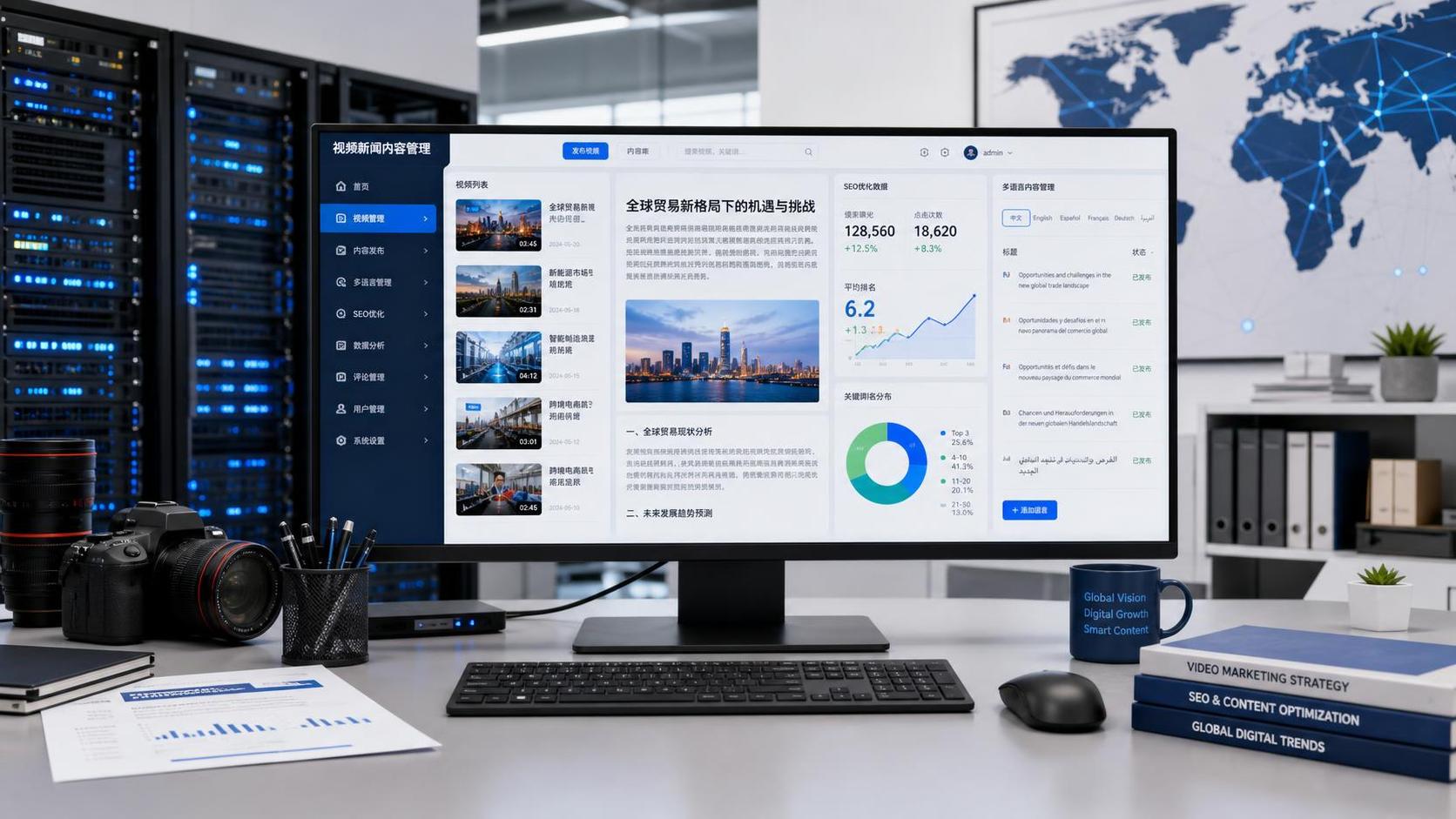
 EasyCamp SaaS Smart Website Marketing SystemE-Yingbao SaaS Smart Website Marketing System: AI-powered, zero-code website building. Rapidly launch multilingual independent e-commerce sites in just 10 minutes. Global server acceleration and AI-driven SEO optimization empower businesses to efficiently connect with global markets. The seamless integration of technology and user-friendly operation makes building e-commerce sites incredibly simple.
 AI+SEM Intelligent Advertising Marketing SystemAI+SEM drives intelligent ad creation, empowering full-funnel precision advertising marketing. The system automatically generates weekly/monthly reports, AI recommends keywords and target countries, monitors core metrics in real-time with intelligent alerts, and enables one-click high-conversion ad solutions to help quickly acquire customers and improve ROI.
 AI+SEO Dual Engine Optimization ServiceEasyWin AI+SEO Dual Engine Optimization System leverages AI-powered keyword mining, content generation, and comprehensive technical optimization to help foreign trade enterprises acquire high-quality organic traffic, significantly improving search rankings and conversion rates.
 AI+SNS Social Media Marketing SystemYingbao AI+SNS Social Media Marketing System - Precision social capture for the social media era. Supports one-click content synchronization across major platforms like Facebook and LinkedIn. AI intelligently rewrites posts for enhanced relevance. 24/7 AI customer service and user profiling analysis empower businesses to efficiently expand into global markets.
 AI+SEO营销解决方案易营宝AI+SEO营销解决方案,通过AI批量写作、智能生成TDK、精准关键词扩词等功能,全面优化网站SEO效果,提升流量与转化率。助力企业构建高效智能网站新生态。
 AI+SEM Advertising Marketing SolutionsAI+SEM Advertising Marketing Solution leverages AI technology to deeply empower SEM ad campaigns. It automatically generates weekly/monthly reports using AI, presenting account data across multiple dimensions for comprehensive insights into campaign performance and trends. The system precisely recommends keywords and target countries, intelligently generates high-conversion ad copy, and enables one-click activation of efficient campaign plans to help businesses rapidly acquire customers. Simultaneously, it monitors core metrics in real time, intelligently identifies abnormal fluctuations, and issues timely alerts to ensure stable, high-return advertising results.
 Domain Name ServicesEasyWin provides professional domain name services, including intelligent queries, one-stop registration, brand protection, and full lifecycle management, helping businesses build a digital brand image.
 EasyOperate B2C Cross-Border E-Commerce Platform & Independent WebsiteEasyStore B2C Cross-border E-commerce Independent Store is an intelligent website building and cross-border e-commerce integrated solution independently developed by EasyStore Information Technology (Beijing) Co., Ltd. The system is specially designed for small and medium-sized as well as large export enterprises, integrating 'website building, operation, marketing, advertising, and conversion' into one, helping enterprises quickly establish cross-border e-commerce independent stores to achieve brand globalization and global sales growth.
The platform supports multiple languages, multiple currencies, and multi-channel marketing, with built-in AI intelligent translation and SEO optimization systems, suitable for mainstream markets such as Southeast Asia, Europe and America, Latin America, and the Middle East, assisting Chinese manufacturing enterprises in efficiently deploying international e-commerce strategies. SSL证书易营宝提供专业SSL安全证书服务,包括单域名和泛域名证书,确保网站数据传输加密、身份验证和完整性保护,助力企业建立安全可信的在线业务环境。









