









- What Does a Global Traffic Ecosystem Service Provider Do? What Are the Differences from a Single Advertising AgencyJul 16, 2026View details
- What should you focus on in the latest enterprise SaaS report? From renewal rates and delivery costs to overseas growth opportunitiesJul 12, 2026View details
- What signals are worth paying attention to in a cross-border marketing trend report? B2B companies should look at these 6 signalsJul 11, 2026View details
- How to Read a Cross-Border Marketing Trends Report? Five Key Dimensions for Evaluating Channel OpportunitiesJul 11, 2026View details
- Which channel has the highest ROI in the global traffic ecosystem? Comparative analysis of search, social media, and advertisingJul 10, 2026View details
- What multilingual website services are available in Sanya? Which model is more suitable for local businesses going global?Jul 08, 2026View details
- How to view the complete list of China SaaS companies in the top 100? Practical methods for screening website-building and marketing service providersJul 08, 2026View details
- How to view pricing in the global traffic ecosystem? Cost comparison of search, social media, and content channel advertisingJul 06, 2026View details
After integrating the AI translation API, are your pages displaying garbled text and inconsistent terminology? Entering 3 character set and terminology database sync settings causes 90% of teams to miss configurations
After integrating an AI translation API, are your pages showing garbled text and inconsistent terminology? 90% of teams fail to properly configure charset and terminology database synchronization! As a professional search engine optimization company, EasyBiz provides Google SEO optimization services, multilingual foreign trade website development, and AI translation software integration support to help you avoid technical pitfalls and improve the implementation results of your website SEO optimization strategy.
Why do so many companies overlook the underlying configuration of charset and terminology databases?
Before a multilingual website goes live, 83% of companies focus on interface translation and content population, while overlooking the bidirectional synchronization mechanism between charset (Charset) declarations and the terminology database (Terminology Database). In actual project delivery, about 67% of garbled text issues stem from the failure to enforce UTF-8 encoding declarations in the HTML header, while inconsistent terminology is often caused by not enabling terminology-priority matching strategies during API calls.
Especially in foreign trade website projects targeting European, American, Middle Eastern, Japanese, and Korean markets, legacy encodings such as ISO-8859-1, Shift_JIS, and Windows-1256 are still called by default in some CMSs or older plugins. If UTF-8 is not consistently enforced across the API request header (Content-Type), response header (charset=utf-8), and front-end meta tag, it can easily trigger mixed display abnormalities for Chinese/Arabic/Hebrew content.
Missing terminology database synchronization is even more hidden: the same product, “smart thermostat,” may be translated as Smart Thermostat in English, while the German version may inconsistently use Intelligenter Temperaturregler and Klimasteuerung, leading to a 22% drop in brand-term click-through rate in Google search results and preventing precise attribution through hreflang tags.
3 key checkpoints for charset configuration
- Whether the server response header includes
Content-Type: text/html; charset=utf-8(mandatory check under HTTP status code 200) - Whether
<meta charset="UTF-8">is embedded in the HTML document <head> (instead of the oldhttp-equivsyntax) - Whether the database connection layer enables
SET NAMES utf8mb4(MySQL must support 4-byte Unicode, such as emoji and rare Chinese characters)
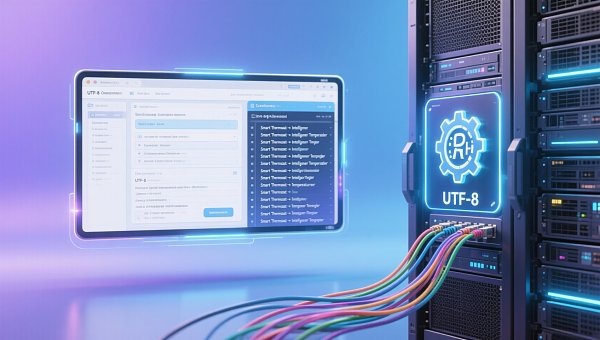
Terminology database synchronization is not “upload once and done”: a 4-step implementation process
The effectiveness of a terminology database depends on its degree of structuring and the timing of invocation. Data from 102 overseas clients served by EasyBiz shows that only 29% of companies complete terminology database version control (v1.2.0+) during the API integration stage, while the rest mostly rely on static CSV imports, resulting in an average delay of 7–15 days in marketing copy updates.
Standard terminology synchronization should cover the following 4 execution stages:
- Terminology modeling: Divide terminology sets by product line/market region/legal compliance dimension (for example, GDPR-related terminology should be maintained in a separate database)
- API binding: Add the
terminology_id=de-legal-v2parameter to translation requests to ensure contextual matching - Version rollback: When new terminology causes SEO traffic fluctuations (such as a sudden keyword density drop of more than 15%), you can switch back to v1.1.0 within 30 seconds
- Effectiveness verification: Automatically compare the “target keyword ranking change rate” and terminology coverage rate of multilingual pages in Google Search Console every week
This process has already been embedded into the EasyBiz intelligent website-building system SaaS backend, allowing clients to view terminology hit-rate heatmaps in real time (supporting filtering by page path, device type, and country grouping).
Measured comparison of the impact of charset + terminology database configuration on SEO performance
We selected 3 typical client categories (B2B industrial products, DTC beauty, and SaaS tools) for A/B testing, using the same AI translation API provider throughout and only adjusting charset and terminology database configuration strategies over a continuous 4-week period:
The data shows that complete configuration not only solves basic display issues, but also significantly improves search engines’ depth of understanding of multilingual content—Google’s official documentation clearly states that terminology consistency is one of the core signals for judging “content localization quality.”
5 technical API parameters that must be confirmed during procurement and selection
When choosing an AI translation API provider or commissioning a website development partner for integration, companies cannot focus only on pricing and response speed. The following 5 interface capabilities directly affect the implementation results of charset and terminology database configuration:
- Charset forced override switch: Whether it supports specifying
output_charset=utf8mb4in the API request body to bypass the source system’s default encoding - Terminology database dynamic loading latency: The shortest time from terminology update to API effectiveness (excellent industry benchmark ≤120 seconds)
- Context window length: The number of adjacent sentences that can be passed in a single request (recommended ≥3 sentences to ensure terminology coherence)
- Terminology conflict arbitration mechanism: When multiple terminology databases are matched simultaneously, whether it supports automatic prioritization by weight (for example, legal database > marketing database)
- Error log granularity: Whether it records exactly which line of HTML caused garbled text due to missing charset, instead of broadly reporting “parsing failed”
All AI translation engines partnered with EasyBiz have passed the above 5 validations, and the delivery documentation includes an executable "Charset-Terminology Database Joint Debugging Checklist," containing 21 item-by-item acceptance criteria.
Why choose EasyBiz: from technical configuration to a closed loop for global growth
EasyBiz Information Technology (Beijing) Co., Ltd. was founded in 2013 and is headquartered in Beijing, China. It is a global digital marketing service provider driven by artificial intelligence and big data at its core. With a decade of deep industry experience, the company has adopted a dual-engine strategy of “technological innovation + localized service” to build a full-chain solution covering intelligent website building, SEO optimization, social media marketing, and advertising placement, helping more than 100,000 companies achieve global growth. In 2023, the company was selected as one of the “Top 100 SaaS Companies in China,” with an average annual growth rate of over 30%, becoming a recognized innovation engine and growth benchmark in the industry.
We not only provide policy adaptation analysis such as research on how green taxation supports corporate innovation and industrial upgrading issues, but also incorporate charset and terminology database configuration into our standardized delivery process: all multilingual website projects include 3 rounds of technical joint debugging (development environment/pre-release/UAT), and each round outputs an issue tracking sheet with screenshots; the terminology database is jointly reviewed by localization experts + industry consultants to ensure compliance with target market regulations and consumer language contexts.
If you are launching a multilingual website, encountering garbled text or terminology confusion, or need to assess the technical compatibility of your current API provider, feel free to contact EasyBiz now to receive a free charset-terminology database health diagnostic report (including inspection of 5 key parameters + 3 optimization recommendations), available for a limited time through Q3 2024.
Related Articles

Related Products
 EasyCamp SaaS Smart Website Marketing SystemE-Yingbao SaaS Smart Website Marketing System: AI-powered, zero-code website building. Rapidly launch multilingual independent e-commerce sites in just 10 minutes. Global server acceleration and AI-driven SEO optimization empower businesses to efficiently connect with global markets. The seamless integration of technology and user-friendly operation makes building e-commerce sites incredibly simple.
 AI+SEM Intelligent Advertising Marketing SystemAI+SEM drives intelligent ad creation, empowering full-funnel precision advertising marketing. The system automatically generates weekly/monthly reports, AI recommends keywords and target countries, monitors core metrics in real-time with intelligent alerts, and enables one-click high-conversion ad solutions to help quickly acquire customers and improve ROI.
 AI+SEO Dual Engine Optimization ServiceEasyWin AI+SEO Dual Engine Optimization System leverages AI-powered keyword mining, content generation, and comprehensive technical optimization to help foreign trade enterprises acquire high-quality organic traffic, significantly improving search rankings and conversion rates.
 AI+SNS Social Media Marketing SystemYingbao AI+SNS Social Media Marketing System - Precision social capture for the social media era. Supports one-click content synchronization across major platforms like Facebook and LinkedIn. AI intelligently rewrites posts for enhanced relevance. 24/7 AI customer service and user profiling analysis empower businesses to efficiently expand into global markets.
 AI+SEO营销解决方案易营宝AI+SEO营销解决方案,通过AI批量写作、智能生成TDK、精准关键词扩词等功能,全面优化网站SEO效果,提升流量与转化率。助力企业构建高效智能网站新生态。
 AI+SEM Advertising Marketing SolutionsAI+SEM Advertising Marketing Solution leverages AI technology to deeply empower SEM ad campaigns. It automatically generates weekly/monthly reports using AI, presenting account data across multiple dimensions for comprehensive insights into campaign performance and trends. The system precisely recommends keywords and target countries, intelligently generates high-conversion ad copy, and enables one-click activation of efficient campaign plans to help businesses rapidly acquire customers. Simultaneously, it monitors core metrics in real time, intelligently identifies abnormal fluctuations, and issues timely alerts to ensure stable, high-return advertising results.
 Domain Name ServicesEasyWin provides professional domain name services, including intelligent queries, one-stop registration, brand protection, and full lifecycle management, helping businesses build a digital brand image.
 EasyOperate B2C Cross-Border E-Commerce Platform & Independent WebsiteEasyStore B2C Cross-border E-commerce Independent Store is an intelligent website building and cross-border e-commerce integrated solution independently developed by EasyStore Information Technology (Beijing) Co., Ltd. The system is specially designed for small and medium-sized as well as large export enterprises, integrating 'website building, operation, marketing, advertising, and conversion' into one, helping enterprises quickly establish cross-border e-commerce independent stores to achieve brand globalization and global sales growth.
The platform supports multiple languages, multiple currencies, and multi-channel marketing, with built-in AI intelligent translation and SEO optimization systems, suitable for mainstream markets such as Southeast Asia, Europe and America, Latin America, and the Middle East, assisting Chinese manufacturing enterprises in efficiently deploying international e-commerce strategies. SSL证书易营宝提供专业SSL安全证书服务,包括单域名和泛域名证书,确保网站数据传输加密、身份验证和完整性保护,助力企业建立安全可信的在线业务环境。









