









- The China-US tariff arrangement has reached a preliminary consensus, and the trade association will be establishedJun 15, 2026View details
- China-Morocco zero-tariff access, a breakthrough in the cost of Moroccan goods exports to ChinaJun 11, 2026View details
- What signal should be released for the suspension of exports to JapanJun 10, 2026View details
- China's May LNG imports rebounded, with increased volumes from Russia and Canada filling the Middle East supply gapJun 10, 2026View details
- Will GEO change its SEO strategy?Jun 04, 2026View details
- What types of businesses are end-to-end solutions suitable for?Jun 03, 2026View details
- 2026 Global Growth Channel TrendsJun 02, 2026View details
- Changes in Search Engine Ranking Factors in 2026Jun 06, 2026View details
How to Use the AI Multilingual Website System
Want to understand how the AI Multilingual Website System works? For companies focused on multilingual website development for foreign trade, search engine optimization services, and social media marketing strategies, leveraging intelligent website-building and data-driven capabilities can help achieve more efficient global customer acquisition and brand growth.
How exactly to use the AI Multilingual Website System: first understand what problems it solves
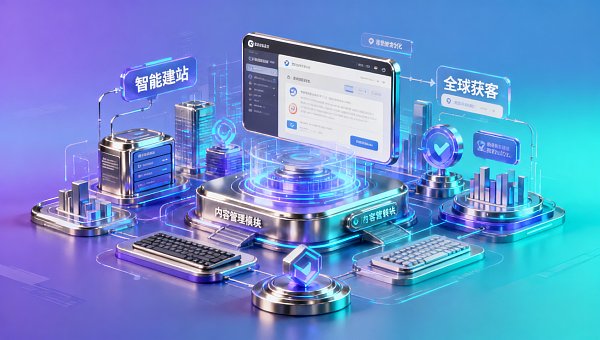
When many companies build websites for overseas expansion, the most common issue is not “whether they have a website,” but “whether the website can continuously generate inquiries.” The core value of the AI Multilingual Website System lies in integrating multilingual website building, content management, search optimization, and marketing conversion into one unified system, reducing the problems of scattered tools, inefficient translation, and unsynchronized content updates.
For users and operators, whether the system is easy to use is usually reflected in 3 aspects: whether pages can be built quickly, whether content can be managed in batches, and whether language versions can be output with high quality. For business decision-makers, the greater concern is 2 outcomes: whether the launch timeline is controllable and whether the cost of future customer acquisition can be reduced.
Easygbs Information Technology (Beijing) Co., Ltd. has been deeply engaged in global digital marketing services since 2013. With artificial intelligence and big data as its underlying capabilities, it has formed an integrated solution covering intelligent website building, SEO optimization, social media marketing, and advertising placement. For enterprises, this means the system does not go live in isolation, but can gradually move into the promotion, optimization, and conversion stage within a standard cycle of 2–4 weeks.
If an enterprise belongs to new energy, industrial manufacturing, or engineering project-based business, its official website often also carries multiple tasks such as brand endorsement, technical explanation, project display, and channel recruitment. Solutions such as photovoltaic, new energy, which are geared toward new energy enterprises, place greater emphasis on fully responsive design, supply chain capability display, and a conversion loop from brand presentation to project lead acquisition, which is naturally aligned with the goals of building a multilingual official website.
What core stages does one system usually cover
In actual use, the AI Multilingual Website System is generally not a single “translation tool,” but consists of 6 stages: website structure setup, language version generation, page publishing, keyword layout, form tracking, and data analysis. The earlier an enterprise connects these stages, the less rework will be needed later.
- Website setup: define the basic structure such as homepage, product pages, solution pages, case pages, and contact page.
- Multilingual generation: output content in different languages according to target markets, while unifying terminology.
- Search optimization: set page titles, descriptions, URL logic, and internal linking relationships.
- Conversion components: deploy forms, inquiry buttons, chat tools, and download entry points.
- Data tracking: track indexing, clicks, bounce rates, and inquiry sources weekly or monthly.
The value of this type of system lies not only in “going live,” but more importantly in whether it can continue to iterate after launch. For engineering project managers, whether it supports multi-person collaboration, permission allocation, and version management also directly affects delivery efficiency.
When enterprises operate it in practice, what steps are recommended
Many companies rush to create pages at the very beginning, and as a result often encounter problems such as language confusion, duplicated content, and unclear inquiry paths. A more reliable approach is to proceed in 4 steps: first set goals, then build the structure, then create content, and finally connect promotion channels. This helps keep early-stage investment within a manageable range.
The first step is to define the target market and target audience. It is usually recommended to first select 1–3 key countries or regions and identify the corresponding purchasing roles, such as distributors, project buyers, end customers, or partners. Different roles focus on completely different content, and channel recruitment and engineering bidding also cannot share the same set of copy.
The second step is to plan the website information architecture. A common structure includes 5–8 primary sections. Product-based enterprises also need supporting sections such as FAQ, download center, case center, and qualification explanation. The clearer the sections, the better search engines can understand them, and the easier it will be to reuse landing pages for subsequent campaigns.
The third step is multilingual content production. This cannot be done through direct translation alone, especially for content such as industry terminology, delivery methods, application scenarios, and service commitments, which should be localized according to the expression habits of the target market. The fourth step is to connect SEO, social media, and advertising to form a closed loop from content exposure to lead conversion.
Recommended implementation process and delivery milestones
The table below is suitable for use by enterprises as an internal alignment reference when launching a project, especially for project managers and decision-makers to evaluate the timeline, required cooperation items, and launch sequence.
As can be seen from the table, a multilingual website is not a one-time delivery project, but a continuous process of “launch + operations.” Easygbs’s advantage lies in combining technological innovation with localized services, helping enterprises shorten the transition time from website building to customer acquisition and avoid having the website left unattended for a long time after launch.
The 3 details operators are most likely to overlook
First, language versions cannot only change the text without changing the conversion entry points. Customers in different countries may prefer different contact methods, time zone explanations, quotation processes, and downloadable materials. Second, product pages cannot only list parameters; they must also supplement application scenarios and service processes. Third, the homepage cannot simply pile up information; it must provide a clear path to action.
For example, when new energy enterprises build overseas official websites, the pages often need to present brand strength, solution capabilities, supply chain collaboration, and project delivery experience at the same time. If the visual primary colors use orange and light gray, combined with grand visual storytelling and rigorous section layouts, it is easier to convey a brand image that balances green energy and industrial technology.
When purchasing or selecting a system, which dimensions should enterprises focus on comparing
When enterprises evaluate how to use the AI Multilingual Website System, what they truly need to compare is not “whether the pages look good,” but whether the system can support subsequent marketing. It is recommended that purchasing decisions evaluate at least 5 dimensions: website-building efficiency, language management, search friendliness, marketing coordination, and ongoing service capabilities.
For enterprises with strong dealer, distributor, and agent networks, it is also necessary to see whether the system supports regional content distribution, contact settings for different countries, and separate tracking for recruitment pages. Otherwise, when the same lead enters multiple channels, it can easily cause attribution confusion and follow-up conflicts.
For project-based enterprises, the decision focus usually also includes content-carrying capability, such as whether it is convenient to upload technical documents, case images, delivery processes, and FAQ explanations. A website that can only display images but cannot accumulate professional content usually struggles to support high-ticket business.
System selection comparison table: do not look only at website-building functions
The comparison table below is more suitable for internal procurement communication. It helps enterprises distinguish the difference between a “basic website-building tool” and an “integrated website + marketing service solution.”
If an enterprise has already made it clear that it wants to develop overseas customers, then purchasing only a website-building tool will often shift the costs of content, promotion, and conversion to the later stage. In contrast, an integrated solution is more suitable for enterprises that have requirements for delivery timelines, lead quality, and long-term ROI.
5 checklist items you can directly verify before purchasing
- Whether it supports unified management of at least 2–5 language versions instead of scattered maintenance page by page.
- Whether it has basic optimization capabilities for page titles, descriptions, link structures, and internal redirects.
- Whether it supports a complete mobile browsing experience, especially for forms, case pages, and attachment downloads.
- Whether it can form a closed loop with social media marketing, advertising placement, and data analysis instead of operating in isolation.
- Whether it provides subsequent content updates, data review, and inquiry conversion recommendations instead of only website delivery.
These 5 items may seem basic, but in fact they determine whether the enterprise will face “repeated rework” later or “continuously accumulate digital assets.”
Which industries and scenarios are more suitable for this system
The AI Multilingual Website System is especially suitable for B2B businesses with complex products, long sales cycles, and dispersed target markets. Common scenarios include new energy, equipment manufacturing, engineering services, brand recruitment, and cross-border supply chain services. This is because these industries all need to do both “professional explanation” and “marketing conversion” well at the same time.
Taking new energy enterprises as an example, when overseas customers browse the official website, they usually do not only look at a single product image, but further assess whether the enterprise can provide full life-cycle services, whether it has a stable supply chain, whether it has customization capabilities, and whether it understands local market demand. This information is exactly what needs to be presented in layers through a multilingual website.
If the company’s main solutions involve project-based collaboration, the official website should also serve as a “pre-sales communication tool,” for example by using case structures to explain requirement confirmation, delivery processes, technical support, and after-sales response. This can screen customers at the front end and reduce ineffective communication for the sales team.
For example, a website solution for new energy enterprises can be developed around industry leadership, brand partners, supply chain strength, and the latest industry developments, forming an expert-level solution logic flow. For enterprises hoping to enhance their overseas brand image, this structure is more effective than simply stacking products.
Scenario adaptation judgment table: different goals require different page priorities
If you are determining whether your business is suitable for introducing a multilingual system, you can first look at the scenario breakdown below and then decide which pages and functions to prioritize.
The clearer the scenario, the less chaotic the website structure will be. Enterprises do not need to do everything at once, but can first focus on 1 primary goal, such as customer acquisition, recruitment, or brand upgrading, and then expand modules quarterly based on data.
Common misunderstandings, risk points, and FAQ
When enterprises use the AI Multilingual Website System, the biggest misunderstanding is treating it as a tool for “automatic customer acquisition after translation.” In fact, the system can improve efficiency, but it does not replace market positioning, content planning, and sales follow-up. If the front-end pages do not clearly express value, then no matter how much traffic comes to the back end, it will still be difficult to convert.
The second common risk is over-pursuing the number of pages. For most small and medium-sized enterprises, launching 10–30 high-quality pages in the initial phase is usually more reliable than laying out hundreds of pages at once. First verify keyword coverage, visitor dwell time, and form conversion, then gradually expand, which can effectively control trial-and-error costs.
The third risk is the disconnect between website building and marketing. If the official website is not connected with social media content, advertising landing pages, keyword layout, and lead management, data fragmentation is very likely to occur later. The truly efficient approach is to use the website as the central hub for all overseas marketing activities.
How to use the AI Multilingual Website System, and which enterprises are suitable to launch first
It is more suitable for enterprises with a clear overseas expansion direction, plans to enter 2 or more target markets, and the need for continuous content updates. If an enterprise only needs a single-page display and has no promotion plan, the return on investment may not be immediately apparent. But if there are goals for overseas branding, channel expansion, or inquiry growth in the next 6–12 months, this system is more worth deploying in advance.
How long is the delivery cycle generally
Conventional projects are usually divided into 4 stages: requirement sorting, page setup, content launch, and promotion optimization. The basic version can usually go live in about 2–4 weeks. If it involves multiple languages, document organization, and complex page logic, the timeline will also be adjusted according to cooperation efficiency. It is recommended that enterprises prepare brand materials, product parameters, and FAQ content in advance to shorten the communication chain.
What should be prioritized most during procurement
It is recommended to prioritize 3 points: whether it supports subsequent growth, whether it is easy for internal maintenance, and whether it has integrated marketing capabilities. The first two determine whether the website can be used long term, while the last determines whether the website can truly bring in leads. During procurement, do not only compare initial quotations; also compare later operational costs and collaboration costs.
Why do many enterprise websites perform only average after launch
There are generally 4 common reasons: unclear positioning, chaotic page structure, content that does not address purchasing concerns, and lack of continuous optimization. Especially in the B2B industry, customers usually compare back and forth across multiple pages. If the logic between the homepage, product pages, case pages, and contact page is disconnected, conversions will naturally be lower.
Why choose us: from website building to growth, providing enterprises with a more complete implementation solution
Easygbs Information Technology (Beijing) Co., Ltd. does not just provide website pages. Instead, based on artificial intelligence and big data capabilities, it helps enterprises connect website building, search optimization, social media marketing, and advertising placement. For business decision-makers, this means a project is no longer pushed forward separately by multiple service providers, making communication and execution more controllable.
The company has been deeply engaged in the industry for ten years and has provided global digital marketing support to more than 100,000 enterprises. It was also selected in 2023 as one of the “Top 100 China SaaS Companies.” For enterprises that need to balance overseas brand presentation, localized content expression, and lead growth at the same time, this model of “technological innovation + localized service” is closer to real business scenarios.
If you are planning a multilingual foreign trade website, or hope to upgrade your existing official website into a true digital asset that can undertake traffic and inquiries, it is recommended to prioritize communication on the following content: target markets and language scope, website section structure, keyword direction, delivery timeline, depth of customization, and methods for subsequent promotional integration.
If your industry belongs to new energy, engineering projects, or B2B solution-based business, you can also further consult on how the page structure can highlight technical support, delivery capability, partner presentation, and channel conversion paths. This is more effective than simply asking about price and also makes it easier to obtain implementation recommendations and quotation plans that fit your current stage.
Related Articles



Related Products
 EasyCamp SaaS Smart Website Marketing SystemE-Yingbao SaaS Smart Website Marketing System: AI-powered, zero-code website building. Rapidly launch multilingual independent e-commerce sites in just 10 minutes. Global server acceleration and AI-driven SEO optimization empower businesses to efficiently connect with global markets. The seamless integration of technology and user-friendly operation makes building e-commerce sites incredibly simple.
 AI+SEM Intelligent Advertising Marketing SystemAI+SEM drives intelligent ad creation, empowering full-funnel precision advertising marketing. The system automatically generates weekly/monthly reports, AI recommends keywords and target countries, monitors core metrics in real-time with intelligent alerts, and enables one-click high-conversion ad solutions to help quickly acquire customers and improve ROI.
 AI+SEO Dual Engine Optimization ServiceEasyWin AI+SEO Dual Engine Optimization System leverages AI-powered keyword mining, content generation, and comprehensive technical optimization to help foreign trade enterprises acquire high-quality organic traffic, significantly improving search rankings and conversion rates.
 AI+SNS Social Media Marketing SystemYingbao AI+SNS Social Media Marketing System - Precision social capture for the social media era. Supports one-click content synchronization across major platforms like Facebook and LinkedIn. AI intelligently rewrites posts for enhanced relevance. 24/7 AI customer service and user profiling analysis empower businesses to efficiently expand into global markets.
 AI+SEO营销解决方案易营宝AI+SEO营销解决方案,通过AI批量写作、智能生成TDK、精准关键词扩词等功能,全面优化网站SEO效果,提升流量与转化率。助力企业构建高效智能网站新生态。
 AI+SEM Advertising Marketing SolutionsAI+SEM Advertising Marketing Solution leverages AI technology to deeply empower SEM ad campaigns. It automatically generates weekly/monthly reports using AI, presenting account data across multiple dimensions for comprehensive insights into campaign performance and trends. The system precisely recommends keywords and target countries, intelligently generates high-conversion ad copy, and enables one-click activation of efficient campaign plans to help businesses rapidly acquire customers. Simultaneously, it monitors core metrics in real time, intelligently identifies abnormal fluctuations, and issues timely alerts to ensure stable, high-return advertising results.
 Domain Name ServicesEasyWin provides professional domain name services, including intelligent queries, one-stop registration, brand protection, and full lifecycle management, helping businesses build a digital brand image.
 EasyOperate B2C Cross-Border E-Commerce Platform & Independent WebsiteEasyStore B2C Cross-border E-commerce Independent Store is an intelligent website building and cross-border e-commerce integrated solution independently developed by EasyStore Information Technology (Beijing) Co., Ltd. The system is specially designed for small and medium-sized as well as large export enterprises, integrating 'website building, operation, marketing, advertising, and conversion' into one, helping enterprises quickly establish cross-border e-commerce independent stores to achieve brand globalization and global sales growth.
The platform supports multiple languages, multiple currencies, and multi-channel marketing, with built-in AI intelligent translation and SEO optimization systems, suitable for mainstream markets such as Southeast Asia, Europe and America, Latin America, and the Middle East, assisting Chinese manufacturing enterprises in efficiently deploying international e-commerce strategies. SSL证书易营宝提供专业SSL安全证书服务,包括单域名和泛域名证书,确保网站数据传输加密、身份验证和完整性保护,助力企业建立安全可信的在线业务环境。









