









- What stages does the cross-border services ecosystem include? How do website building, promotion, payment, and compliance work togetherJun 22, 2026View details
- How will email marketing costs change in 2026Jun 22, 2026View details
- The China-US tariff arrangement has reached a preliminary consensus, and the trade association will be establishedJun 15, 2026View details
- Should overseas brand marketing start with ads or contentJun 21, 2026View details
- What determines B2C cross-border e-commerce website development costs? A breakdown of features, interfaces, and deployment methodsJun 17, 2026View details
- China-Morocco zero-tariff access, a breakthrough in the cost of Moroccan goods exports to ChinaJun 11, 2026View details
What to do with geo-targeted website building solutions? Top 4 Configuration Strategies to Avoid Wasted Traffic

Mastering location-targeted website building solutions, combining AI-powered multilingual website building systems with global website building SaaS platforms, allows for precise location configuration and multilingual foreign trade website building systems to avoid traffic waste and improve cross-border conversion rates.
In the context of global customer acquisition and localized operations, information researchers and users often face problems such as low traffic conversion rates, duplicate crawling, and geographic mismatch. For operations personnel, the primary task is to ensure the broad coverage of multilingual foreign trade website building systems while avoiding wasting limited budgets and crawler traffic on regions irrelevant to the target market. This article, aimed at B2B readers, proposes practical, region-targeted website building strategies from both technical and operational perspectives to help enterprise-level multilingual CMS and global website building SaaS platforms achieve higher ROI.

First, understand why geographic targeting affects traffic quality and cost.
Geographic targeting isn't just about IP address, CDN node selection, or server physical location; it also involves how search engines understand the page's audience. Incorrect geographic settings can lead to a massive influx of traffic from non-target markets, resulting in high bounce rates, low dwell times, and decreased ad conversion rates. To fundamentally reduce waste, website building systems need to create a closed loop in terms of domain strategy, subdirectory/subdomain mapping, hreflang tags, and server response speed. Businesses should link geographic targeting with multilingual content, site structure, indexing strategies, and ad placement strategies. For example, configuring geographic priority in a global SEO website building system ensures that search engines display pages in the correct language to users in the correct domain. Technically, combining a responsive self-service website building system with a smart CDN can improve local loading speed while maintaining SEO friendliness, thereby reducing bounce rates and improving user experience.
II. Four Configuration Strategies: Landing Solutions from DNS to Content Layer
Strategy 1: Geographic Mapping of Domain Names and URL Structures. For cross-border e-commerce websites, it is recommended to prioritize geographic subdirectories or ccTLDs (as needed for business operations), and clearly define the language and geographic mapping relationship in the sitemap. Subdirectory solutions facilitate unified SaaS platform management, while enterprise-level multilingual CMSs should support automatic generation of TDK (Title, Description, Keywords) and sitemaps and synchronization with search engines.
Strategy Two: Precise Use of Hreflang and Canonical. Incorrect use or omission of hreflang can lead search engines to misjudge the page's target region, resulting in duplicate content penalties or improper display. It is recommended to use an AI multilingual website building system to automatically generate an hreflang list and combine it with canonical pointing to the main version to maintain a clear index.
Strategy 3: Edge Computing and CDN Node Prioritization. Select CDNs and nodes that cover the target market, and combine them with intelligent routing to ensure that pages load faster locally. In some scenarios, it is necessary to deploy overseas acceleration nodes or partner cloud services to reduce request latency and improve conversion rates. Simultaneously, enterprises can assess the support of underlying network protocols, such as adopting new protocols during enterprise network upgrades to achieve a more stable connection experience. For example, in environments where network equipment and carrier support permit, introducing Internet Protocol Version 6 (IPv6) can bring a larger address space and native security features, facilitating stable interconnection of global nodes and multicast optimization.
Strategy 4: Intent-Based Traffic Filtering and Targeting Integration. By jointly analyzing search behavior, geographic location, and language signals, precise ad targeting and on-site traffic routing are constructed. The AI marketing engine enables real-time keyword expansion and automatic TDK generation, helping ads maintain semantic consistency with organic traffic and reducing invalid clicks and wasted budget.
III. Integration of Operations and Technology: Achieving Long-Term Sustainable Territorial Control

Achieving low-waste, high-conversion geographic targeting is not a one-time configuration, but a continuous process of monitoring and optimization. First, establish a multi-dimensional monitoring indicator system: geographic traffic distribution, bounce rate, page load time, index volume, ad conversion efficiency, etc. Second, utilize AI-driven detection and diagnostic tools to achieve automatic alerts and quickly locate region-related SEO issues. For example, a multilingual foreign trade website building system should be able to automatically detect duplicate content, hreflang conflicts, and domain name resolution anomalies, and generate priority suggestions.
At the operational level, it is recommended to regularly evaluate keyword performance and search intent changes in the target market, and adjust geographic strategies based on social media data and advertising effectiveness. For users and operators, training documentation should cover practical skills such as site geographic mapping, log parsing, and CDN node selection to ensure the strategy is correctly executed in daily maintenance. Through a technology platform and data-driven approach, enterprises can achieve a "configure once, iterate intelligently" management approach, transforming geographic targeting from a complex operational task into a replicable growth tool.
IV. Case Studies and Implementation Roadmap Recommendations
The implementation roadmap is recommended to follow a three-step approach: assessment, deployment, and optimization. Step 1: Assessment. Identify core markets based on historical traffic and business priorities, and review the existing site's domain structure, CDN, and server distribution. Step 2: Deployment. Complete URL normalization, hreflang configuration, CDN node optimization, and SSL policies on an enterprise-grade multilingual CMS. Simultaneously, enable AI translation and TDK generation on the SaaS platform to ensure the quality of multilingual pages. Step 3: Optimization. Continuously iterate the keyword database and geographic blacklists/whitelists through regular reports and AI diagnostics, adjusting the geographical scope of ad placement.
For example, after integrating a global website building SaaS platform and an AI-powered multilingual website building system, a cross-border e-commerce company improved page loading speed for its target European market by 40% and organic search conversion rate by 25% through subdirectory and CDN node optimization. Simultaneously, by using a strategy of aligning regionally targeted advertising with website content, they reduced advertising costs by approximately 18%. These results stem from the synchronized management of the multilingual foreign trade website building system, the global SEO website building system, and precise regional configurations, forming a closed loop of "website building-customer acquisition-conversion."

Summary and Action Guidelines
In summary, a sound geographic targeting website building strategy should encompass domain name strategy, hreflang and canonical language optimization, CDN and network protocol optimization, and AI-driven content and ad delivery integration. By combining technology with operational processes, businesses can achieve more efficient traffic utilization, reduce ineffective spending, and improve cross-border conversion rates on global website building SaaS systems. With its global server clusters, AI-powered multilingual website building system, and intelligent advertising management system, EasyCreative has provided replicable geographic targeting solutions for numerous manufacturing and e-commerce companies, demonstrating its ability to be implemented and scaled.
If you would like to evaluate your current site's geographic configuration or explore customized global website building and deployment solutions, contact us today to learn more about our solutions and implementation paths.
- Foreign Trade Website Development
- Yiyingbao
- SEO
- AI Translation
- AI Marketing Engine
- Multilingual Foreign Trade Website System
- Global Website Building SaaS Platform
- Cross-border E-commerce Website
- Responsive self-service website system
- AI multilingual website system
- Global SEO Website System
- Geo-targeted Website Solution
- Enterprise-Grade Multilingual CMS
- Global Website Building SaaS System
- Foreign Trade Website System
- Multilingual Website System
Related Articles
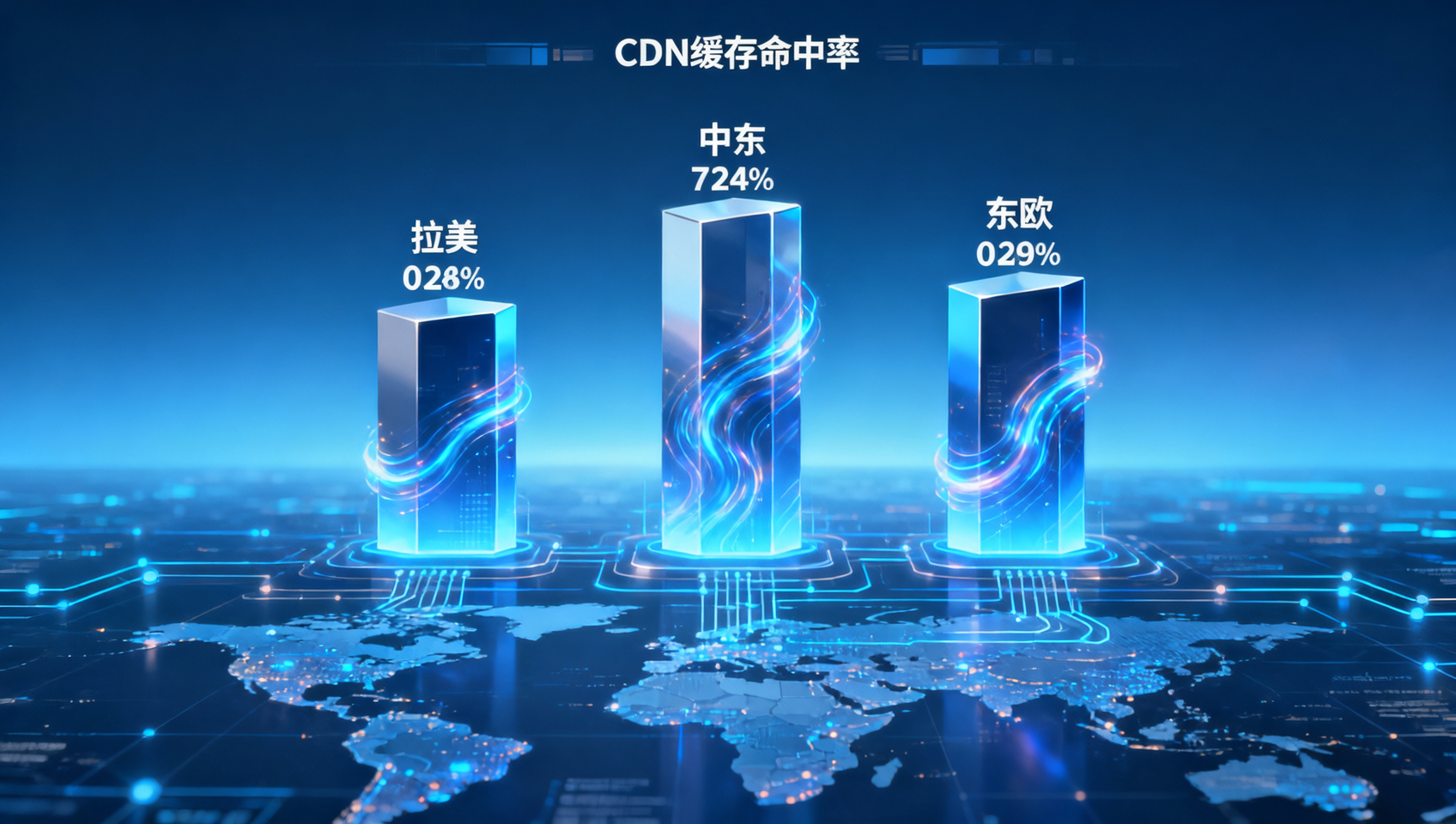
 In Yiyingbao's security and performance architecture, what are the cache hit rates for CDN edge nodes in Latin America, the Middle East, and Eastern Europe?
 How many working days were shortened in the PCI DSS compliance audit cycle for enterprises using Yiyingbao's technology platform for multilingual websites?
 Yiyingbao Security and Performance White Paper Reveals: How Many Milliseconds Does the Average Multilingual Website Homepage Load Time Stay Within?


Related Products
 EasyCamp SaaS Smart Website Marketing SystemE-Yingbao SaaS Smart Website Marketing System: AI-powered, zero-code website building. Rapidly launch multilingual independent e-commerce sites in just 10 minutes. Global server acceleration and AI-driven SEO optimization empower businesses to efficiently connect with global markets. The seamless integration of technology and user-friendly operation makes building e-commerce sites incredibly simple.
 AI+SEM Intelligent Advertising Marketing SystemAI+SEM drives intelligent ad creation, empowering full-funnel precision advertising marketing. The system automatically generates weekly/monthly reports, AI recommends keywords and target countries, monitors core metrics in real-time with intelligent alerts, and enables one-click high-conversion ad solutions to help quickly acquire customers and improve ROI.
 AI+SEO Dual Engine Optimization ServiceEasyWin AI+SEO Dual Engine Optimization System leverages AI-powered keyword mining, content generation, and comprehensive technical optimization to help foreign trade enterprises acquire high-quality organic traffic, significantly improving search rankings and conversion rates.
 AI+SNS Social Media Marketing SystemYingbao AI+SNS Social Media Marketing System - Precision social capture for the social media era. Supports one-click content synchronization across major platforms like Facebook and LinkedIn. AI intelligently rewrites posts for enhanced relevance. 24/7 AI customer service and user profiling analysis empower businesses to efficiently expand into global markets.
 AI+SEO营销解决方案易营宝AI+SEO营销解决方案,通过AI批量写作、智能生成TDK、精准关键词扩词等功能,全面优化网站SEO效果,提升流量与转化率。助力企业构建高效智能网站新生态。
 AI+SEM Advertising Marketing SolutionsAI+SEM Advertising Marketing Solution leverages AI technology to deeply empower SEM ad campaigns. It automatically generates weekly/monthly reports using AI, presenting account data across multiple dimensions for comprehensive insights into campaign performance and trends. The system precisely recommends keywords and target countries, intelligently generates high-conversion ad copy, and enables one-click activation of efficient campaign plans to help businesses rapidly acquire customers. Simultaneously, it monitors core metrics in real time, intelligently identifies abnormal fluctuations, and issues timely alerts to ensure stable, high-return advertising results.
 Domain Name ServicesEasyWin provides professional domain name services, including intelligent queries, one-stop registration, brand protection, and full lifecycle management, helping businesses build a digital brand image.
 EasyOperate B2C Cross-Border E-Commerce Platform & Independent WebsiteEasyStore B2C Cross-border E-commerce Independent Store is an intelligent website building and cross-border e-commerce integrated solution independently developed by EasyStore Information Technology (Beijing) Co., Ltd. The system is specially designed for small and medium-sized as well as large export enterprises, integrating 'website building, operation, marketing, advertising, and conversion' into one, helping enterprises quickly establish cross-border e-commerce independent stores to achieve brand globalization and global sales growth.
The platform supports multiple languages, multiple currencies, and multi-channel marketing, with built-in AI intelligent translation and SEO optimization systems, suitable for mainstream markets such as Southeast Asia, Europe and America, Latin America, and the Middle East, assisting Chinese manufacturing enterprises in efficiently deploying international e-commerce strategies. SSL证书易营宝提供专业SSL安全证书服务,包括单域名和泛域名证书,确保网站数据传输加密、身份验证和完整性保护,助力企业建立安全可信的在线业务环境。









