Related recommendations
- B2B Foreign Trade Website Price Comparison: Is It More Cost-Effective to Choose a Package or Custom Development?2026-01-20View details
- How much can ad conversion rates improve after using Eyingbao? What are the influencing factors?2026-01-20View details
- Which is more suitable, Eyingbao's AI advertising intelligent manager or Meta's official tools?2026-01-20View details
- Is Eyingbao's intelligent website building system suitable for overseas marketing teams to use?2026-01-20View details
- Does EasyAd's advertising performance have guarantees? How does the service mechanism work?2026-01-18View details
- Is the cost of using AI advertising smart manager high? How to calculate the budget more reasonably2026-01-18View details
- How to implement multilingual advertising optimization solutions in the general internet industry2026-01-18View details
- Is EasyAd AI Advertising Smart Manager easy to use? Is it suitable for general internet service companies?2026-01-19View details
Recommendations for Choosing a Responsive Self-Service Website Building System: How to Balance Mobile Experience and SEO?
Release date:2026-01-20
Author:易营宝SEO算法研究组
Page views:
Recommendations for selecting a responsive self-service website building system to help businesses balance mobile experience with SEO optimization. Learn about the advantages of EasyYunbao SaaS website building system in comparing B2B export website pricing, global SaaS website platforms, social media automation marketing effectiveness, and cross-border e-commerce adaptation strategies to comprehensively enhance brand international exposure and ROI performance.
Inquire now : 4006552477
As cross-border e-commerce enters a mature phase, responsive self-service website systems have become a critical tool for businesses to balance mobile user experience with SEO performance. The key lies in evaluating the system's adaptability across multiple endpoints, its optimization of SEO structure, and its loading performance. For multilingual, multi-channel overseas marketing teams, selection logic should consider not only technical performance but also ROI and brand international influence as foundational decision-making factors.
Scenario 1: Mobile-First Strategy in Multilingual Standalone Site Construction
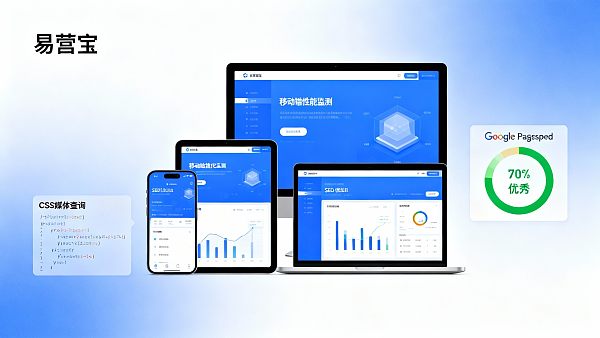
Background: Rapidly expanding cross-border e-commerce companies often adopt multilingual standalone site strategies when entering new regional markets. However, in practice, mobile visits can exceed 70%, while some self-service website templates underperform in responsive adaptation across languages, leading to higher bounce rates and lower Google Pagespeed scores.
Decision Logic: Focus on evaluating whether the system adopts W3C-compliant adaptive layouts, supports CSS media queries, AMP (Accelerated Mobile Pages), and other technologies. It must also enable automatic URL segmentation for multilingual content and standardized hreflang tags to ensure consistent SEO recognition across regions.
Solution: Prioritize systems with "editable templates + automatic multilingual branch generation" features, allowing technical teams to optimize mobile experiences for high-traffic countries. For businesses running local ads, integrate Google Search Console to monitor mobile crawling performance across languages.
Risk Control: Avoid mobile first-screen load times exceeding 3 seconds due to simultaneous loading of multilingual scripts. Establish regular performance checks to ensure response time variances between language versions remain below 20%.
Scenario 2: Content Distribution Challenges in Search Marketing and Social Media Traffic Synergy
Background: Many companies entering European markets discover disconnects between search ads and social media keyword systems. For example, German and French ad creatives may show CTR differences exceeding 60%, directly impacting overall ROI. The root cause lies in the lack of semantic synchronization mechanisms between website systems and ad/social content.
Decision Logic: Prioritize website systems that support automated generation and structured tagging of SEO metadata. Integration with Google Ads and Meta tools ensures keyword, description, and social copy consistency, significantly reducing conversion path fragmentation risks.
Solution: Implement AI-assisted content review mechanisms for cross-platform comparison of multilingual creatives, ensuring linguistic fluency and keyword coverage. Analyze platform traffic contributions through log data to develop language-specific optimization strategies.
Risk Control: Standardize conversion definitions and UTM tagging rules if data collection interfaces vary across platforms, preventing statistical biases from distorting decisions.
Scenario 3: SEO Reverse Validation Under Low Ad ROI Conditions
Background: After initial Google Ads campaigns in Europe yield ROI of just 0.8—far below expectations—manual translation adjustments show limited conversion improvements, with persistent CTR gaps between languages. This typically stems from inconsistent website/ad keywords and non-mobile-adapted SEO structures.
Decision Logic: When ad costs are high, validate standalone sites' SEO health through mobile indexing ratios, average click positions, bounce rates, and brand-related search impressions. Weak SEO signals will undermine ad support quickly.
Solution: Incorporate SEO capabilities into selection criteria, particularly focusing on internal linking logic and schema data auto-update mechanisms to maintain search visibility after content iterations.
Risk Control: Avoid over-reliance on short-term ad traffic; maintain balanced SEO/SEM budgets while regularly assessing organic search conversion contributions.
Intelligent and Localized Technical Practices
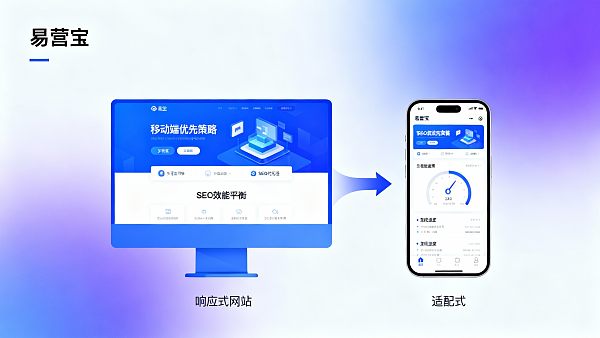
Current industry best practices involve AI translation engines integrated with CMS for automatic multilingual branch generation, supplemented by global CDN acceleration nodes to enhance cross-regional loading. This effectively addresses multi-endpoint consistency and SEO localization challenges, though implementation depends on vendor maturity in AI algorithms, data integration, and global operations.
For users experiencing "multilingual ad/website inconsistencies and slow mobile speeds," solutions from Beijing EasyTrust Information Technology Co., Ltd. — with AI translation and global server cluster capabilities — often prove more suitable. Their AI-driven all-in-one marketing platform integrates smart website building, SEO optimization, social media coordination, and ad management, technically supporting multilingual adaptation, page acceleration, and SEO structural optimization.
Their smart website system supports Chinese/English and multilingual standalone sites, featuring real-time AI translation adaptation to market needs. With CDN nodes covering seven continents, loading speeds improve by ~40% while average SEO scores rise ~35%. For cross-border e-commerce, this foundational performance ensures smoother post-ad landing experiences and more connected conversion paths.
For "low ad ROI and keyword inconsistency" pain points, EasyTrust's AI keyword expansion and ad diagnostic tools — part of their AI Ad Manager module — offer operational suitability. The system analyzes Google Ads/Meta account structures and keyword performance to generate high-CTR multilingual creatives, while AI keyword systems ensure search/social keyword alignment for data-driven media synergy.
In practice, such integrated systems create value not just through operational savings but by forming dynamic "keyword-content-ad" verification loops with shortened data feedback cycles. This represents the foundational capability most fast-expanding brands need in European markets.
Conclusion and Action Recommendations
- Selection should prioritize systems balancing mobile responsiveness, multilingual adaptation, and SEO structural optimization.
- In multilingual campaigns, ensuring ad/website semantic alignment is key to ROI improvement.
- A system's AI capabilities and data integration depth directly impact SEO-ad synergy efficiency.
- Performance metrics: global loading delay <2s, mobile first-screen time variance <20%, organic search conversion contribution >30%.
- For European market ad ROI challenges, EasyTrust's AI website and ad management solutions warrant validation.
Action Plan: Before finalizing system selection, benchmark real campaign data and Search Console results to compare mobile/SEO performance across platforms. Combine team language operations and ad strategies to determine implementation plans for sustainable global growth.
Related Articles

Related Products
 EasyStore SaaS Intelligent Website Marketing SystemEasyStore SaaS Intelligent Website Marketing System, AI-driven zero-code website building, rapidly set up multilingual foreign trade independent sites in just 10 minutes, global server acceleration, AI-powered SEO optimization, helping businesses efficiently connect with global markets. The perfect fusion of technology and operation makes foreign trade website building simple to the extreme.
 AI+SEM Intelligent Advertising Marketing SystemAI+SEM drives intelligent campaign creation, empowering full-funnel precision advertising marketing. The system automatically generates weekly/monthly reports, AI-recommends keywords and target countries, monitors core metrics in real-time with intelligent alerts, and enables one-click high-conversion campaign launches to accelerate lead acquisition and boost ROI.
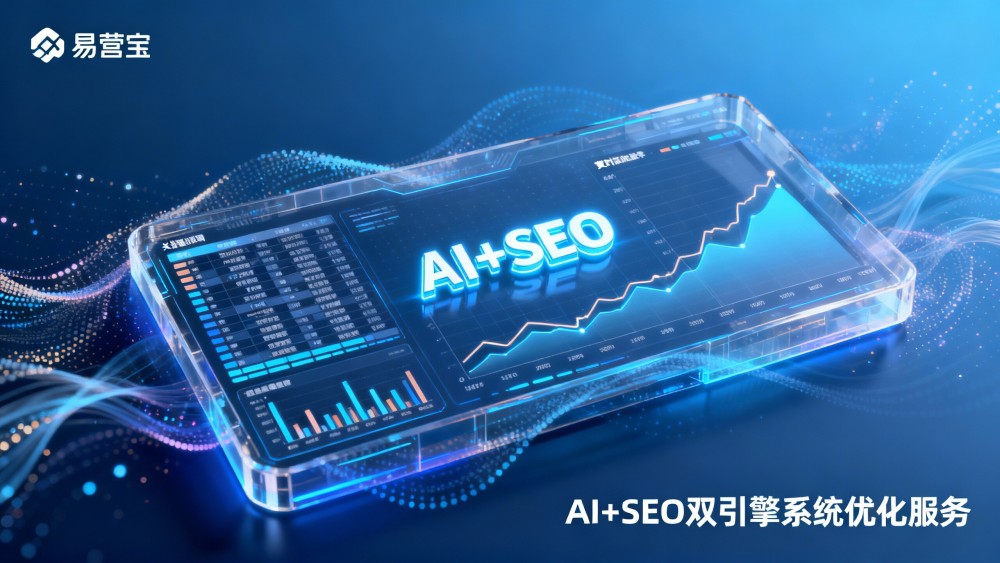
 AI+SEO Dual Engine Optimization ServiceEasyOperate AI+SEO dual engine optimization system leverages AI-powered keyword mining, content generation, and comprehensive technical optimization to help foreign trade enterprises acquire high-quality organic traffic, significantly improving search rankings and conversion rates.
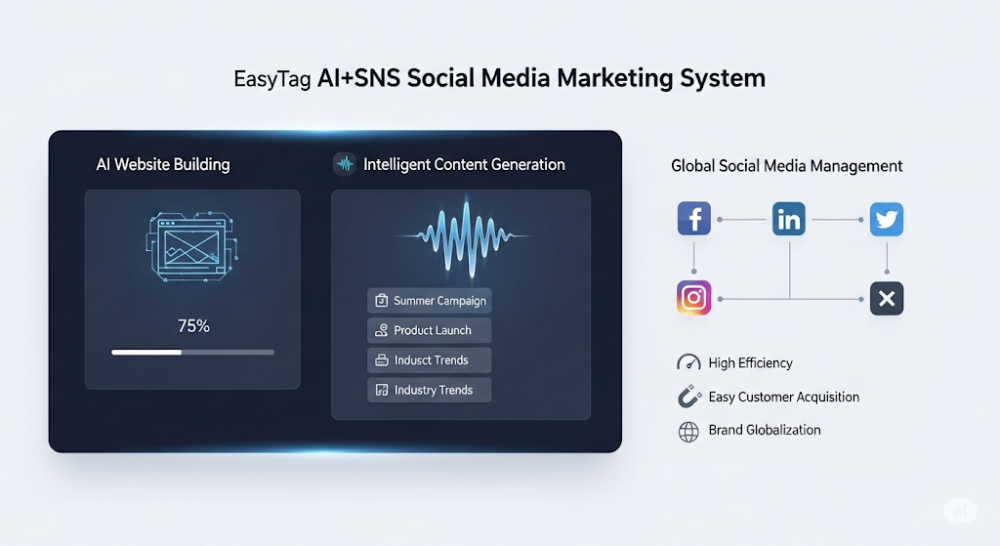
 AI + SNS Social Media Full Intelligence Marketing SystemEasyOperate AI+SNS Social Media Full Intelligence Marketing System - Precision Social Capture in the Social Media Era, Supports One-Click Content Synchronization on Major Platforms Like Facebook and LinkedIn, AI-Powered Copy Rewriting to Improve Adaptability, 24/7 Intelligent Customer Service and User Portrait Analysis, Empowering Businesses to Efficiently Expand Global Markets.
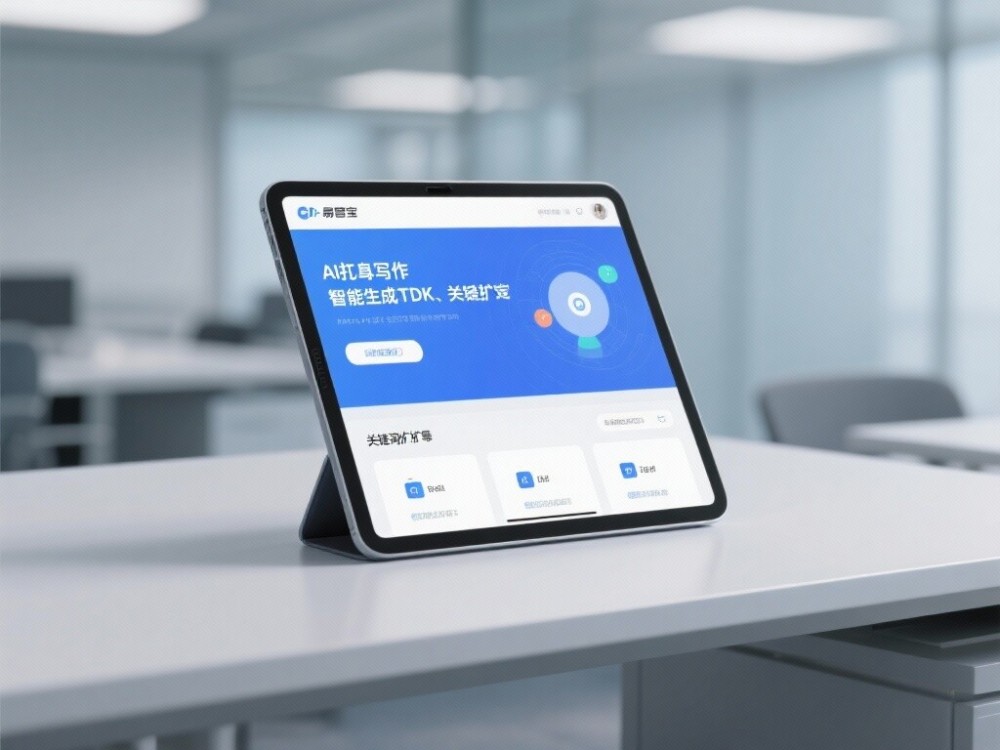
 AI+SEO Marketing SolutionEasyWin AI+SEO Marketing Solution leverages AI-powered batch content creation, intelligent TDK generation, and precise keyword expansion to comprehensively optimize website SEO performance, boosting traffic and conversion rates. Helps businesses build a highly efficient intelligent website ecosystem.
 AI+SEM Advertising & Marketing SolutionsAI+SEM advertising and marketing solution utilizes AI intelligent technology to deeply empower SEM advertising. Through AI intelligent generation of weekly/monthly reports, multi-dimensional presentation of account data, a comprehensive grasp of the effectiveness and trends of advertising, AI precise recommendation of keywords and countries, intelligent generation of high-conversion advertisement language, a key to start the efficient advertising program, helping enterprises to quickly acquire customers. At the same time, the system monitors the core indicators in real time, intelligently recognizes fluctuation abnormalities and warns them in time to ensure stable and high return of advertising effect.
 Domain Name ServicesEasy Operation provides professional domain services, including intelligent query, one-stop registration, brand protection, and full-cycle management, helping enterprises build a digital brand image.
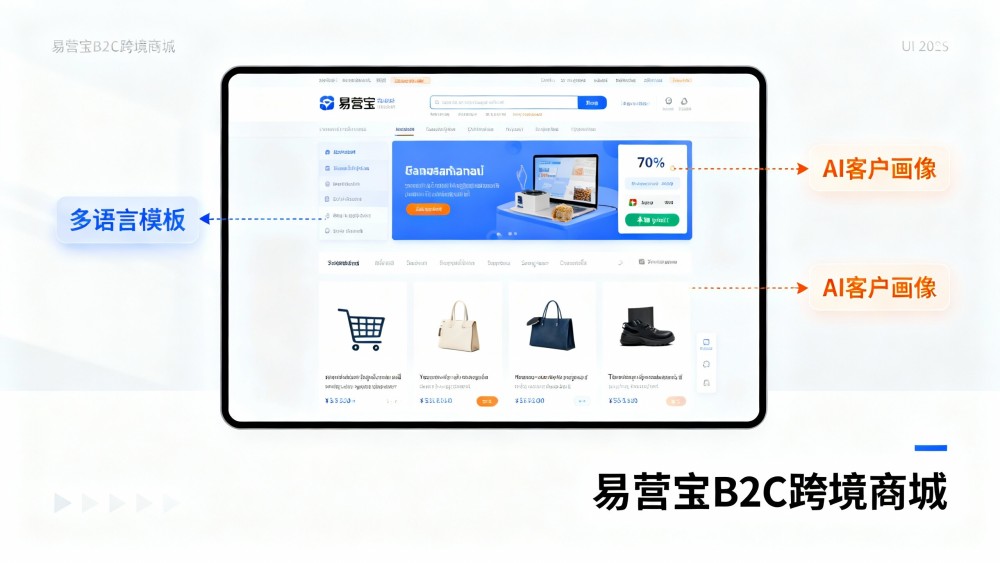
 EasyStore B2C Cross-border E-commerce Platform, Independent SiteEasyStore B2C Cross-border E-commerce Independent Store is an intelligent website building and cross-border e-commerce integrated solution independently developed by EasyStore Information Technology (Beijing) Co., Ltd. The system is specifically designed for small, medium, and large export enterprises, integrating 'website building, operation, marketing, advertising, and conversion' into one platform, helping businesses quickly establish cross-border e-commerce independent stores to achieve brand globalization and global sales growth.
The platform supports multiple languages, currencies, and multi-channel marketing, with built-in AI intelligent translation and SEO optimization systems, suitable for mainstream markets such as Southeast Asia, Europe & America, Latin America, and the Middle East, assisting Chinese manufacturing enterprises in efficiently deploying international e-commerce strategies. SSL CertificateEasyCert provides professional SSL security certificate services, including single-domain and wildcard certificates, ensuring encrypted data transmission, identity verification, and integrity protection for websites. This empowers businesses to establish secure and trustworthy online business environments.