- The Era of GEO Has Arrived: Rankings No Longer Matter, Appearing in AI Responses is the Key to Foreign Trade Lead Generation2026-01-14View details
- How to Choose the Right Global Website SaaS Platform for Your Business? The Latest 2023 Selection Guide2026-01-13View details
- City Partner Program Explained: How to Achieve Business Growth Through Global Website Building SaaS Platform2026-01-13View details
- How does EasySales B2B platform help companies reduce customer acquisition costs? 2024 latest data analysis2026-01-12View details
- From 0 to 1: EasyYunbao Multilingual Website Helps Businesses Succeed in Overseas Markets with Case Studies2026-01-12View details
- Using AI to Enhance Brand Visibility and Exposure: Intelligent Solutions for Multilingual Content Marketing2026-01-14View details
- 2023 China Smart Website Market Research: Analysis of Multilingual Website System Demand Growth2026-01-12View details
- Real User Sharing: YIYINGBAO Usage Experience and Website Effectiveness Evaluation2026-01-12View details
Multilingual Website vs. Single-Language Website: Comparative Analysis of Traffic Boost Effects for Foreign Trade Independent Sites
In today's fiercely competitive globalized environment, the traffic-boosting effects of multilingual websites versus single-language websites for foreign trade independent sites show significant differences. This article delves into the distinctions between the two, revealing how multilingual websites precisely reach overseas clients through AI translation technology, addressing core concerns such as 'Are independent sites suitable for B2B foreign trade?' and providing data-supported actionable recommendations for decision-makers.
1. Traffic Acquisition Capability Comparison: The Globalization Advantage of Multilingual Websites
Google Analytics data shows that independent sites supporting five or more languages experience an average natural traffic growth of 217%, while single-language websites have an international user bounce rate as high as 68%. The core advantages of multilingual websites lie in:
- Broader Search Engine Coverage: Google ranks search results independently in different language regions—German content won’t appear in French searches.
- Enhanced User Trust: 79% of non-native English speakers prefer completing transactions on websites in their mother tongue.
- Long-Tail Keyword Opportunities: Each language unlocks local market-specific search habits and business terminology.
For example, a machinery equipment company offering operational services saw a 340% increase in Brazilian market inquiries within three months after deploying English/Russian/Spanish versions, while domain services with multi-suffix registration effectively prevented brand hijacking risks overseas.
2. Technological Implementation Differences: Balancing AI Translation and Native Content
2.1 Limitations of Single-Language Websites
While English-only websites have lower development costs, they face three major issues: professional terminology machine translation accuracy below 62%, poor cultural adaptation (e.g., right-to-left layouts in Middle Eastern regions), and difficulty optimizing local SEO. B2B platform data shows that pages relying solely on browser auto-translation have an 83% lower conversion rate than native-language pages.
2.2 Technological Breakthroughs in Multilingual Sites
Leading intelligent website systems have achieved:

3. Operational Cost Analysis: Long-Term ROI Calculation Model
We compared the three-year total investment for two models (using a medium-sized foreign trade company as an example):
- Single-Language Site: Annual maintenance costs ~¥80,000, but require additional Google Ads multilingual campaign expenses (~35% of budget).
- Multilingual Site: Initial development investment ~¥150,000-200,000; later reduces customer acquisition costs through organic traffic—CPA drops to 41% of single-language sites by the third year.
Notably, domain services with global resolution ensure consistent access speeds across language versions, preventing client loss due to technical issues.
4. Decision Recommendations: Choosing the Optimal Solution
Tailor strategies based on target market characteristics:
- Emerging Markets: Prioritize Spanish/Portuguese/Russian versions with local payment methods.
- High-End Manufacturing: German/Japanese versions require professional manual proofreading to ensure technical documentation accuracy.
- Rapid Testing: Start with AI-generated minimal multilingual MVP to validate demand through traffic data.
5. Success Case: Practical Results of Multilingual Independent Sites
A medical device supplier using an intelligent website system achieved:
- Launched English/French/Arabic independent sites within 6 months
- 220% increase in click-through rates for AI-generated Arabic product videos
- 17x growth in French market organic search rankings for top-3 page keywords
Conclusion and Actionable Recommendations
For foreign trade companies with annual exports exceeding ¥5 million, multilingual independent sites have become standard. Their core value extends beyond traffic growth to embody brand internationalization and client trust-building. Recommendations:
- Priority registration of .com/.cn and target country top-level domains
- Choose website platforms supporting AI translation with human proofreading collaboration
- Develop phased language expansion plans, adding 1-2 languages quarterly
The intelligent website system has helped over 2,000 foreign trade companies achieve multilingual digital transformation. Click to learn how domain services safeguard your globalization strategy.
Related Articles
 Full-chain SEO closed loop: precise traffic introduction to automated inquiry conversion, EasyYun defines new standards for customer acquisition
 Enterprise Website Development and Independent Website SEO Optimization Full Strategy: From 0 to 1 Building a High-Converting Website
 Fast SEO Optimization Techniques: 7-Day Practical Methods to Boost Natural Traffic for Corporate Websites
Related Products
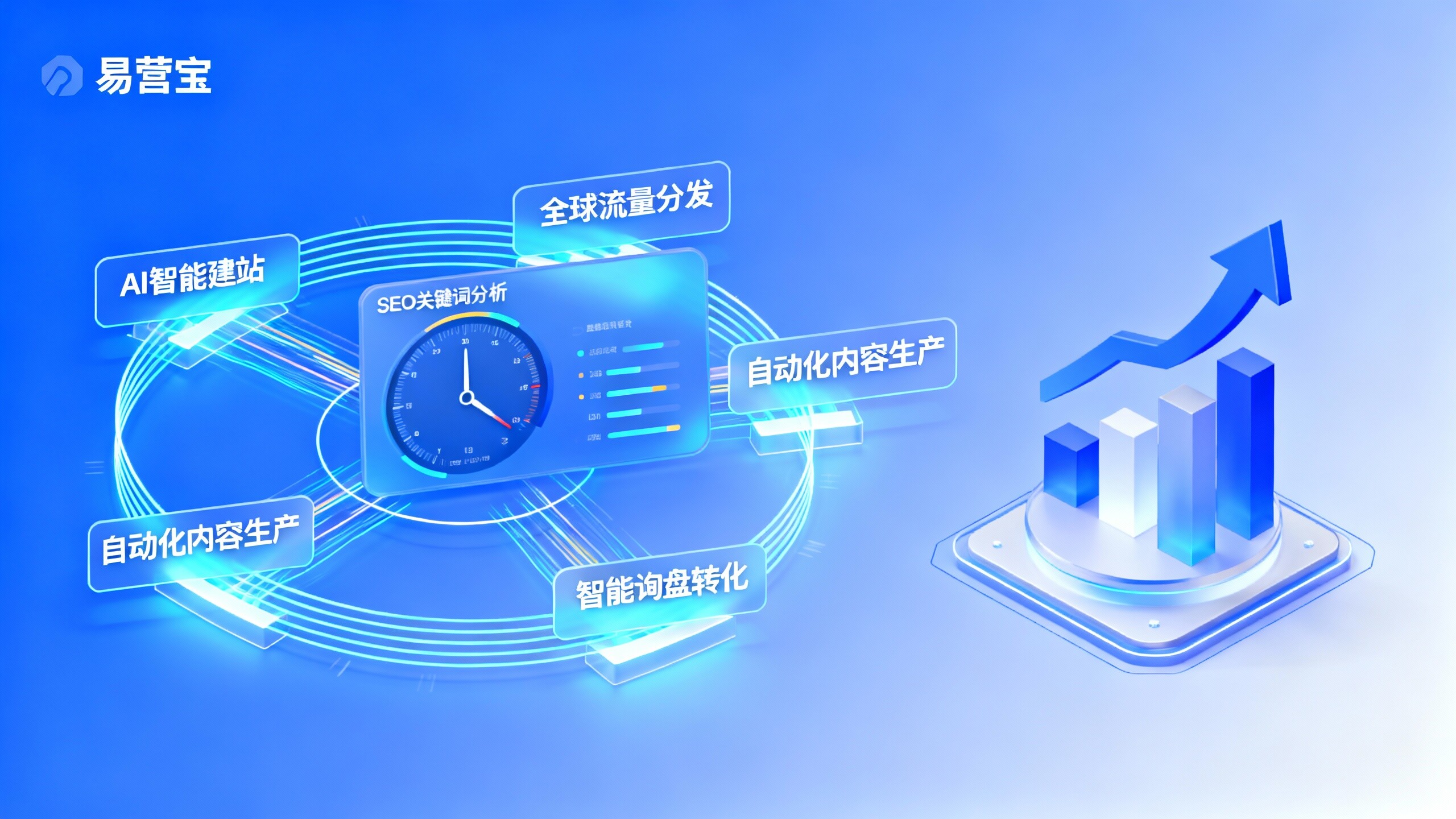
 EYB SaaS Intelligent Station Building and Marketing SystemYiyingbao SaaS intelligent station building and marketing system, AI-driven zero-code station building, 10-minute rapid construction of multi-language foreign trade independent station, global server acceleration, AI intelligent SEO optimization, help enterprises efficiently connect to the global market. The perfect fusion of technology and operation, so that foreign trade station building simple to the extreme!
 AI+SEM Advertising Intelligent Investment Marketing SystemAI+SEM drives intelligent VC and empowers accurate advertising and marketing in the whole chain. The system automatically generates weekly/monthly reports, AI recommends keywords and placement countries, real-time monitoring of core indicators and intelligent early warning, and one-click start of high-conversion placement programs, helping to quickly acquire customers and improve ROI.
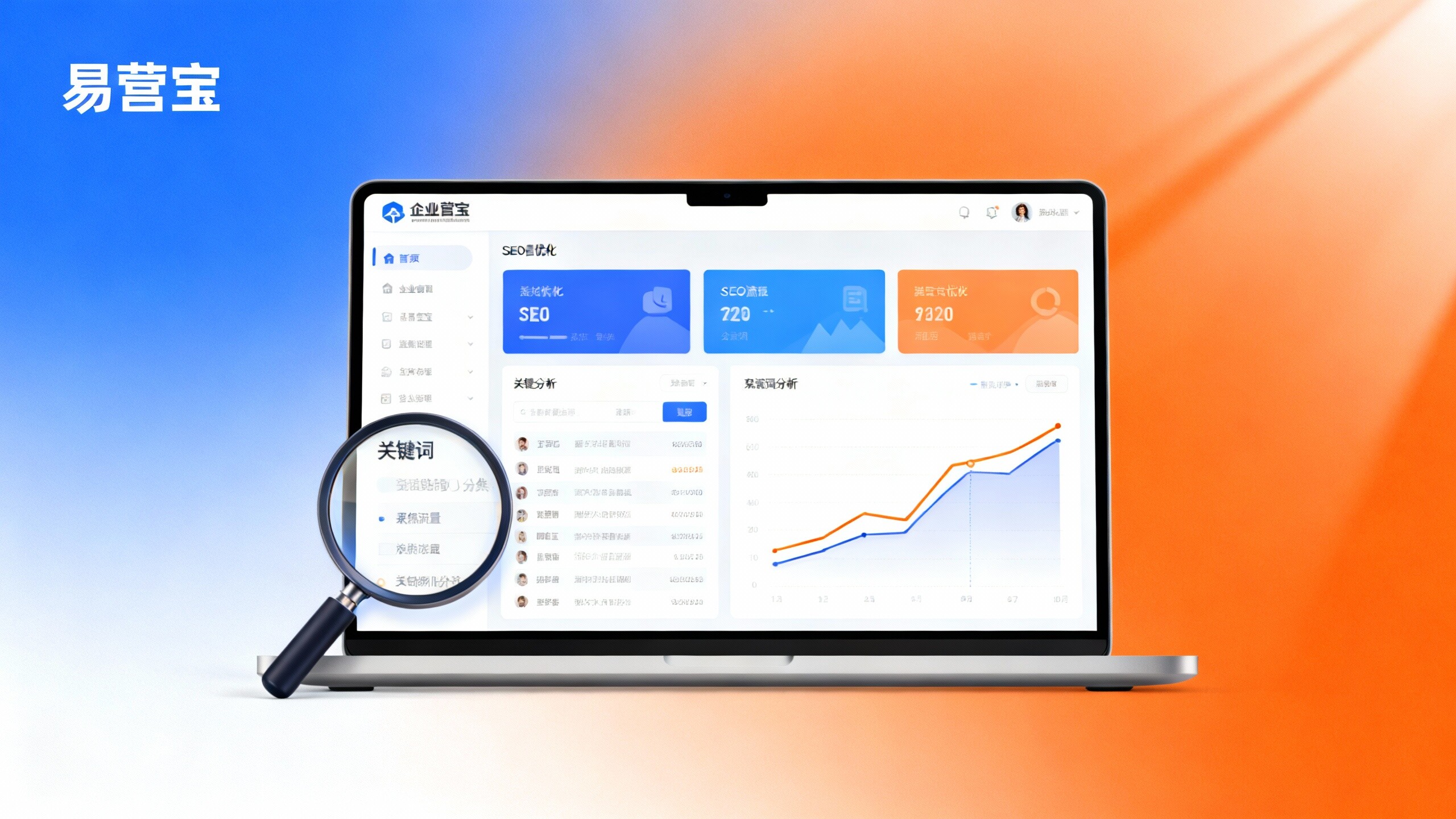
 AI+SEO Dual-Engine System Optimization ServiceE-Yingbao AI+SEO Dual-Engine Optimization System leverages AI-powered keyword mining, content generation, and comprehensive technical optimization to help export-oriented enterprises capture high-quality organic traffic, significantly boosting search rankings and conversion rates.
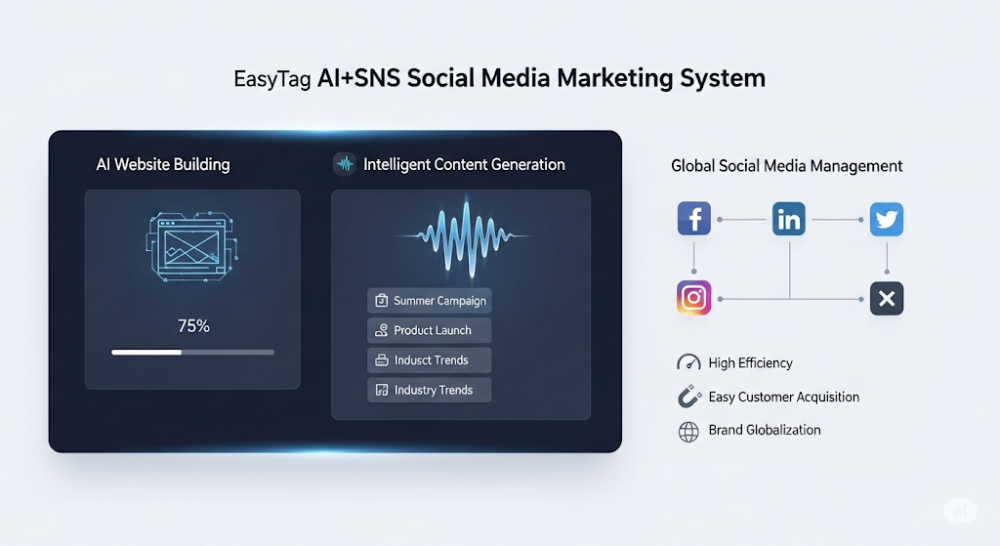
 AI+SNS Social Media Full Intelligence Marketing SystemEYBao AI+SNS Social Media All Intelligent Marketing System - Precise social capture in the era of social media, supporting one-click synchronization of content on mainstream platforms such as Facebook, LinkedIn, etc., AI intelligent rewriting of postings to enhance the degree of adaptability, 24/7 intelligent customer service and user profile analysis, helping enterprises to efficiently expand the global market.
 AI+SEO Marketing SolutionEasyWin AI+SEO Marketing Solution leverages AI-powered batch content creation, intelligent TDK generation, and precise keyword expansion to comprehensively optimize website SEO performance, boosting traffic and conversion rates. Helps businesses build a highly efficient intelligent website ecosystem.
 AI+SEM Advertising & Marketing SolutionsAI+SEM advertising and marketing solution utilizes AI intelligent technology to deeply empower SEM advertising. Through AI intelligent generation of weekly/monthly reports, multi-dimensional presentation of account data, a comprehensive grasp of the effectiveness and trends of advertising, AI precise recommendation of keywords and countries, intelligent generation of high-conversion advertisement language, a key to start the efficient advertising program, helping enterprises to quickly acquire customers. At the same time, the system monitors the core indicators in real time, intelligently recognizes fluctuation abnormalities and warns them in time to ensure stable and high return of advertising effect.
 Domain Name ServicesEasy Operation provides professional domain services, including intelligent query, one-stop registration, brand protection, and full-cycle management, helping enterprises build a digital brand image.
 EasyStore B2C Cross-border E-commerce Platform, Independent SiteEasyStore B2C Cross-border E-commerce Independent Store is an intelligent website building and cross-border e-commerce integrated solution independently developed by EasyStore Information Technology (Beijing) Co., Ltd. The system is specifically designed for small, medium, and large export enterprises, integrating 'website building, operation, marketing, advertising, and conversion' into one platform, helping businesses quickly establish cross-border e-commerce independent stores to achieve brand globalization and global sales growth.
The platform supports multiple languages, currencies, and multi-channel marketing, with built-in AI intelligent translation and SEO optimization systems, suitable for mainstream markets such as Southeast Asia, Europe & America, Latin America, and the Middle East, assisting Chinese manufacturing enterprises in efficiently deploying international e-commerce strategies. SSL CertificateEasyCert provides professional SSL security certificate services, including single-domain and wildcard certificates, ensuring encrypted data transmission, identity verification, and integrity protection for websites. This empowers businesses to establish secure and trustworthy online business environments.