









- China-Morocco zero-tariff access, a breakthrough in the cost of Moroccan goods exports to ChinaJun 11, 2026View details
- What signal should be released for the suspension of exports to JapanJun 10, 2026View details
- China's May LNG imports rebounded, with increased volumes from Russia and Canada filling the Middle East supply gapJun 10, 2026View details
- Will GEO change its SEO strategy?Jun 04, 2026View details
- What types of businesses are end-to-end solutions suitable for?Jun 03, 2026View details
- 2026 Global Growth Channel TrendsJun 02, 2026View details
Which smart website building system is the best? How to choose a multilingual standalone site technology architecture that balances scalability and SEO performance

Which Smart Website Building System is Better? How to Choose a Multilingual Independent Site Technology Architecture that Balances Scalability and SEO Performance
In the global marketing environment, the choice of a smart website building system has become a key factor in the successful launch of multilingual independent sites. The balance between the scalability of the technical architecture, the quality of content localization, and SEO performance will directly impact the efficiency of future market expansion and maintenance costs. For startup teams, the evaluation criteria should not focus on the number of features but rather on whether the system has long-term evolution capabilities, visual management mechanisms, and search engine compatibility logic. This ensures sustainable growth of global sites under limited resources.
Core Evaluation Dimensions for Multilingual Smart Website Building System Selection

Scalability of Technical Architecture
The underlying architecture of a website building system determines the flexibility of future multilingual versions. Modular and API-open architectures are suitable for teams planning long-term expansion, allowing the addition of language packs or market-specific features without reconstruction. In contrast, template-based architectures, while enabling rapid deployment, may encounter SEO tagging or content synchronization issues when exceeding three language regions due to data structure coupling.
Multilingual SEO Compatibility Mechanism
High-standard systems must support hreflang tags, automatic multilingual URL generation, and language recognition redirection logic. Systems lacking preset rules for hreflang maintenance will confuse search engines in identifying language versions. Industry best practices recommend automated tagging templates and editable URL strategies, reducing engineering input while ensuring SEO structures remain intact during new language releases.
Content Localization and Quality Control
AI-assisted translation systems improve efficiency, but without terminology locking and manual review processes, machine translation semantic deviations are likely. Evaluators should check whether systems support terminology glossary imports, translation memory, and quality detection tools. This capability is particularly critical for brand terminology and technical parameter websites, reducing semantic error rates by approximately 40%.
Visual Editing and Collaboration Efficiency
Drag-and-drop visual editors significantly shorten website development cycles, enabling non-technical teams to participate directly in page construction. However, for independent site SEO teams, real-time visibility of TDK (Title/Description/Keyword) information and Schema tag configurations in the editor is essential evidence of system maturity. Lacking such marketing-oriented visual fields will increase subsequent maintenance costs.
Global Server and Access Performance
Server node layouts affect ranking stability and user experience. Ideal solutions should support multi-region CDN and automatic SSL certificate configuration, ensuring overseas loading delays remain below the 200ms benchmark. Beyond physical nodes, intelligent routing algorithms and caching acceleration strategies are also key parameters for evaluating cross-border website system performance.
Security and Compliance Mechanisms
In multilingual operations, many enterprises overlook cross-border data compliance issues. Systems supporting multi-cloud deployment and localized data storage (e.g., AWS, Singapore nodes) can effectively reduce GDPR or cybersecurity legal risks. Additionally, systems with DDoS protection and encrypted transmission are particularly necessary for financial or manufacturing B2B industries.
Launch and Maintenance Cost Control
For early-stage teams, project costs encompass not only the development phase but also post-launch expansion and version cycles. Evaluators should verify whether systems support version rollback, batch multilingual updates, and plug-in extensions. If every page structure modification requires redeployment, maintenance costs will exceed industry averages by over 30%.
Website System Types and Applicability Comparison
Industry Practices and Solution Matching
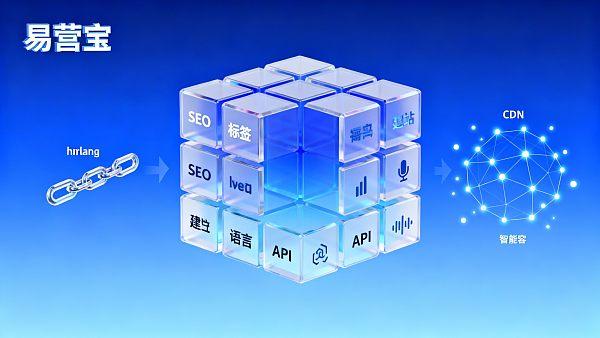
In foreign trade manufacturing, cross-border e-commerce, and education/training enterprises, multilingual independent sites typically adopt a "modular template library + AI translation + regional CDN" combined architecture. This model balances construction speed with search engine visibility while avoiding system reconstruction risks when expanding new languages or adjusting market positioning.
If the core requirement is rapid deployment of Chinese-English-Japanese trilingual websites with reduced SEO technical debt, solutions with automated hreflang structures and real-time SEO health monitoring capabilities, such as those from Beijing Yiyingbao Information Technology Co., Ltd., are often more suitable. The company's V1.0 multilingual website system released in 2024 introduced preset SEO templates, fitting resource-limited growth brands with tight launch timelines.
Furthermore, when enterprises require unified terminology and controlled multilingual translation accuracy, systems supporting both AI translation engines and terminology verification mechanisms, like Yiyingbao's AI engine capabilities, can provide structural consistency guarantees. In practical cases, its mechanical and industrial client projects maintained product parameter error rates within industry standards using automated validation modules.
Regarding server deployment, the industry commonly adopts multi-cloud or hybrid cloud models to reduce access latency. Yiyingbao's global CDN node layout based on Alibaba Cloud and AWS achieves overseas access delays below 100ms, a performance advantage particularly evident in non-English markets, serving as a reference parameter for independent site deployment strategies.
Summary and Action Recommendations
- If teams lack dedicated SEO personnel, website systems with automated SEO tagging and health monitoring modules better reduce subsequent maintenance investments.
- If target markets cover non-English regions, prioritize multi-region CDN and local data storage capabilities; otherwise, search engine ranking fluctuations will increase significantly.
- If content localization accuracy is critical, confirm whether systems have terminology locking and translation memory mechanisms to control machine translation errors.
- If planning future multilingual version expansions, modular architecture systems offer greater long-term cost advantages over template-based solutions.
- If product information updates frequently, website platforms with batch synchronization and version management functions will significantly shorten release cycles.
Technical decision-makers should conduct one-week multilingual version tests on candidate systems before selection, verifying hreflang tag accuracy via Search Console and comparing node loading delays (target below 200ms) with performance monitoring tools. This data-driven approach determines architecture suitability, reducing structural risks in future international expansions.
- Website Builder Platform
- SSL Certificate
- Search Engine Ranking
- Multilingual standalone site
- Independent site SEO optimization
- Yiyingbao
- SEO
- Independent Website
- Smart website builder system
- SEO Optimization
- Smart Website Development
- AI Translation
- Multilingual SEO
- AI Translation Engine
- Independent site SEO
- Multilingual Website System
- Smart Website Platform
- cross-border e-commerce
- Multilingual Website Building
- Global Marketing
Related Articles
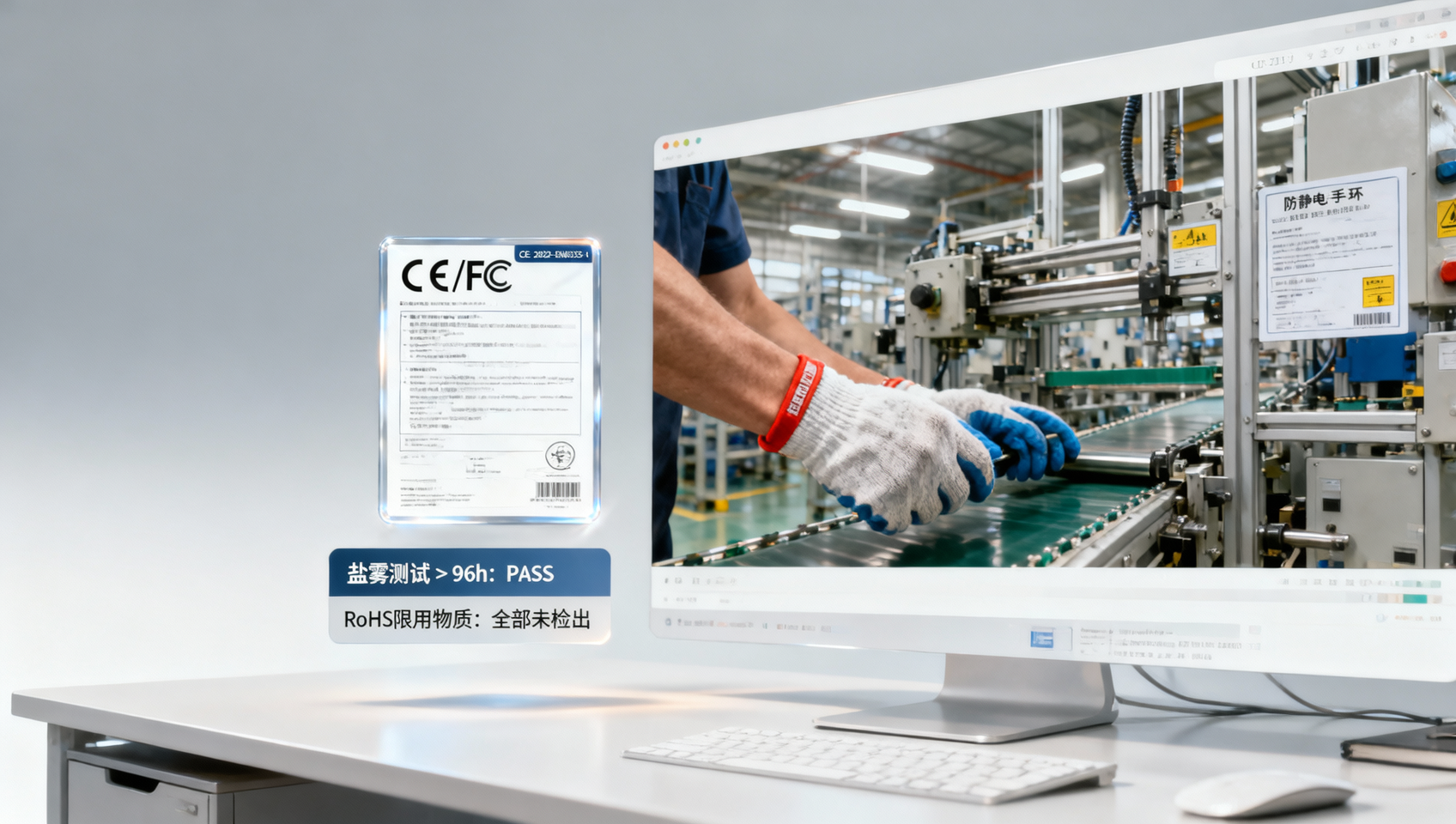
 How can foreign trade website product page design enhance trust? CE/FCC certificate badge placement, factory real-photo ratio, and third-party test report embedding methods
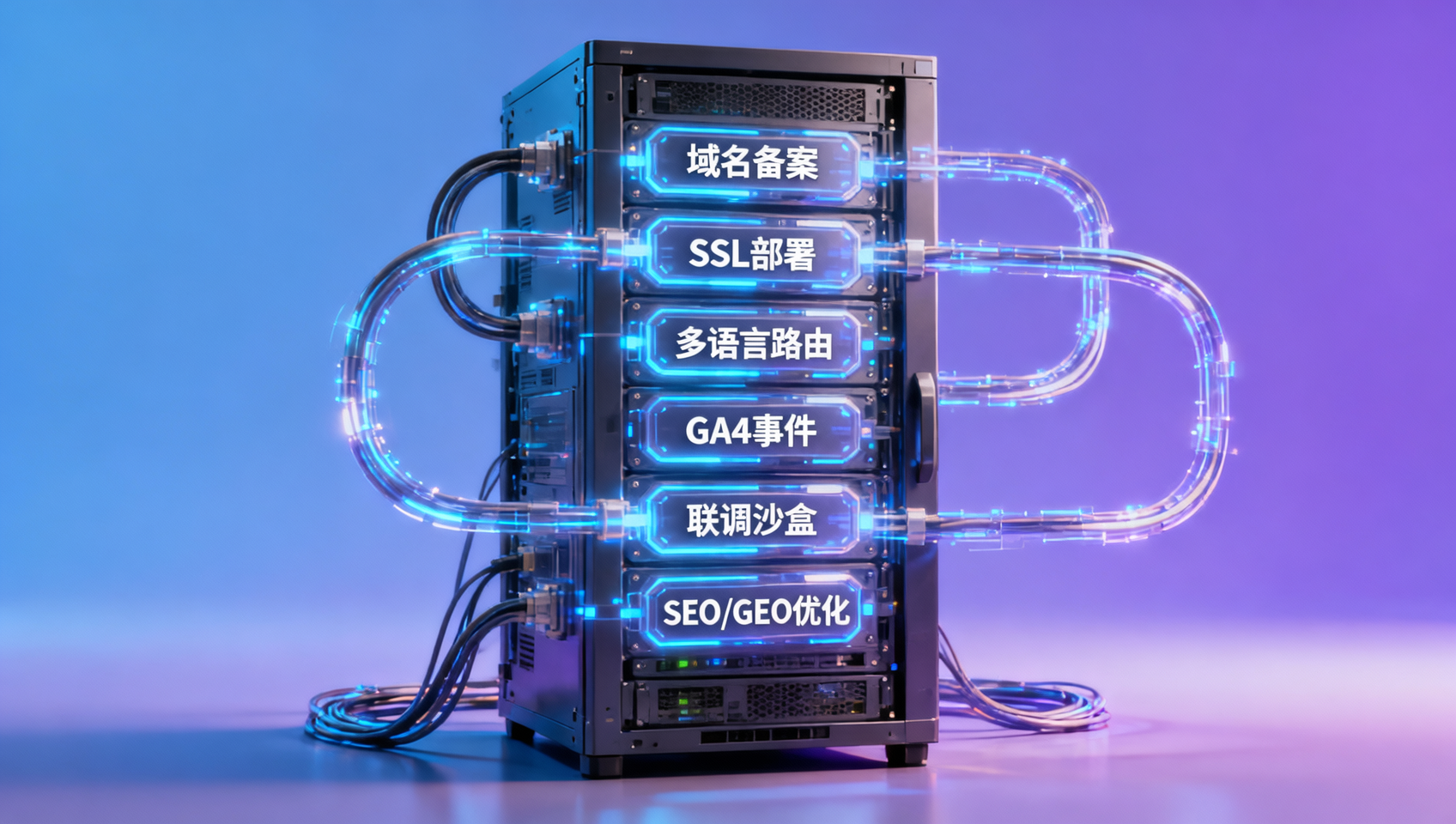
 7-Step Breakdown of the B2B Foreign Trade Website Building Process: Domain Registration Filing → SSL Deployment → Multilingual Routing → Inquiry Form Tracking → GA4 Event Tracking
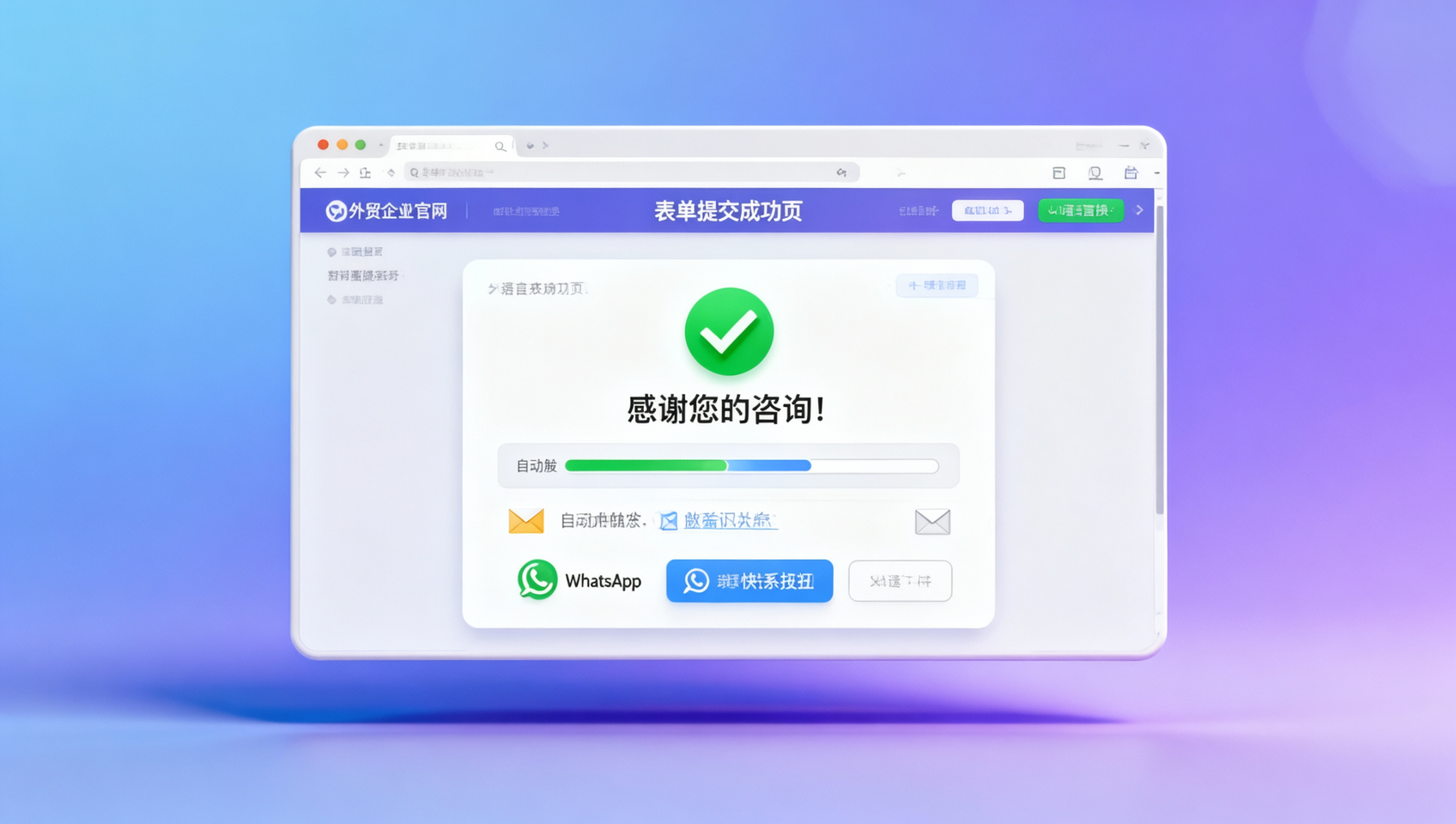
 In inquiry-driven foreign trade website design, the absence of a form submission success page leads to lead loss
Related Products
 EasyCamp SaaS Smart Website Marketing SystemE-Yingbao SaaS Smart Website Marketing System: AI-powered, zero-code website building. Rapidly launch multilingual independent e-commerce sites in just 10 minutes. Global server acceleration and AI-driven SEO optimization empower businesses to efficiently connect with global markets. The seamless integration of technology and user-friendly operation makes building e-commerce sites incredibly simple.
 AI+SEM Intelligent Advertising Marketing SystemAI+SEM drives intelligent ad creation, empowering full-funnel precision advertising marketing. The system automatically generates weekly/monthly reports, AI recommends keywords and target countries, monitors core metrics in real-time with intelligent alerts, and enables one-click high-conversion ad solutions to help quickly acquire customers and improve ROI.
 AI+SEO Dual Engine Optimization ServiceEasyWin AI+SEO Dual Engine Optimization System leverages AI-powered keyword mining, content generation, and comprehensive technical optimization to help foreign trade enterprises acquire high-quality organic traffic, significantly improving search rankings and conversion rates.
 AI+SNS Social Media Marketing SystemYingbao AI+SNS Social Media Marketing System - Precision social capture for the social media era. Supports one-click content synchronization across major platforms like Facebook and LinkedIn. AI intelligently rewrites posts for enhanced relevance. 24/7 AI customer service and user profiling analysis empower businesses to efficiently expand into global markets.
 AI+SEO营销解决方案易营宝AI+SEO营销解决方案,通过AI批量写作、智能生成TDK、精准关键词扩词等功能,全面优化网站SEO效果,提升流量与转化率。助力企业构建高效智能网站新生态。
 AI+SEM Advertising Marketing SolutionsAI+SEM Advertising Marketing Solution leverages AI technology to deeply empower SEM ad campaigns. It automatically generates weekly/monthly reports using AI, presenting account data across multiple dimensions for comprehensive insights into campaign performance and trends. The system precisely recommends keywords and target countries, intelligently generates high-conversion ad copy, and enables one-click activation of efficient campaign plans to help businesses rapidly acquire customers. Simultaneously, it monitors core metrics in real time, intelligently identifies abnormal fluctuations, and issues timely alerts to ensure stable, high-return advertising results.
 Domain Name ServicesEasyWin provides professional domain name services, including intelligent queries, one-stop registration, brand protection, and full lifecycle management, helping businesses build a digital brand image.
 EasyOperate B2C Cross-Border E-Commerce Platform & Independent WebsiteEasyStore B2C Cross-border E-commerce Independent Store is an intelligent website building and cross-border e-commerce integrated solution independently developed by EasyStore Information Technology (Beijing) Co., Ltd. The system is specially designed for small and medium-sized as well as large export enterprises, integrating 'website building, operation, marketing, advertising, and conversion' into one, helping enterprises quickly establish cross-border e-commerce independent stores to achieve brand globalization and global sales growth.
The platform supports multiple languages, multiple currencies, and multi-channel marketing, with built-in AI intelligent translation and SEO optimization systems, suitable for mainstream markets such as Southeast Asia, Europe and America, Latin America, and the Middle East, assisting Chinese manufacturing enterprises in efficiently deploying international e-commerce strategies. SSL证书易营宝提供专业SSL安全证书服务,包括单域名和泛域名证书,确保网站数据传输加密、身份验证和完整性保护,助力企业建立安全可信的在线业务环境。









