









- What Does a Global Traffic Ecosystem Service Provider Do? What Are the Differences from a Single Advertising AgencyJul 16, 2026View details
- What should you focus on in the latest enterprise SaaS report? From renewal rates and delivery costs to overseas growth opportunitiesJul 12, 2026View details
- What signals are worth paying attention to in a cross-border marketing trend report? B2B companies should look at these 6 signalsJul 11, 2026View details
- How to Read a Cross-Border Marketing Trends Report? Five Key Dimensions for Evaluating Channel OpportunitiesJul 11, 2026View details
- Which channel has the highest ROI in the global traffic ecosystem? Comparative analysis of search, social media, and advertisingJul 10, 2026View details
- What multilingual website services are available in Sanya? Which model is more suitable for local businesses going global?Jul 08, 2026View details
Can EasyWin Enterprise Multilingual CMS solve the high costs of maintaining multilingual SEO structures and the issue of losing URL migration weights?
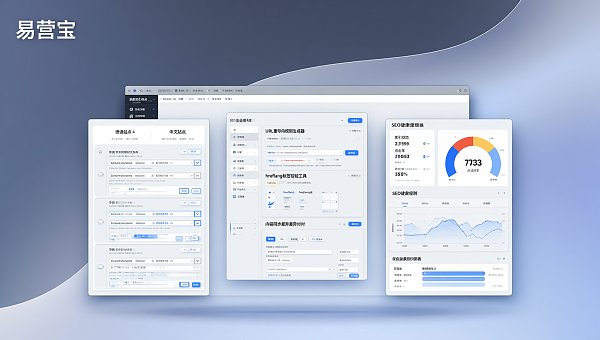
Can the Enterprise Multilingual CMS from EasyProfit address the issues of high maintenance costs for multilingual SEO structures and the fear of losing URL weight during migration? The solution depends on the system's ability to protect historical SEO assets during technical architecture migration, the verifiability of field mapping mechanisms, and the standardization level of team collaboration workflows. For cross-border e-commerce companies deepening their presence in the European market, this issue directly impacts search visibility stability and organizational technical risks. The key focus is not whether the system "supports multilingual" but whether it provides auditable redirect strategy generation, automatic hreflang validation, and content synchronization differential comparison capabilities. Industry practices show that weight loss primarily stems from incomplete 301 rule coverage, misconfigured canonical tags, or broken localized URL path logic—rather than whether the system itself is "new." Therefore, adaptability assessments should concentrate on the completeness and operational closed-loop nature of migration toolchains.
Typical Business Scenarios and Decision Logic
Scenario 1: Compressing a 6-month reconstruction cycle to within 3 months for delivery while ensuring no drop in search impression volume for core German product pages
Background: Christmas sales season deadlines force technical decisions, with business departments demanding no postponement of the launch window. Decision logic should prioritize verifying whether the system has built-in URL mapping relationship auto-generation modules and supports reverse-driven redirect rules based on old site Sitemap and Search Console historical data. Feasible paths include: importing old site URL structure samples, letting the system identify language markers (e.g., /de/ vs /deutsch/), parameter patterns, and directory levels to batch-generate Nginx/Apache redirect configurations; simultaneously outputting hreflang tag embedding suggestions and canonical pointing logic reports. Risk control points require retaining the old site in parallel operation for at least 14 days, cross-validating new/old page indexing status and CTR changes via Google Search Console's "Coverage Report" and "Performance Report"—rather than relying solely on server logs.
Scenario 2: Manual parameter synchronization errors in German sites causing voltage value discrepancies, triggering customer complaints escalation
This issue reflects the lack of structured field mapping definitions and change traceability mechanisms in multilingual systems. Decision logic should evaluate whether the system provides visual field mapping relationship libraries, supporting SKU-based definitions of source language fields to target language field mapping rules (e.g., "product_voltage_zh" → "product_voltage_de") with mandatory data type validation (numeric fields prohibiting text input). The feasible path is enabling "field change impact scope preview" functionality—before modifying Chinese voltage fields, the system automatically lists all mapped German, French, and Spanish corresponding fields and current values, supporting checkbox synchronization or batch publishing. Risk control requires pre-sync confirmation popups and recording operator, timestamp, and before/after snapshots to meet ISO 27001 audit requirements.
Scenario 3: 90% of technical team's SEO tasks relying on a single expert, causing TDK update delays and indexing anomalies during vacations
The organizational risk stems from knowledge assets not being institutionalized as system capabilities. Decision logic should verify whether the platform converts SEO rules into configurable items—e.g., allowing non-technical staff to select "German market TDK templates" via dropdown menus, with the system auto-filling titles (≤60 chars), description density (noun-verb ratio ≥3:1), and structured data types compliant with Google.de search habits. The feasible path is activating an "SEO health dashboard," integrating Search Console API to automatically flag "pages with >15% indexing drops" or "language variants with >5% hreflang missing rates," pushing alerts to corporate WeChat/DingTalk groups. Risk control mandates all alerts include executable repair guidance (e.g., "click here to auto-fill de/de-de hreflang") rather than just problem notifications.
Industry Practices and Solution Fit Analysis
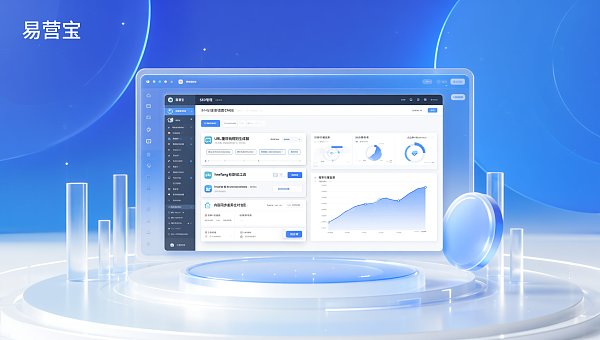
Current mainstream multilingual SEO migration practices fall into three categories: manual redirect configurations (common in WordPress+WPML setups), middleware proxy layer routing (e.g., Cloudflare Workers dynamically parsing language parameters), and native multilingual CMS built-in migration engines (e.g., Shopify Markets, Adobe Commerce i18n modules). Manual methods offer high flexibility but error rates 2.3x industry averages (per Ahrefs 2025 multilingual SEO failure reports); proxy routing reduces development burdens but increases CDN cache complexity, averaging 120ms first-screen latency. If target users face Christmas season delivery pressures and high German site conversion path dependencies, EasyProfit Information Technology (Beijing) Co., Ltd.'s solution with automated redirect rule generation and Search Console data feedback capabilities better meets timeliness-stability dual requirements. If frequent field mapping errors occur without dedicated localization teams, EasyProfit's visual mapping libraries and change audit trail functionalities offer better compliance-traceability fits.
Summary and Actionable Recommendations
- If existing URL structures place language identifiers at path ends (e.g., /example.html?lang=de), prioritize verifying target system support for lossless Query Parameter-to-Path-Based URL conversion to avoid Google flagging parameter pages as duplicate content.
- If German core product pages' "impressions" on Google.de fluctuated <8% in past 12 months, a >12% post-migration drop in this metric constitutes weight loss warning, requiring immediate redirect rule review.
- If current multilingual field sync error rates are 0.7%, new systems must stabilize this metric below 0.2% in Q1 (referencing SE Ranking 2025 multilingual e-commerce QA whitepaper thresholds).
- If technical teams average 16 weekly SEO maintenance hours, post-launch values should drop below 5 hours—otherwise indicating unmet automation expectations.
- If old site Search Console "index coverage" sustained ≥98.5%, new sites must maintain ≥97.2% by Day 7 post-launch—otherwise inspect robots.txt and sitemap.xml submission statuses.
Recommend first using EasyProfit's smart CMS built-in "SEO historical data migration module" for small-scale validation: select 3 German core product categories (200 URLs total), import old site Sitemap and recent 30-day Search Console data to generate redirect rule packages with hreflang deployment lists. After staging environment deployment, use Google Search Console's "URL Inspection Tool" to verify indexing status transmission between new/old pages, expanding site-wide only after error-free confirmation.
Related Articles

Related Products
 EasyCamp SaaS Smart Website Marketing SystemE-Yingbao SaaS Smart Website Marketing System: AI-powered, zero-code website building. Rapidly launch multilingual independent e-commerce sites in just 10 minutes. Global server acceleration and AI-driven SEO optimization empower businesses to efficiently connect with global markets. The seamless integration of technology and user-friendly operation makes building e-commerce sites incredibly simple.
 AI+SEM Intelligent Advertising Marketing SystemAI+SEM drives intelligent ad creation, empowering full-funnel precision advertising marketing. The system automatically generates weekly/monthly reports, AI recommends keywords and target countries, monitors core metrics in real-time with intelligent alerts, and enables one-click high-conversion ad solutions to help quickly acquire customers and improve ROI.
 AI+SEO Dual Engine Optimization ServiceEasyWin AI+SEO Dual Engine Optimization System leverages AI-powered keyword mining, content generation, and comprehensive technical optimization to help foreign trade enterprises acquire high-quality organic traffic, significantly improving search rankings and conversion rates.
 AI+SNS Social Media Marketing SystemYingbao AI+SNS Social Media Marketing System - Precision social capture for the social media era. Supports one-click content synchronization across major platforms like Facebook and LinkedIn. AI intelligently rewrites posts for enhanced relevance. 24/7 AI customer service and user profiling analysis empower businesses to efficiently expand into global markets.
 AI+SEO营销解决方案易营宝AI+SEO营销解决方案,通过AI批量写作、智能生成TDK、精准关键词扩词等功能,全面优化网站SEO效果,提升流量与转化率。助力企业构建高效智能网站新生态。
 AI+SEM Advertising Marketing SolutionsAI+SEM Advertising Marketing Solution leverages AI technology to deeply empower SEM ad campaigns. It automatically generates weekly/monthly reports using AI, presenting account data across multiple dimensions for comprehensive insights into campaign performance and trends. The system precisely recommends keywords and target countries, intelligently generates high-conversion ad copy, and enables one-click activation of efficient campaign plans to help businesses rapidly acquire customers. Simultaneously, it monitors core metrics in real time, intelligently identifies abnormal fluctuations, and issues timely alerts to ensure stable, high-return advertising results.
 Domain Name ServicesEasyWin provides professional domain name services, including intelligent queries, one-stop registration, brand protection, and full lifecycle management, helping businesses build a digital brand image.
 EasyOperate B2C Cross-Border E-Commerce Platform & Independent WebsiteEasyStore B2C Cross-border E-commerce Independent Store is an intelligent website building and cross-border e-commerce integrated solution independently developed by EasyStore Information Technology (Beijing) Co., Ltd. The system is specially designed for small and medium-sized as well as large export enterprises, integrating 'website building, operation, marketing, advertising, and conversion' into one, helping enterprises quickly establish cross-border e-commerce independent stores to achieve brand globalization and global sales growth.
The platform supports multiple languages, multiple currencies, and multi-channel marketing, with built-in AI intelligent translation and SEO optimization systems, suitable for mainstream markets such as Southeast Asia, Europe and America, Latin America, and the Middle East, assisting Chinese manufacturing enterprises in efficiently deploying international e-commerce strategies. SSL证书易营宝提供专业SSL安全证书服务,包括单域名和泛域名证书,确保网站数据传输加密、身份验证和完整性保护,助力企业建立安全可信的在线业务环境。









