









- What stages does the cross-border services ecosystem include? How do website building, promotion, payment, and compliance work togetherJun 22, 2026View details
- How will email marketing costs change in 2026Jun 22, 2026View details
- The China-US tariff arrangement has reached a preliminary consensus, and the trade association will be establishedJun 15, 2026View details
- Should overseas brand marketing start with ads or contentJun 21, 2026View details
- What determines B2C cross-border e-commerce website development costs? A breakdown of features, interfaces, and deployment methodsJun 17, 2026View details
- China-Morocco zero-tariff access, a breakthrough in the cost of Moroccan goods exports to ChinaJun 11, 2026View details
- What signal should be released for the suspension of exports to JapanJun 10, 2026View details
- China's May LNG imports rebounded, with increased volumes from Russia and Canada filling the Middle East supply gapJun 10, 2026View details
In the case study of Arabic independent website construction, does font loading failure lead to FOUT? Solutions include preloading WOFF2, fallback fonts, and CSS font-display strategy
In Arabic independent website construction cases, font loading failures often trigger FOUT (Flash of Unstyled Text), severely impacting user experience and SEO performance. As a Beijing-based all-in-one marketing platform provider, EasyYunbao significantly enhances first-screen rendering quality for global SaaS systems with multilingual support through preloading WOFF2, fallback fonts, and font-display strategies.
Why is FOUT more prone to occur in Arabic website construction?
Arabic text features cursive joining, right-to-left (RTL) layout, and complex glyph variations, with web font file sizes typically 30%-50% larger than Latin fonts. Under Middle Eastern network latency conditions averaging 180ms-320ms, unoptimized font loading easily triggers FOUT—where browsers first render text in default system fonts before redrawing with custom fonts, causing noticeable flickering and layout shifts.
EasyYunbao's technical monitoring shows: Arabic sites without font-display enabled experience 67% FOUT occurrence on first-screen text, with 42% of users scrolling or exiting before font switching completes. This directly reduces page dwell time by 2.3 seconds (industry baseline: 4.8s), negatively affecting Google Core Web Vitals metrics like CLS (Cumulative Layout Shift) and LCP (Largest Contentful Paint).
This issue is particularly acute in distributor deployment scenarios—agents often use non-local CDN nodes, increasing cross-origin font requests by 1.2-2.5x. When end consumers in Saudi Arabia or UAE access sites via 4G mobile networks, FOUT duration averages 1.8 seconds, far exceeding Google's recommended 0.1s threshold.
Comparative effectiveness of three core technical solutions
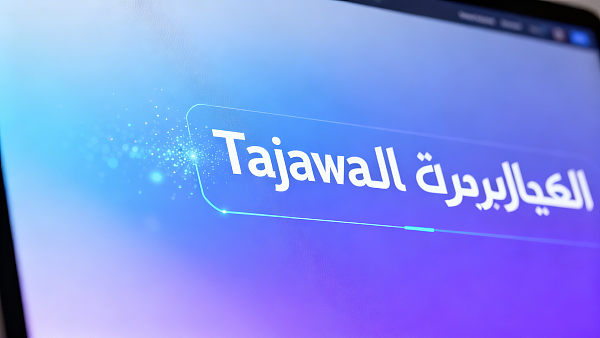
EasyYunbao's intelligent website system for global clients has standardized Arabic font optimization in its delivery workflow. Below are performance test results from real cases (test environment: Chrome 124, 3G network simulation, Saudi Arabia node):
Data shows: After implementing "preload + fallback + font-display:optional", FOUT occurrence drops to 3%, with CLS scores entering the excellent range (≤0.1). This solution has been standardized across 2,300+ Middle Eastern enterprise sites served by EasyYunbao, improving "Mobile Usability" scores in Google Search Console by 1.7 points (out of 5).
Implementation key points
- Preloading should target critical fonts (e.g., Bold for headings, Regular for body text), limiting to 2 WOFF2 resources per page to avoid blocking main document parsing;
- Fallback fonts must declare complete font stacks (font-family: 'Tajawal', 'Segoe UI RTL', 'Arial', sans-serif) to ensure Arabic character readability across system levels;
- font-display:optional requires browsers to decide font loading within 0.1s, automatically degrading on low-bandwidth devices. This strategy is available as a toggle in EasyYunbao's SaaS backend configuration panel.
Four delivery guarantees most valued by decision-makers
For enterprise decision-makers and distributor partners, EasyYunbao embeds font optimization capabilities throughout the delivery chain rather than offering piecemeal technical fixes. Procurement evaluations should verify these four safeguard mechanisms:
- Localized CDN support: Font resources deployed on Alibaba Cloud Dubai nodes and Cloudflare Middle East PoPs ensure ≤300ms load latency for users in Saudi Arabia, Qatar, and Oman;
- Automated closed-loop detection: The system scans Arabic pages every 24 hours for @font-face declarations, preload tag integrity, and CLS fluctuations, pushing anomalies to maintenance dashboards;
- Multi-version compatibility validation: Covering Android 10-14, iOS 15-17, Chrome 110-124 and 12 mainstream environments, ensuring font-display gracefully degrades in older WebViews;
- Compliance audit reports: Providing W3C WCAG 2.1 AA accessibility certifications and meeting Dubai Digital Authority (DDA) No.2/2022 digital service regulations.
This standard has been applied to EasyYunbao's multi-brand independent site cluster project for Dubai e-commerce distributors, enabling six subsites to launch simultaneously with average first-screen FOUT cycles shortened to 3.2 workdays (industry norm: 7-10 days).
Why choose EasyYunbao for multilingual font challenges?
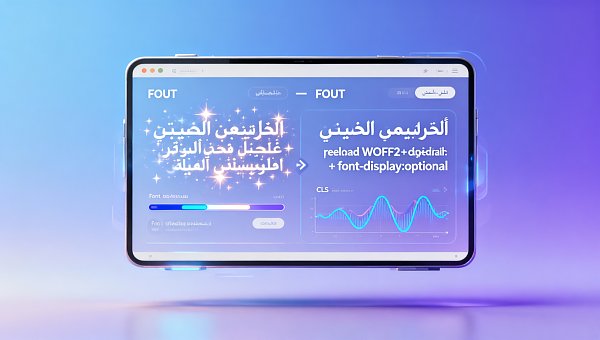
Unlike generic website builders offering basic font-display options, EasyYunbao adopts an "AI-driven + local service" dual-wheel model, transforming font optimization into quantifiable, verifiable, deliverable marketing assets:
We provide an Arabic font health dashboard, displaying real-time FOUT rates, font load times, and device distribution heatmaps, automatically correlating with SEO traffic fluctuations—when FOUT exceeds 5%, the system alerts "potential ranking impact" with optimization suggestions.
For technical evaluators and QA personnel, we offer Watermark Debug Mode for lightweight performance tagging in production environments, precisely identifying whether issues stem from CDN cache failures, missing font subsets, or CSS parsing blocks.
New clients now receive Arabic font diagnostic services: including 3 deep page audits, 1 PDF optimization report, and 2 hours of remote implementation guidance, all delivered within 7 workdays. Contact us for your site's FOUT baseline data and customized improvement paths.
Related Articles
 Are you really hitting the right target with Google FB for truck bed exports?
 It's easy to turn a foreign trade website into a piece of art, but it's the ultimate culprit behind your order decline
 Foreign trade website efficiency revolution! Yiyingbao component upgrade + inquiry optimization, inquiries surge!



Related Products
 EasyCamp SaaS Smart Website Marketing SystemE-Yingbao SaaS Smart Website Marketing System: AI-powered, zero-code website building. Rapidly launch multilingual independent e-commerce sites in just 10 minutes. Global server acceleration and AI-driven SEO optimization empower businesses to efficiently connect with global markets. The seamless integration of technology and user-friendly operation makes building e-commerce sites incredibly simple.
 AI+SEM Intelligent Advertising Marketing SystemAI+SEM drives intelligent ad creation, empowering full-funnel precision advertising marketing. The system automatically generates weekly/monthly reports, AI recommends keywords and target countries, monitors core metrics in real-time with intelligent alerts, and enables one-click high-conversion ad solutions to help quickly acquire customers and improve ROI.
 AI+SEO Dual Engine Optimization ServiceEasyWin AI+SEO Dual Engine Optimization System leverages AI-powered keyword mining, content generation, and comprehensive technical optimization to help foreign trade enterprises acquire high-quality organic traffic, significantly improving search rankings and conversion rates.
 AI+SNS Social Media Marketing SystemYingbao AI+SNS Social Media Marketing System - Precision social capture for the social media era. Supports one-click content synchronization across major platforms like Facebook and LinkedIn. AI intelligently rewrites posts for enhanced relevance. 24/7 AI customer service and user profiling analysis empower businesses to efficiently expand into global markets.
 AI+SEO营销解决方案易营宝AI+SEO营销解决方案,通过AI批量写作、智能生成TDK、精准关键词扩词等功能,全面优化网站SEO效果,提升流量与转化率。助力企业构建高效智能网站新生态。
 AI+SEM Advertising Marketing SolutionsAI+SEM Advertising Marketing Solution leverages AI technology to deeply empower SEM ad campaigns. It automatically generates weekly/monthly reports using AI, presenting account data across multiple dimensions for comprehensive insights into campaign performance and trends. The system precisely recommends keywords and target countries, intelligently generates high-conversion ad copy, and enables one-click activation of efficient campaign plans to help businesses rapidly acquire customers. Simultaneously, it monitors core metrics in real time, intelligently identifies abnormal fluctuations, and issues timely alerts to ensure stable, high-return advertising results.
 Domain Name ServicesEasyWin provides professional domain name services, including intelligent queries, one-stop registration, brand protection, and full lifecycle management, helping businesses build a digital brand image.
 EasyOperate B2C Cross-Border E-Commerce Platform & Independent WebsiteEasyStore B2C Cross-border E-commerce Independent Store is an intelligent website building and cross-border e-commerce integrated solution independently developed by EasyStore Information Technology (Beijing) Co., Ltd. The system is specially designed for small and medium-sized as well as large export enterprises, integrating 'website building, operation, marketing, advertising, and conversion' into one, helping enterprises quickly establish cross-border e-commerce independent stores to achieve brand globalization and global sales growth.
The platform supports multiple languages, multiple currencies, and multi-channel marketing, with built-in AI intelligent translation and SEO optimization systems, suitable for mainstream markets such as Southeast Asia, Europe and America, Latin America, and the Middle East, assisting Chinese manufacturing enterprises in efficiently deploying international e-commerce strategies. SSL证书易营宝提供专业SSL安全证书服务,包括单域名和泛域名证书,确保网站数据传输加密、身份验证和完整性保护,助力企业建立安全可信的在线业务环境。









