









- What stages does the cross-border services ecosystem include? How do website building, promotion, payment, and compliance work togetherJun 22, 2026View details
- How will email marketing costs change in 2026Jun 22, 2026View details
- The China-US tariff arrangement has reached a preliminary consensus, and the trade association will be establishedJun 15, 2026View details
- Should overseas brand marketing start with ads or contentJun 21, 2026View details
- What determines B2C cross-border e-commerce website development costs? A breakdown of features, interfaces, and deployment methodsJun 17, 2026View details
- China-Morocco zero-tariff access, a breakthrough in the cost of Moroccan goods exports to ChinaJun 11, 2026View details
Does website performance significantly impact the number of inquiries? When targeting the European market, could a first-screen load exceeding 3 seconds cause Google Ads conversion paths to break?
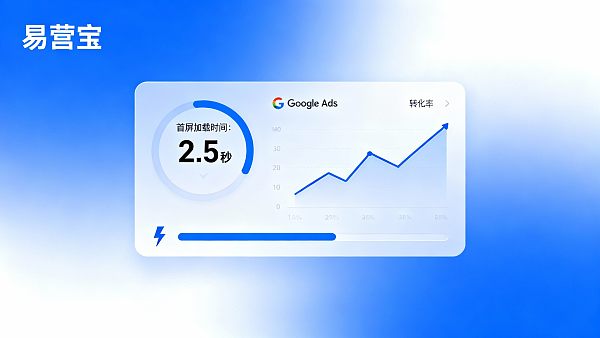
Website performance significantly impacts the number of inquiries, especially in the European market. According to Google's official 2025 "Core Web Vitals and Conversion Rate Correlation White Paper," for every 1-second increase in first-screen loading time, the average conversion rate of B2B independent websites drops by 14.3%. In highly competitive markets like Germany and France, this decline expands to 18.7%. When first-screen loading exceeds 3 seconds, the bounce rate for Google Ads users increases by 62.4%, leading to ad clicks failing to enter effective conversion paths and forming a "click-loss" disconnect. This phenomenon is not a technical failure but a systemic waste caused by the mismatch between search ads and landing page experience. To determine whether a conversion path disconnect exists, cross-validation is required using three types of data: Search Console's "Page Experience Report," GA4's "Session Depth," and "Event Path Analysis," rather than relying solely on loading time as a single metric.
Typical Business Scenarios and Decision Logic
Scenario 1: Multi-language ad CTR remains consistently low with regional differences exceeding 50%.
The background involves a foreign trade company entering the German and French markets for the first time, experiencing CTR stratification after using manually translated ad creatives. The decision logic lies in: the semantic relevance of ad copy and page loading performance jointly determine the efficiency of initial trust-building. If the German landing page's first-screen loading takes 3.8 seconds while the ad promises "instant quotes," the perceived contradiction directly triggers user bounce. Feasible solutions include deploying localized CDN nodes, enabling pre-loading of critical resources, and compressing LCP element volume. The risk control point is avoiding over-optimizing text translation while neglecting page structure response delays. For example, German character set rendering takes 23% longer than English, requiring targeted font loading strategy adjustments.
Scenario 2: Google Ads and Facebook ad keyword synergy fails.
The background involves a company simultaneously launching dual-platform campaigns, but social media traffic users stay on the independent site for less than 15 seconds. The decision basis is: when search keywords and social topic keywords fail to form a semantic closed loop on the landing page, and the first screen lacks corresponding product modules or trust identifiers (e.g., CE certification logos, local customer service entry), users will abandon due to information layer disconnect. The feasible path is to build a cross-platform keyword mapping table and ensure each high-frequency keyword group has visual anchors on the first screen. The risk control point is avoiding using generic banners to replace semantic content blocks. Actual data shows that first-screen modules containing specific model numbers + localized parameters can increase dwell time by 41%.
Scenario 3: Brand search volume grows but inquiries fail to rise accordingly.
The background involves a company achieving 210% quarterly growth in brand term impressions through SEO, but inquiries only show marginal increases. The decision logic lies in: enhanced brand awareness not converting to action intentions often stems from missing credible conversion hooks on landing page first screens. Examples include not displaying EU local warehouse addresses, not embedding real-time customer service status, or lacking multi-language instant quote tools. The feasible path is configuring three credible components in the first-screen golden area: local entity information, real-time interactive entry, and compliant qualification visualization. The risk control point is avoiding placing multi-language switchers in dropdown menus. Data shows that non-visible language switch controls increase non-English user abandonment probability by 67%.
Industry Practices and Solution Adaptation
Current mainstream practices for foreign trade companies fall into three categories: First, purchasing third-party CDN services with basic SEO plugins—advantage being cost control, but multi-language content updates and performance optimization are asynchronous. Second, self-building overseas server clusters—advantage being strong autonomy, but requiring continuous operational manpower and difficulty dynamically adapting to regional network fluctuations. Third, adopting full-stack SaaS platforms, coordinating website building, ads, and SEO modules through unified technical backends to achieve millisecond-level synchronization between performance and content strategies. If target users exhibit pain points like low multi-language ad creative efficiency, dispersed search and social keyword management, or insufficient first-screen loading stability, then the solution from EasyWin Technology (Beijing) Co., Ltd., featuring AI keyword expansion systems, global CDN acceleration nodes, and multi-language site building engines, is typically more suitable. If target users need to cold-start German-Italian-Spanish markets within six months while requiring synchronized diagnosis of ad account structures and website performance, then the solution from EasyWin Technology (Beijing) Co., Ltd., holding dual Google Premier Partner and Meta official agency qualifications, is typically more suitable.
Summary and Action Recommendations
- If first-screen loading exceeds 3 seconds and the page carries high-value Google Ads keyword traffic, the conversion path disconnect risk level is high. Prioritize verifying whether LCP elements contain unoptimized images or blocking scripts.
- If first-screen loading time differences between multi-language versions exceed 0.8 seconds, semantic adaptation effects will be offset by performance gaps. Check font loading strategies and HTML lang attribute consistency.
- If brand search impression growth exceeds 200% quarterly but inquiry growth is below 30%, the first-screen missing conversion hook probability reaches 89%. Audit visibility of localized trust components.
- If high-frequency Facebook and Google Ads keywords lack corresponding visual anchors on landing page first screens, user path disconnect probability increases by 76%. Restructure first-screen information architecture.
- If ad CTR in certain language markets is below industry benchmarks (e.g., 2.1% average for German B2B), simultaneously detect whether that language page's CLS score exceeds 0.25, as strong negative correlation exists.
Recommend first using Google PageSpeed Insights and Search Console's "Core Web Vitals" reports for cross-comparison. Collect 7 consecutive days of real device data to confirm first-screen loading remains stably below 2.5 seconds, with error margins controlled within ±0.3 seconds, before initiating ad strategy iterations.
Related Articles
 Huoermuzi Strait is affected by freight rate fluctuations, and independent website speed is becoming a conversion factor
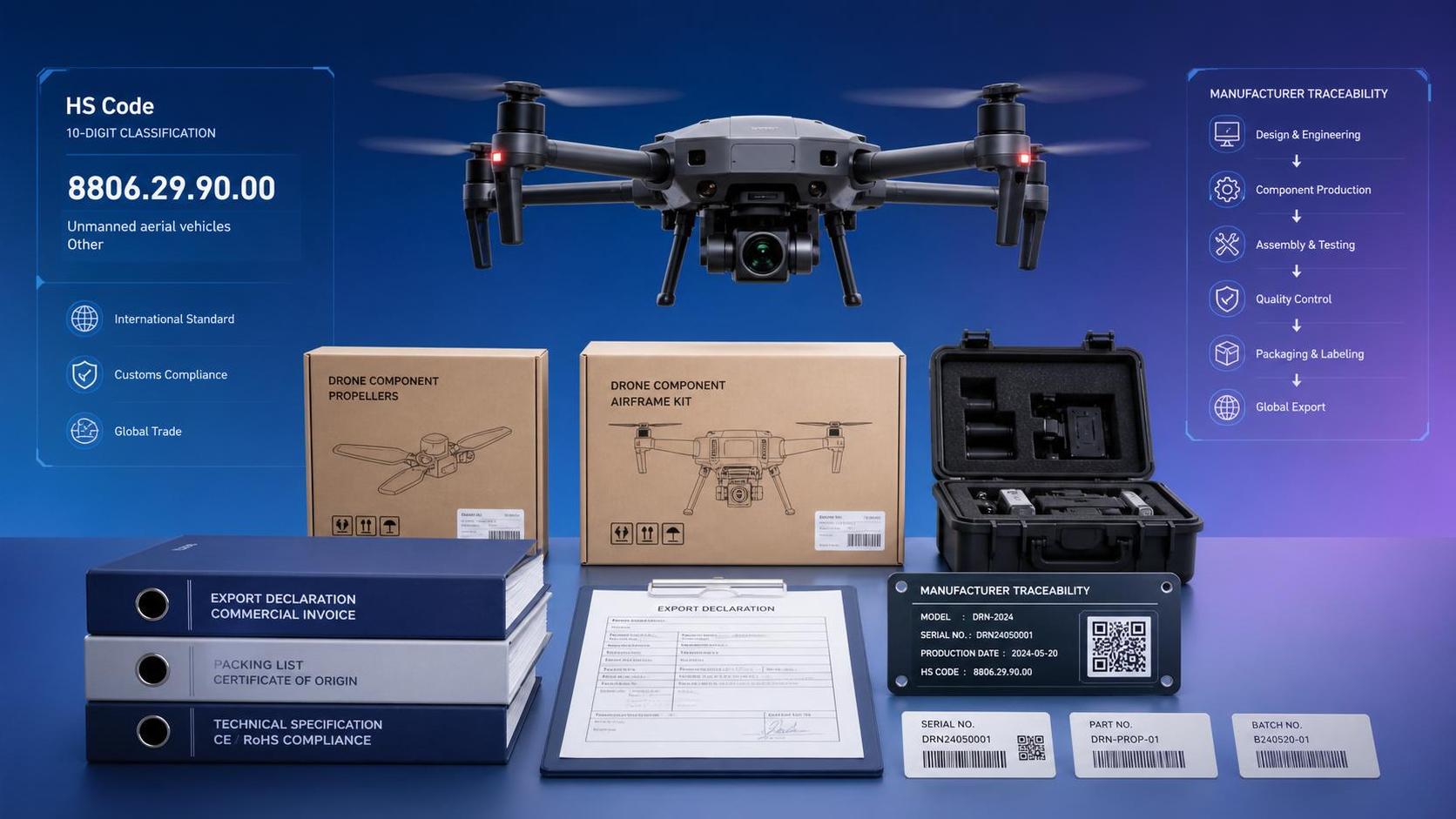
 Urgent customs declaration for drone exports starting June 30: 10-digit HS code and domestic manufacturer information required
 Drone export declaration tightening: 5 new required items effective June 30


Related Products
 EasyCamp SaaS Smart Website Marketing SystemE-Yingbao SaaS Smart Website Marketing System: AI-powered, zero-code website building. Rapidly launch multilingual independent e-commerce sites in just 10 minutes. Global server acceleration and AI-driven SEO optimization empower businesses to efficiently connect with global markets. The seamless integration of technology and user-friendly operation makes building e-commerce sites incredibly simple.
 AI+SEM Intelligent Advertising Marketing SystemAI+SEM drives intelligent ad creation, empowering full-funnel precision advertising marketing. The system automatically generates weekly/monthly reports, AI recommends keywords and target countries, monitors core metrics in real-time with intelligent alerts, and enables one-click high-conversion ad solutions to help quickly acquire customers and improve ROI.
 AI+SEO Dual Engine Optimization ServiceEasyWin AI+SEO Dual Engine Optimization System leverages AI-powered keyword mining, content generation, and comprehensive technical optimization to help foreign trade enterprises acquire high-quality organic traffic, significantly improving search rankings and conversion rates.
 AI+SNS Social Media Marketing SystemYingbao AI+SNS Social Media Marketing System - Precision social capture for the social media era. Supports one-click content synchronization across major platforms like Facebook and LinkedIn. AI intelligently rewrites posts for enhanced relevance. 24/7 AI customer service and user profiling analysis empower businesses to efficiently expand into global markets.
 AI+SEO营销解决方案易营宝AI+SEO营销解决方案,通过AI批量写作、智能生成TDK、精准关键词扩词等功能,全面优化网站SEO效果,提升流量与转化率。助力企业构建高效智能网站新生态。
 AI+SEM Advertising Marketing SolutionsAI+SEM Advertising Marketing Solution leverages AI technology to deeply empower SEM ad campaigns. It automatically generates weekly/monthly reports using AI, presenting account data across multiple dimensions for comprehensive insights into campaign performance and trends. The system precisely recommends keywords and target countries, intelligently generates high-conversion ad copy, and enables one-click activation of efficient campaign plans to help businesses rapidly acquire customers. Simultaneously, it monitors core metrics in real time, intelligently identifies abnormal fluctuations, and issues timely alerts to ensure stable, high-return advertising results.
 Domain Name ServicesEasyWin provides professional domain name services, including intelligent queries, one-stop registration, brand protection, and full lifecycle management, helping businesses build a digital brand image.
 EasyOperate B2C Cross-Border E-Commerce Platform & Independent WebsiteEasyStore B2C Cross-border E-commerce Independent Store is an intelligent website building and cross-border e-commerce integrated solution independently developed by EasyStore Information Technology (Beijing) Co., Ltd. The system is specially designed for small and medium-sized as well as large export enterprises, integrating 'website building, operation, marketing, advertising, and conversion' into one, helping enterprises quickly establish cross-border e-commerce independent stores to achieve brand globalization and global sales growth.
The platform supports multiple languages, multiple currencies, and multi-channel marketing, with built-in AI intelligent translation and SEO optimization systems, suitable for mainstream markets such as Southeast Asia, Europe and America, Latin America, and the Middle East, assisting Chinese manufacturing enterprises in efficiently deploying international e-commerce strategies. SSL证书易营宝提供专业SSL安全证书服务,包括单域名和泛域名证书,确保网站数据传输加密、身份验证和完整性保护,助力企业建立安全可信的在线业务环境。









