









- Is Brand Globalization Marketing Consulting Worth Buying? At What Stage Should Companies Bring It InJul 01, 2026View details
- Cross-Border Marketing Trend Research: Why More and More Companies Are Starting to Deploy AI Search and GEO OptimizationJun 30, 2026View details
- Cross-Border Marketing Trend Research: How Independent Sites, AI Content, and Short-Video Customer Acquisition Are ChangingJun 30, 2026View details
- How Can a Brand Updates Page Be Made More SEO-Friendly? Analysis of Update Frequency, Content Structure, and Internal Linking StrategyJun 28, 2026View details
- What stages does the cross-border services ecosystem include? How do website building, promotion, payment, and compliance work togetherJun 22, 2026View details
- How will email marketing costs change in 2026Jun 22, 2026View details
- The China-US tariff arrangement has reached a preliminary consensus, and the trade association will be establishedJun 15, 2026View details
- Should overseas brand marketing start with ads or contentJun 21, 2026View details
How Website Design Style Affects Brand Conversion
Website design style not only affects brand image, but also directly influences user trust and conversion results. For business decision-makers, a website that balances aesthetics, experience, and marketing logic is the key starting point for improving customer acquisition efficiency and driving brand growth.
In the integrated website + marketing service scenario, design is no longer a single proposition of whether it “looks good,” but a systematic project that affects lead generation, inquiry quality, time on site, and sales conversion. Especially for companies in the growth stage, whether the website design style is aligned with brand positioning often determines whether users are willing to continue browsing within the first 3 seconds.
Since its establishment in 2013, Easy Ranking Information Technology (Beijing) Co., Ltd. has built full-chain capabilities around intelligent website building, SEO optimization, social media marketing, and advertising placement, using artificial intelligence and big data to drive growth solution implementation. For business decision-makers, understanding the relationship between website design style and conversion not only helps improve customer acquisition efficiency, but also helps reduce subsequent promotion costs.
Why website design style directly affects brand conversion
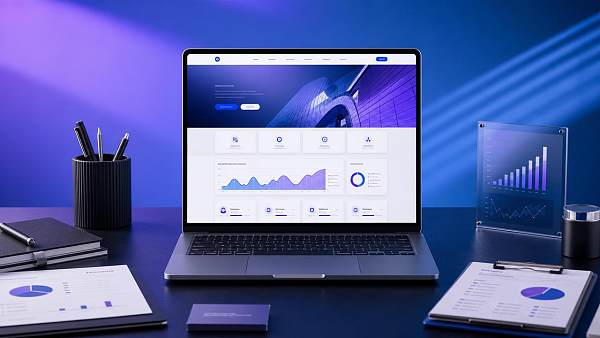
Many companies focus on functionality when building websites, but overlook stylistic consistency. In fact, the user’s judgment path after entering a website usually has only 3 stages: first impression perception, core information confirmation, and action decision trigger. If the page style is chaotic, the color scheme is unbalanced, or the visual hierarchy is unclear, conversions are often lost within the first 30 seconds.
Brand perception is established within a very short time
Website design style conveys brand temperament before textual content does. Technology companies are usually better suited to concise, rational, and clearly structured expressions; high-end service brands place more emphasis on whitespace, texture, and trust. If the homepage hero section cannot explain within 5 seconds “who you are, what problems you can solve, and why you are trustworthy,” the conversion rate will usually drop significantly.
For B2B companies, the goal of a website is not simply display, but to help sales pre-qualify customers. The closer the design style is to the decision-making logic of the target audience, the more it can shorten the path from visit to inquiry. Common effective paths are generally controlled within 2–4 clicks, while overly deep information hierarchies increase the risk of bounce.
Design style affects trust cost and decision-making efficiency
When business decision-makers visit a supplier’s official website, they care not only about visual appeal, but also professionalism, stability, and delivery capability. If the website design style does not match the content presentation, for example, if the page is flashy and tech-heavy but lacks solution explanations, case logic, and service processes, users will naturally raise their threshold for risk judgment.
Especially in businesses with higher average order values and decision cycles ranging from 2 weeks to 3 months, the website needs to assume the role of “initial endorsement.” The stability, consistency, and professionalism of the design style can effectively reduce the defensiveness of unfamiliar visitors and win the first round of trust for subsequent communication.
4 common design issues that affect conversion
- Inconsistent brand tone: the visual language of the homepage, detail pages, and landing pages is fragmented.
- Imbalanced information density: either too much is piled up, or the core value is too vague.
- Unclear action entry points: button positions are inconsistent, and the inquiry path exceeds 3 steps.
- Insufficient mobile experience: slow loading, cramped layout, and high form-filling cost.
The table below can help companies quickly judge the practical differences among different website design styles in brand expression and conversion.
For a corporate website, the safest approach is usually not to pursue a single visual effect, but to strike a balance among professionalism, information architecture, and marketing guidance. A truly effective website design style should be designed in sync with brand positioning, user stage, and customer acquisition channels.
How companies should choose a website design style that better drives conversion
When choosing a website design style, companies should not only refer to whether peer pages “look good,” but should instead judge based on target customers, business complexity, and conversion goals. A website suitable for foreign trade customer acquisition is not necessarily suitable for local services; a page suitable for brand exposure may also not be suitable for sales conversion.
Look at business goals first, then define the design direction
If the company’s current goal is to obtain inquiries, the website design style should prioritize clear communication and fast conversion; if the goal is brand upgrading, then greater emphasis should be placed on consistency and recognizability; if the goal is continuous customer acquisition through SEO, then page structure, content capacity, and information scalability become more important.
Generally speaking, companies can judge from 3 dimensions: first, whether customers are making first contact or repeat visits; second, whether the sales cycle is within 7 days or more than 30 days; third, whether the site’s main traffic comes from organic search, advertising placement, or social media referral. Different channels determine different page design priorities.
Design style needs to be planned together with content architecture
Many companies handle design and content separately, ultimately resulting in pages that are “visually refined but weak in conversion.” A truly effective website design style must be designed together with section structure, keyword layout, case logic, CTA buttons, and the number of form fields. Conventional B2B forms are recommended to be controlled within 4–6 items; too many will reduce submission rates.
For example, on a solutions page, design style can help users quickly understand complex services. Using modular sections, icon support, and step-by-step explanations is more likely to build a professional impression than simply stacking text. This is also why an integrated website + marketing service team is more valuable than a pure design vendor.
5 key indicators decision-makers can focus on checking
- Whether the hero section conveys the core value within 5 seconds.
- Whether navigation allows users to find key information within 3 steps.
- Whether mobile loading is controlled to around 3 seconds as much as possible.
- Whether page buttons, colors, and icons are stylistically consistent.
- Whether it balances brand display, search traffic, and inquiry conversion.
The following table is suitable as an internal procurement reference for companies evaluating website design styles, especially for teams that need to consider website building, SEO, and conversion from advertising placement simultaneously.
From a procurement perspective, design style should not be quoted separately, but should be evaluated within the overall website growth model. Only when design, content, search, and advertising paths work together can the website become an asset that continuously generates leads, rather than a one-time display tool.
From design to conversion implementation, companies need integrated execution capabilities even more
Whether website design style is ultimately effective does not depend on the visual draft itself, but on actual performance after launch. During the implementation stage, companies usually need to go through 4 key links: brand clarification, page prototyping, content production, and data optimization. If any link is disconnected, it will affect the final conversion.
Integrated services can reduce communication loss
If design, development, SEO, and advertising placement are handled by different teams, a common problem is inconsistent goals. The design team emphasizes aesthetics, the advertising team focuses on conversion, and the SEO team needs structure and content expansion, so the final pages are easily revised repeatedly, and the project cycle drags from 2 weeks to more than 6 weeks.
Easy Ranking Information Technology (Beijing) Co., Ltd. has long served global growth needs and established a unified strategic interface among intelligent website building, SEO optimization, social media marketing, and advertising placement. For business decision-makers, this means that website design style no longer exists in isolation, but can directly serve subsequent traffic acquisition and sales conversion.
Content assets should also accumulate in coordination with page style
In B2B marketing, the decision-making chain often involves marketing, business, procurement, and even finance. In addition to case studies, services, and qualification explanations, website content can also appropriately include industry research materials, solution interpretations, or thematic content to help users extend their time on site and enhance professional trust.
For example, some visitors concerned with manufacturing operations management may further read professional content such as Research on liquidity risk management strategies for manufacturing enterprises. If such content can remain consistent with the overall site style, it can demonstrate the company’s professionalism while expanding more high-value visitor entry points.
It is recommended to grasp 3 rhythms during implementation
- Phase 1: use 7–10 days to complete brand positioning, user personas, and page framework confirmation.
- Phase 2: use 10–15 days to complete design, development, and launch of core content.
- Phase 3: after launch, review traffic and conversion data at 30-day, 60-day, and 90-day intervals.
If a company hopes the website can truly undertake growth tasks, it cannot regard website design style as a one-time visual packaging. It is more like the interface among brand strategy, user experience, and marketing conversion. If the style is chosen correctly, traffic is easier to retain; if the path is logically smooth, lead quality will improve.
For companies that are upgrading their official websites, expanding into overseas markets, or rebuilding their digital marketing systems, it is recommended to first evaluate the shortcomings of the current website in brand consistency, content architecture, search adaptability, and conversion process, and then determine the direction of design revamp. If you would like to obtain a website solution better suited to your business goals, please contact us now to get a customized solution and learn more solutions.
Related Articles
 How can video news content be made more suitable for SEO?Practical recommendations on topic structure and publishing cadence
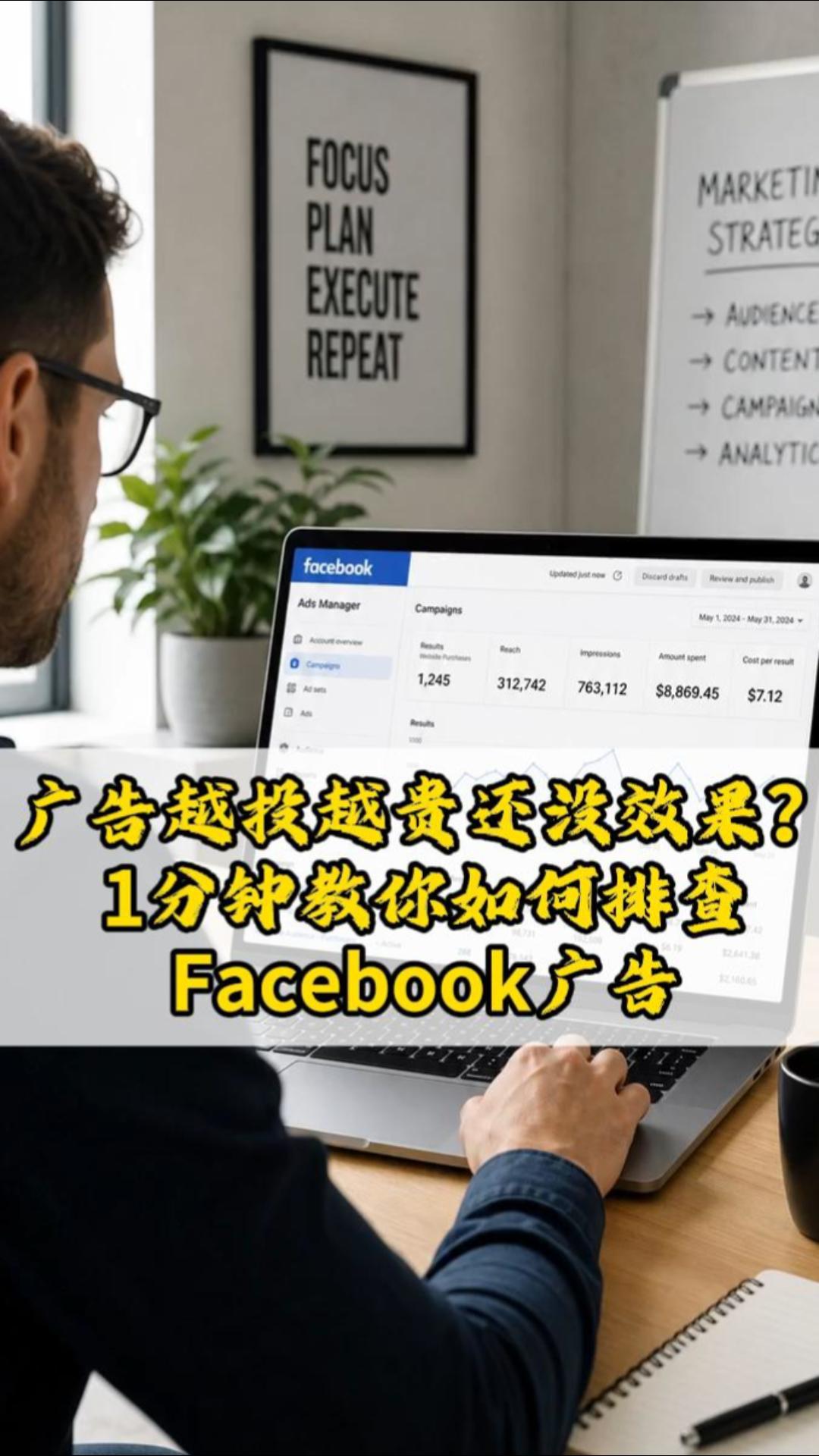
 Are your ads getting more expensive with no results?Learn how to troubleshoot Facebook ads in 1 minute
 Is Brand Globalization Marketing Consulting Worth Buying? At What Stage Should Companies Bring It In
Related Products
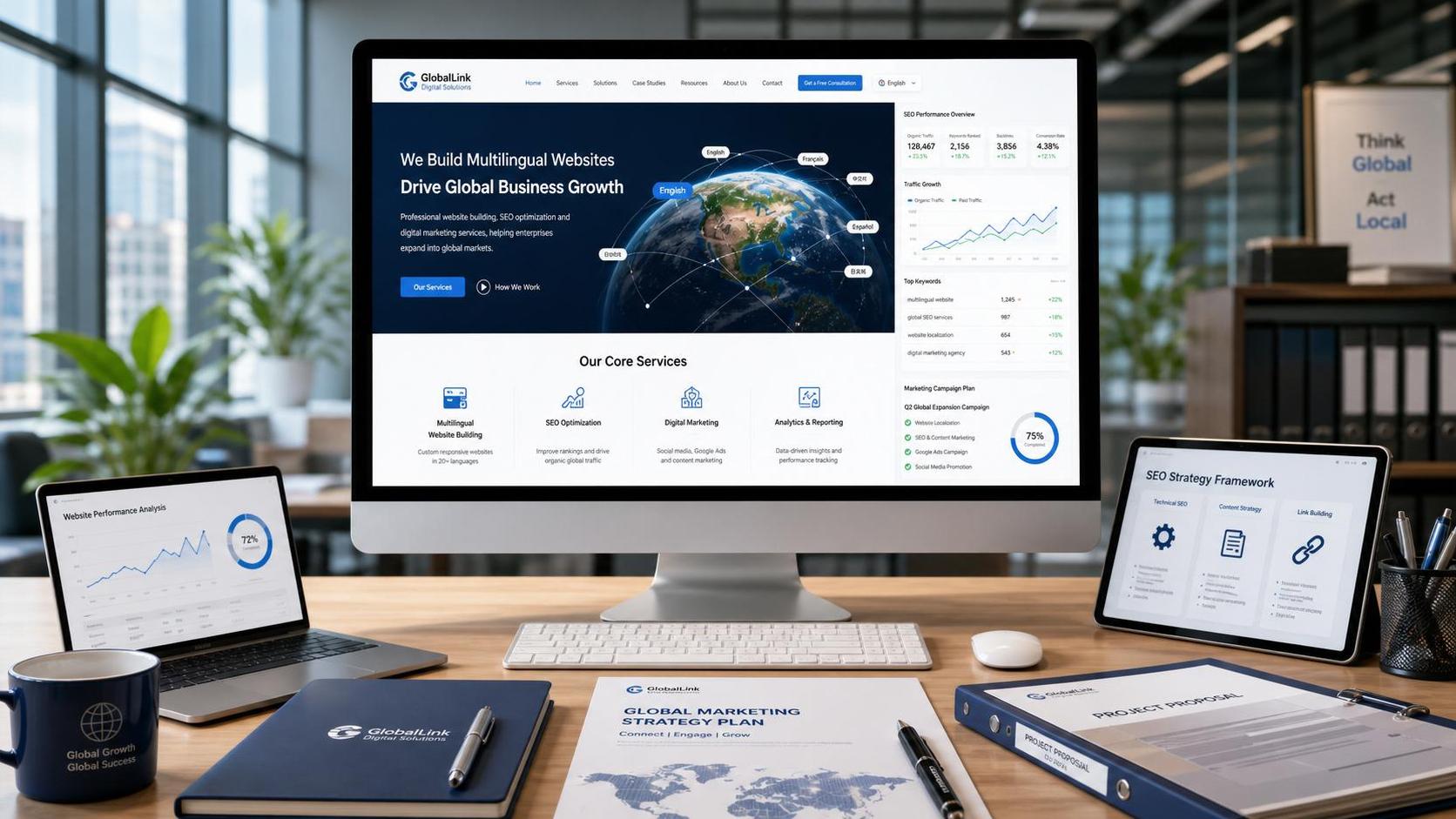
 EasyCamp SaaS Smart Website Marketing SystemE-Yingbao SaaS Smart Website Marketing System: AI-powered, zero-code website building. Rapidly launch multilingual independent e-commerce sites in just 10 minutes. Global server acceleration and AI-driven SEO optimization empower businesses to efficiently connect with global markets. The seamless integration of technology and user-friendly operation makes building e-commerce sites incredibly simple.
 AI+SEM Intelligent Advertising Marketing SystemAI+SEM drives intelligent ad creation, empowering full-funnel precision advertising marketing. The system automatically generates weekly/monthly reports, AI recommends keywords and target countries, monitors core metrics in real-time with intelligent alerts, and enables one-click high-conversion ad solutions to help quickly acquire customers and improve ROI.
 AI+SEO Dual Engine Optimization ServiceEasyWin AI+SEO Dual Engine Optimization System leverages AI-powered keyword mining, content generation, and comprehensive technical optimization to help foreign trade enterprises acquire high-quality organic traffic, significantly improving search rankings and conversion rates.
 AI+SNS Social Media Marketing SystemYingbao AI+SNS Social Media Marketing System - Precision social capture for the social media era. Supports one-click content synchronization across major platforms like Facebook and LinkedIn. AI intelligently rewrites posts for enhanced relevance. 24/7 AI customer service and user profiling analysis empower businesses to efficiently expand into global markets.
 AI+SEO营销解决方案易营宝AI+SEO营销解决方案,通过AI批量写作、智能生成TDK、精准关键词扩词等功能,全面优化网站SEO效果,提升流量与转化率。助力企业构建高效智能网站新生态。
 AI+SEM Advertising Marketing SolutionsAI+SEM Advertising Marketing Solution leverages AI technology to deeply empower SEM ad campaigns. It automatically generates weekly/monthly reports using AI, presenting account data across multiple dimensions for comprehensive insights into campaign performance and trends. The system precisely recommends keywords and target countries, intelligently generates high-conversion ad copy, and enables one-click activation of efficient campaign plans to help businesses rapidly acquire customers. Simultaneously, it monitors core metrics in real time, intelligently identifies abnormal fluctuations, and issues timely alerts to ensure stable, high-return advertising results.
 Domain Name ServicesEasyWin provides professional domain name services, including intelligent queries, one-stop registration, brand protection, and full lifecycle management, helping businesses build a digital brand image.
 EasyOperate B2C Cross-Border E-Commerce Platform & Independent WebsiteEasyStore B2C Cross-border E-commerce Independent Store is an intelligent website building and cross-border e-commerce integrated solution independently developed by EasyStore Information Technology (Beijing) Co., Ltd. The system is specially designed for small and medium-sized as well as large export enterprises, integrating 'website building, operation, marketing, advertising, and conversion' into one, helping enterprises quickly establish cross-border e-commerce independent stores to achieve brand globalization and global sales growth.
The platform supports multiple languages, multiple currencies, and multi-channel marketing, with built-in AI intelligent translation and SEO optimization systems, suitable for mainstream markets such as Southeast Asia, Europe and America, Latin America, and the Middle East, assisting Chinese manufacturing enterprises in efficiently deploying international e-commerce strategies. SSL证书易营宝提供专业SSL安全证书服务,包括单域名和泛域名证书,确保网站数据传输加密、身份验证和完整性保护,助力企业建立安全可信的在线业务环境。









