









- What Does a Global Traffic Ecosystem Service Provider Do? What Are the Differences from a Single Advertising AgencyJul 16, 2026View details
- What should you focus on in the latest enterprise SaaS report? From renewal rates and delivery costs to overseas growth opportunitiesJul 12, 2026View details
- What signals are worth paying attention to in a cross-border marketing trend report? B2B companies should look at these 6 signalsJul 11, 2026View details
- How to Read a Cross-Border Marketing Trends Report? Five Key Dimensions for Evaluating Channel OpportunitiesJul 11, 2026View details
- Which channel has the highest ROI in the global traffic ecosystem? Comparative analysis of search, social media, and advertisingJul 10, 2026View details
- What multilingual website services are available in Sanya? Which model is more suitable for local businesses going global?Jul 08, 2026View details
Why is website loading speed crucial? 5 lightweight optimization solutions ready for immediate deployment for manufacturing enterprises
Why is website loading speed so important? Data shows that if a website takes more than 3 seconds to load, 53% of visitors will drop off—a particularly devastating blow to manufacturing companies. This article addresses this pain point directly, recommending five lightweight optimization solutions that can be implemented immediately. These solutions cover key keywords such as efficient website acceleration and performance optimization, AI website acceleration technology to enhance user experience, and Beijing suppliers, helping foreign trade companies improve conversion rates and strengthen their global competitiveness.
I. Three Hidden Costs of Slow Loading on Manufacturing Websites
Manufacturing clients have long decision-making cycles, are meticulous in comparing prices, and value technical details and response efficiency. When a website's first screen loads in more than 2.8 seconds, the average dwell time for B2B purchasing personnel decreases by 62%, and the inquiry conversion rate drops by 37%. More importantly, Google's search algorithm has incorporated Core Web Vitals (CWV) into its ranking weight. Pages with a LCP (Maximum Content Rendering) exceeding 2.5 seconds lose an average of 21% of their exposure share in global organic traffic for industrial equipment keywords.
Secondly, without localization acceleration, multilingual foreign trade websites experience an average latency of 1.9 seconds for users in Europe and America accessing the Chinese main site, while Southeast Asian customers accessing the English subsite often experience a first byte time-to-first-byte (TTFB) exceeding 800ms due to missing CDN nodes—directly leading to a 44% decrease in LinkedIn's lead conversion rate. Thirdly, manufacturing companies often embed large product manuals (PDFs), 3D models, or CAD drawings. Uncompressed static resources cause mobile loading failure rates to rise to 18%, resulting in the loss of both end consumers and distributors.
According to real-world test data from the YiYingBao intelligent website building system, after adopting a global server cluster spanning 7 continents and AI-driven dynamic resource scheduling, the median LCP (Local Content Count) for independent websites of manufacturing clients decreased from 3.4 seconds to 1.2 seconds, SEO scores improved by 35%, and Google organic traffic increased by an average of 26% per month.
II. Five lightweight optimization solutions that can be implemented without coding and can be deployed within 72 hours.
Without requiring website rebuilding or relying on an IT team, the following solutions can all be deployed independently by marketing/operations personnel, with an average implementation time of ≤4 hours, and all are compatible with mainstream CMS (WordPress, Shopify, and self-developed website building systems):
- Option 1: Enable intelligent CDN + edge caching strategy - automatically identify the visitor's geographical location and distribute static resources nearby; support versioned caching of HTML, CSS and JS files, reducing TTFB by more than 55%.
- Solution 2: Intelligent image compression and batch switching of WebP format - Based on AI recognition of product images/factory scene images, the compression rate is improved by 68% while retaining key details, and the size of a single banner image is reduced from 1.2MB to 320KB.
- Option 3: Third-party script asynchronous loading control - disable unnecessary statistical plugins (such as unauthorized heatmap tools), delay the loading of advertisement and form components until the user scrolls to the viewport, and speed up the first screen rendering by 41%.
- Option 4: Inline Key CSS + Font Preloading – Extract the CSS required for the first screen as inline styles, and combine it with… Preload Chinese and English fonts to eliminate the FOIT (flickering blank font) problem.
- Option 5: Intelligent routing optimization for multilingual sites – By analyzing user IP and browser language preferences with AI, it automatically redirects users to the corresponding language subsite, avoiding the additional RTT latency caused by traditional redirect links (reducing an average of 2 HTTP round trips).
The aforementioned solution has been validated and implemented in 8,200 manufacturing enterprises served by EasyCare. Among them, a precision mold factory in Dongguan reduced its LCP (Local Time Compatibility) for its German website from 4.1 seconds to 1.4 seconds after implementing the dual-engine approach of AI translation center and intelligent CDN. Inquiries from German customers increased by 33% monthly. Furthermore, EasyCare's AI translation center simultaneously achieved real-time adaptation for 249 languages, with a dynamic unit conversion accuracy rate of 99.2%, significantly reducing overseas compliance risks.
III. Why does the manufacturing industry need "AI-driven" website acceleration even more?
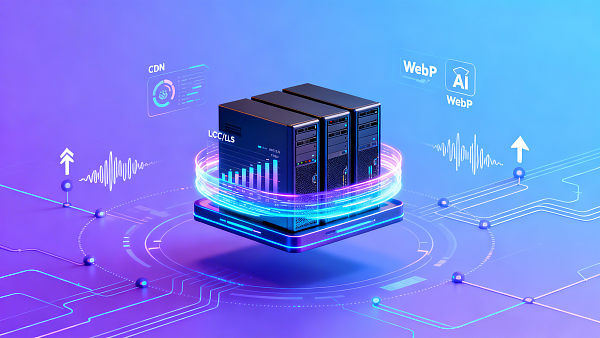
Traditional CDNs only address physical distance issues, but manufacturing websites face three unique bottlenecks: dynamic generation of multilingual content, real-time rendering of product parameter tables, and BOM-level data interaction. In these scenarios, AI acceleration engines can achieve "predictive preloading"—for example, when a user browses the "CNC machining center" page, the system automatically pre-fetches associated ISO certification documents, CE certificate scans, and German-language technical white papers, reducing deep page redirection time by 58%.
YiYingBao's self-developed AI algorithm platform iterates 12 times annually, integrating an NLP semantic understanding module. This allows it to identify visitor search intent (such as "stainless steel valve pressure resistance test standard") and pre-cache relevant ASME B16.34 text and image resources, rather than mechanically caching URLs. This capability reduces bounce rate by 29% for highly specialized manufacturing clients and increases average session depth by 2.4 pages.
Meanwhile, AI acceleration and security protection are deeply coupled: all edge nodes have a built-in DDoS defense rule base, which can intercept automated scanning attacks targeting PLC parameter interfaces and API key leaks in real time, ensuring zero-interruption operation of production line-level data interfaces.
IV. Procurement Decision Guide: How to Evaluate Website Acceleration Service Providers
When choosing a website acceleration and integrated marketing service provider, manufacturing companies should focus on the following six key indicators:
Pay special attention to whether the system provides manufacturing-specific templates (such as supporting structured display of ISO/IEC standard documents), whether it is compatible with ERP/MES system interfaces, and whether it has GDPR/CCPA data compliance certification—these are the key factors affecting long-term ROI.
V. Take Immediate Action: Make Your Manufacturing Website Outperform 90% of Your Competitors
Website loading speed is not just a nice-to-have, but a fundamental infrastructure requirement for manufacturers going global. Starting today, you can begin optimization in just three steps: ① Get a free "Manufacturing Website Performance Health Diagnostic Report" (including three core indicators: LCP/FID/CLS); ② Choose any 1-3 lightweight solutions and have them remotely deployed by EasyMarket engineers; ③ Connect to the AI marketing engine to simultaneously improve SEO scores and multilingual conversion efficiency.
As an AI digital marketing service provider serving over 100,000 enterprises, YiYingBao has provided customized acceleration solutions for clients in more than 20 sub-sectors, including equipment manufacturing, auto parts, and industrial automation. Inquire now to enjoy a manufacturing-specific service package, including free CDN deployment, a trial of our AI translation center, and a Google Ads account health check.
Get your customized optimization plan → Contact the EasyCare consultant team now to unlock a new path to efficient, secure, and quantifiable global growth.
Related Articles
Related Products
 EasyCamp SaaS Smart Website Marketing SystemE-Yingbao SaaS Smart Website Marketing System: AI-powered, zero-code website building. Rapidly launch multilingual independent e-commerce sites in just 10 minutes. Global server acceleration and AI-driven SEO optimization empower businesses to efficiently connect with global markets. The seamless integration of technology and user-friendly operation makes building e-commerce sites incredibly simple.
 AI+SEM Intelligent Advertising Marketing SystemAI+SEM drives intelligent ad creation, empowering full-funnel precision advertising marketing. The system automatically generates weekly/monthly reports, AI recommends keywords and target countries, monitors core metrics in real-time with intelligent alerts, and enables one-click high-conversion ad solutions to help quickly acquire customers and improve ROI.
 AI+SEO Dual Engine Optimization ServiceEasyWin AI+SEO Dual Engine Optimization System leverages AI-powered keyword mining, content generation, and comprehensive technical optimization to help foreign trade enterprises acquire high-quality organic traffic, significantly improving search rankings and conversion rates.
 AI+SNS Social Media Marketing SystemYingbao AI+SNS Social Media Marketing System - Precision social capture for the social media era. Supports one-click content synchronization across major platforms like Facebook and LinkedIn. AI intelligently rewrites posts for enhanced relevance. 24/7 AI customer service and user profiling analysis empower businesses to efficiently expand into global markets.
 AI+SEO营销解决方案易营宝AI+SEO营销解决方案,通过AI批量写作、智能生成TDK、精准关键词扩词等功能,全面优化网站SEO效果,提升流量与转化率。助力企业构建高效智能网站新生态。
 AI+SEM Advertising Marketing SolutionsAI+SEM Advertising Marketing Solution leverages AI technology to deeply empower SEM ad campaigns. It automatically generates weekly/monthly reports using AI, presenting account data across multiple dimensions for comprehensive insights into campaign performance and trends. The system precisely recommends keywords and target countries, intelligently generates high-conversion ad copy, and enables one-click activation of efficient campaign plans to help businesses rapidly acquire customers. Simultaneously, it monitors core metrics in real time, intelligently identifies abnormal fluctuations, and issues timely alerts to ensure stable, high-return advertising results.
 Domain Name ServicesEasyWin provides professional domain name services, including intelligent queries, one-stop registration, brand protection, and full lifecycle management, helping businesses build a digital brand image.
 EasyOperate B2C Cross-Border E-Commerce Platform & Independent WebsiteEasyStore B2C Cross-border E-commerce Independent Store is an intelligent website building and cross-border e-commerce integrated solution independently developed by EasyStore Information Technology (Beijing) Co., Ltd. The system is specially designed for small and medium-sized as well as large export enterprises, integrating 'website building, operation, marketing, advertising, and conversion' into one, helping enterprises quickly establish cross-border e-commerce independent stores to achieve brand globalization and global sales growth.
The platform supports multiple languages, multiple currencies, and multi-channel marketing, with built-in AI intelligent translation and SEO optimization systems, suitable for mainstream markets such as Southeast Asia, Europe and America, Latin America, and the Middle East, assisting Chinese manufacturing enterprises in efficiently deploying international e-commerce strategies. SSL证书易营宝提供专业SSL安全证书服务,包括单域名和泛域名证书,确保网站数据传输加密、身份验证和完整性保护,助力企业建立安全可信的在线业务环境。









