









- What Does a Global Traffic Ecosystem Service Provider Do? What Are the Differences from a Single Advertising AgencyJul 16, 2026View details
- What should you focus on in the latest enterprise SaaS report? From renewal rates and delivery costs to overseas growth opportunitiesJul 12, 2026View details
- What signals are worth paying attention to in a cross-border marketing trend report? B2B companies should look at these 6 signalsJul 11, 2026View details
- How to Read a Cross-Border Marketing Trends Report? Five Key Dimensions for Evaluating Channel OpportunitiesJul 11, 2026View details
- Which channel has the highest ROI in the global traffic ecosystem? Comparative analysis of search, social media, and advertisingJul 10, 2026View details
- What multilingual website services are available in Sanya? Which model is more suitable for local businesses going global?Jul 08, 2026View details
- How to view the complete list of China SaaS companies in the top 100? Practical methods for screening website-building and marketing service providersJul 08, 2026View details
- How to view pricing in the global traffic ecosystem? Cost comparison of search, social media, and content channel advertisingJul 06, 2026View details
How can a website SEO optimization strategy balance traffic and conversions
How can a website SEO optimization plan balance traffic and conversion? The key lies in implementing search engine optimization services, SEO content optimization, and website traffic growth solutions in a coordinated way, so as to improve search engine ranking optimization results while also enabling visitors to convert into inquiries and orders more quickly.
Why do many companies do SEO optimization, see traffic increase, yet receive no inquiries

In the integrated website + marketing service scenario, the common misconception among companies is not “not doing SEO,” but rather understanding a website SEO optimization plan as purely chasing rankings. Information researchers focus on keyword volume, technical evaluators look at indexing, and business decision-makers look at costs, but what truly affects deal conversion is whether traffic quality, page engagement, and the conversion path are aligned.
If a website only adds a large amount of broad-keyword traffic within 2–4 weeks, but does not simultaneously build industry pages, product pages, case pages, and inquiry forms, then even if search engine ranking optimization becomes more obvious, inquiry growth may still lag behind. For B2B companies, the path from visit to lead capture often requires 3 stages: understanding needs, building trust, and triggering consultation.
Yiyingbao Information Technology (Beijing) Co., Ltd. has long served global growth scenarios. Its core approach is not to promote a single channel in isolation, but to use smart website building, SEO optimization, social media marketing, and advertising placement in coordination, executing “being found” and “being able to close deals” within the same chain. This is more stable than only pursuing short-term keyword fluctuations.
For quality control personnel, safety managers, project leaders, or customers in a distributor system, after entering the website they usually first assess 4 types of information: company strength, service boundaries, delivery process, and after-sales capabilities. If this content is missing, then even if the website traffic growth solution is effective, it is still difficult to generate high-quality conversions.
4 core reasons why traffic and conversion cannot be separated
- Imbalanced keyword distribution: only covering high-search-volume keywords while ignoring high-intent long-tail keywords such as “how to choose,” “how much does it cost,” “how long is the delivery time,” and “what scenarios is it suitable for.”
- Incomplete page structure: lacking case studies, FAQ, parameter descriptions, and service processes, making it impossible for visitors to make an effective judgment within 5–8 minutes.
- Broken website experience: content exists on the PC side, but mobile forms are complicated and consultation entry points are scattered, resulting in a high bounce rate and short dwell time.
- Insufficient data review: only looking at rankings and clicks, but not inquiry sources, page conversion rates, or content-assisted conversion paths, making the optimization direction prone to distortion.
Therefore, truly effective search engine optimization services should serve both search engine understanding and the user decision-making path at the same time. Especially in B2B business, where the purchasing cycle commonly ranges from 2 weeks to 3 months, the website is not a single display page, but a pre-sales communication system.
What modules should a website SEO optimization plan that balances traffic and conversion include

A complete website SEO optimization plan should not stop at a keyword list and content publishing plan, but should cover website structure, technical performance, content matrix, conversion components, and data tracking. It can usually be divided into 5 execution layers: foundational diagnosis, structural planning, content production, page conversion, and continuous iteration.
For technical evaluators, the focus is on crawling, indexing, loading speed, and mobile adaptation; for business decision-makers, the focus is on customer acquisition cost, lead quality, and ROI cycle; for after-sales maintenance and channel partners, the focus is on whether materials can be checked, solutions can be reused, and pages can be shared.
Relying on artificial intelligence and big data capabilities, Yiyingbao usually plans SEO content optimization and page engagement simultaneously in integrated website + marketing service execution, avoiding the repeated rework of ranking first and patching pages later. In conventional projects, the basic setup is usually completed within 7–15 days after launch, and then content and conversion collaboration are advanced monthly.
If a company is also advancing financial digitization, organizational collaboration, or intelligent process building, it can also supplement its understanding of digital system integration logic from a management perspective. For example, the ideas reflected in Analysis of the Integrated Development Path of Enterprise Artificial Intelligence and Accounting Informatization essentially emphasize system collaboration rather than single-point optimization, just like marketing data integration does.
5 execution modules recommended for priority implementation
- Keyword layering: distribute brand keywords, product keywords, scenario keywords, problem keywords, and decision keywords across the homepage, category pages, topic pages, and article pages respectively.
- Technical foundation optimization: focus on checking URL standards, internal linking logic, sitemap, mobile first-screen speed, and form usability.
- SEO content optimization: continuously produce content around application scenarios, purchasing questions, service processes, and risk reminders, rather than only writing conceptual introductions.
- Conversion component design: set consultation buttons, quotation entry points, material downloads, case redirects, and FAQ sections on key pages.
- Data review mechanism: track 3 types of indicators every month, namely exposure and clicks, page behavior, and inquiry quality, to avoid looking at traffic alone.
The table below is more suitable for use during the procurement and evaluation stage, helping different roles judge what results search engine optimization services should actually deliver, rather than only hearing the single dimension of “ranking improvement.”
As can be seen from the table, a website traffic growth solution can only truly produce measurable business results when it is considered together with page engagement and lead management. For companies with limited budgets, this integrated approach is also more suitable for controlling trial-and-error costs.
How different roles evaluate whether an SEO plan is reliable
Whether a plan is suitable depends on different evaluation dimensions for different roles. Information researchers first compare service scope, technical evaluators pay more attention to implementation logic, project managers look at the pace of progress, and business decision-makers focus on 3 issues: how soon results appear, whether the investment is controllable, and whether it can continuously bring in effective customers.
Under normal circumstances, basic technical fixes can be completed within 1–3 weeks, content and page optimization usually show results gradually in 4–8 weeks, and stable inquiry growth depends more on continuous operation. Any claim promising “a large number of deals in an extremely short cycle” deserves careful verification of its implementation path and prerequisites.
For distributors, agents, or channel partners, a website SEO optimization plan should also support content such as regional pages, agency policy explanations, and service coverage descriptions for reuse in different markets. For businesses with a stronger end-consumer orientation, it is necessary to strengthen pricing Q&A, usage instructions, and after-sales entry points.
Yiyingbao’s advantage lies in evaluating website building, SEO, social media, and advertising within the same framework. Therefore, at the planning stage it can identify which keywords are suitable for organic optimization and which are more suitable for ad landing, reducing duplicate investment across channels.
Focus on these 6 items during procurement and selection
- Whether a website diagnosis is done first, instead of directly quoting an execution package.
- Whether it clearly distinguishes the boundaries of 3 types of work: technical optimization, content optimization, and conversion optimization.
- Whether a monthly rhythm is provided, such as fixing issues in month 1, expanding keywords in month 2, and strengthening conversion in month 3.
- Whether there are traceable metric definitions, including indexing, clicks, lead capture, and opportunity quality.
- Whether it supports multi-language, multi-region, or localized page expansion to meet global growth needs.
- Whether it can connect with existing CRM, forms, customer service, or advertising systems to reduce data silos.
To make procurement judgment more intuitive, the comparison below explains the difference between “traffic-only SEO” and “conversion-oriented SEO,” which is particularly valuable for budget approval and service provider selection.
If internal cross-department collaborative review is needed, it is recommended to use this table as a discussion draft for selection, unifying the concerns of technology, marketing, and management. When necessary, it can also be combined with management digitalization perspective materials such as Analysis of the Integrated Development Path of Enterprise Artificial Intelligence and Accounting Informatization to help understand the impact of system collaboration on execution efficiency.
How to truly connect SEO content optimization with the conversion path during implementation
Many companies already have an official website and a content team, but the problem is that content production is disconnected from business conversion. The truly effective approach is to first sort out the user decision chain in search, and then reverse-engineer the website page structure. It can usually be advanced in 4 steps: keyword pool layering, page mapping, content publishing, and lead tracking.
At the keyword pool layering stage, it is recommended to establish at least 3 thematic pools: acquisition topics, education topics, and decision topics. Acquisition topics are used to cover demand entry points, education topics solve cognitive barriers, and decision topics answer key questions such as delivery cycle, quotation methods, suitable scenarios, and after-sales processes.
At the page mapping stage, every important keyword should have a corresponding landing page, rather than all being directed to the homepage. For example, “search engine optimization services” is suitable for a solution page, “SEO content optimization” is suitable for a service description page, and “website traffic growth solution” is suitable for a scenario page or topic page. This is more beneficial for search understanding and user judgment.
At the tracking stage, it is recommended to review 6 items monthly: organic traffic, click-through rate of target pages, number of form submissions, consultation sources, valid lead rate, and sales feedback. Without this closed loop, optimization actions are likely to remain at the content publishing level and cannot form continuous growth.
Website conversion design checklist suitable for B2B companies
Content that pages should prioritize having
- Service boundary explanation: clearly state which parts are included, such as diagnosis, website building, content, placement, and review, to avoid communication deviation.
- Industry-adapted scenarios: split pages by different businesses such as manufacturing, foreign trade, engineering, and channel招商, reducing generic expressions.
- Layered consultation entry points: quotation consultation, solution consultation, technical evaluation, and delivery cycle confirmation should be set separately.
- Trust information display: company introduction, years of service, implementation process, and after-sales support scope should be complete and accessible for review.
If these page elements are all in place, visitors brought by search engine ranking optimization are more likely to complete a preliminary judgment in a single visit. For companies with tight project cycles and extensive cross-department communication, this can significantly reduce the cost of repeated explanations by sales.
Common misconceptions, risk reminders, and why choose us
When companies advance a website SEO optimization plan, there are 3 most common risks: treating SEO as a short-term speculative tactic, treating content as a keyword-stuffing tool, and treating the website as a static business card. Once these 3 types of issues occur, at best they waste budget, and at worst they affect brand image and the trust of potential customers.
Another easily overlooked issue is insufficient collaboration. The marketing department handles content, the technical department handles the website, and the sales department handles leads, but if there is no unified goal, the final result will be disconnection such as “traffic but no business opportunities” and “inquiries but difficult follow-up.” Especially during monthly reviews, more attention should be paid to lead quality rather than only traffic curves.
Yiyingbao Information Technology (Beijing) Co., Ltd. was established in 2013 and is headquartered in Beijing. With artificial intelligence and big data as its core driving force, it has long focused on full-chain services covering smart website building, SEO optimization, social media marketing, and advertising placement. For companies that hope to balance localized services and global growth at the same time, this integrated capability is better suited to complex business scenarios.
If you are evaluating search engine optimization services, it is recommended to first communicate 5 specific items: current website diagnosis results, keyword layering strategy, page engagement plan, estimated implementation cycle, and lead tracking method. Compared with directly comparing unit prices, this makes it easier to judge whether the plan truly fits business goals.
FAQ: 4 questions companies ask most often
1. How long does it usually take to see results from a website SEO optimization plan?
Basic fixes can usually be completed in 1–3 weeks, while content and page structure optimization often show results gradually in 4–8 weeks. If more stable inquiry growth is the goal, it is generally recommended to observe by quarter. Different website foundations, industry competition intensity, and content reserves will all affect the pace.
2. Is SEO content optimization simply the more articles you publish, the better?
No. More important is whether the content matches page engagement. 10 pieces of content that solve real procurement questions often bring more effective traffic and inquiries than 50 vague articles. The amount of content should serve keyword distribution and page conversion, rather than simply pursuing update frequency.
3. When the budget is limited, should we build the website first or do SEO first?
If the current website structure is chaotic, the mobile experience is poor, and there are no conversion entry points, it is recommended to first carry out foundational website optimization and then advance SEO. Because the traffic brought by search engine optimization services ultimately lands on the page, poor page engagement will directly reduce ROI.
4. Before contacting you, what information should a company prepare?
It is recommended to prepare the current website URL, main products or services, target markets, key keyword directions, monthly budget range, whether a multilingual website is needed, and the expected delivery cycle. If historical advertising or inquiry data can also be supplemented, plan judgment will be faster, and the first round of communication can usually complete core issue confirmation within 30–60 minutes.
If you would like to further confirm whether a website traffic growth solution is suitable for your current business, you can have a detailed discussion with us around parameter confirmation, product selection, delivery cycle, customized solutions, data tracking methods, and quotation communication. The earlier traffic goals and conversion goals are placed into the same plan, the easier it is for subsequent investment to generate stable returns.
Related Articles
 Attention! Builders' must-see: Yibingbao AI components updated, design efficiency directly doubled!
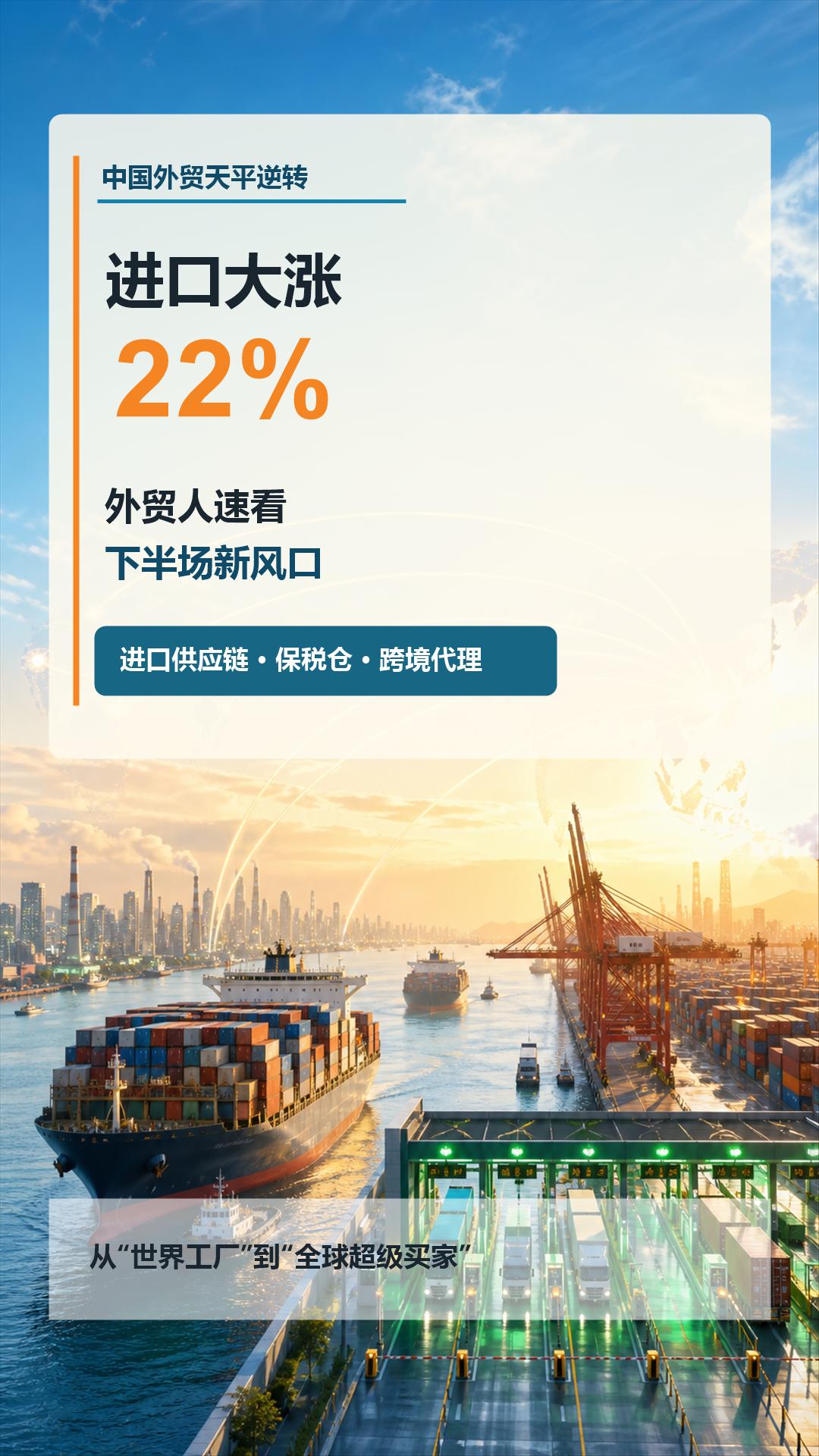
 China's foreign trade sees a turnaround: imports surge by 22%! Foreign trade professionals should quickly take note of the new trends in the second half of the year
 What Does a Global Traffic Ecosystem Service Provider Do? What Are the Differences from a Single Advertising Agency

Related Products
 EasyCamp SaaS Smart Website Marketing SystemE-Yingbao SaaS Smart Website Marketing System: AI-powered, zero-code website building. Rapidly launch multilingual independent e-commerce sites in just 10 minutes. Global server acceleration and AI-driven SEO optimization empower businesses to efficiently connect with global markets. The seamless integration of technology and user-friendly operation makes building e-commerce sites incredibly simple.
 AI+SEM Intelligent Advertising Marketing SystemAI+SEM drives intelligent ad creation, empowering full-funnel precision advertising marketing. The system automatically generates weekly/monthly reports, AI recommends keywords and target countries, monitors core metrics in real-time with intelligent alerts, and enables one-click high-conversion ad solutions to help quickly acquire customers and improve ROI.
 AI+SEO Dual Engine Optimization ServiceEasyWin AI+SEO Dual Engine Optimization System leverages AI-powered keyword mining, content generation, and comprehensive technical optimization to help foreign trade enterprises acquire high-quality organic traffic, significantly improving search rankings and conversion rates.
 AI+SNS Social Media Marketing SystemYingbao AI+SNS Social Media Marketing System - Precision social capture for the social media era. Supports one-click content synchronization across major platforms like Facebook and LinkedIn. AI intelligently rewrites posts for enhanced relevance. 24/7 AI customer service and user profiling analysis empower businesses to efficiently expand into global markets.
 AI+SEO营销解决方案易营宝AI+SEO营销解决方案,通过AI批量写作、智能生成TDK、精准关键词扩词等功能,全面优化网站SEO效果,提升流量与转化率。助力企业构建高效智能网站新生态。
 AI+SEM Advertising Marketing SolutionsAI+SEM Advertising Marketing Solution leverages AI technology to deeply empower SEM ad campaigns. It automatically generates weekly/monthly reports using AI, presenting account data across multiple dimensions for comprehensive insights into campaign performance and trends. The system precisely recommends keywords and target countries, intelligently generates high-conversion ad copy, and enables one-click activation of efficient campaign plans to help businesses rapidly acquire customers. Simultaneously, it monitors core metrics in real time, intelligently identifies abnormal fluctuations, and issues timely alerts to ensure stable, high-return advertising results.
 Domain Name ServicesEasyWin provides professional domain name services, including intelligent queries, one-stop registration, brand protection, and full lifecycle management, helping businesses build a digital brand image.
 EasyOperate B2C Cross-Border E-Commerce Platform & Independent WebsiteEasyStore B2C Cross-border E-commerce Independent Store is an intelligent website building and cross-border e-commerce integrated solution independently developed by EasyStore Information Technology (Beijing) Co., Ltd. The system is specially designed for small and medium-sized as well as large export enterprises, integrating 'website building, operation, marketing, advertising, and conversion' into one, helping enterprises quickly establish cross-border e-commerce independent stores to achieve brand globalization and global sales growth.
The platform supports multiple languages, multiple currencies, and multi-channel marketing, with built-in AI intelligent translation and SEO optimization systems, suitable for mainstream markets such as Southeast Asia, Europe and America, Latin America, and the Middle East, assisting Chinese manufacturing enterprises in efficiently deploying international e-commerce strategies. SSL证书易营宝提供专业SSL安全证书服务,包括单域名和泛域名证书,确保网站数据传输加密、身份验证和完整性保护,助力企业建立安全可信的在线业务环境。









