









- What Does a Global Traffic Ecosystem Service Provider Do? What Are the Differences from a Single Advertising AgencyJul 16, 2026View details
- What should you focus on in the latest enterprise SaaS report? From renewal rates and delivery costs to overseas growth opportunitiesJul 12, 2026View details
- What signals are worth paying attention to in a cross-border marketing trend report? B2B companies should look at these 6 signalsJul 11, 2026View details
- How to Read a Cross-Border Marketing Trends Report? Five Key Dimensions for Evaluating Channel OpportunitiesJul 11, 2026View details
- Which channel has the highest ROI in the global traffic ecosystem? Comparative analysis of search, social media, and advertisingJul 10, 2026View details
- What multilingual website services are available in Sanya? Which model is more suitable for local businesses going global?Jul 08, 2026View details
- How to view the complete list of China SaaS companies in the top 100? Practical methods for screening website-building and marketing service providersJul 08, 2026View details
- How to view pricing in the global traffic ecosystem? Cost comparison of search, social media, and content channel advertisingJul 06, 2026View details
Where search engine ranking optimization usually gets stuck when results come slowly
Many companies see slow results from search engine ranking optimization, often getting stuck due to insufficient coordination among keyword planning, content quality, and technical details. To improve search engine ranking optimization performance, you first need to understand the factors that affect search engine rankings, and then match them with an executable website SEO optimization plan.
Why has search engine ranking optimization been underway for 2–6 months, yet the results are still not obvious?

In an integrated website + marketing service scenario, slow search engine ranking optimization results are usually not caused by a single issue, but by the failure to form a closed loop among the four links of “website foundation, content production, traffic capture, and data feedback.” Many companies have launched their official websites and continue publishing content, but rankings fluctuate greatly and inquiries remain low. In essence, this is a breakdown in the execution chain.
For information researchers and technical evaluators, the most common misjudgment is to interpret search engine ranking optimization as simply publishing articles or stuffing keywords. In fact, a new website usually needs 4–12 weeks to establish basic crawling and page signals, and highly competitive core keywords often need to go through 3 stages before they can enter a stable ranking range.
For business decision-makers, slow results are also related to imbalanced goal setting. If you focus on highly competitive keywords from the very beginning without first laying out industry long-tail keywords, product application keywords, and procurement decision keywords, then even with a considerable budget investment, it is still easy to see no high-quality conversions in the first 60–90 days.
E-Marketing Information Technology (Beijing) Co., Ltd. has long served globalization growth scenarios. Its core advantage is not just handling one single link, but coordinating intelligent website building, SEO optimization, social media marketing, and advertising placement within the same business chain. The value of this approach is that enterprises do not need to separately coordinate 3–4 vendors, and delivery rhythm and data standards become easier to unify.
When ranking optimization shows slow results, it is usually stuck in these 4 types of issues
- Keyword strategy deviation: only pursuing broad industry keywords while ignoring scenario keywords, regional keywords, model keywords, and question keywords with clearer search intent.
- Incomplete content hierarchy: only news pages are available, while product pages, solution pages, case study pages, and FAQ pages are missing, resulting in insufficient semantic coverage of the pages.
- Technical details do not meet requirements: such as redundant crawling paths, slow mobile loading, duplicate titles, chaotic internal links, and low indexing efficiency.
- Broken conversion chain: rankings exist but inquiries do not, often because landing pages have poor engagement, weak form design, and insufficient trust information.
If a company is targeting overseas niche markets, it will also be additionally affected by language localization. For example, if Middle East business follows the logic of a Chinese website while ignoring Arabic search habits, right-to-left layout, and local content expression, then even if the advertising budget increases, search engine ranking optimization will still struggle to continuously accumulate effective authority.
Where to check first: the troubleshooting sequence from keywords, content, and technology to conversion

When companies find that website SEO optimization is progressing slowly, it is not recommended to start with a major redesign. A more efficient method is to conduct a 4-step review based on “keyword relevance—page quality—technical crawlability—conversion engagement.” This not only controls costs, but also helps avoid repeated rework by project managers during the launch cycle.
The first step is to review keywords. It is recommended to divide the keyword database into 3 categories: brand keywords, business keywords, and long-tail keywords. Brand keywords are used to protect existing awareness, business keywords are used to capture industry traffic, and long-tail keywords are responsible for capturing high-intent searches such as “how to choose, how much does it cost, and what scenarios is it suitable for.” The problem for most companies is that more than 70% of their pages are competing for the same type of business keywords.
The second step is to review content. A truly effective content system should cover at least 5 dimensions: product introduction, application scenarios, purchasing recommendations, frequently asked questions, and after-sales maintenance. If a website only contains company news or promotional articles, search engines will find it difficult to determine whether the pages sufficiently match user needs.
The third step is to review technical execution. Technical evaluators usually focus on checking 6 basic items: URL structure, sitemap, mobile adaptation, HTTPS status, page loading time, and canonical settings. Long-term abnormalities in any 2–3 of these items may significantly slow down page crawling and ranking accumulation.
Common enterprise bottlenecks and priority handling recommendations
The table below is suitable for shared use by project owners, procurement personnel, and operations teams to quickly identify whether the slow results of search engine ranking optimization are ultimately a strategy issue or an execution issue.
The significance of the table lies in helping the team first distinguish priorities. If pages have not been adequately indexed for a long time, then content volume should not be pursued first; if stable traffic already exists but conversion is low, then page engagement should be optimized first rather than continuing to blindly expand keywords.
Why the fourth step must definitely examine the conversion chain
What many after-sales maintenance staff, distributors, or end users search for is not just the “product name,” but also “how long is the maintenance cycle,” “how is project delivery arranged,” and “does it support customization.” If the website does not display these high-decision questions upfront, then even if search engine ranking optimization improves, it may still fail to generate inquiries.
Therefore, a website SEO optimization plan that can generate effective leads should at least let users see within 30–60 seconds: what you do, who it is suitable for, how it is implemented, how long delivery takes, and how to get in touch. This is closer to a company’s actual returns than simply pursuing page traffic.
During procurement and selection, how to determine whether an SEO service is not “doing a lot but delivering no results”
For business decision-makers and project managers, the biggest risk when purchasing SEO or website operation services is not high pricing, but vague service content. The contract may state optimization, but if it does not clearly define keyword strategy, page revamp scope, content frequency, and technical maintenance milestones, then after 3 months of execution, it becomes difficult for all parties to determine where the problem lies.
A more reliable approach is to break the service into verifiable milestones. Common practical milestones include: completing diagnosis and keyword planning in week 1–2, completing core page structure adjustments in week 3–4, launching the content matrix in month 2, and observing changes in indexing, rankings, and inquiry quality in month 3.
If a company is also expanding into overseas markets, website building and marketing must not be separated. Taking the Middle East market as an example, language adaptation, domain configuration, SSL selection, social media coordination, and Google Ads keyword strategy all directly affect website SEO optimization efficiency. In this case, an integrated solution usually saves more communication costs than purchasing individual services separately.
Companies with clear regional expansion needs can evaluate their Middle East market implementation path together with the Arabic industry website development and marketing solution. The focus of such a solution is not just translation, but joint planning around Arabic website development, right-to-left layout, localized content, maintenance services, and advertising keyword coordination.
5 dimensions recommended for重点 verification during selection
- Whether diagnosis is conducted first and execution comes after, rather than directly promising ranking results.
- Whether coordinated optimization is provided across the four levels of pages, content, technology, and conversion.
- Whether it can support unified data across multiple languages, multiple regions, and multiple channels.
- Whether it can provide monthly review metrics, rather than only the number of published articles.
- Whether it has integrated capabilities in website building, SEO, social media, and advertising to reduce cross-team communication loss.
E-Marketing Information Technology (Beijing) Co., Ltd. has been deeply engaged in digital marketing services since 2013. Driven by artificial intelligence and big data as its core forces, it has formed full-chain capabilities in intelligent website building, SEO optimization, social media marketing, and advertising placement. For companies that need cross-region, cross-language, and cross-channel collaboration, this integrated service model is more suitable for controlling project progress and delivery quality.
How to quantify service evaluation dimensions more reasonably
The table below is more suitable for procurement evaluation or management reporting, and can turn “invisible optimization work” into project metrics that can be compared and communicated.
If a vendor can only provide process data such as “how many articles were published,” but cannot explain page intent matching, structural optimization, and conversion improvement, then slow ranking results will often continue. Bringing metrics forward during procurement can significantly reduce subsequent communication costs.
Common misconception: why some websites have increased traffic, but business results have not improved accordingly
The goal of search engine ranking optimization should not stop at merely “having traffic.” In B2B scenarios, especially for distributors, agents, engineering project leaders, and quality control-related roles, what really matters is parameter confirmation, delivery cycle, service capability, and subsequent maintenance. If the pages cannot answer these questions, traffic quality will be difficult to convert into business opportunities.
Another misconception is overreliance on a single channel. Website SEO optimization is responsible for capturing ongoing search demand, but in the user decision-making chain, social media content is often also needed to build trust, advertising is needed to test high-conversion keywords, and remarketing is needed to encourage return visits. Stagnation after 90 days of single-channel advancement is a growth bottleneck many companies encounter.
Some companies also ignore the depth of localization needed in multilingual markets. For example, when targeting the Middle East market, if only direct text translation is done without addressing right-to-left layout, regional domain strategy, and Arabic keyword habits, then although the pages are online, both search engine understanding and user experience remain incomplete.
This is also why many companies in overseas marketing will prioritize evaluating combination solutions such as Arabic industry website development and marketing solution, which are closer to actual implementation. For teams with limited budgets that still need to balance website building, localization, maintenance, and campaign coordination, this integrated approach makes it easier to control trial-and-error costs in the first 1–3 quarters.
FAQ: the 3 questions companies ask most often
How long does it usually take to see changes from search engine ranking optimization?
If the website foundation is normal, new pages can usually show changes in crawling and indexing within 2–6 weeks, long-tail keywords are more likely to achieve initial rankings within 1–3 months, and highly competitive core keywords often require more time. The key is not just to look at ranking numbers, but also to observe indexing, impressions, clicks, and inquiry behavior at the same time.
When purchasing website SEO optimization, should the website be built first or promotion be done first?
In most cases, the basic website structure and core landing pages should be established first, and then promotion should follow. This is because promotion amplifies traffic, while the website determines whether conversions can be captured. If there are obvious problems in page structure, forms, or mobile experience, launching campaigns first will often only magnify waste.
What kinds of companies are better suited for integrated website + marketing services?
There are usually 3 types of companies that are more suitable: first, companies that want to expand into multilingual markets; second, companies with limited internal staffing that need a vendor to coordinate both website building and marketing; third, manufacturing, engineering, and cross-border business teams that have higher requirements for delivery cycle, data standards, and subsequent maintenance.
Why choose us: turning “ranking optimization” into a growth project that is “deliverable, measurable, and convertible”
For companies currently evaluating search engine ranking optimization solutions, what is truly needed is not scattered actions, but a practical execution system. Based on ten years of industry experience, E-Marketing Information Technology (Beijing) Co., Ltd. has provided global digital marketing-related services to more than 100,000 companies, and has strong project integration capabilities in website development, SEO, social media, and advertising coordination.
If the problems you are currently facing include slow ranking growth, unclear return on content investment, weak conversion on overseas websites, or low efficiency in collaboration among multiple internal teams, we can start with 1 website diagnosis to help sort out keyword strategy, page structure, technical issues, and conversion paths, and then define the execution priorities for 30 days, 60 days, and 90 days.
Consultation can include: keyword and page planning, website SEO optimization priorities, website building and revamp recommendations, multilingual localization paths, delivery cycle estimates, maintenance service arrangements, Google Ads coordinated campaign ideas, and customized solution evaluation for target markets such as the Middle East.
If you need a solution that is closer to business goals rather than broad and generic optimization suggestions, you can now communicate based on your existing website, target market, budget range, and expected timeline. Aligning the direction first and then investing resources often delivers truly effective results faster than blindly continuing to produce content.
Related Articles
 Attention! Builders' must-see: Yibingbao AI components updated, design efficiency directly doubled!
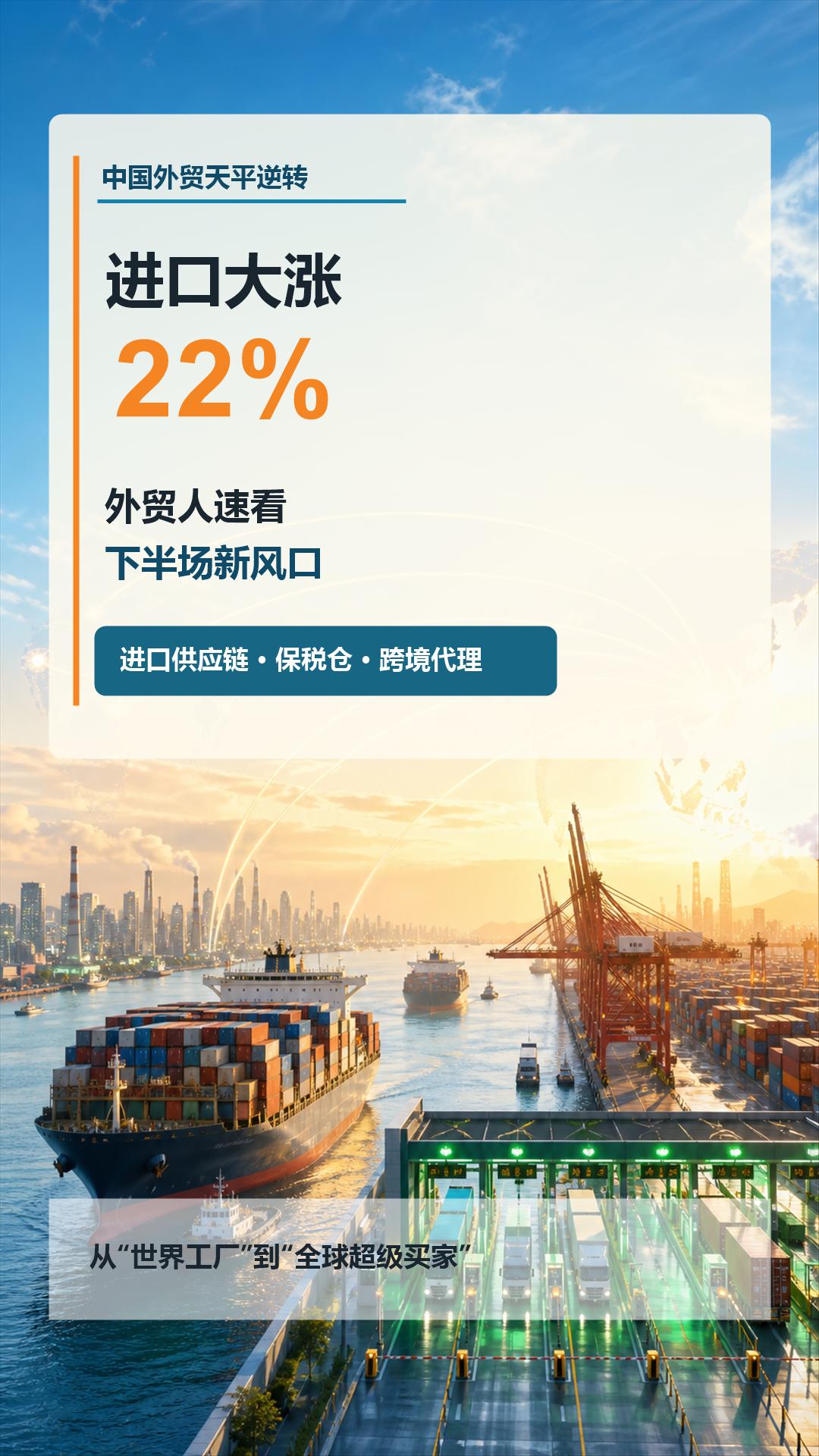
 China's foreign trade sees a turnaround: imports surge by 22%! Foreign trade professionals should quickly take note of the new trends in the second half of the year
 What Does a Global Traffic Ecosystem Service Provider Do? What Are the Differences from a Single Advertising Agency

Related Products
 EasyCamp SaaS Smart Website Marketing SystemE-Yingbao SaaS Smart Website Marketing System: AI-powered, zero-code website building. Rapidly launch multilingual independent e-commerce sites in just 10 minutes. Global server acceleration and AI-driven SEO optimization empower businesses to efficiently connect with global markets. The seamless integration of technology and user-friendly operation makes building e-commerce sites incredibly simple.
 AI+SEM Intelligent Advertising Marketing SystemAI+SEM drives intelligent ad creation, empowering full-funnel precision advertising marketing. The system automatically generates weekly/monthly reports, AI recommends keywords and target countries, monitors core metrics in real-time with intelligent alerts, and enables one-click high-conversion ad solutions to help quickly acquire customers and improve ROI.
 AI+SEO Dual Engine Optimization ServiceEasyWin AI+SEO Dual Engine Optimization System leverages AI-powered keyword mining, content generation, and comprehensive technical optimization to help foreign trade enterprises acquire high-quality organic traffic, significantly improving search rankings and conversion rates.
 AI+SNS Social Media Marketing SystemYingbao AI+SNS Social Media Marketing System - Precision social capture for the social media era. Supports one-click content synchronization across major platforms like Facebook and LinkedIn. AI intelligently rewrites posts for enhanced relevance. 24/7 AI customer service and user profiling analysis empower businesses to efficiently expand into global markets.
 AI+SEO营销解决方案易营宝AI+SEO营销解决方案,通过AI批量写作、智能生成TDK、精准关键词扩词等功能,全面优化网站SEO效果,提升流量与转化率。助力企业构建高效智能网站新生态。
 AI+SEM Advertising Marketing SolutionsAI+SEM Advertising Marketing Solution leverages AI technology to deeply empower SEM ad campaigns. It automatically generates weekly/monthly reports using AI, presenting account data across multiple dimensions for comprehensive insights into campaign performance and trends. The system precisely recommends keywords and target countries, intelligently generates high-conversion ad copy, and enables one-click activation of efficient campaign plans to help businesses rapidly acquire customers. Simultaneously, it monitors core metrics in real time, intelligently identifies abnormal fluctuations, and issues timely alerts to ensure stable, high-return advertising results.
 Domain Name ServicesEasyWin provides professional domain name services, including intelligent queries, one-stop registration, brand protection, and full lifecycle management, helping businesses build a digital brand image.
 EasyOperate B2C Cross-Border E-Commerce Platform & Independent WebsiteEasyStore B2C Cross-border E-commerce Independent Store is an intelligent website building and cross-border e-commerce integrated solution independently developed by EasyStore Information Technology (Beijing) Co., Ltd. The system is specially designed for small and medium-sized as well as large export enterprises, integrating 'website building, operation, marketing, advertising, and conversion' into one, helping enterprises quickly establish cross-border e-commerce independent stores to achieve brand globalization and global sales growth.
The platform supports multiple languages, multiple currencies, and multi-channel marketing, with built-in AI intelligent translation and SEO optimization systems, suitable for mainstream markets such as Southeast Asia, Europe and America, Latin America, and the Middle East, assisting Chinese manufacturing enterprises in efficiently deploying international e-commerce strategies. SSL证书易营宝提供专业SSL安全证书服务,包括单域名和泛域名证书,确保网站数据传输加密、身份验证和完整性保护,助力企业建立安全可信的在线业务环境。









