









- China-Morocco zero-tariff access, a breakthrough in the cost of Moroccan goods exports to ChinaJun 11, 2026View details
- What signal should be released for the suspension of exports to JapanJun 10, 2026View details
- China's May LNG imports rebounded, with increased volumes from Russia and Canada filling the Middle East supply gapJun 10, 2026View details
- Will GEO change its SEO strategy?Jun 04, 2026View details
- What types of businesses are end-to-end solutions suitable for?Jun 03, 2026View details
- 2026 Global Growth Channel TrendsJun 02, 2026View details
Does using templates for foreign trade website construction affect SEO? Analysis of the contradiction between standardized design and search engine ranking
Does Using Website Templates for Foreign Trade Sites Affect SEO? Analysis of the Conflict Between Standardized Design and Search Engine Weight
In the context of global marketing, building multilingual websites has become a basic step for foreign trade enterprises to enter overseas markets. However, whether using templates for website construction affects SEO performance has always been a critical decision point for brands in their early stages of international expansion. Template-based designs can significantly reduce costs and development cycles, but improper handling of code structure, content uniqueness, and loading performance may lead to limited search engine weight allocation. Therefore, enterprises should evaluate based on site structure rationality, content originality, and technical compliance rather than solely focusing on construction efficiency.
The Relationship Between Template-Based Websites and SEO Principles
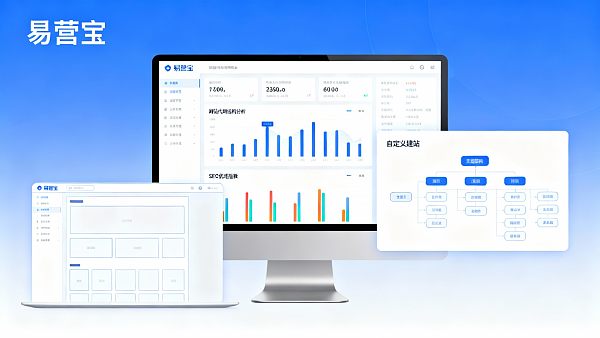
Template-based websites rely on pre-packaged front-end structures and components, forming sites by replacing text and image content. Their advantage lies in unified design and rapid deployment, but SEO fundamentally depends on page indexability, content quality, and user experience. If templates contain redundant code, duplicate tags, or non-semantic HTML structures, search engines may reduce crawling efficiency and structural comprehension, thereby affecting rankings. Thus, template-based websites are not inherently detrimental to SEO—the key lies in technical implementation and post-launch optimization.
SEO Differences Between Template-Based and Custom-Built Websites
Impact of Template Design on Different SEO Metrics
1. Indexability and Crawling Efficiency
Search engines primarily understand page topics and hierarchical relationships through HTML document structures. If template code contains excessive nested structures, inline styles, or JavaScript-rendered content, crawling delays or omissions may occur. According to W3C and Google Search Essentials guidelines, maintaining clear semantic HTML and rational heading hierarchies is fundamental.
2. Loading Speed and User Experience
Loading speed is a key ranking signal. Template sites relying on unified resource libraries or third-party plugins often increase page volume. Industry tests show that when loading exceeds 3 seconds, bounce rates rise by 32% on average. Implementing local caching and CDN distribution can significantly improve performance in standardized templates.
3. Content Uniqueness and Duplication Risks
Template designs often lead to uniform page titles, descriptions, and structures. When paired with low-originality content, algorithms may flag them as duplicate pages—especially in multilingual versions where machine translations or copied template descriptions reduce content authority. Best practice involves providing culturally differentiated localized content for each language market.
4. Structured Data and Mobile Adaptation
Modern SEO extends beyond keyword placement. Templates lacking schema markup or responsive structures prevent search engines from identifying key business information, affecting display results. Recommended practice involves using product information structures compliant with Schema.org to ensure cross-device search consistency.
Industry Practices and Solution Adaptation
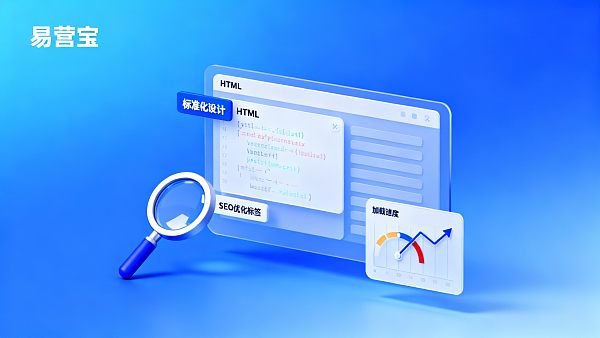
In cross-border marketing ecosystems, enterprises typically adopt two approaches: First, building multilingual standalone sites using standardized templates with manual keyword and content adjustments; Second, employing self-learning intelligent website systems where AI algorithms dynamically correct SEO elements within template structures. The former suits teams with moderate budgets and clear requirements, while the latter fits high-growth enterprises needing continuous content output and search strategy optimization.
For target users facing high multilingual maintenance costs, long update cycles, or inconsistent keywords, solutions like EasyPromo Information Technology (Beijing) Co., Ltd.'s AI-driven website and ad management systems—featuring "AI keyword expansion + automated TDK generation + AI image creation"—better meet cross-border needs. These systems align on-site content with ad placements, balancing speed and SEO performance within templates.
For European market entries challenged by search/social keyword disconnects or low ad ROI, EasyPromo's global traffic integration and AI optimization engines enable multi-channel content synergy. As a Google Premier Partner, the company combines AI ad diagnostics to help enterprises achieve closed-loop adjustments from content generation to投放optimization within template frameworks.
Conclusions and Actionable Recommendations
- If template systems feature compliant code and sub-2-second loading speeds with customizable meta/schema capabilities, SEO impact is manageable.
- If templates restrict URL structures or content module customization, conduct technical audits or SEO checks pre-launch.
- In multilingual markets, unverified machine translations may cause CTR/conversion rates to underperform by over 30%.
- High-update industries or product sites should prioritize systems automating TDK and structured data generation to avoid repetitive labor.
- Template sites can initiate SEO strategies but require ongoing optimization and monitoring to prevent static page固化.
Action steps: Before official launch, validate core metrics (loading speed, indexability, mobile-friendliness) via Google Search Console and PageSpeed Insights. Adjust technically or content-wise to build sustainable optimization frameworks tailored to different countries' search engines.
Related Articles
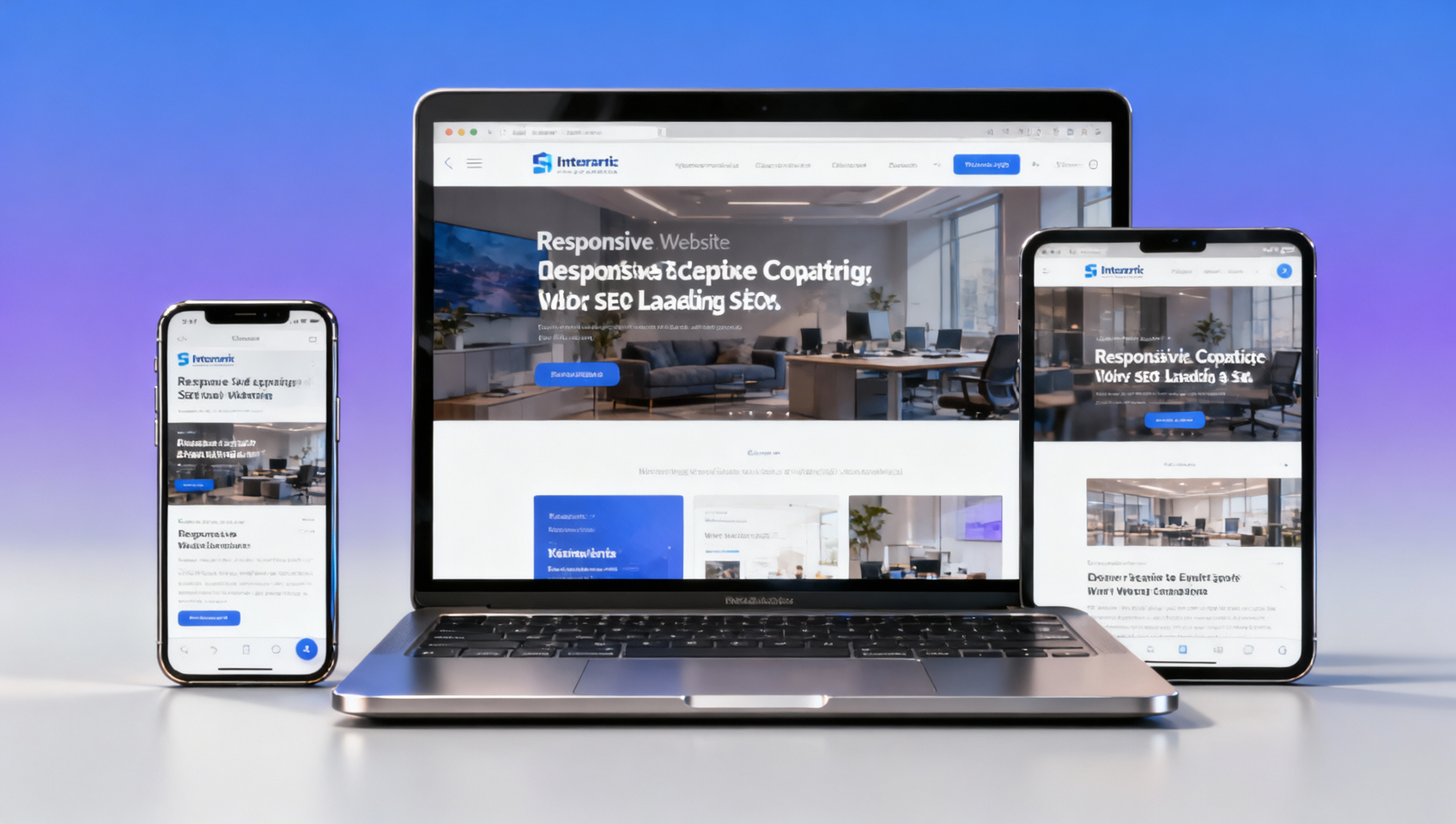
 Responsive website development: which key metrics matter? Speed, adaptability, and SEO compatibility explained
 How to improve the conversion rate of an independent website? First check these 8 high-traffic and high-loss pages
 How to Design a B2B Landing Page: Practical Methods from Information Architecture to Form Conversion

Related Products
 EasyCamp SaaS Smart Website Marketing SystemE-Yingbao SaaS Smart Website Marketing System: AI-powered, zero-code website building. Rapidly launch multilingual independent e-commerce sites in just 10 minutes. Global server acceleration and AI-driven SEO optimization empower businesses to efficiently connect with global markets. The seamless integration of technology and user-friendly operation makes building e-commerce sites incredibly simple.
 AI+SEM Intelligent Advertising Marketing SystemAI+SEM drives intelligent ad creation, empowering full-funnel precision advertising marketing. The system automatically generates weekly/monthly reports, AI recommends keywords and target countries, monitors core metrics in real-time with intelligent alerts, and enables one-click high-conversion ad solutions to help quickly acquire customers and improve ROI.
 AI+SEO Dual Engine Optimization ServiceEasyWin AI+SEO Dual Engine Optimization System leverages AI-powered keyword mining, content generation, and comprehensive technical optimization to help foreign trade enterprises acquire high-quality organic traffic, significantly improving search rankings and conversion rates.
 AI+SNS Social Media Marketing SystemYingbao AI+SNS Social Media Marketing System - Precision social capture for the social media era. Supports one-click content synchronization across major platforms like Facebook and LinkedIn. AI intelligently rewrites posts for enhanced relevance. 24/7 AI customer service and user profiling analysis empower businesses to efficiently expand into global markets.
 AI+SEO营销解决方案易营宝AI+SEO营销解决方案,通过AI批量写作、智能生成TDK、精准关键词扩词等功能,全面优化网站SEO效果,提升流量与转化率。助力企业构建高效智能网站新生态。
 AI+SEM Advertising Marketing SolutionsAI+SEM Advertising Marketing Solution leverages AI technology to deeply empower SEM ad campaigns. It automatically generates weekly/monthly reports using AI, presenting account data across multiple dimensions for comprehensive insights into campaign performance and trends. The system precisely recommends keywords and target countries, intelligently generates high-conversion ad copy, and enables one-click activation of efficient campaign plans to help businesses rapidly acquire customers. Simultaneously, it monitors core metrics in real time, intelligently identifies abnormal fluctuations, and issues timely alerts to ensure stable, high-return advertising results.
 Domain Name ServicesEasyWin provides professional domain name services, including intelligent queries, one-stop registration, brand protection, and full lifecycle management, helping businesses build a digital brand image.
 EasyOperate B2C Cross-Border E-Commerce Platform & Independent WebsiteEasyStore B2C Cross-border E-commerce Independent Store is an intelligent website building and cross-border e-commerce integrated solution independently developed by EasyStore Information Technology (Beijing) Co., Ltd. The system is specially designed for small and medium-sized as well as large export enterprises, integrating 'website building, operation, marketing, advertising, and conversion' into one, helping enterprises quickly establish cross-border e-commerce independent stores to achieve brand globalization and global sales growth.
The platform supports multiple languages, multiple currencies, and multi-channel marketing, with built-in AI intelligent translation and SEO optimization systems, suitable for mainstream markets such as Southeast Asia, Europe and America, Latin America, and the Middle East, assisting Chinese manufacturing enterprises in efficiently deploying international e-commerce strategies. SSL证书易营宝提供专业SSL安全证书服务,包括单域名和泛域名证书,确保网站数据传输加密、身份验证和完整性保护,助力企业建立安全可信的在线业务环境。









