









- What Does a Global Traffic Ecosystem Service Provider Do? What Are the Differences from a Single Advertising AgencyJul 16, 2026View details
- What should you focus on in the latest enterprise SaaS report? From renewal rates and delivery costs to overseas growth opportunitiesJul 12, 2026View details
- What signals are worth paying attention to in a cross-border marketing trend report? B2B companies should look at these 6 signalsJul 11, 2026View details
- How to Read a Cross-Border Marketing Trends Report? Five Key Dimensions for Evaluating Channel OpportunitiesJul 11, 2026View details
- Which channel has the highest ROI in the global traffic ecosystem? Comparative analysis of search, social media, and advertisingJul 10, 2026View details
- What multilingual website services are available in Sanya? Which model is more suitable for local businesses going global?Jul 08, 2026View details
How to Improve Conversion Rates for Digital Marketing Websites? 7 Quantifiable Optimization Strategies

Want to improve digital marketing website conversion rates? This article targets researchers and operators, listing 7 quantifiable international digital marketing and smart website platform optimization strategies to help you steadily increase conversions.
In today's globalized landscape where acquiring traffic and delivering localized user experiences are equally crucial, the main pain points faced by researchers and operators include: weak traffic quality, low landing page conversion rates, high multilingual operation costs, and difficulty quantifying ad ROI. This article focuses on quantifiable optimization measures for digital marketing websites, incorporating execution paths for both international digital marketing and smart website platforms, helping businesses steadily improve conversion rates in international digital marketing and global digital marketing scenarios.

1. Prioritize Speed and Usability: Quantifiable Methods to Improve Page Performance
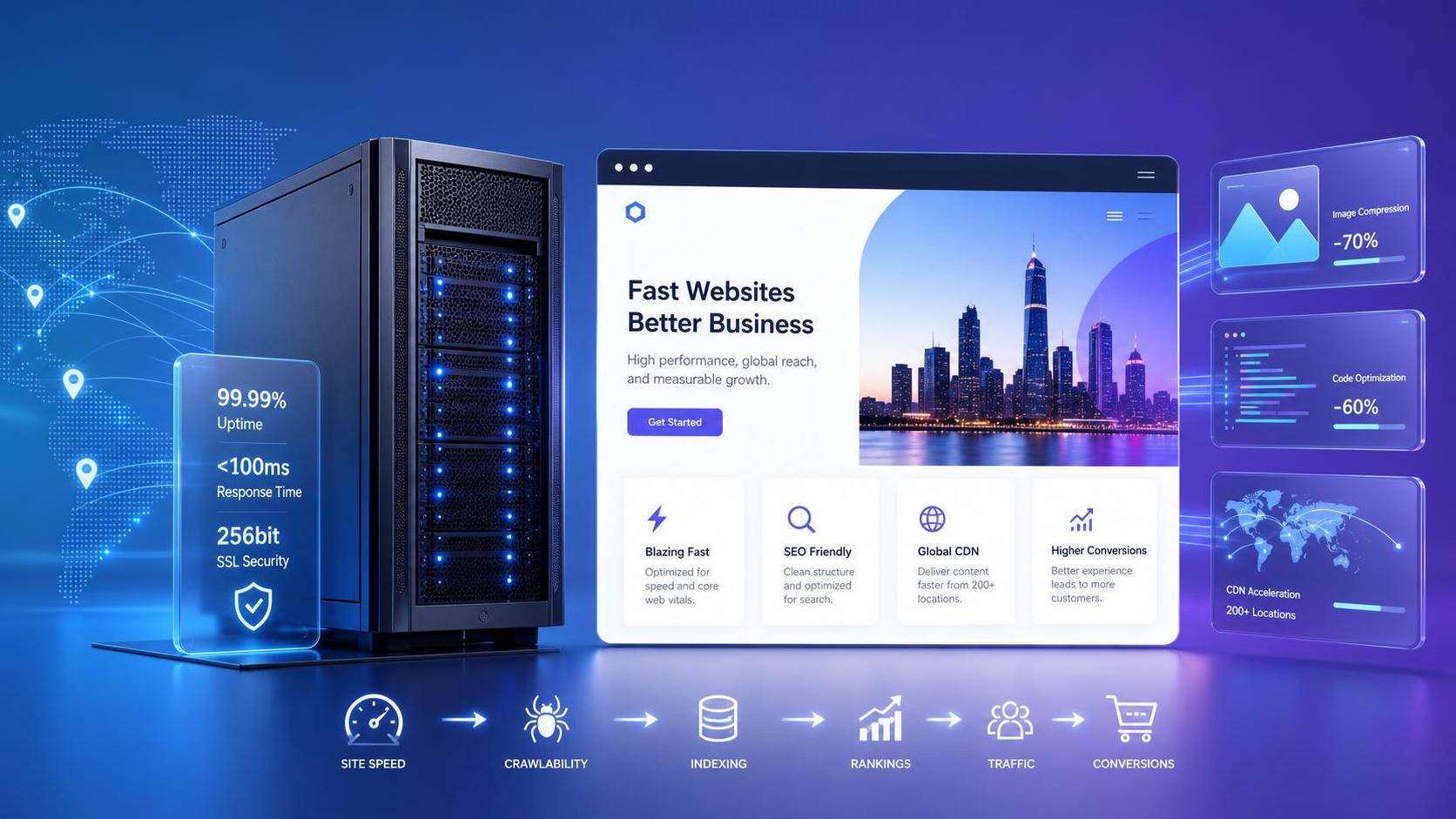
Page load speed and usability are among the primary factors affecting digital marketing website conversion rates. Studies show that for every second of delay in page loading, conversion rates may drop by several percentage points; in cross-border scenarios, network fluctuations have an even more pronounced impact on user experience. Quantifiable optimization paths include: using global CDN and edge caching to reduce Time to First Byte (TTFB), aiming to keep mobile-first screen load times under 2 seconds; enabling lazy loading and WebP format to reduce page volume by 20%~60%; optimizing critical rendering paths and consolidating third-party scripts to ensure measurable and continuously decreasing first-screen rendering times. Evaluation metrics should include: First Contentful Paint (FCP), Time to Interactive (TTI), Lighthouse usability scores, and bounce rates. For international digital marketing projects requiring multilingual coverage, it's recommended to implement continuous monitoring through smart website platforms' automated diagnostics modules, combining A/B tests to assess the actual impact of different compression, CDN nodes, and resource consolidation strategies on conversion rates. Continuous tracking with monthly percentage improvement targets (e.g., reducing FCP by 10% monthly) can directly map technical optimizations to business growth, facilitating ROI reporting to decision-makers.
2. Content and SEO Synergy: Building Semantic, Multilingual Conversion Paths
In international markets, traffic alone doesn't equal conversions. Semantic content and localized SEO are core to improving target traffic quality and conversion rates. Specific strategies include: keyword stratification based on audience personas (brand terms, long-tail keywords, purchase intent keywords), mapping keywords to clear conversion funnel nodes; using automated TDK generation to create unique, localized meta information for each page type, maximizing click-through rates (CTR) in search results. For multilingual support, employ AI-powered translation combined with local proofreading, prioritizing accuracy in landing pages, product pages, and checkout pages to avoid literal translation errors. Recommended SEO metrics: organic traffic conversion rates, organic keyword coverage, page indexing rates, and site authority scores, with periodic reports quantifying results. For example, engineering methods can automate sitemap synchronization with search engines, improving indexing efficiency and achieving 15%~30% month-over-month organic traffic growth in specific markets. In practice, leveraging smart website platforms with integrated AI keyword expansion and automated TDK generation can streamline semantic SEO and content production workflows, shortening the gap between traffic and conversions. For cross-border e-commerce and multilingual website solutions, reference platform cases like EasyOperate B2C Cross-Border Marketplace, which supports multiple languages, currencies, and full-stack SEO engines for rapid deployment in Southeast Asia, Middle East, and European markets.

3. Ad Campaigns and Attribution Optimization: Using Data to Lower Acquisition Costs and Improve ROI
Precision advertising is the "lever" for achieving scalable conversions on digital marketing websites. In global digital marketing scenarios with multiple ad platforms (Google Ads, Meta, TikTok, Yandex, etc.), establishing a quantifiable account diagnosis and optimization workflow is essential. First, implement structured account reorganization: segment ad groups by product categories, regions, and audience intent to avoid bidding waste from mixed keyword groups; then use dynamic creatives and multilingual assets for iterative testing, with CTR and CPA as primary optimization metrics. For attribution, adopt data-driven or hybrid attribution models to dissect contributions from search, social, and direct visits, enabling monthly adjustments to bidding strategies and budget allocation. Ad diagnostic tools can identify low-performing keywords, audience overlaps, and landing page mismatches in real-time, allowing traffic quality corrections within a week. Common targets include reducing invalid clicks by 20% and increasing ad ROAS by 30%. Linking ad campaigns with on-site conversion optimizations (e.g., form improvements, streamlined checkout) can significantly boost efficiency while reducing ad spend waste, suitable for professional digital marketing strategy services or as execution solutions for online marketing consultants.
4. User Segmentation and Automated Engagement: Personalization to Increase Repeat Purchases and Conversion Depth
Segmenting users for automated engagement is key to transforming traffic into long-term value. Through behavior tracking and tag management, classify users into first-time visitors, purchase-intent, lapsed, and loyal customer groups, designing differentiated triggers for each. For example, offer time-limited discounts + social retargeting to purchase-intent users; reactivate lapsed customers via lifecycle emails and AI recommendations. Technically, integrate CRM with marketing automation tools to close the loop from tag triggering to content generation and channel deployment. Quantifiable KPIs include: first-time to order conversion rates, repeat purchase rates, LTV (customer lifetime value) growth, and email/push notification open/click rates. In practice, AI recommendation systems and dynamic content generation can increase email conversion rates by 50%~100%, with significant LTV improvements within 180 days. For cross-border marketplace projects, adopt smart website platforms supporting multi-channel marketing and CRM integration, ensuring locally logical and traceable user engagement across markets, facilitating incremental optimizations by internet marketing consultants or digital strategy agencies.
5. Implementation Framework: 7-Step Quantifiable Optimization Plan and Monitoring

To turn these strategies into executable growth plans, follow these seven steps: 1) Baseline diagnosis: use automated tools for comprehensive site and ad account audits to establish current KPIs; 2) Prioritization: score strategies by impact and implementation cost, tackling high-impact low-cost items first; 3) Rapid testing: change only one variable per test, using A/B or multivariate tests with statistical significance; 4) Quantifiable goals: set clear numerical targets for each strategy (e.g., 20% checkout conversion improvement in 90 days); 5) Tool integration: visualize SEO, content, ads, and CRM data on unified dashboards; 6) Review and iteration: biweekly result reviews forming optimization playbooks; 7) Scalable replication: template successful solutions for other countries/languages. Monitoring frameworks should include: technical performance (Lighthouse scores), traffic quality (organic/paid conversion rates), ad efficiency (CPA/ROAS), and customer value (LTV/repeat rates). Businesses needing external support should choose vendors with international digital agency backgrounds offering smart website platforms and ad diagnostic tools to accelerate strategy implementation and sustainable growth loops.
Conclusion and Call to Action
In summary, improving digital marketing website conversion rates requires parallel advancements in technology, content, advertising, and customer operations, guided by quantifiable KPIs for continuous iteration. Through page performance optimization, semantic multilingual content, precision advertising, and rigorous user segmentation automation, you can achieve stable growth in international and global digital marketing environments. As a provider with AI and big data technology backends, offering automated website building, multilingual support, and ad diagnostic capabilities, we can significantly compress the time and cost from piloting to scaling these strategies. If you need strategy implementation or professional digital marketing strategy services and internet marketing consulting, contact us to learn more about enterprise-grade solutions and customized implementation plans. Reach out now, or explore more solutions to kickstart your conversion rate improvement plan.
Related Articles
Related Products
 EasyCamp SaaS Smart Website Marketing SystemE-Yingbao SaaS Smart Website Marketing System: AI-powered, zero-code website building. Rapidly launch multilingual independent e-commerce sites in just 10 minutes. Global server acceleration and AI-driven SEO optimization empower businesses to efficiently connect with global markets. The seamless integration of technology and user-friendly operation makes building e-commerce sites incredibly simple.
 AI+SEM Intelligent Advertising Marketing SystemAI+SEM drives intelligent ad creation, empowering full-funnel precision advertising marketing. The system automatically generates weekly/monthly reports, AI recommends keywords and target countries, monitors core metrics in real-time with intelligent alerts, and enables one-click high-conversion ad solutions to help quickly acquire customers and improve ROI.
 AI+SEO Dual Engine Optimization ServiceEasyWin AI+SEO Dual Engine Optimization System leverages AI-powered keyword mining, content generation, and comprehensive technical optimization to help foreign trade enterprises acquire high-quality organic traffic, significantly improving search rankings and conversion rates.
 AI+SNS Social Media Marketing SystemYingbao AI+SNS Social Media Marketing System - Precision social capture for the social media era. Supports one-click content synchronization across major platforms like Facebook and LinkedIn. AI intelligently rewrites posts for enhanced relevance. 24/7 AI customer service and user profiling analysis empower businesses to efficiently expand into global markets.
 AI+SEO营销解决方案易营宝AI+SEO营销解决方案,通过AI批量写作、智能生成TDK、精准关键词扩词等功能,全面优化网站SEO效果,提升流量与转化率。助力企业构建高效智能网站新生态。
 AI+SEM Advertising Marketing SolutionsAI+SEM Advertising Marketing Solution leverages AI technology to deeply empower SEM ad campaigns. It automatically generates weekly/monthly reports using AI, presenting account data across multiple dimensions for comprehensive insights into campaign performance and trends. The system precisely recommends keywords and target countries, intelligently generates high-conversion ad copy, and enables one-click activation of efficient campaign plans to help businesses rapidly acquire customers. Simultaneously, it monitors core metrics in real time, intelligently identifies abnormal fluctuations, and issues timely alerts to ensure stable, high-return advertising results.
 Domain Name ServicesEasyWin provides professional domain name services, including intelligent queries, one-stop registration, brand protection, and full lifecycle management, helping businesses build a digital brand image.
 EasyOperate B2C Cross-Border E-Commerce Platform & Independent WebsiteEasyStore B2C Cross-border E-commerce Independent Store is an intelligent website building and cross-border e-commerce integrated solution independently developed by EasyStore Information Technology (Beijing) Co., Ltd. The system is specially designed for small and medium-sized as well as large export enterprises, integrating 'website building, operation, marketing, advertising, and conversion' into one, helping enterprises quickly establish cross-border e-commerce independent stores to achieve brand globalization and global sales growth.
The platform supports multiple languages, multiple currencies, and multi-channel marketing, with built-in AI intelligent translation and SEO optimization systems, suitable for mainstream markets such as Southeast Asia, Europe and America, Latin America, and the Middle East, assisting Chinese manufacturing enterprises in efficiently deploying international e-commerce strategies. SSL证书易营宝提供专业SSL安全证书服务,包括单域名和泛域名证书,确保网站数据传输加密、身份验证和完整性保护,助力企业建立安全可信的在线业务环境。









