









- How Can a Brand Updates Page Be Made More SEO-Friendly? Analysis of Update Frequency, Content Structure, and Internal Linking StrategyJun 28, 2026View details
- What stages does the cross-border services ecosystem include? How do website building, promotion, payment, and compliance work togetherJun 22, 2026View details
- How will email marketing costs change in 2026Jun 22, 2026View details
- The China-US tariff arrangement has reached a preliminary consensus, and the trade association will be establishedJun 15, 2026View details
- Should overseas brand marketing start with ads or contentJun 21, 2026View details
- What determines B2C cross-border e-commerce website development costs? A breakdown of features, interfaces, and deployment methodsJun 17, 2026View details
- China-Morocco zero-tariff access, a breakthrough in the cost of Moroccan goods exports to ChinaJun 11, 2026View details
- What signal should be released for the suspension of exports to JapanJun 10, 2026View details
Which Parameters Matter When Comparing Enterprise Self-Service Website Building Systems
When comparing enterprise self-service website building systems, technical evaluators should not focus only on price and templates, but also pay attention to architectural scalability, data security, SEO capabilities, and marketing integration efficiency, as these parameters directly determine subsequent launch speed and growth potential. For integrated website + marketing service needs, a website building system is not merely a page generation tool, but the infrastructure for capturing search traffic, accumulating customer data, connecting advertising campaigns, and supporting content operations. Therefore, the comparison of enterprise self-service website building systems must return to real business scenarios and judge them around the question of “whether it can support growth.”
1. In comparing enterprise self-service website building systems, which underlying parameters should be examined first?

The first step in comparing enterprise self-service website building systems is not to see whether the homepage looks good, but to examine whether the underlying foundation is stable and scalable. A system truly designed for enterprise applications needs to support multi-site management, hierarchical permissions, component-based page building, unified content maintenance, and cross-business-line expansion. If a platform can only meet the needs of a single display-oriented corporate website, then once the business adds campaign pages, product pages, overseas landing pages, or multilingual sites, problems such as repeated construction and low maintenance efficiency will arise.
It is recommended to focus on verifying four core capabilities: first, the deployment architecture, and whether it supports elastic cloud scaling; second, back-end permissions, and whether they can meet collaboration needs across marketing, operations, and technical teams; third, the template and component mechanism, and whether it allows rapid reuse without changing code; fourth, API openness, and whether it leaves room for integration with CRM, forms, data analytics, and advertising systems. When comparing enterprise self-service website building systems, the clearer these underlying parameters are, the more controllable the later transformation costs will be.
2. Why are SEO capabilities considered a core indicator in the comparison of enterprise self-service website building systems?
When many companies compare enterprise self-service website building systems, they focus only on page generation speed while overlooking the ability to acquire organic traffic. For integrated website + marketing service scenarios, SEO is not an add-on feature, but the key factor that determines a website’s long-term customer acquisition efficiency. A system that looks attractive but is not conducive to indexing and does not support structured optimization often makes it difficult for content investment to translate into search visibility.
Specific points to examine include: whether it supports custom titles, descriptions, and URL paths; whether it can automatically generate a sitemap; whether it supports 301 redirects, breadcrumb navigation, image alt text, page load optimization, and mobile adaptation; and whether it facilitates the creation of category hierarchies and topic hub pages. All of these directly affect search engine crawling efficiency and keyword ranking performance. When comparing enterprise self-service website building systems, if SEO capabilities only allow the most basic title editing, it is usually difficult to support sustained content operations.
From the service logic of EasyAB Information Technology (Beijing) Co., Ltd., intelligent website building, SEO optimization, social media marketing, and advertising placement need to form a coordinated closed loop. If the website building system lacks foundational SEO settings, and remediation is attempted later through external fixes, it often increases technical communication and promotion costs, affecting overall marketing efficiency.
3. How should data security and permission management be compared so the evaluation does not remain superficial?
In comparing enterprise self-service website building systems, data security cannot stop at the three words “has backups.” What truly needs to be confirmed is: backup frequency, whether version rollback is supported, whether abnormal activity monitoring exists, whether operation logs are recorded, and whether different access permissions can be set for different roles. Especially when the website simultaneously carries form leads, member data, and marketing campaign data, security and compliance capabilities will directly affect operational stability.
If the system supports fine-grained permission control, for example, content editors can only modify page copy, advertising operators can only view conversion data, and only administrators have publishing and deletion rights, then team collaboration will be smoother and the risk of operational errors can also be reduced. For enterprises with multiple business modules, it should also be confirmed whether independent approval workflows for separate sections are supported, to avoid all updates depending on a single administrator.
It is worth noting that website systems and an enterprise’s internal digitalization are not isolated from each other. Some companies, while optimizing their official websites and marketing sites, also simultaneously promote the integration of financial, customer, and operational data. At this time, you may refer to Exploring Enterprise Financial Digital Transformation Under the Financial Shared Services Model for its digital collaboration approach, which helps in understanding the importance of system connectivity and process unification.
4. What should be compared in marketing integration capabilities to reflect the value of website + marketing service integration?
The comparison of enterprise self-service website building systems should not remain only at the website building stage, but should also examine whether the system can connect subsequent marketing actions. At a minimum, a qualified platform should support form collection, lead distribution, tracking statistics, online customer service integration, ad conversion tracking, social media sharing, and rapid duplication of campaign pages. Only in this way can a website truly upgrade from a “display window” to a “customer acquisition base.”
If the system can directly connect to data analytics tools and support conversion tagging for different channels, it becomes easier to clearly judge the traffic quality brought by SEO, advertising placement, and social media content respectively. When comparing enterprise self-service website building systems, it is recommended to pay special attention to the following questions: whether A/B testing is supported, whether it is convenient to add new landing pages, whether topic templates can be quickly generated by campaign, and whether it can integrate with WeCom or CRM. Without these capabilities, marketing teams often need to piece together multiple external tools, resulting in low efficiency and inconsistent data.
5. How should cost, timeline, and later operation and maintenance be balanced in comparing enterprise self-service website building systems?
Many people understand the comparison of enterprise self-service website building systems as simply a comparison of quotations, but what truly affects return on investment is the total cost of ownership. In addition to the initial procurement cost, template modification costs, plugin expansion costs, operation and maintenance costs, training costs, and later migration costs should also be calculated. Some systems have relatively low upfront prices, but once multilingual support, multi-region sites, in-depth SEO optimization, or expanded marketing components are needed, additional charges arise, making them not cost-effective in the long run.
The implementation timeline is equally critical. Official website revamps, brand site upgrades, and campaign site launches for enterprises are usually tied to marketing timing requirements. If a system requires extensive custom development, although the functions may seem complete, launch time may be delayed, causing missed promotion windows. In contrast, platforms with mature templates, configurable modules, and standardized integration APIs are more suitable for high-frequency update scenarios.
Common Parameter Comparison Table
6. When comparing enterprise self-service website building systems, what are the most common pitfalls?
There are mainly four common misconceptions. First, looking only at the effect of the demo site while ignoring the complexity of back-end operations; second, looking only at current needs without evaluating expansion scenarios one year later; third, comparing only prices without comparing long-term capabilities such as SEO, data, and security; fourth, separating website building from marketing, which results in the website being unable to continuously bring traffic and leads after launch.
A more prudent approach is to first list a real checklist before comparing enterprise self-service website building systems: whether multilingual support is needed, whether content marketing is required, whether advertising will be run, whether a customer management system will be connected, and whether there are multi-person collaboration and approval needs. Testing systems with this checklist in mind will make judgments more accurate. If the business also involves process and data governance, you may also combine research content such as Exploring Enterprise Financial Digital Transformation Under the Financial Shared Services Model to understand the logic of how platform-based systems improve organizational efficiency.
Overall, the key to comparing enterprise self-service website building systems does not lie in which company has stronger promotion, but in whether the system can balance website building efficiency, SEO performance, data security, and marketing collaboration. For enterprises pursuing integrated website + marketing services, it is recommended to prioritize platforms with technological innovation, open integration, and localized service capabilities, and verify them item by item through trials, scenario demonstrations, and parameter checklists. Only by evaluating a website building system as growth infrastructure can subsequent content operations, search-based customer acquisition, and advertising conversion truly work together.
Related Articles
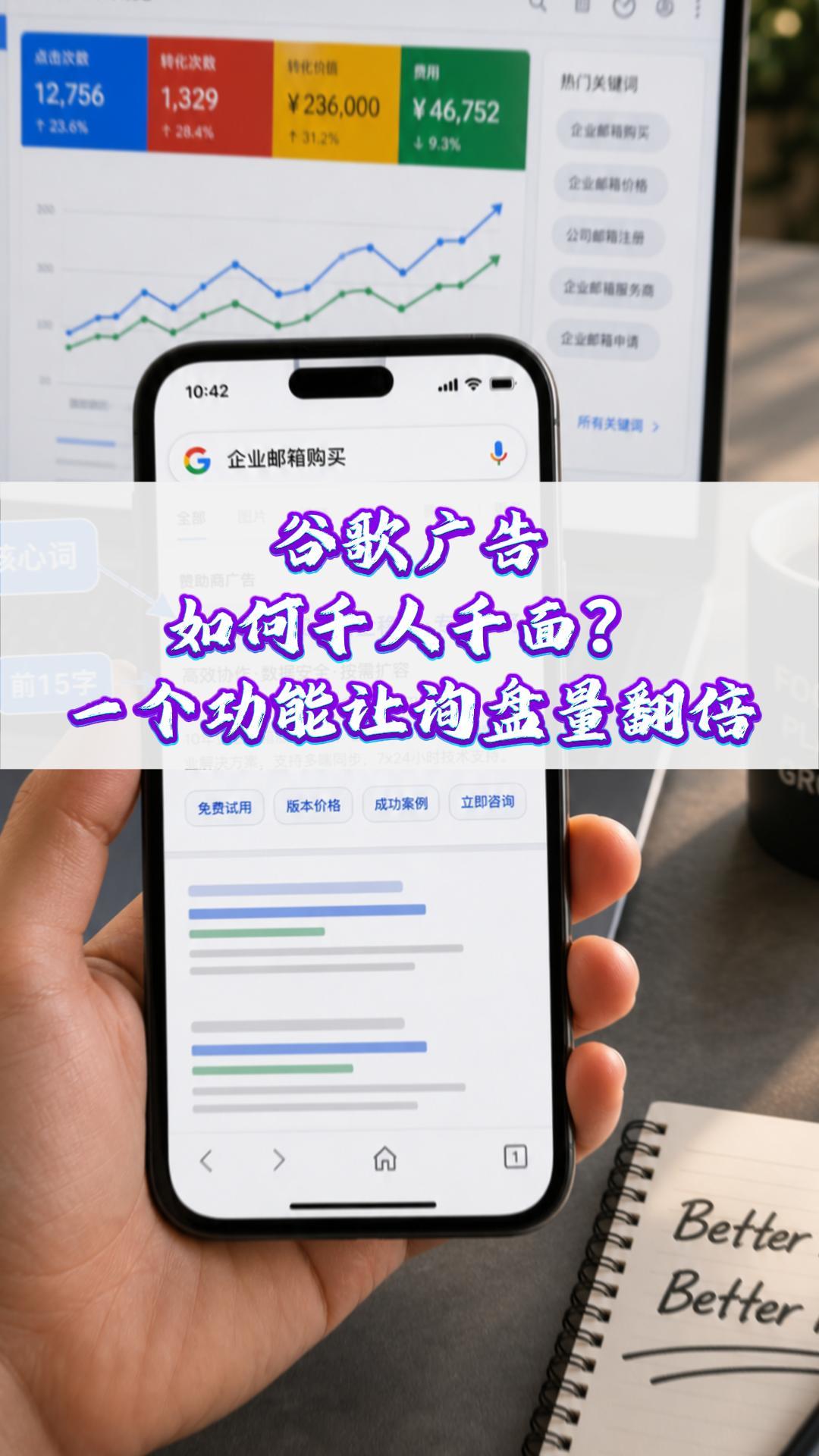
 How can Google Ads deliver one-to-one personalization? One feature can double your inquiry volume#ExportMarketing#OverseasPromotion#GoogleAds#SocialMediaMarketing#ForeignTradeIndependentWebsite
 Why a Google-optimized independent website is essential for trailer exports
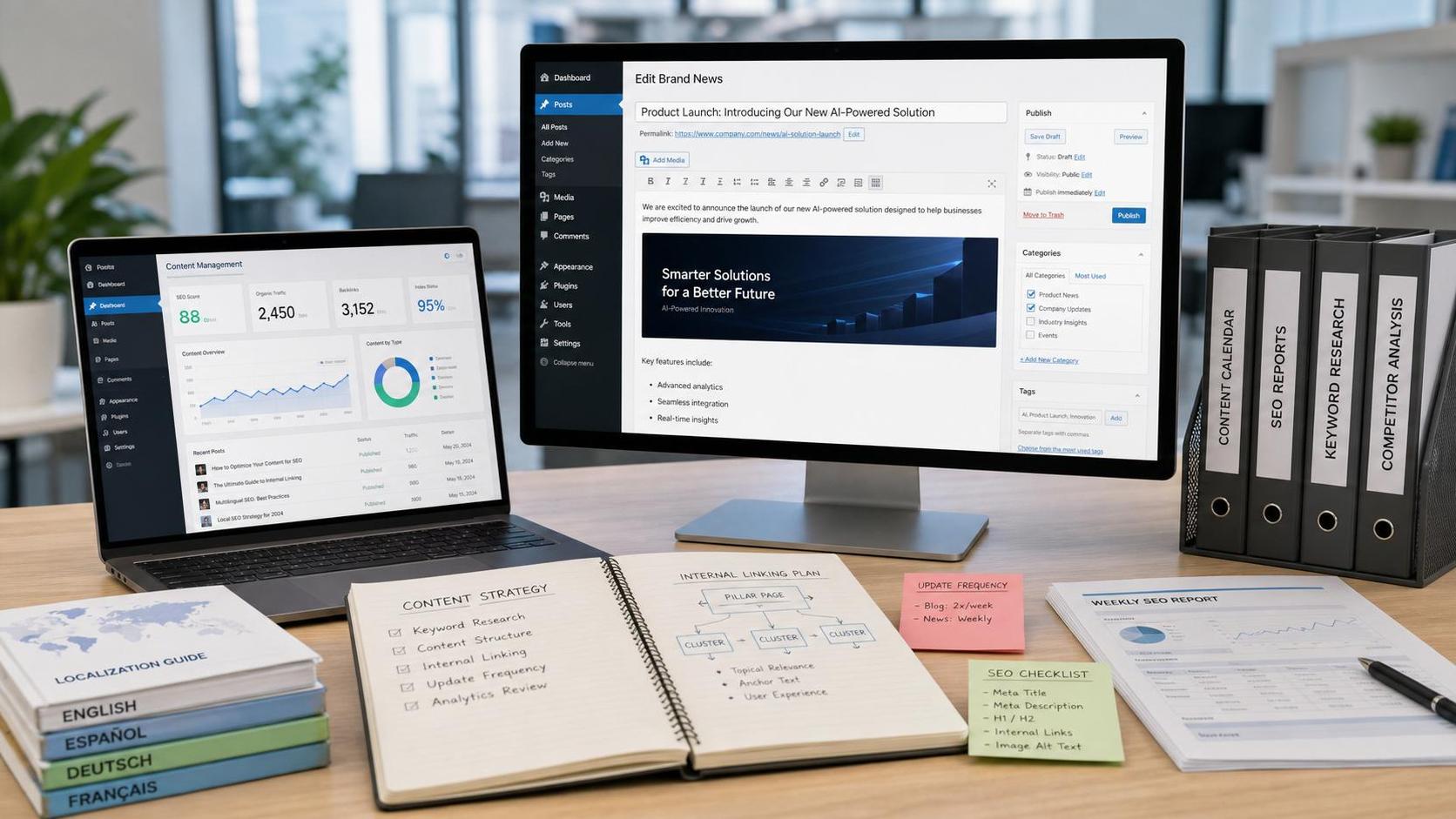
 How Can a Brand Updates Page Be Made More SEO-Friendly? Analysis of Update Frequency, Content Structure, and Internal Linking Strategy

Related Products
 EasyCamp SaaS Smart Website Marketing SystemE-Yingbao SaaS Smart Website Marketing System: AI-powered, zero-code website building. Rapidly launch multilingual independent e-commerce sites in just 10 minutes. Global server acceleration and AI-driven SEO optimization empower businesses to efficiently connect with global markets. The seamless integration of technology and user-friendly operation makes building e-commerce sites incredibly simple.
 AI+SEM Intelligent Advertising Marketing SystemAI+SEM drives intelligent ad creation, empowering full-funnel precision advertising marketing. The system automatically generates weekly/monthly reports, AI recommends keywords and target countries, monitors core metrics in real-time with intelligent alerts, and enables one-click high-conversion ad solutions to help quickly acquire customers and improve ROI.
 AI+SEO Dual Engine Optimization ServiceEasyWin AI+SEO Dual Engine Optimization System leverages AI-powered keyword mining, content generation, and comprehensive technical optimization to help foreign trade enterprises acquire high-quality organic traffic, significantly improving search rankings and conversion rates.
 AI+SNS Social Media Marketing SystemYingbao AI+SNS Social Media Marketing System - Precision social capture for the social media era. Supports one-click content synchronization across major platforms like Facebook and LinkedIn. AI intelligently rewrites posts for enhanced relevance. 24/7 AI customer service and user profiling analysis empower businesses to efficiently expand into global markets.
 AI+SEO营销解决方案易营宝AI+SEO营销解决方案,通过AI批量写作、智能生成TDK、精准关键词扩词等功能,全面优化网站SEO效果,提升流量与转化率。助力企业构建高效智能网站新生态。
 AI+SEM Advertising Marketing SolutionsAI+SEM Advertising Marketing Solution leverages AI technology to deeply empower SEM ad campaigns. It automatically generates weekly/monthly reports using AI, presenting account data across multiple dimensions for comprehensive insights into campaign performance and trends. The system precisely recommends keywords and target countries, intelligently generates high-conversion ad copy, and enables one-click activation of efficient campaign plans to help businesses rapidly acquire customers. Simultaneously, it monitors core metrics in real time, intelligently identifies abnormal fluctuations, and issues timely alerts to ensure stable, high-return advertising results.
 Domain Name ServicesEasyWin provides professional domain name services, including intelligent queries, one-stop registration, brand protection, and full lifecycle management, helping businesses build a digital brand image.
 EasyOperate B2C Cross-Border E-Commerce Platform & Independent WebsiteEasyStore B2C Cross-border E-commerce Independent Store is an intelligent website building and cross-border e-commerce integrated solution independently developed by EasyStore Information Technology (Beijing) Co., Ltd. The system is specially designed for small and medium-sized as well as large export enterprises, integrating 'website building, operation, marketing, advertising, and conversion' into one, helping enterprises quickly establish cross-border e-commerce independent stores to achieve brand globalization and global sales growth.
The platform supports multiple languages, multiple currencies, and multi-channel marketing, with built-in AI intelligent translation and SEO optimization systems, suitable for mainstream markets such as Southeast Asia, Europe and America, Latin America, and the Middle East, assisting Chinese manufacturing enterprises in efficiently deploying international e-commerce strategies. SSL证书易营宝提供专业SSL安全证书服务,包括单域名和泛域名证书,确保网站数据传输加密、身份验证和完整性保护,助力企业建立安全可信的在线业务环境。









