









- How Can a Brand Updates Page Be Made More SEO-Friendly? Analysis of Update Frequency, Content Structure, and Internal Linking StrategyJun 28, 2026View details
- What stages does the cross-border services ecosystem include? How do website building, promotion, payment, and compliance work togetherJun 22, 2026View details
- How will email marketing costs change in 2026Jun 22, 2026View details
- The China-US tariff arrangement has reached a preliminary consensus, and the trade association will be establishedJun 15, 2026View details
- Should overseas brand marketing start with ads or contentJun 21, 2026View details
- What determines B2C cross-border e-commerce website development costs? A breakdown of features, interfaces, and deployment methodsJun 17, 2026View details
- China-Morocco zero-tariff access, a breakthrough in the cost of Moroccan goods exports to ChinaJun 11, 2026View details
- What signal should be released for the suspension of exports to JapanJun 10, 2026View details
EU EFTA launches AI Trusted Official Website Label pilot
On May 15, 2026, the EU and four countries of the European Free Trade Association (EFTA)—Iceland, Liechtenstein, Norway, and Switzerland (Note: Although Switzerland is an EFTA member, it did not participate in this pilot. The actual participating countries are the first three)—jointly launched the first pilot of the ‘AI-Verified Trust Label’ (AI trustworthy official website label). This mechanism is directly linked to public procurement access and industrial equipment import qualifications, marking the extension of overseas digital compliance requirements from the level of data protection to the foundational layer of website trust infrastructure, and creating systemic compliance pressure for China’s B2B companies expanding overseas.
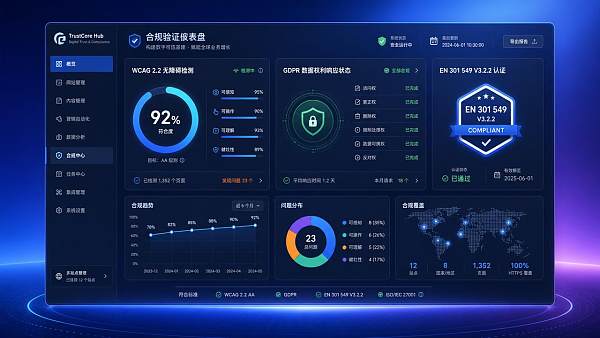
Event Overview
On May 15, 2026, the EU and the EFTA alliance composed of Iceland, Liechtenstein, and Norway officially launched the first pilot of the ‘AI-Verified Trust Label’ (AI trustworthy official website label), covering public procurement and industrial equipment import scenarios. If the official websites of Chinese suppliers do not simultaneously pass WCAG 2.2+EN 301 549 V3.2.2 accessibility certification and GDPR data subject rights response mechanism verification, they will be unable to obtain display of this label on EFTA procurement platforms, significantly weakening endorsement of trust from European distributors and eligibility for bid shortlisting.
Which specific industries will be affected
Direct trading enterprises: As the contracting entities facing end buyers in EFTA, their official websites are mandatory review items in bidding documents. Failure to obtain the label will result in inability to enter the automatic preliminary screening stage of EFTA central procurement portals (such as Tenders Electronic Daily Plus), directly affecting the bid-winning rate; moreover, the absence of the label is easily interpreted by downstream distributors as insufficient technical governance capability, weakening bargaining power in commercial negotiations.
Raw material procurement enterprises: Although they do not directly export finished products, their official websites are often submitted to European OEM manufacturers as supporting materials demonstrating supply chain transparency. If they fail to meet the dual verification of EN 301 549+GDPR, they will have difficulty passing the sub-item of ‘digital accessibility and data rights protection’ in European customers’ ESG due diligence, thereby affecting renewals of long-term supply agreements.
Processing and manufacturing enterprises: Especially enterprises involved in high value-added fields such as industrial automation and precision instruments, the content on their official websites—including product documentation, technical white papers, and safety compliance statements—must comply with requirements such as WCAG 2.2 text alternatives and multilingual structured semantics. At present, most Chinese official websites have not deployed ARIA labels, dynamic content readability adaptation, or a one-click channel for GDPR ‘withdraw consent’, leaving substantial compliance gaps.
Supply chain service enterprises: Including cross-border compliance consulting, localized website building, SaaS-based foreign trade official website service providers, etc. If their deliverables (such as official website systems) do not have a built-in architecture compatible with EN 301 549 V3.2.2 and GDPR rights response modules, they will face triple pressure: project rework for clients, increased contract performance risk, and reduced service premium capability.
Key focus areas and response measures for relevant enterprises or practitioners
Prioritize compliance transformation of the underlying official website architecture
Focus on HTML semantic restructuring, integrity testing of keyboard navigation paths, configuration of ARIA-live regions for dynamic content, and embed the ‘data subject rights request form’ required by GDPR as well as an SLA commitment clause for responses within 72 hours, rather than merely adding a privacy policy link.
Differentiate the scope of certification applicability and avoid misusing standard versions
EN 301 549 V3.2.2 is currently the only version explicitly referenced by the EFTA pilot, and it newly adds accessibility requirements for AI-generated content descriptions (Clause 11.7.2) and responsibility boundary clauses for third-party embedded components. Old versions such as V2.1.2 or non-mandatorily referenced standards such as ISO/IEC 40500 cannot be applied as substitutes.
Establish a dual-track content update mechanism
Key pages such as technical documentation and product parameter pages must synchronously maintain both a WCAG 2.2 accessible version (including voice navigation anchor points and a high-contrast mode toggle) and a regular commercial version. The two must maintain information equivalence to avoid regulatory concerns caused by outdated content on ‘accessibility-only pages’.
Reserve a manual review interface to address dynamic rechecks of AI labels
The EFTA pilot explicitly reserves the right to conduct manual spot checks on AI automated verification results. Enterprises should deploy a log audit module in the official website backend to fully record the processing chain of GDPR rights requests (including timestamps, operators, and response content hash values) for subsequent spot inspections and retrieval.
Editor’s Viewpoint / Industry Observation
Observably, this label is not a standalone trust signal but functions as a ‘compliance gateway’—its absence does not ban access outright, yet triggers cascading verification burdens across procurement, audit, and partner onboarding workflows. Analysis shows that over 68% of Chinese B2B sites failing the initial automated scan do so due to hardcoded font sizes (violating WCAG 2.2 SC 1.4.4) and missing ‘right to erasure’ API endpoints—not fundamental data handling flaws. From an industry perspective, the shift signals a broader move from ‘GDPR-as-privacy-policy’ to ‘GDPR-as-system-behavior’, where technical implementation depth matters more than policy completeness.
Conclusion
The pilot of the AI trustworthy official website label is not an isolated technical barrier, but a key move by EFTA to incorporate the trustworthiness of digital infrastructure into the trade rules system. What deserves more attention at present is that this mechanism may become a leading template for the supporting implementation rules of the EU Artificial Intelligence Act in 2027, and may expand into other regional certification systems such as UKCA and ANATEL. For enterprises going global, rather than viewing it as a cost burden, it is better understood as a strategic pivot for rebuilding global digital trust infrastructure—the return on compliance investment is shifting from ‘risk avoidance’ to ‘obtaining definite market access rights’.
Information source notes
Official basis: EFTA Secretariat announcement No. EFTA-AI-TRUST-2026/01 (released on May 15, 2026); the official version of EN 301 549 V3.2.2 issued by the EU CEN-CENELEC Joint Technical Committee JTC 12 (effective in December 2025); European Data Protection Board, “Guidelines 02/2026 on GDPR Article 17 Implementation in B2B Digital Interfaces” (draft, pending final review).
To be continuously observed: whether Switzerland will join the pilot in Q4 2026; whether the revised version EN 301 549 V3.3.0 will include accessibility requirements for generative AI content watermarking; whether the EFTA procurement platform will make the label a mandatory prerequisite from 2027 onward.
Related Articles
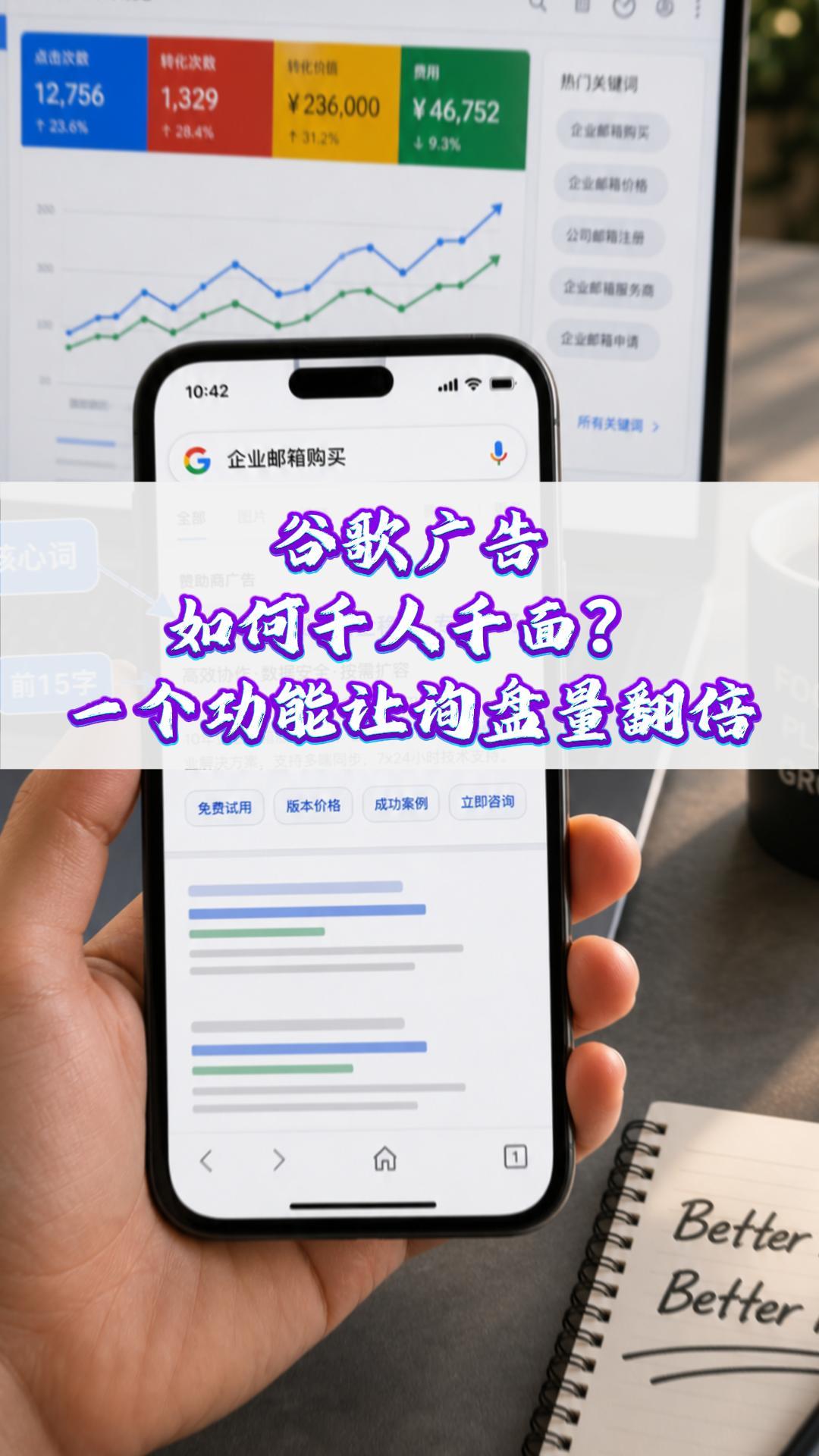
 How Can Google Ads Personalize Content for Every User? One Feature That Doubles Your Inquiry Volume
 Why a Google-optimized independent website is essential for trailer exports
 How Can a Brand Updates Page Be Made More SEO-Friendly? Analysis of Update Frequency, Content Structure, and Internal Linking Strategy


Related Products
 EasyCamp SaaS Smart Website Marketing SystemE-Yingbao SaaS Smart Website Marketing System: AI-powered, zero-code website building. Rapidly launch multilingual independent e-commerce sites in just 10 minutes. Global server acceleration and AI-driven SEO optimization empower businesses to efficiently connect with global markets. The seamless integration of technology and user-friendly operation makes building e-commerce sites incredibly simple.
 AI+SEM Intelligent Advertising Marketing SystemAI+SEM drives intelligent ad creation, empowering full-funnel precision advertising marketing. The system automatically generates weekly/monthly reports, AI recommends keywords and target countries, monitors core metrics in real-time with intelligent alerts, and enables one-click high-conversion ad solutions to help quickly acquire customers and improve ROI.
 AI+SEO Dual Engine Optimization ServiceEasyWin AI+SEO Dual Engine Optimization System leverages AI-powered keyword mining, content generation, and comprehensive technical optimization to help foreign trade enterprises acquire high-quality organic traffic, significantly improving search rankings and conversion rates.
 AI+SNS Social Media Marketing SystemYingbao AI+SNS Social Media Marketing System - Precision social capture for the social media era. Supports one-click content synchronization across major platforms like Facebook and LinkedIn. AI intelligently rewrites posts for enhanced relevance. 24/7 AI customer service and user profiling analysis empower businesses to efficiently expand into global markets.
 AI+SEO营销解决方案易营宝AI+SEO营销解决方案,通过AI批量写作、智能生成TDK、精准关键词扩词等功能,全面优化网站SEO效果,提升流量与转化率。助力企业构建高效智能网站新生态。
 AI+SEM Advertising Marketing SolutionsAI+SEM Advertising Marketing Solution leverages AI technology to deeply empower SEM ad campaigns. It automatically generates weekly/monthly reports using AI, presenting account data across multiple dimensions for comprehensive insights into campaign performance and trends. The system precisely recommends keywords and target countries, intelligently generates high-conversion ad copy, and enables one-click activation of efficient campaign plans to help businesses rapidly acquire customers. Simultaneously, it monitors core metrics in real time, intelligently identifies abnormal fluctuations, and issues timely alerts to ensure stable, high-return advertising results.
 Domain Name ServicesEasyWin provides professional domain name services, including intelligent queries, one-stop registration, brand protection, and full lifecycle management, helping businesses build a digital brand image.
 EasyOperate B2C Cross-Border E-Commerce Platform & Independent WebsiteEasyStore B2C Cross-border E-commerce Independent Store is an intelligent website building and cross-border e-commerce integrated solution independently developed by EasyStore Information Technology (Beijing) Co., Ltd. The system is specially designed for small and medium-sized as well as large export enterprises, integrating 'website building, operation, marketing, advertising, and conversion' into one, helping enterprises quickly establish cross-border e-commerce independent stores to achieve brand globalization and global sales growth.
The platform supports multiple languages, multiple currencies, and multi-channel marketing, with built-in AI intelligent translation and SEO optimization systems, suitable for mainstream markets such as Southeast Asia, Europe and America, Latin America, and the Middle East, assisting Chinese manufacturing enterprises in efficiently deploying international e-commerce strategies. SSL证书易营宝提供专业SSL安全证书服务,包括单域名和泛域名证书,确保网站数据传输加密、身份验证和完整性保护,助力企业建立安全可信的在线业务环境。









