









- How Can a Brand Updates Page Be Made More SEO-Friendly? Analysis of Update Frequency, Content Structure, and Internal Linking StrategyJun 28, 2026View details
- What stages does the cross-border services ecosystem include? How do website building, promotion, payment, and compliance work togetherJun 22, 2026View details
- How will email marketing costs change in 2026Jun 22, 2026View details
- The China-US tariff arrangement has reached a preliminary consensus, and the trade association will be establishedJun 15, 2026View details
- Should overseas brand marketing start with ads or contentJun 21, 2026View details
- What determines B2C cross-border e-commerce website development costs? A breakdown of features, interfaces, and deployment methodsJun 17, 2026View details
- China-Morocco zero-tariff access, a breakthrough in the cost of Moroccan goods exports to ChinaJun 11, 2026View details
- What signal should be released for the suspension of exports to JapanJun 10, 2026View details
U.S. FDA updates the B2B digital compliance declaration guidelines: Chinese supplier websites must embed CE/FDA dual-certification verification modules
On May 14, 2026, the U.S. Food and Drug Administration (FDA) officially updated the B2B Digital Compliance Statement Guidance, requiring Chinese exporters of medical devices and health technology products targeting the U.S. and Canadian markets to embed a CE/FDA dual-mark compliance statement module with timestamps, digital signatures, and third-party verification links on their official website homepage and specific product pages. This requirement directly affects the efficiency of overseas buyers in conducting online verification of supplier qualifications. Non-compliant official websites may be excluded from the e-procurement whitelists of government agencies, hospitals, and mainstream distributors, and relevant companies should pay close attention.
Event Overview
On May 14, 2026, the U.S. FDA released a new version of the B2B Digital Compliance Statement Guidance. The guidance clarifies that all Chinese suppliers exporting medical devices and health technology products to the U.S. and Canadian markets must deploy verifiable compliance statement modules on their corporate website homepage and each product detail page; these modules must simultaneously support real-time online verification of CE certification numbers and FDA registration numbers, and integrate timestamps, digital signatures, and clickable third-party verification links. All current information is sourced from public documents on the FDA official website, and no other supporting implementation details have been released simultaneously.
Which Market Segments Will Be Affected
Direct Trading Enterprises
For Chinese exporters directly conducting B2B sales to U.S. and Canadian customers, their official websites are the primary entry point for buyers to verify qualifications. If the required dual-mark verification module is not embedded, the procurement process may be obstructed, and electronic inquiries, RFQ responses, and contract signing stages may be automatically blocked by the system or manually downgraded for evaluation.
Manufacturing Enterprises (Including ODM/OEM)
Although they may not sign contracts directly with overseas customers, more and more international brands are incorporating supplier website compliance into their supplier admission review items. Especially when the end customer is a U.S. hospital system or a federal procurement project, if a manufacturer’s official website cannot provide verifiable FDA/CE status, it may lose eligibility for joint bidding or secondary supplier qualification.
Channel Distribution Enterprises (Importers, Distributors, E-commerce Platforms)
As key nodes for transmitting compliance information between China and the U.S., such companies are often required by buyers to provide real-time compliance proof for upstream factories. If the official websites of the Chinese suppliers they represent do not meet the new guidance requirements, their own ability to endorse qualifications will be weakened, affecting platform onboarding, catalog listing, and responsiveness in government procurement.
Supply Chain Service Enterprises (Compliance Consulting, Digital Certification, SaaS Service Providers)
The guidance sets clear requirements for technical implementation (timestamps, digital signatures, third-party verification links), driving increased demand for technical adaptation of compliance statement modules. Service providers need to confirm whether their own solutions support FDA-recognized verification pathways (such as direct connection to the FDA OASIS database, EU NANDO interfaces, etc.), otherwise it will be difficult to meet customers’ implementation needs.
What Key Points Should Relevant Companies or Practitioners Focus On, and How Should They Respond at Present
Pay Attention to the FDA’s Subsequent Implementation Details and Verification Interface Specifications
The current guidance only sets out functional requirements and has not yet specified the exact databases to which third-party verification links should connect (such as the FDA’s FURLS system, the EU’s EUDAMED or NANDO), digital signature algorithm standards (such as the RFC 3161 timestamp protocol), or qualification requirements for timestamp issuing authorities. Companies need to continue tracking supplementary notices on the FDA official website and in the Federal Register.
Prioritize Reviewing Core Products for the U.S. and Canadian Markets and Their Corresponding Website Pages
Not all product lines are subject to this guidance—only medical devices defined under FDA 21 CFR Part 807 and health technology products regulated under the EU MDR are included. Companies should combine this with their own export product list to identify the scope of official website pages that need modification (such as the homepage, product category pages, and individual SKU detail pages), so as to avoid redundant site-wide development.
Differentiate Between Policy Signals and the Actual Pace of Business Implementation
Based on the analysis, this guidance is a mandatory administrative guidance document without a unified transition period, but enforcement at the implementation level depends on adoption by buyers at their own discretion. Observations suggest that large medical groups (such as HCA Healthcare, Vizient) and federal procurement platforms (GSA Advantage!) have already started internal testing of verification logic; meanwhile, small and medium-sized distributors may gradually begin enabling it in Q4 2026. Companies should adopt a strategy of “adapting first for high-priority customers” rather than waiting for the whole industry to move in sync.
Prepare Structured Data Sources for CE and FDA Registration Information in Advance
Embedding the module requires calling dynamic data, including valid registration numbers, certification status, issuance dates, and expiration dates. Companies should verify whether existing CE certificates (issued by EU notified bodies) and FDA listing/approval numbers (obtained through FURLS) are active, and organize them into machine-readable formats (such as JSON-LD) for real-time invocation and display by front-end modules.
Editor’s Viewpoint / Industry Observation
Observably, this guidance does not create new compliance obligations, but rather shifts existing CE/FDA qualification requirements from “document delivery” to “digital verifiability,” essentially improving the level of automated trust across the B2B transaction chain. Analysis shows, it currently resembles more of a structural signal: it marks that regulators are pushing global supply chain qualification management from “static filing” toward “dynamic verifiability.” The industry needs to continue watching two points: first, whether verification links will form a de facto mutual-recognition interface standard; second, whether non-medical-device health products (such as AI-assisted diagnostic software and remote monitoring SaaS) will subsequently be included in expanded coverage. This is not only a matter of technical adaptation, but also an important point for Chinese companies to align their digital infrastructure with the international regulatory context.
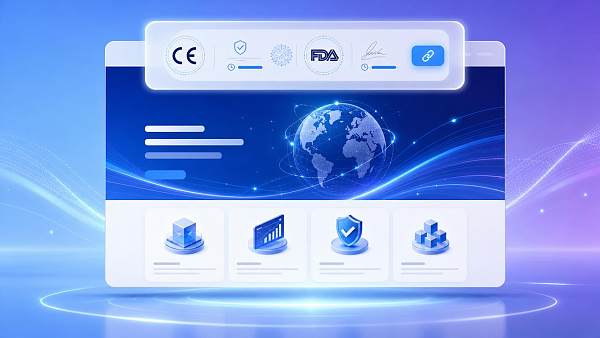
Conclusion: this guidance does not raise the entry thresholds for CE or FDA approval itself, but it significantly raises the threshold for the online credibility of qualification information. At present, it is more appropriately understood as a launch signal for “digital compliance capability building”—it does not replace existing certification processes, but enables certification results to become truly “visible, verifiable, and trustworthy” in B2B scenarios. For companies, the response priority is not to quickly put modules online, but to clarify the matching relationship among their own qualification status, verification pathways, and customers’ actual trust-adoption mechanisms.
Explanation of information sources:
Main source: the B2B Digital Compliance Statement Guidance published on the official FDA website (effective version dated May 14, 2026).
Items pending continued observation: the FDA has not yet published the technical white paper for verification link integration, the list of accredited third-party institutions, or the buyer implementation timetable, and the relevant content requires continued follow-up and updates.
Related Articles
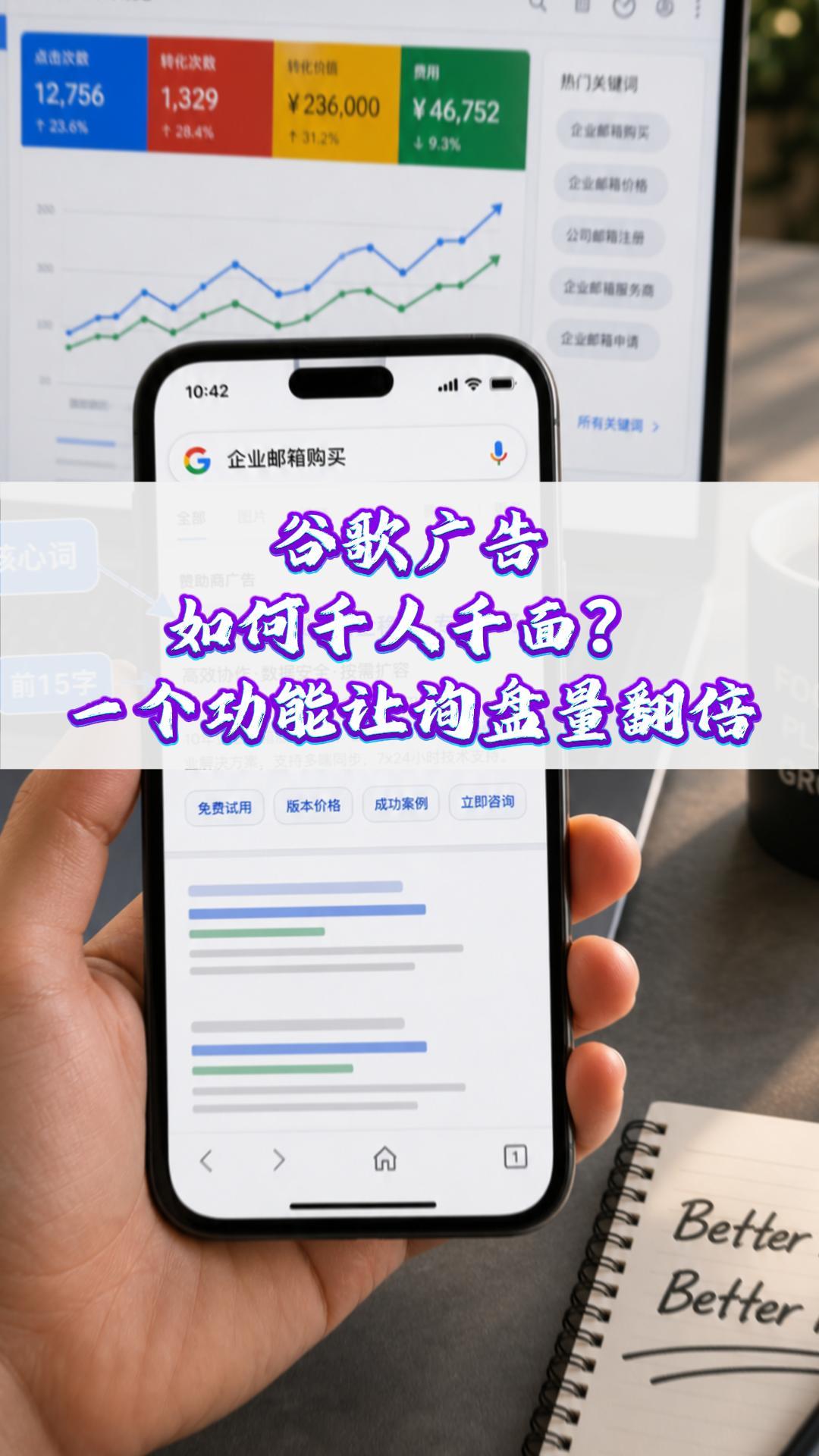
 How can Google Ads deliver one-to-one personalization? One feature can double your inquiry volume#ExportMarketing#OverseasPromotion#GoogleAds#SocialMediaMarketing#ForeignTradeIndependentWebsite
 Why a Google-optimized independent website is essential for trailer exports
 How Can a Brand Updates Page Be Made More SEO-Friendly? Analysis of Update Frequency, Content Structure, and Internal Linking Strategy


Related Products
 EasyCamp SaaS Smart Website Marketing SystemE-Yingbao SaaS Smart Website Marketing System: AI-powered, zero-code website building. Rapidly launch multilingual independent e-commerce sites in just 10 minutes. Global server acceleration and AI-driven SEO optimization empower businesses to efficiently connect with global markets. The seamless integration of technology and user-friendly operation makes building e-commerce sites incredibly simple.
 AI+SEM Intelligent Advertising Marketing SystemAI+SEM drives intelligent ad creation, empowering full-funnel precision advertising marketing. The system automatically generates weekly/monthly reports, AI recommends keywords and target countries, monitors core metrics in real-time with intelligent alerts, and enables one-click high-conversion ad solutions to help quickly acquire customers and improve ROI.
 AI+SEO Dual Engine Optimization ServiceEasyWin AI+SEO Dual Engine Optimization System leverages AI-powered keyword mining, content generation, and comprehensive technical optimization to help foreign trade enterprises acquire high-quality organic traffic, significantly improving search rankings and conversion rates.
 AI+SNS Social Media Marketing SystemYingbao AI+SNS Social Media Marketing System - Precision social capture for the social media era. Supports one-click content synchronization across major platforms like Facebook and LinkedIn. AI intelligently rewrites posts for enhanced relevance. 24/7 AI customer service and user profiling analysis empower businesses to efficiently expand into global markets.
 AI+SEO营销解决方案易营宝AI+SEO营销解决方案,通过AI批量写作、智能生成TDK、精准关键词扩词等功能,全面优化网站SEO效果,提升流量与转化率。助力企业构建高效智能网站新生态。
 AI+SEM Advertising Marketing SolutionsAI+SEM Advertising Marketing Solution leverages AI technology to deeply empower SEM ad campaigns. It automatically generates weekly/monthly reports using AI, presenting account data across multiple dimensions for comprehensive insights into campaign performance and trends. The system precisely recommends keywords and target countries, intelligently generates high-conversion ad copy, and enables one-click activation of efficient campaign plans to help businesses rapidly acquire customers. Simultaneously, it monitors core metrics in real time, intelligently identifies abnormal fluctuations, and issues timely alerts to ensure stable, high-return advertising results.
 Domain Name ServicesEasyWin provides professional domain name services, including intelligent queries, one-stop registration, brand protection, and full lifecycle management, helping businesses build a digital brand image.
 EasyOperate B2C Cross-Border E-Commerce Platform & Independent WebsiteEasyStore B2C Cross-border E-commerce Independent Store is an intelligent website building and cross-border e-commerce integrated solution independently developed by EasyStore Information Technology (Beijing) Co., Ltd. The system is specially designed for small and medium-sized as well as large export enterprises, integrating 'website building, operation, marketing, advertising, and conversion' into one, helping enterprises quickly establish cross-border e-commerce independent stores to achieve brand globalization and global sales growth.
The platform supports multiple languages, multiple currencies, and multi-channel marketing, with built-in AI intelligent translation and SEO optimization systems, suitable for mainstream markets such as Southeast Asia, Europe and America, Latin America, and the Middle East, assisting Chinese manufacturing enterprises in efficiently deploying international e-commerce strategies. SSL证书易营宝提供专业SSL安全证书服务,包括单域名和泛域名证书,确保网站数据传输加密、身份验证和完整性保护,助力企业建立安全可信的在线业务环境。









