









- What Does a Global Traffic Ecosystem Service Provider Do? What Are the Differences from a Single Advertising AgencyJul 16, 2026View details
- What should you focus on in the latest enterprise SaaS report? From renewal rates and delivery costs to overseas growth opportunitiesJul 12, 2026View details
- What signals are worth paying attention to in a cross-border marketing trend report? B2B companies should look at these 6 signalsJul 11, 2026View details
- How to Read a Cross-Border Marketing Trends Report? Five Key Dimensions for Evaluating Channel OpportunitiesJul 11, 2026View details
- Which channel has the highest ROI in the global traffic ecosystem? Comparative analysis of search, social media, and advertisingJul 10, 2026View details
- What multilingual website services are available in Sanya? Which model is more suitable for local businesses going global?Jul 08, 2026View details
- How to view the complete list of China SaaS companies in the top 100? Practical methods for screening website-building and marketing service providersJul 08, 2026View details
- How to view pricing in the global traffic ecosystem? Cost comparison of search, social media, and content channel advertisingJul 06, 2026View details
How to Choose Arabic Website Design That Better Fits User Habits
How should you choose an Arabic website design that better fits user habits? The key is not just translating a Chinese or English page into Arabic, but redesigning it altogether around reading direction, layout structure, color aesthetics, trust-building methods, form paths, and multilingual switching logic. For businesses, how to choose Arabic website development determines whether users are willing to read, whether they can understand the content, and whether they will eventually make an inquiry. This article will combine how to choose a platform for multilingual website development, the steps for building a marketing-oriented website, and actual business needs to help you judge what kind of website solution is more suitable for the Middle East market.
Conclusion first: an Arabic website is not a “translated version website,” but a “website adapted to local habits”
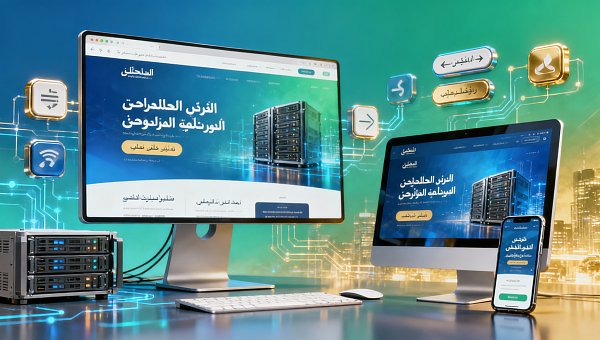
When many companies build overseas websites, the most common problem is directly mirroring the Chinese or English site and then translating the text into Arabic. Although this seems to save time, it often actually leads to high bounce rates, short visit durations, and fewer inquiries. That is because the browsing habits of Arabic users are not exactly the same as those of typical Chinese or English users.
If you are evaluating how to choose an Arabic website design, you can first focus on three criteria:
- Whether it supports a complete right-to-left (RTL) layout, rather than only changing the text direction;
- Whether it aligns with local aesthetics and business expression styles, including visual style, image usage, and information hierarchy;
- Whether it has marketing conversion capabilities, so visitors are willing to make inquiries, submit forms, or initiate contact.
For business decision-makers, a website solution truly worth investing in is not one that merely “can go live,” but one that “allows Middle Eastern users to understand smoothly and develop trust.” This is also the most fundamental logic when deciding how to choose Arabic website development.
What do Arabic users care about most: whether it reads smoothly, whether it feels trustworthy, and whether it is easy to contact you
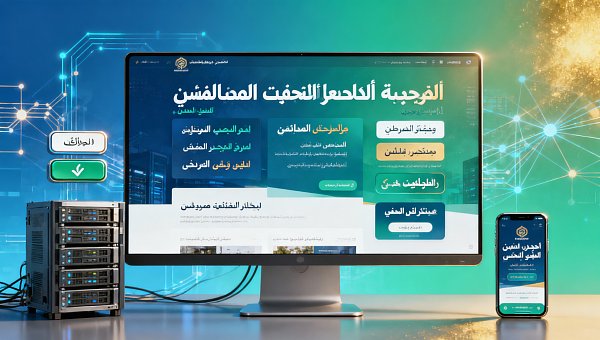
From the perspective of search intent, people searching for “how to choose an Arabic website design that better fits user habits” are usually not looking for conceptual introductions. What they really want to know is: how exactly to judge whether a solution works, and which details will directly affect results.
From the actual browsing experience, Arabic users usually care more about the following types of issues:
1. Whether the page reads naturally
Arabic is read from right to left, so navigation, Banner copy placement, button direction, image-text layout, carousel switching logic, and so on should all be adjusted according to RTL standards. If you only change the text into Arabic, but the buttons are still arranged according to English-site habits, users will clearly feel that it is “awkward to use.”
2. Whether the website appears reliable and professional
In many industries in the Middle East market, users place particular importance on corporate image, credential endorsements, case displays, and the completeness of contact methods. For B2B companies, the official website is essentially an entry point for trust. Especially in manufacturing, industry, environmental protection, packaging, and similar fields, the website must not only explain products clearly, but also clearly communicate the company’s strength, delivery capabilities, service scope, and international experience.
3. Whether the contact path is direct enough
Many Arabic websites have content, but the contact entry points are buried too deep, the forms are too complex, and the buttons are not prominent, resulting in relatively low conversion efficiency. A very critical step in the process of building a marketing-oriented website is designing the conversion path around target actions, rather than stacking pages around the internal column structure.
4. Whether multilingual switching is clear
Among Middle Eastern customers, many people consume both Arabic and English content. If multilingual site switching is confusing, the URL structure is unclear, or some pages are not fully translated, it will directly affect professionalism and is also unfavorable for SEO indexing.
How to choose an Arabic website design: focus on these 6 practical evaluation dimensions
If you are a technical evaluator, business manager, or project lead, it is recommended not to look only at the “quotation” and whether the “pages look good,” but to focus on reviewing the following six dimensions.
1. Whether it natively supports RTL instead of relying on later patchwork adaptation
This is the foundation of the foundation. A website system truly suitable for Arabic should natively support RTL in its front-end framework, CSS styles, component library, and editing standards. Otherwise, problems such as misaligned navigation, incorrect icon directions, messy form layouts, and abnormal mobile display are likely to appear later.
When choosing a platform for multilingual website development, it is best to prioritize an integrated system that supports multilingual operation, multi-site management, RTL layout, and responsive management, so that subsequent maintenance and expansion will be more stable.
2. Whether the information structure suits Arabic users’ understanding
Not every industry is suited to a “long blocks of text” approach. Especially for overseas visitors encountering the brand for the first time, pages should pay more attention to information layering: company introduction, advantage explanation, solutions, case endorsements, certifications, and contact actions. The order should be clear, and visitors should not be left guessing.
For example, websites for industrial and environmental protection companies are well suited to using a single-column structure with clear content sections, breaking complex business offerings into modules that are easy to understand and find. In scenarios such as papermaking, packaging, environmental protection, it is especially suitable to build trust and inquiry intent through industry solution modules, technical commitment icon sections, high-definition industrial scene imagery, and high-conversion appointment forms.
3. Whether the visual style balances local aesthetics and industry characteristics
An Arabic website does not mean it must use an exaggerated decorative style. A more reasonable approach is to choose the visual language according to the industry: websites in finance, industry, manufacturing, and technology are usually better suited to a stable, clear, formal, and trustworthy style; consumer goods and retail, on the other hand, can place more emphasis on atmosphere and emotional expression.
If the business leans toward manufacturing, packaging, or environmental protection, colors such as green and khaki, which combine natural and industrial impressions, are often better at conveying brand perceptions of environmental protection, stability, and systemization. Combined with high-quality images of ecological landscapes, production environments, and modern offices, they can more intuitively reflect the company’s scale and professionalism.
4. Whether the mobile experience is truly usable
In the Middle East, mobile traffic often accounts for a significant share, so you cannot look only at the PC effect. You need to focus on checking:
- Whether Arabic line breaks naturally on mobile devices;
- Whether navigation and buttons are easy to tap;
- Whether the forms are concise;
- Whether page loading speed is fast enough;
- Whether images and videos affect the above-the-fold experience.
A truly business-valuable Arabic official website should be built on a fully responsive architecture, rather than simply “shrinking the PC version into a phone.”
5. Whether it has both SEO and marketing conversion capabilities
Many websites can display information, but cannot acquire customers. How to choose Arabic website development should not stay only at the design level; you also need to see whether it supports SEO-friendly URL structures, independent language directories, title and description settings, on-site content management, structured layouts, and landing page expansion.
At the same time, the website must also take marketing needs into account, for example:
- Setting obvious inquiry buttons on key pages;
- Providing locally common contact entry points such as WhatsApp, phone, and email;
- Form fields should not be too numerous;
- Content such as cases, FAQ, service commitments, and cooperation processes should be built around conversion.
6. Whether subsequent maintenance is hassle-free
What after-sales maintenance staff and technical teams are usually most concerned about is: will changing one language version affect other versions? Is it troublesome to publish new pages? Is it convenient later to run ads, do SEO, and add tracking code?
Therefore, when choosing a platform for multilingual website development, it is recommended to pay attention to backend permission management, independent language editing capabilities, template reuse capabilities, form data management, and extension interface capabilities. A site that is difficult to maintain after launch often brings higher costs later.
How different roles should evaluate it: managers, technicians, and operators focus on different things
In the same Arabic website project, the evaluation logic of different roles is actually different, so this should be clearly distinguished during selection.
Business decision-makers should focus more on these 4 points
- Whether the website helps enter the Middle East market and improve brand credibility;
- Whether it has inquiry conversion capabilities rather than only display functions;
- Whether the project timeline, budget, and subsequent maintenance costs are controllable;
- Whether the service provider understands both technology and localized marketing.
If a service provider can only create pages but cannot understand the relationship between search, advertising, content, and conversion, then after the website goes live, it will most likely be only “good-looking but not growth-driving.”
Technical evaluators should review these 5 points more carefully
- Whether the system supports native RTL adaptation;
- Whether it supports independent multilingual SEO settings;
- Whether the code and templates are easy to expand;
- Whether it supports responsiveness and performance optimization;
- Whether it supports forms, tracking, analytics, and CRM integration.
Operations and maintenance personnel need to pay more attention to these 3 points
- Whether content updates are simple;
- Whether new landing pages and campaign pages can be added quickly;
- Whether multilingual switching and asset replacement are efficient.
In the steps of building a marketing-oriented website, where are Arabic sites most likely to go wrong
Based on project experience, many Arabic websites do not fail because the budget is insufficient, but because key steps are done wrong. Common problems include:
- Treating translation as localization while ignoring reading and interaction habits;
- Homepage information being too scattered, with no core conversion goal;
- Overemphasizing the company’s self-introduction while neglecting the solutions and results customers care about;
- Only creating design drafts without considering SEO structure and later advertising landing needs;
- Inconsistent multilingual switching logic, affecting indexing and user experience;
- No one continuously maintaining content after launch, causing the website to quickly lose value.
A more reasonable process for building a marketing-oriented website is usually: first clarify the target market and user needs, then plan the language structure, content strategy, page conversion design, visual and interaction adaptation, technical development and testing, and SEO basic configuration, and finally move into the launch and continuous optimization stage.
If your business itself is more focused on industrial, environmental protection, packaging, or manufacturing scenarios, then in addition to introducing products, the website content should place greater emphasis on the company’s overall capabilities. For example, through modules such as brand footprint carousels, technical capability icon matrices, waterfall displays of industry solutions, and appointment communication entry points, complex services can be understood more clearly. This kind of presentation is especially effective for building professional trust.
How to judge whether a service provider is reliable: don’t just look at case images, look at methods and execution capabilities
When choosing an Arabic website service provider, many companies are easily attracted by “design mockups,” but ignore the parts that truly affect results. You can directly ask the service provider the following questions:
- Have you worked on Arabic or RTL website projects?
- Is it translation adaptation, or is Arabic localization done from the structural level?
- How do you handle multilingual SEO?
- How do you balance brand presentation and inquiry conversion?
- Who is responsible for content maintenance after launch, and how difficult is it?
- Can you integrate advertising, SEO, and social media into a unified growth chain?
For companies hoping to achieve long-term overseas growth, the ideal partner should not just be someone who “builds websites,” but someone who can place the website into the broader international marketing system. Only then is the website not an isolated asset, but a core digital entry point for global customer acquisition.
Conclusion: when choosing an Arabic website, the core is “fitting user habits and being able to convert”
Returning to the original question, how should you choose an Arabic website design that better fits user habits? The answer can be summarized in one sentence: choose a website solution that truly understands Arabic users’ reading habits, aesthetic preferences, trust-building methods, and conversion paths, rather than simply creating an Arabic-language version.
If you are evaluating how to choose Arabic website development, it is recommended to first look at several core dimensions: RTL support, localized design, multilingual management, SEO capability, mobile experience, and later maintenance efficiency. For businesses, a truly effective Arabic website is not just for presenting the company, but for helping the brand enter the Middle East market more naturally, build trust, and gain inquiries.
Especially when targeting industrial and business service markets, in businesses such as papermaking, packaging, environmental protection that need to present brand image, technical strength, and inquiry conversion paths at the same time, the website needs to get the content structure, visual expression, and interaction design right in one step. Such a website is closer to being a “valuable overseas growth asset,” rather than just a page that has gone live.
Related Articles
 Attention! Builders' must-see: Yibingbao AI components updated, design efficiency directly doubled!
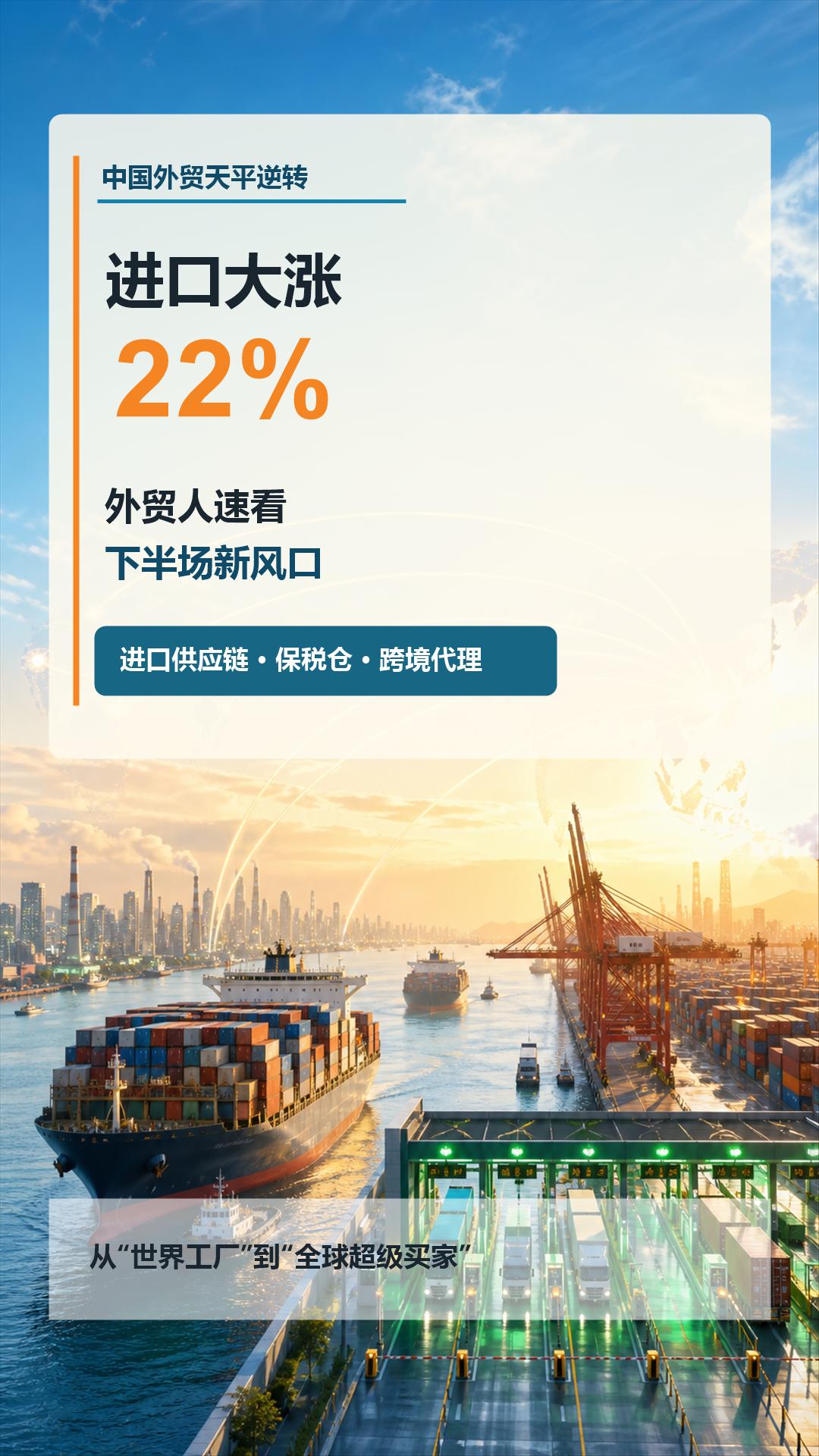
 China's foreign trade sees a turnaround: imports surge by 22%! Foreign trade professionals should quickly take note of the new trends in the second half of the year
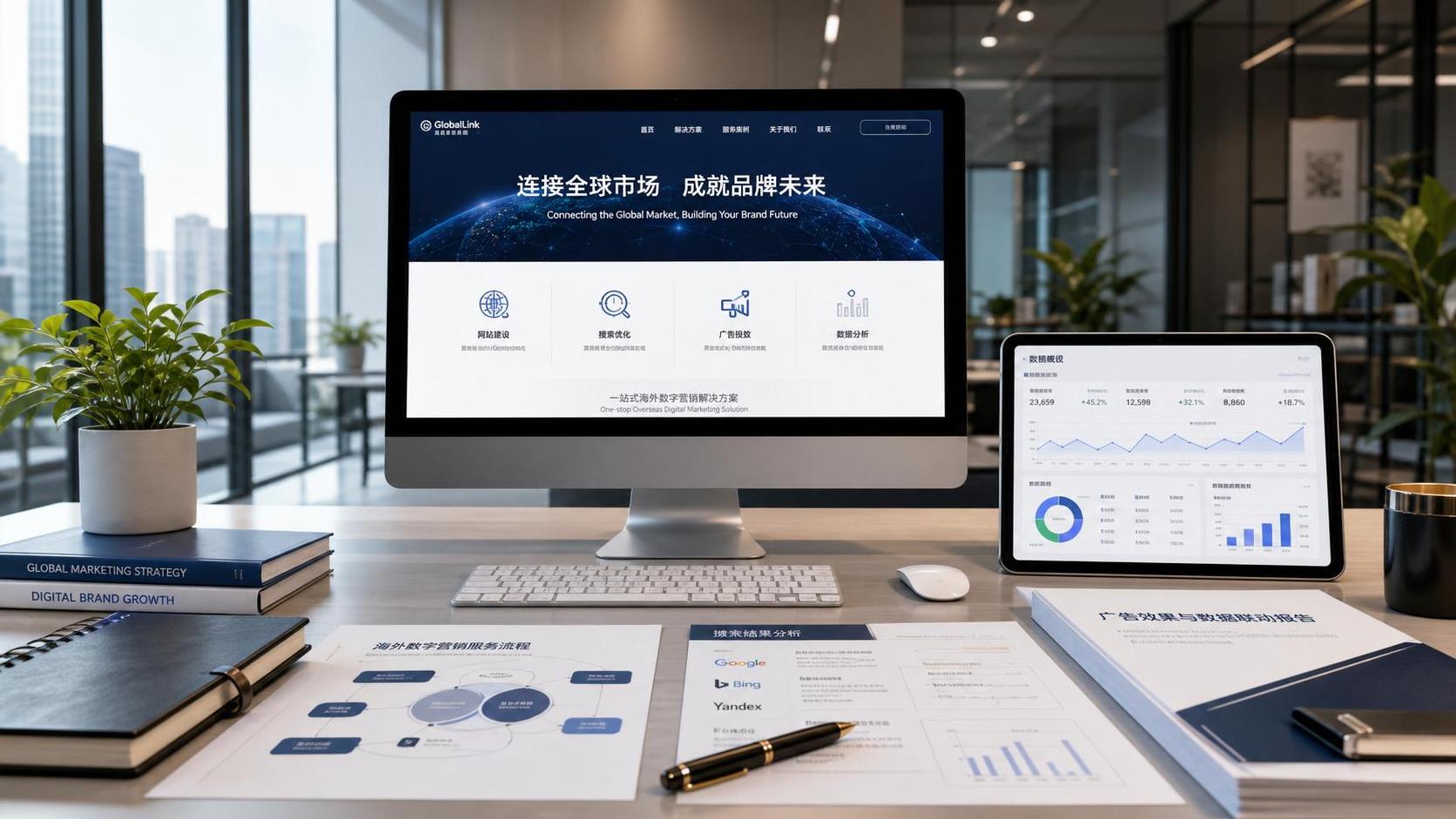
 What Does a Global Traffic Ecosystem Service Provider Do? What Are the Differences from a Single Advertising Agency

Related Products
 EasyCamp SaaS Smart Website Marketing SystemE-Yingbao SaaS Smart Website Marketing System: AI-powered, zero-code website building. Rapidly launch multilingual independent e-commerce sites in just 10 minutes. Global server acceleration and AI-driven SEO optimization empower businesses to efficiently connect with global markets. The seamless integration of technology and user-friendly operation makes building e-commerce sites incredibly simple.
 AI+SEM Intelligent Advertising Marketing SystemAI+SEM drives intelligent ad creation, empowering full-funnel precision advertising marketing. The system automatically generates weekly/monthly reports, AI recommends keywords and target countries, monitors core metrics in real-time with intelligent alerts, and enables one-click high-conversion ad solutions to help quickly acquire customers and improve ROI.
 AI+SEO Dual Engine Optimization ServiceEasyWin AI+SEO Dual Engine Optimization System leverages AI-powered keyword mining, content generation, and comprehensive technical optimization to help foreign trade enterprises acquire high-quality organic traffic, significantly improving search rankings and conversion rates.
 AI+SNS Social Media Marketing SystemYingbao AI+SNS Social Media Marketing System - Precision social capture for the social media era. Supports one-click content synchronization across major platforms like Facebook and LinkedIn. AI intelligently rewrites posts for enhanced relevance. 24/7 AI customer service and user profiling analysis empower businesses to efficiently expand into global markets.
 AI+SEO营销解决方案易营宝AI+SEO营销解决方案,通过AI批量写作、智能生成TDK、精准关键词扩词等功能,全面优化网站SEO效果,提升流量与转化率。助力企业构建高效智能网站新生态。
 AI+SEM Advertising Marketing SolutionsAI+SEM Advertising Marketing Solution leverages AI technology to deeply empower SEM ad campaigns. It automatically generates weekly/monthly reports using AI, presenting account data across multiple dimensions for comprehensive insights into campaign performance and trends. The system precisely recommends keywords and target countries, intelligently generates high-conversion ad copy, and enables one-click activation of efficient campaign plans to help businesses rapidly acquire customers. Simultaneously, it monitors core metrics in real time, intelligently identifies abnormal fluctuations, and issues timely alerts to ensure stable, high-return advertising results.
 Domain Name ServicesEasyWin provides professional domain name services, including intelligent queries, one-stop registration, brand protection, and full lifecycle management, helping businesses build a digital brand image.
 EasyOperate B2C Cross-Border E-Commerce Platform & Independent WebsiteEasyStore B2C Cross-border E-commerce Independent Store is an intelligent website building and cross-border e-commerce integrated solution independently developed by EasyStore Information Technology (Beijing) Co., Ltd. The system is specially designed for small and medium-sized as well as large export enterprises, integrating 'website building, operation, marketing, advertising, and conversion' into one, helping enterprises quickly establish cross-border e-commerce independent stores to achieve brand globalization and global sales growth.
The platform supports multiple languages, multiple currencies, and multi-channel marketing, with built-in AI intelligent translation and SEO optimization systems, suitable for mainstream markets such as Southeast Asia, Europe and America, Latin America, and the Middle East, assisting Chinese manufacturing enterprises in efficiently deploying international e-commerce strategies. SSL证书易营宝提供专业SSL安全证书服务,包括单域名和泛域名证书,确保网站数据传输加密、身份验证和完整性保护,助力企业建立安全可信的在线业务环境。









