









- How to view pricing in the global traffic ecosystem? Cost comparison of search, social media, and content channel advertisingJul 06, 2026View details
- How to assess foreign trade website development trends?Looking at 2026 changes from multilingual,AI content to conversion pathsJul 04, 2026View details
- What are the new trends in multilingual marketing data analytics tools in 2026? Focus on attribution、automation and complianceJul 04, 2026View details
- Is Brand Globalization Marketing Consulting Worth Buying? At What Stage Should Companies Bring It InJul 01, 2026View details
- Cross-Border Marketing Trend Research: Why More and More Companies Are Starting to Deploy AI Search and GEO OptimizationJun 30, 2026View details
- Cross-Border Marketing Trend Research: How Independent Sites, AI Content, and Short-Video Customer Acquisition Are ChangingJun 30, 2026View details
- How Can a Brand Updates Page Be Made More SEO-Friendly? Analysis of Update Frequency, Content Structure, and Internal Linking StrategyJun 28, 2026View details
- What stages does the cross-border services ecosystem include? How do website building, promotion, payment, and compliance work togetherJun 22, 2026View details
What Else to Look for When Choosing a Schema-ready website builder
For Schema-ready website builder recommendations, buyers cannot focus only on website building functions, but must also pay attention to SEO compatibility, structured data capabilities, later-stage maintenance costs, and marketing collaboration efficiency, so that they can balance launch speed, indexing performance, and long-term growth.
For buyers responsible for vendor selection, what truly affects results is often not “whether a website can be built,” but whether the website can continuously generate indexing, inquiries, and measurable conversions 30 days, 90 days, and 180 days after launch. Especially in website + marketing service integrated scenarios, if the website building system cannot support structured data, page scalability, and multi-channel collaboration, the cost of later remediation usually increases by 20% to 50%.
Since its establishment in 2013, E-Marketing Information Technology (Beijing) Co., Ltd. has continuously served enterprises’ global growth needs around intelligent website building, SEO optimization, social media marketing, and advertising placement. For enterprises hoping to shorten launch cycles, reduce communication chains, and improve marketing coordination efficiency, choosing a Schema-ready website builder is essentially choosing a digital foundation better suited to long-term growth.
When purchasing a Schema-ready website builder, why you cannot focus only on the page editor
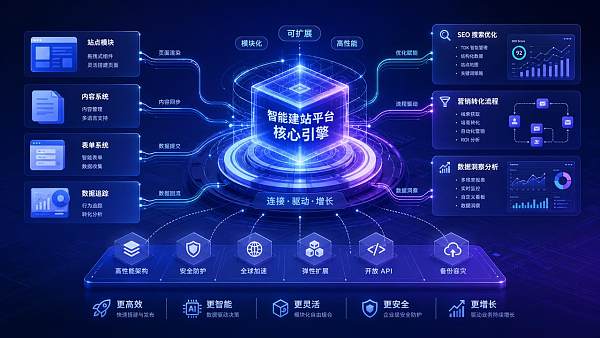
In the early evaluation stage, many procurement projects tend to focus on the number of templates, drag-and-drop experience, and launch speed. These factors are certainly important, but if Schema markup capabilities, URL rules, site speed, and content scalability are overlooked, the website may expose growth bottlenecks within 3 months, which is especially obvious for B2B companies that rely on SEO for customer acquisition.
A common procurement misconception: mistaking “website completed” for “marketing-ready”
If a visual website building tool can only generate static pages, but cannot support common Schema types such as Organization, Product, FAQ, and Breadcrumb, then search engines’ understanding of page topics, hierarchy, and entity relationships will be limited. If this point is not clarified during the procurement stage, the subsequent SEO team often needs secondary development, and the timeline usually increases by 2 to 4 weeks.
The 4 underlying capabilities buyers should verify first
- Whether it supports page-level Schema customization and modular invocation
- Whether it allows editing of Title, Description, Canonical, and Robots
- Whether it supports multilingual, multi-site, or multi-directory deployment
- Whether it is convenient to integrate with forms, CRM, and ad tracking code
The table below can help buyers quickly distinguish the difference between “can build a website” and “suitable for long-term marketing growth,” avoiding the mistake of looking only at the demo interface while overlooking subsequent investment.
From the perspective of procurement decision-making, the core of Schema-ready website builder recommendations is not “having many functions,” but “whether the underlying architecture leaves room for SEO and growth.” If a system enables content teams, technical teams, and advertising teams to collaborate within the same site architecture, the long-term total cost is usually more controllable.
When evaluating procurement, also look at delivery and collaboration efficiency
B2B enterprise website projects often involve 3 types of roles: procurement, marketing, and technical teams. If the platform has a high learning threshold, or every revision requires scheduling development resources, a single page adjustment may take 3 to 7 days, affecting campaign landing speed. For teams that need quarterly updates to topic pages, product pages, and landing pages, this will directly slow down the pace of lead acquisition.
Therefore, in addition to price, buyers should also examine whether the delivery model is clear, such as whether phase-one launch can be completed within 7 to 15 days, and whether it includes content migration, basic optimization, tracking code deployment, and an acceptance checklist. These details determine whether the project can truly be implemented.
Schema-ready website builder recommendations: which functions and services should be evaluated as priorities
If the company’s goal is not just display, but also organic traffic, brand exposure, and inquiry conversion, then when evaluating Schema-ready website builder recommendations, it is advisable to break functions into 4 dimensions: “SEO foundation layer, content production layer, marketing conversion layer, and maintenance service layer.” This makes it easier to align with budget, timeline, and departmental needs.
First, look at the SEO foundation layer: it determines indexing and visibility
The SEO foundation layer should cover at least 6 items: Title and Description editing, URL customization, sitemap generation, 301 redirects, image Alt management, and Schema configuration. If more than 2 of these are missing, subsequent organic search performance is often restricted. For companies with multiple products and multiple regions, attention should also be paid to pagination rules and multilingual indexing logic.
Technical details recommended for confirmation during procurement
- Whether it supports outputting structured data in JSON-LD format
- Whether it can batch set meta information by page type
- Whether it provides logs or error page handling mechanisms
- Whether it supports mobile loading optimization, with controllable above-the-fold resources
For enterprises that value content asset accumulation, support for 4 core page templates—articles, case studies, Q&A, and product catalogs—is particularly critical. The higher the degree of templating, the lower the labor cost of subsequent content operations, usually saving 20% to 35% of repetitive editing time per month.
Second, look at the marketing conversion layer: it determines whether leads can be tracked
Website building is only the entry point; the real commercial value lies in whether the conversion chain is closed-loop. During procurement, it is necessary to confirm whether the platform can integrate with forms, online consultation, email systems, ad tracking code, and CRM. If the website cannot record channel sources, keyword landing pages, and form submission nodes, then ad optimization and sales follow-up will lose their basis.
When conducting internal research, some enterprises also refer to content related to digital management to sort out collaboration mechanisms and process optimization ideas, such as Discussion on Human Resource Management Optimization Strategies for New-Era Dispatch Offices. Although such materials do not belong to the website building product itself, they can still provide some inspiration for cross-departmental management methods, especially for project environments led by procurement and involving multi-team collaboration.
For easier comparison, the table below is suitable for supplier evaluation scoring during project initiation, and is especially suitable for comprehensive estimation under an annual payment model.
If a vendor can provide not only a website building system, but also undertake SEO, content optimization, and promotion collaboration, procurement communication costs will be significantly reduced. Compared with splitting website building, optimization, and advertising among 3 service providers, the integrated model makes it easier to unify messaging, data standards, and goal pacing.
Third, look at the later-stage service layer: it determines the long-term total cost of ownership
Many procurement solutions appear to have low upfront quotes, but additional charges frequently arise later when adding pages, adjusting code, supplementing structured data, or expanding multilingual capabilities. During procurement, at least 3 service boundaries should be confirmed: daily maintenance frequency, issue response timeliness, and feature expansion methods. Typically, responding within 4 hours and providing handling suggestions within 1 working day is more in line with enterprise operational needs.
For enterprises continuously expanding overseas or operating across multiple regions, whether the vendor has localization service capabilities is also crucial. Relying on AI and big data capabilities, E-Marketing Information Technology (Beijing) Co., Ltd. connects intelligent website building with SEO, social media, and advertising placement, making it suitable for enterprise procurement scenarios that hope to reduce system fragmentation and improve lead conversion efficiency.
During procurement implementation, how to turn Schema-ready website building capabilities into growth results
Choosing the right platform is only the first step; the real value lies in whether the implementation path is clear. It is recommended that procurement and marketing teams proceed according to 6 steps: “requirements sorting, site planning, content migration, SEO configuration, marketing coordination, and acceptance review.” This can avoid the common problem of a website going live while traffic, indexing, and lead tracking are still unprepared.
A more reliable implementation rhythm
Completing goal sorting and page listing in week 1, confirming design and templates in week 2, deploying content, Schema, and basic tracking in week 3, and conducting testing and the first launch in week 4 is a relatively common rhythm. If multilingual support or old site migration is included, it is recommended to reserve an additional 5 to 10 working days for redirects and indexing verification.
During acceptance, do not only look at whether the pages have “been made”
- Check whether the sitemap has been submitted properly
- Check whether important pages have corresponding Schema
- Check whether form submissions can enter the sales follow-up process
- Check mobile opening speed and button clickable areas
- Check whether core pages have clear conversion entry points
If buyers hope to improve the completeness of evaluation, they can divide acceptance into 3 checklists: functional acceptance, SEO acceptance, and marketing acceptance, with each list controlled within 8 to 12 items. This not only facilitates cross-departmental sign-off, but also reduces disputes caused by verbal confirmation.
Common question: why do some websites still fail to grow even after using a website builder
The reasons usually concentrate in 4 aspects: first, the website building tool does not support refined SEO control; second, Schema deployment is incomplete; third, the content structure is not suitable for search and conversion; fourth, the website has not formed a closed loop with promotion, social media, and CRM. In other words, the problem may not lie in “whether the website was built,” but in “whether the website is being operated as a growth system.”
When recommending a Schema-ready website builder to buyers, more attention should be paid to long-term adaptability rather than short-term demo effects. A platform that can support subsequent content iteration, category expansion, lead tracking, and multi-channel collaboration is closer to the solution enterprises truly need.
For buyers, the criteria for judging Schema-ready website builder recommendations should return to 3 questions: Is it beneficial for indexing, is it easy to maintain, and can it work in coordination with marketing. After clarifying these 3 questions, and then evaluating functions, services, and costs, vendor selection will be more stable and better aligned with the company’s medium- and long-term growth goals.
If you are evaluating an integrated website + marketing service solution and hope to balance launch efficiency, SEO performance, and conversion collaboration, you can further obtain customized recommendations based on your industry, budget range, and delivery cycle. Consult product details now, or learn more solutions to help your website truly move from “going live” to “growth.”
Related Articles



Related Products
 EasyCamp SaaS Smart Website Marketing SystemE-Yingbao SaaS Smart Website Marketing System: AI-powered, zero-code website building. Rapidly launch multilingual independent e-commerce sites in just 10 minutes. Global server acceleration and AI-driven SEO optimization empower businesses to efficiently connect with global markets. The seamless integration of technology and user-friendly operation makes building e-commerce sites incredibly simple.
 AI+SEM Intelligent Advertising Marketing SystemAI+SEM drives intelligent ad creation, empowering full-funnel precision advertising marketing. The system automatically generates weekly/monthly reports, AI recommends keywords and target countries, monitors core metrics in real-time with intelligent alerts, and enables one-click high-conversion ad solutions to help quickly acquire customers and improve ROI.
 AI+SEO Dual Engine Optimization ServiceEasyWin AI+SEO Dual Engine Optimization System leverages AI-powered keyword mining, content generation, and comprehensive technical optimization to help foreign trade enterprises acquire high-quality organic traffic, significantly improving search rankings and conversion rates.
 AI+SNS Social Media Marketing SystemYingbao AI+SNS Social Media Marketing System - Precision social capture for the social media era. Supports one-click content synchronization across major platforms like Facebook and LinkedIn. AI intelligently rewrites posts for enhanced relevance. 24/7 AI customer service and user profiling analysis empower businesses to efficiently expand into global markets.
 AI+SEO营销解决方案易营宝AI+SEO营销解决方案,通过AI批量写作、智能生成TDK、精准关键词扩词等功能,全面优化网站SEO效果,提升流量与转化率。助力企业构建高效智能网站新生态。
 AI+SEM Advertising Marketing SolutionsAI+SEM Advertising Marketing Solution leverages AI technology to deeply empower SEM ad campaigns. It automatically generates weekly/monthly reports using AI, presenting account data across multiple dimensions for comprehensive insights into campaign performance and trends. The system precisely recommends keywords and target countries, intelligently generates high-conversion ad copy, and enables one-click activation of efficient campaign plans to help businesses rapidly acquire customers. Simultaneously, it monitors core metrics in real time, intelligently identifies abnormal fluctuations, and issues timely alerts to ensure stable, high-return advertising results.
 Domain Name ServicesEasyWin provides professional domain name services, including intelligent queries, one-stop registration, brand protection, and full lifecycle management, helping businesses build a digital brand image.
 EasyOperate B2C Cross-Border E-Commerce Platform & Independent WebsiteEasyStore B2C Cross-border E-commerce Independent Store is an intelligent website building and cross-border e-commerce integrated solution independently developed by EasyStore Information Technology (Beijing) Co., Ltd. The system is specially designed for small and medium-sized as well as large export enterprises, integrating 'website building, operation, marketing, advertising, and conversion' into one, helping enterprises quickly establish cross-border e-commerce independent stores to achieve brand globalization and global sales growth.
The platform supports multiple languages, multiple currencies, and multi-channel marketing, with built-in AI intelligent translation and SEO optimization systems, suitable for mainstream markets such as Southeast Asia, Europe and America, Latin America, and the Middle East, assisting Chinese manufacturing enterprises in efficiently deploying international e-commerce strategies. SSL证书易营宝提供专业SSL安全证书服务,包括单域名和泛域名证书,确保网站数据传输加密、身份验证和完整性保护,助力企业建立安全可信的在线业务环境。









