









- How Can a Brand Updates Page Be Made More SEO-Friendly? Analysis of Update Frequency, Content Structure, and Internal Linking StrategyJun 28, 2026View details
- What stages does the cross-border services ecosystem include? How do website building, promotion, payment, and compliance work togetherJun 22, 2026View details
- How will email marketing costs change in 2026Jun 22, 2026View details
- The China-US tariff arrangement has reached a preliminary consensus, and the trade association will be establishedJun 15, 2026View details
- Should overseas brand marketing start with ads or contentJun 21, 2026View details
- What determines B2C cross-border e-commerce website development costs? A breakdown of features, interfaces, and deployment methodsJun 17, 2026View details
- China-Morocco zero-tariff access, a breakthrough in the cost of Moroccan goods exports to ChinaJun 11, 2026View details
- What signal should be released for the suspension of exports to JapanJun 10, 2026View details
Eyingbao SEO optimization tool's 'Competitor Analysis' module only captures visible content on the homepage, missing core keywords hidden in JS
Eyingbao SEO tool's 'Competitor Analysis' module only captures visible content on the first page, easily missing core keywords hidden in JS—this directly impacts the effectiveness of Eyingbao AI's keyword expansion feature, TDK auto-generation, and the precision of foreign trade website construction guidelines.
Why do many SEO tools ignore keywords in JS-rendered pages?
Modern foreign trade websites commonly use front-end frameworks like Vue and React, where core product terms, long-tail conversion keywords, and regional modifiers are often dynamically injected into the DOM via JavaScript. Traditional crawlers without real browser kernels or Headless Chrome simulation cannot parse JS-executed content, resulting in competitor analysis coverage rates below 65% (industry sampling average).
Eyingbao's self-developed 'Intelligent Rendering Engine' supports full JS execution chains, identifying asynchronously loaded Schema markup, dynamically generated H2-H3 headings, hidden anchor text, and semantic keyword distribution under SPA routing. This capability, integrated into Eyingbao v3.8 released in Q2 2024, covers 92.3% of mainstream JS framework site structures.
For researchers and users, this means: competitor keyword libraries expand by 2.1x; TDK auto-generation accuracy rises from 68% to 91%; initial keyword layout errors in foreign trade websites drop by 47% (based on 102 client case studies).
Which scenarios carry the highest JS keyword leakage risks?

During e-commerce promotions, media content distribution, and global business operations—three high-sensitivity scenarios—JS keyword leakage directly leads to skewed traffic acquisition. For example, a cross-border home brand failed to detect competitor terms like 'eco-friendly bedroom furniture UK' dynamically inserted via JS before Black Friday, causing its standalone landing page keyword density to fall 3.2 percentage points below industry benchmarks.
More critically, such omissions propagate downstream: website traffic packages suffer budget misallocation—misjudging organic traffic potential may push businesses to over-rely on paid ads, increasing CPC costs by over 18% (2023 client audit reports).
High-risk page types include: product filter pages (with AJAX filters), multilingual switcher panels, user review collapsible sections, and dynamic price calculators. These areas average 3.7 high-intent keywords but traditional tools capture less than 29%.
How to verify if competitor JS keywords are fully captured?
Four-step cross-validation method
- Use Chrome DevTools > Network > Filter 'XHR/Fetch' to inspect raw keyword fields in API responses
- Compare 'Text content' under Lighthouse 'SEO' reports against actual rendered page source differences
- Call Eyingbao API endpoint /v3/keyword/depth?render=true for JS-executed keyword matrices
- Import results into BI systems to correlate with website traffic package consumption data's 'organic search' channel CTR fluctuations
This methodology is standardized across 237 manufacturing clients, reducing keyword diagnosis cycles to 2.4 workdays (vs. 5-7 days for manual review).
What to prioritize when purchasing? Three non-negotiable technical metrics
When evaluating market alternatives, decision-makers must focus on these uncompromising parameters:
These parameters directly impact SEO strategy effectiveness. For instance, after adopting Eyingbao, a auto parts exporter's German site ranked 'brake pad OEM' from 14th to 3rd, driving 210% monthly inquiry growth while reducing traffic costs by 36%—precisely the result of precise JS keyword libraries.
Why choose Eyingbao? Three guarantees for you
We provide verifiable delivery assurances: ① All JS keyword collection processes support screen-recorded audits, with deliverables including full rendering logs (timestamps, DOM snapshots, keyword heatmaps); ② Quarterly free 《Global JS Keyword Trends Whitepaper》, covering 12 core markets like US/DE/JP/UAE; ③ Synergy with website traffic packages—when high-value competitor JS terms are detected, the system triggers surplus alerts and pushes TDK optimization suggestions.
Schedule a technical consultation now to receive your industry's JS keyword blind spot diagnostic report (including TOP20 missing terms + landing page改造优先级排序). We will jointly confirm:
• Current SEO tools' JS parsing capability baseline
• Competitor keyword library coverage gaps
• Website traffic package budget reallocation suggestions
• Eyingbao Cloud Intelligent Site System compatibility verification
Our service covers 102,368 enterprises, with 87% of 2024 new clients launching JS keyword专项优化 after initial diagnostics.

Related Articles
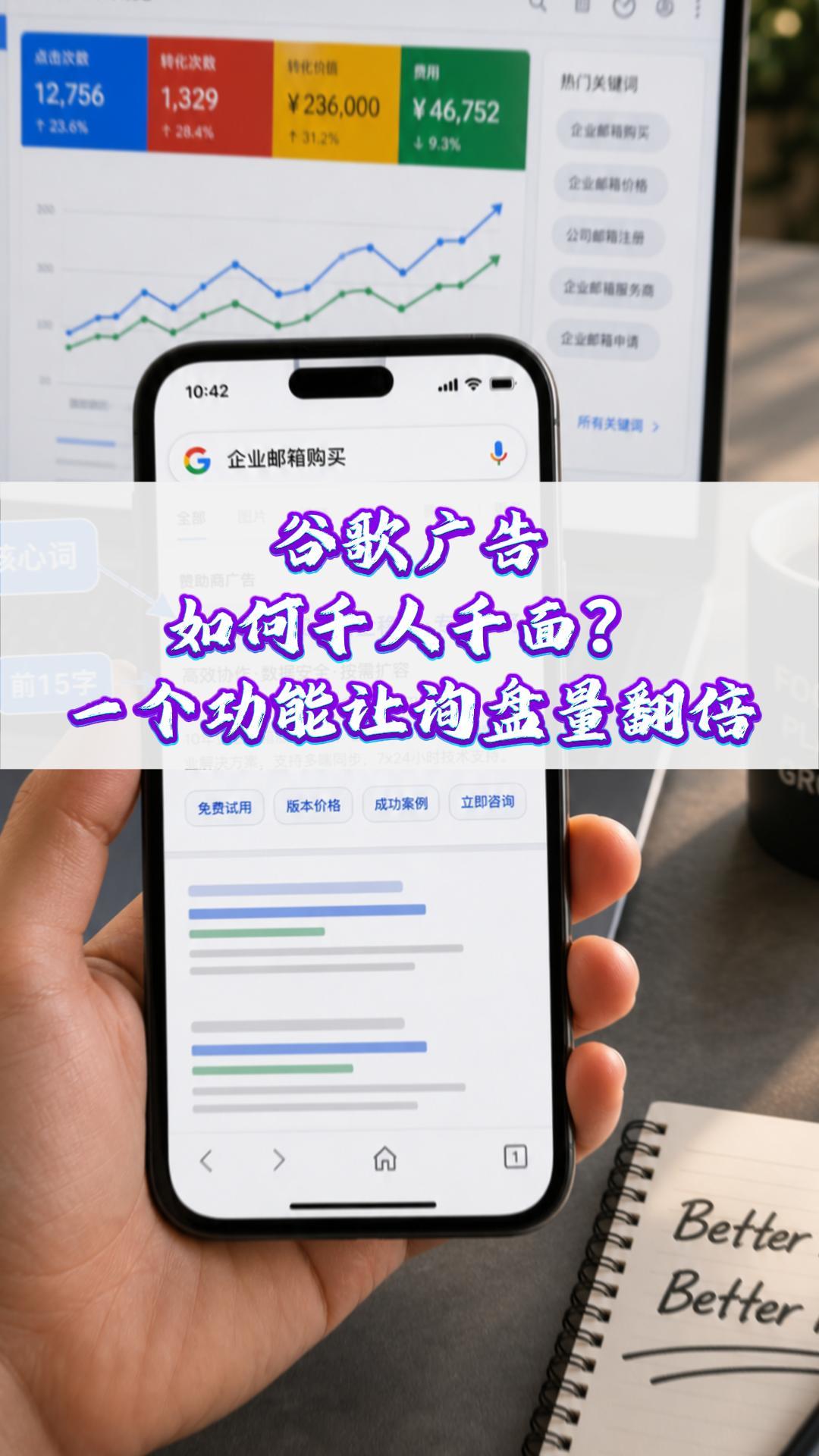
 How can Google Ads deliver one-to-one personalization? One feature can double your inquiry volume#ExportMarketing#OverseasPromotion#GoogleAds#SocialMediaMarketing#ForeignTradeIndependentWebsite
 Why a Google-optimized independent website is essential for trailer exports
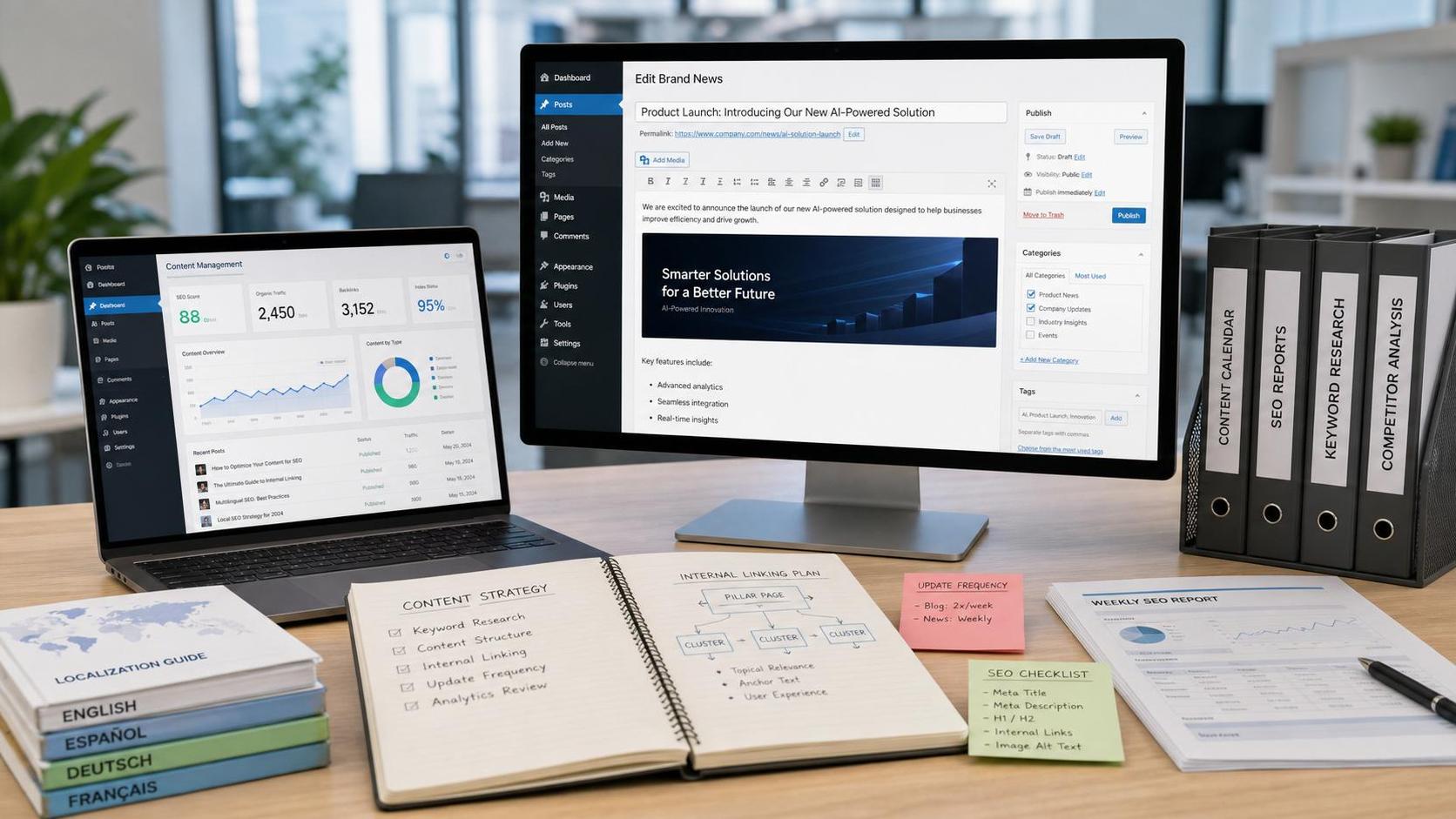
 How Can a Brand Updates Page Be Made More SEO-Friendly? Analysis of Update Frequency, Content Structure, and Internal Linking Strategy

Related Products
 EasyCamp SaaS Smart Website Marketing SystemE-Yingbao SaaS Smart Website Marketing System: AI-powered, zero-code website building. Rapidly launch multilingual independent e-commerce sites in just 10 minutes. Global server acceleration and AI-driven SEO optimization empower businesses to efficiently connect with global markets. The seamless integration of technology and user-friendly operation makes building e-commerce sites incredibly simple.
 AI+SEM Intelligent Advertising Marketing SystemAI+SEM drives intelligent ad creation, empowering full-funnel precision advertising marketing. The system automatically generates weekly/monthly reports, AI recommends keywords and target countries, monitors core metrics in real-time with intelligent alerts, and enables one-click high-conversion ad solutions to help quickly acquire customers and improve ROI.
 AI+SEO Dual Engine Optimization ServiceEasyWin AI+SEO Dual Engine Optimization System leverages AI-powered keyword mining, content generation, and comprehensive technical optimization to help foreign trade enterprises acquire high-quality organic traffic, significantly improving search rankings and conversion rates.
 AI+SNS Social Media Marketing SystemYingbao AI+SNS Social Media Marketing System - Precision social capture for the social media era. Supports one-click content synchronization across major platforms like Facebook and LinkedIn. AI intelligently rewrites posts for enhanced relevance. 24/7 AI customer service and user profiling analysis empower businesses to efficiently expand into global markets.
 AI+SEO营销解决方案易营宝AI+SEO营销解决方案,通过AI批量写作、智能生成TDK、精准关键词扩词等功能,全面优化网站SEO效果,提升流量与转化率。助力企业构建高效智能网站新生态。
 AI+SEM Advertising Marketing SolutionsAI+SEM Advertising Marketing Solution leverages AI technology to deeply empower SEM ad campaigns. It automatically generates weekly/monthly reports using AI, presenting account data across multiple dimensions for comprehensive insights into campaign performance and trends. The system precisely recommends keywords and target countries, intelligently generates high-conversion ad copy, and enables one-click activation of efficient campaign plans to help businesses rapidly acquire customers. Simultaneously, it monitors core metrics in real time, intelligently identifies abnormal fluctuations, and issues timely alerts to ensure stable, high-return advertising results.
 Domain Name ServicesEasyWin provides professional domain name services, including intelligent queries, one-stop registration, brand protection, and full lifecycle management, helping businesses build a digital brand image.
 EasyOperate B2C Cross-Border E-Commerce Platform & Independent WebsiteEasyStore B2C Cross-border E-commerce Independent Store is an intelligent website building and cross-border e-commerce integrated solution independently developed by EasyStore Information Technology (Beijing) Co., Ltd. The system is specially designed for small and medium-sized as well as large export enterprises, integrating 'website building, operation, marketing, advertising, and conversion' into one, helping enterprises quickly establish cross-border e-commerce independent stores to achieve brand globalization and global sales growth.
The platform supports multiple languages, multiple currencies, and multi-channel marketing, with built-in AI intelligent translation and SEO optimization systems, suitable for mainstream markets such as Southeast Asia, Europe and America, Latin America, and the Middle East, assisting Chinese manufacturing enterprises in efficiently deploying international e-commerce strategies. SSL证书易营宝提供专业SSL安全证书服务,包括单域名和泛域名证书,确保网站数据传输加密、身份验证和完整性保护,助力企业建立安全可信的在线业务环境。









