









- What stages does the cross-border services ecosystem include? How do website building, promotion, payment, and compliance work togetherJun 22, 2026View details
- How will email marketing costs change in 2026Jun 22, 2026View details
- The China-US tariff arrangement has reached a preliminary consensus, and the trade association will be establishedJun 15, 2026View details
- Should overseas brand marketing start with ads or contentJun 21, 2026View details
- What determines B2C cross-border e-commerce website development costs? A breakdown of features, interfaces, and deployment methodsJun 17, 2026View details
- China-Morocco zero-tariff access, a breakthrough in the cost of Moroccan goods exports to ChinaJun 11, 2026View details
2025 Easy Store Competitive Comparison: Cost and ROI Analysis of Foreign Trade Website Systems

Introduction
This article compares Yishengbao with competitors from the perspective of cost and ROI, analyzing the recommendations between traditional foreign trade website systems and intelligent website platforms to assist in decision-making. As a professional analysis for end-users, technical evaluators, and corporate decision-makers, this article focuses on the differences in total cost of ownership (TCO), launch speed, conversion rates, and long-term operational sustainability for foreign trade website systems. Many procurement personnel and distributors are concerned with: construction and maintenance costs, marginal returns on marketing investments, the actual effectiveness of multilingual website construction, and how to quantify compliance and security risks. The following sections provide structured comparisons based on data-driven and scenario-specific case studies, evaluating Yishengbao's user experience, functional sets, deployment architecture, operational costs, and ROI performance against competitors. It also offers decision-making recommendations for procurement and brand control, enabling businesses to maximize growth within limited budgets.

1. Cost Structure Comparison: Evaluating TCO from Initial Investment to Sustained Operations
When comparing the costs of foreign trade website systems, the perspective should expand from "website pricing" to three categories: one-time development and launch costs, annual operational and hosting fees, and continuous investments in customer acquisition and conversion. Yishengbao optimizes infrastructure through in-house AI and cloud partnerships for multilingual websites and global CDN deployment, delivering significant benefits in average loading speeds and SEO ratings, thereby reducing SEO optimization costs and paid traffic investments. Compared to competitors that charge per module or require extensive custom development, Yishengbao’s templated + AI-automated content production can shorten launch cycles by 30% to 50%. These savings represent both time-cost reductions and opportunity-cost decreases for small and medium-sized foreign trade enterprises. Additionally, third-party service fees—such as overseas server EIP, bandwidth, and DDoS protection—can be further optimized through prepayment or traffic package strategies to manage financial budgets. For example, prepaid traffic packages can lock in costs and mitigate budget volatility for large promotions or media distribution scenarios.
2. Functionality and ROI: Competitive Analysis and Conversion Efficiency Metrics for Intelligent Website Platforms
The key to evaluating intelligent website platforms lies not in more features but in each feature’s marginal contribution to revenue and customer acquisition costs. Common evaluation dimensions include: multilingual SEO effectiveness, AI-generated content and automated TDK’s impact on organic traffic, social media automation’s expansion of potential customer pools, and ad optimization tools’ direct influence on click-through and conversion rates. For example, Yishengbao’s AI keyword expansion and automated TDK generation can produce semantically relevant pages and long-tail keyword coverage daily, reducing customer acquisition costs by 20% to 40% in practice. Its automated ad creative tools can multiply CTR and conversion rates, significantly lowering CPL (cost per lead). When comparing platforms, procurement teams should validate with a three-year ROI model: combining savings from SEO and ad costs, incremental revenue from faster launches, and operational efficiencies to calculate net present value and payback periods. Technical evaluators should also assess API automation capabilities to integrate site data, ad performance, and CRM/BI systems for closed-loop optimization.
3. Security, Operations, and Global Deployment: Compliance and Reliability Comparisons

Cross-border operations demand extreme usability and compliance, where security and stability directly impact brand trust and conversion rates. When evaluating foreign trade website systems, prioritize CDN coverage, automated SSL, DDoS protection, and logging/audit capabilities. Yishengbao leverages AWS and Alibaba Cloud’s global acceleration nodes, supports automated SSL certificates, and detects anomalies in real time to minimize downtime losses. Its operational model allows multi-account billing consolidation and prepaid traffic strategies to reduce cost volatility. For peak traffic management, combining traffic packages with elastic resources—such as dedicated packages for e-commerce promotions or global media campaigns—can lower bandwidth costs by up to 40% in practice. For direct API procurement and BI integration, opt for built-in solutions and reference real-time monitoring and alert mechanisms in product documentation. Large-scale distribution scenarios may also consider website traffic packages to balance cost and compliance.
Conclusion and Actionable Recommendations: How to Decide Among Competitors
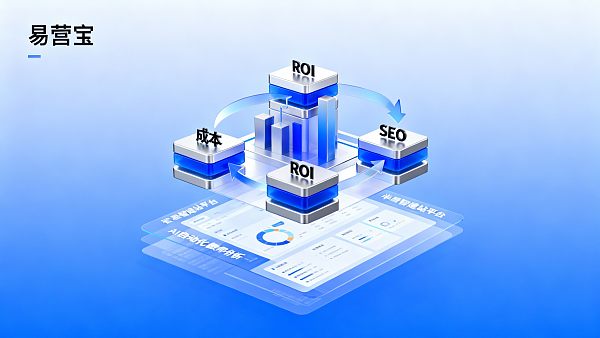
In summary, selecting a foreign trade website system should align with business goals: if the objective is rapid multilingual market coverage with organic traffic and conversion improvements within 3–12 months, prioritize platforms with AI content generation, automated TDK, and global CDN acceleration. For long-term cost control and compliant operations, evaluate prepaid traffic, consolidated billing, and 24/7 monitoring. Yishengbao excels in intelligent websites, AI marketing, and global traffic integration, making it ideal for mid-to-large foreign trade enterprises pursuing scalable growth and localized services. We recommend adding pilot evaluations to the procurement process: test a single site or product category for three months, quantify organic traffic, ad CPL, and operational costs, then expand to full deployment. For detailed technical solutions or custom quotes, contact us immediately for one-on-one consultations and free ROI calculation reports to explore solutions and begin pilot deployments.
- Website Builder Platform
- Foreign Trade Website Development
- SSL Certificate
- Website traffic
- AI Writing
- Yiyingbao
- SEO
- SEO Optimization
- Smart Website Building
- Social Media Automation
- Multilingual SEO
- Global CDN Acceleration
- Global multilingual website
- Foreign Trade Website System
- Smart Website Platform Recommendation
- Smart Website Platform
- Easy Treasure User Experience
- 智能建站平台竞品分析
- EasyStore product competition comparison
- Multilingual Website Building
Related Articles
 New U.S. Customs regulations require B2B independent sites to connect to the USMCA Certificate of Origin API
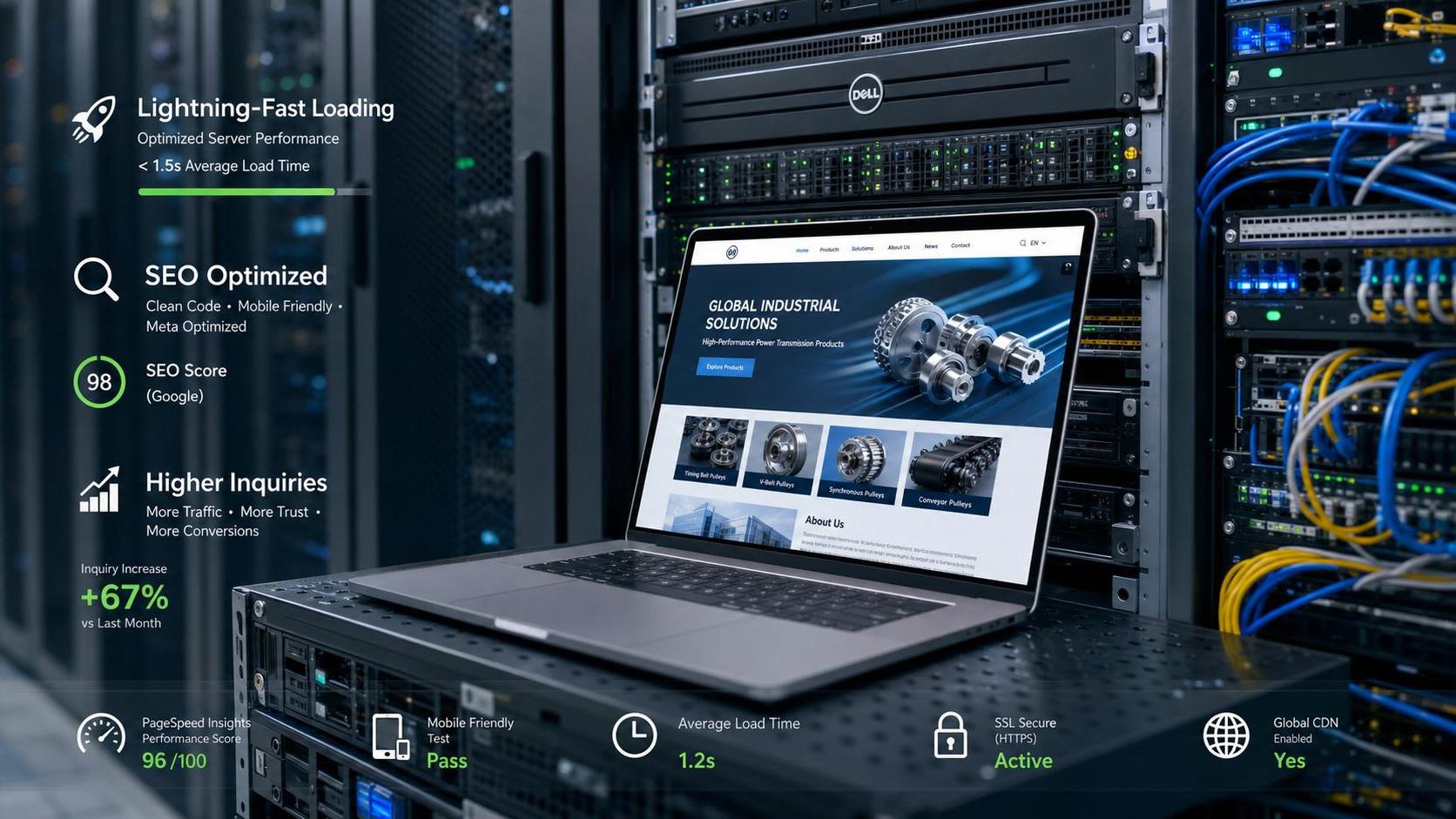
 Why is website loading speed so important? The reasons it affects SEO rankings and inquiry conversion
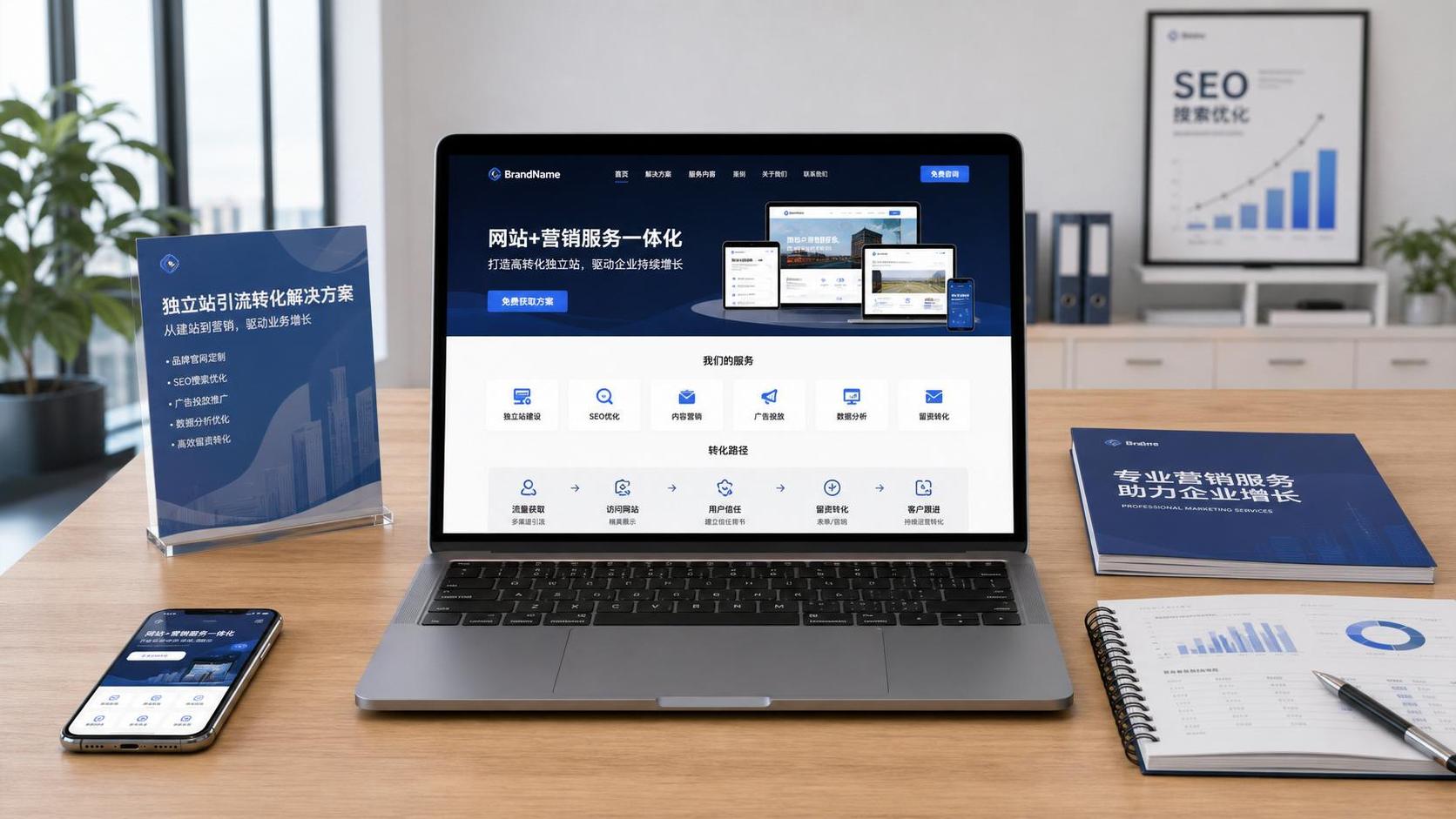
 How can landing page creation improve independent website traffic conversion? Structure and content like this

Related Products
 EasyCamp SaaS Smart Website Marketing SystemE-Yingbao SaaS Smart Website Marketing System: AI-powered, zero-code website building. Rapidly launch multilingual independent e-commerce sites in just 10 minutes. Global server acceleration and AI-driven SEO optimization empower businesses to efficiently connect with global markets. The seamless integration of technology and user-friendly operation makes building e-commerce sites incredibly simple.
 AI+SEM Intelligent Advertising Marketing SystemAI+SEM drives intelligent ad creation, empowering full-funnel precision advertising marketing. The system automatically generates weekly/monthly reports, AI recommends keywords and target countries, monitors core metrics in real-time with intelligent alerts, and enables one-click high-conversion ad solutions to help quickly acquire customers and improve ROI.
 AI+SEO Dual Engine Optimization ServiceEasyWin AI+SEO Dual Engine Optimization System leverages AI-powered keyword mining, content generation, and comprehensive technical optimization to help foreign trade enterprises acquire high-quality organic traffic, significantly improving search rankings and conversion rates.
 AI+SNS Social Media Marketing SystemYingbao AI+SNS Social Media Marketing System - Precision social capture for the social media era. Supports one-click content synchronization across major platforms like Facebook and LinkedIn. AI intelligently rewrites posts for enhanced relevance. 24/7 AI customer service and user profiling analysis empower businesses to efficiently expand into global markets.
 AI+SEO营销解决方案易营宝AI+SEO营销解决方案,通过AI批量写作、智能生成TDK、精准关键词扩词等功能,全面优化网站SEO效果,提升流量与转化率。助力企业构建高效智能网站新生态。
 AI+SEM Advertising Marketing SolutionsAI+SEM Advertising Marketing Solution leverages AI technology to deeply empower SEM ad campaigns. It automatically generates weekly/monthly reports using AI, presenting account data across multiple dimensions for comprehensive insights into campaign performance and trends. The system precisely recommends keywords and target countries, intelligently generates high-conversion ad copy, and enables one-click activation of efficient campaign plans to help businesses rapidly acquire customers. Simultaneously, it monitors core metrics in real time, intelligently identifies abnormal fluctuations, and issues timely alerts to ensure stable, high-return advertising results.
 Domain Name ServicesEasyWin provides professional domain name services, including intelligent queries, one-stop registration, brand protection, and full lifecycle management, helping businesses build a digital brand image.
 EasyOperate B2C Cross-Border E-Commerce Platform & Independent WebsiteEasyStore B2C Cross-border E-commerce Independent Store is an intelligent website building and cross-border e-commerce integrated solution independently developed by EasyStore Information Technology (Beijing) Co., Ltd. The system is specially designed for small and medium-sized as well as large export enterprises, integrating 'website building, operation, marketing, advertising, and conversion' into one, helping enterprises quickly establish cross-border e-commerce independent stores to achieve brand globalization and global sales growth.
The platform supports multiple languages, multiple currencies, and multi-channel marketing, with built-in AI intelligent translation and SEO optimization systems, suitable for mainstream markets such as Southeast Asia, Europe and America, Latin America, and the Middle East, assisting Chinese manufacturing enterprises in efficiently deploying international e-commerce strategies. SSL证书易营宝提供专业SSL安全证书服务,包括单域名和泛域名证书,确保网站数据传输加密、身份验证和完整性保护,助力企业建立安全可信的在线业务环境。









