









- What Does a Global Traffic Ecosystem Service Provider Do? What Are the Differences from a Single Advertising AgencyJul 16, 2026View details
- What should you focus on in the latest enterprise SaaS report? From renewal rates and delivery costs to overseas growth opportunitiesJul 12, 2026View details
- What signals are worth paying attention to in a cross-border marketing trend report? B2B companies should look at these 6 signalsJul 11, 2026View details
- How to Read a Cross-Border Marketing Trends Report? Five Key Dimensions for Evaluating Channel OpportunitiesJul 11, 2026View details
- Which channel has the highest ROI in the global traffic ecosystem? Comparative analysis of search, social media, and advertisingJul 10, 2026View details
- What multilingual website services are available in Sanya? Which model is more suitable for local businesses going global?Jul 08, 2026View details
- How to view the complete list of China SaaS companies in the top 100? Practical methods for screening website-building and marketing service providersJul 08, 2026View details
- How to view pricing in the global traffic ecosystem? Cost comparison of search, social media, and content channel advertisingJul 06, 2026View details
2025 Virtual Currency New Era: How Will Application and Technological Innovation Lead the Future Amid Compliant Trends?
Defining the Regulatory Landscape: The Compliance Wave in the Virtual Currency Market
When examining the development trends of virtual currencies in 2025, our primary focus must be on the transformative shifts within the regulatory framework. As a foundational component of the digital economy, virtual currencies have witnessed rapid global ascension in recent years, with their market scale and influence expanding exponentially. Nevertheless, as the market growth outpaces regulatory measures, issues such as pronounced volatility and fraudulent activities have increasingly impeded the sector's sustainable development.

Encouragingly, as governmental comprehension of virtual currencies deepens, more structured regulatory frameworks are being implemented. These measures aim to mitigate market uncertainty, safeguard investor interests, and foster compliant market operations. By 2025, we anticipate the emergence of a transparent, equitable, and orderly virtual currency ecosystem where compliance will dominate market dynamics, reinforcing investor confidence.
Diversified Application Scenarios: The Infinite Potential of Virtual Currencies
Beyond regulatory clarity, the expanding utility of virtual currencies serves as another critical growth catalyst. Historically perceived primarily as investment instruments, these digital assets are now undergoing transformative application diversification driven by technological advancement and evolving market demands.

In retail payments, a growing merchant base now accepts virtual currencies, offering enhanced consumer choice while reducing transaction overhead. For cross-border remittances, the decentralized architecture of virtual currencies delivers cost-efficient, rapid settlement solutions that are increasingly displacing conventional payment rails. Furthermore, smart contract proliferation has revitalized financial services through automated, secure execution—significantly boosting transactional integrity and efficiency.
Technological Innovation as the Driver: The Boundless Potential of Blockchain
Technological advancement remains the cornerstone of virtual currency evolution. Blockchain infrastructure—underpinning these digital assets—undergoes continuous refinement in security protocols, scalability solutions, and transaction throughput. This progress births innovative cryptocurrencies and decentralized finance (DeFi) projects, exponentially expanding user opportunities.

Security enhancements leverage distributed ledgers and cryptographic verification to ensure transaction immutability. Scaling innovations like sharding partition workloads to optimize network capacity, while layer-two solutions such as the Lightning Network achieve near-instant settlement speeds.
B2B Independent Websites & Multilingual Sites: Tools for Foreign Trade Marketing
Amid virtual currency's maturation, global enterprises confront unprecedented expansion avenues. Capitalizing on these requires strategic digital engagement through proprietary web platforms and multilingual localization.
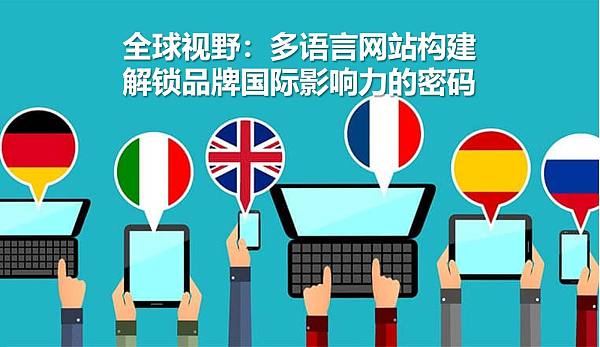
Dedicated websites empower brands to forge digital identities, showcase offerings, and capture worldwide audiences via search-optimized and socially amplified outreach.
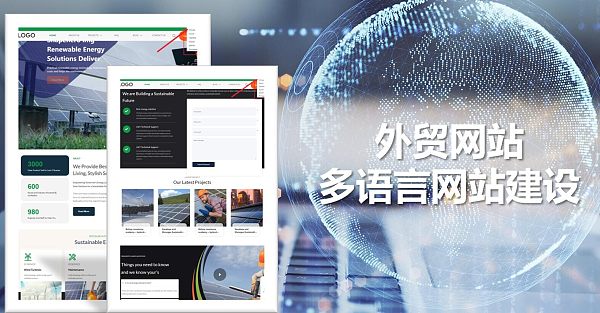
Multilingual portals prove indispensable for cross-border commerce, bridging linguistic divides to amplify market resonance and trust in international arenas.
Embracing the New Era of Virtual Currency & Foreign Trade Marketing
In summation, 2025 heralds an inflection point where regulatory maturation, application diversification, and blockchain innovation converge to democratize virtual currency adoption worldwide. Astute enterprises now leverage e-commerce architectures—including localized digital storefronts—to navigate this paradigm shift, transforming both challenges and opportunities into sustained competitive advantage as virtual currencies rewrite global trade paradigms.
For inquiries aboutB2B website development or operations, contactEasyWin at WeChat: Ieyingbao18661939702 for expert support.

Images sourced online; contact 400-655-2477 for copyright claims.
Related Articles



Related Products
 EasyCamp SaaS Smart Website Marketing SystemE-Yingbao SaaS Smart Website Marketing System: AI-powered, zero-code website building. Rapidly launch multilingual independent e-commerce sites in just 10 minutes. Global server acceleration and AI-driven SEO optimization empower businesses to efficiently connect with global markets. The seamless integration of technology and user-friendly operation makes building e-commerce sites incredibly simple.
 AI+SEM Intelligent Advertising Marketing SystemAI+SEM drives intelligent ad creation, empowering full-funnel precision advertising marketing. The system automatically generates weekly/monthly reports, AI recommends keywords and target countries, monitors core metrics in real-time with intelligent alerts, and enables one-click high-conversion ad solutions to help quickly acquire customers and improve ROI.
 AI+SEO Dual Engine Optimization ServiceEasyWin AI+SEO Dual Engine Optimization System leverages AI-powered keyword mining, content generation, and comprehensive technical optimization to help foreign trade enterprises acquire high-quality organic traffic, significantly improving search rankings and conversion rates.
 AI+SNS Social Media Marketing SystemYingbao AI+SNS Social Media Marketing System - Precision social capture for the social media era. Supports one-click content synchronization across major platforms like Facebook and LinkedIn. AI intelligently rewrites posts for enhanced relevance. 24/7 AI customer service and user profiling analysis empower businesses to efficiently expand into global markets.
 AI+SEO营销解决方案易营宝AI+SEO营销解决方案,通过AI批量写作、智能生成TDK、精准关键词扩词等功能,全面优化网站SEO效果,提升流量与转化率。助力企业构建高效智能网站新生态。
 AI+SEM Advertising Marketing SolutionsAI+SEM Advertising Marketing Solution leverages AI technology to deeply empower SEM ad campaigns. It automatically generates weekly/monthly reports using AI, presenting account data across multiple dimensions for comprehensive insights into campaign performance and trends. The system precisely recommends keywords and target countries, intelligently generates high-conversion ad copy, and enables one-click activation of efficient campaign plans to help businesses rapidly acquire customers. Simultaneously, it monitors core metrics in real time, intelligently identifies abnormal fluctuations, and issues timely alerts to ensure stable, high-return advertising results.
 Domain Name ServicesEasyWin provides professional domain name services, including intelligent queries, one-stop registration, brand protection, and full lifecycle management, helping businesses build a digital brand image.
 EasyOperate B2C Cross-Border E-Commerce Platform & Independent WebsiteEasyStore B2C Cross-border E-commerce Independent Store is an intelligent website building and cross-border e-commerce integrated solution independently developed by EasyStore Information Technology (Beijing) Co., Ltd. The system is specially designed for small and medium-sized as well as large export enterprises, integrating 'website building, operation, marketing, advertising, and conversion' into one, helping enterprises quickly establish cross-border e-commerce independent stores to achieve brand globalization and global sales growth.
The platform supports multiple languages, multiple currencies, and multi-channel marketing, with built-in AI intelligent translation and SEO optimization systems, suitable for mainstream markets such as Southeast Asia, Europe and America, Latin America, and the Middle East, assisting Chinese manufacturing enterprises in efficiently deploying international e-commerce strategies. SSL证书易营宝提供专业SSL安全证书服务,包括单域名和泛域名证书,确保网站数据传输加密、身份验证和完整性保护,助力企业建立安全可信的在线业务环境。









