









- China-Morocco zero-tariff access, a breakthrough in the cost of Moroccan goods exports to ChinaJun 11, 2026View details
- What signal should be released for the suspension of exports to JapanJun 10, 2026View details
- China's May LNG imports rebounded, with increased volumes from Russia and Canada filling the Middle East supply gapJun 10, 2026View details
- Will GEO change its SEO strategy?Jun 04, 2026View details
- What types of businesses are end-to-end solutions suitable for?Jun 03, 2026View details
- 2026 Global Growth Channel TrendsJun 02, 2026View details
Performance Red Flags in SaaS Website Building Platforms: How to Incorporate Website Acceleration and Performance Optimization into Project Budgets from Stage 0 to 1

In zero-to-one SaaS website platform projects, incorporating website acceleration and performance optimization into the budget is a crucial strategy for cross-border e-commerce operations, promotion, enhancing user experience, and SEO.
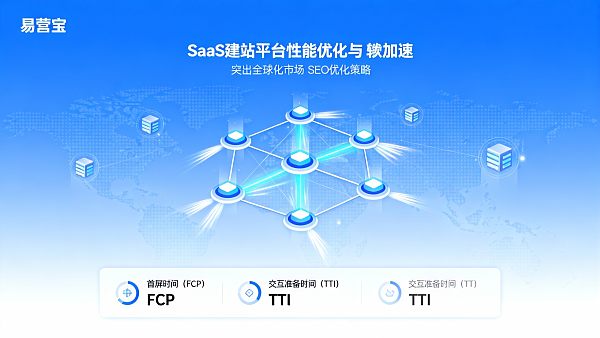
During the critical 0-to-1 project phase, decision-makers and implementers face a primary challenge: not feature stacking, but ensuring competitive access speed, stability, and global coverage post-launch within limited budgets. For independent sites targeting cross-border e-commerce operations and promotion, metrics like First Contentful Paint (FCP), Time to Interactive (TTI), and total load time directly impact conversion rates and search rankings. Researchers and operators require clear cost projections and quantifiable KPIs to balance product planning, technology selection, and market promotion. This article explores why early-stage budget allocation for website acceleration/optimization matters, how to quantify input-output, key technical implementations, and practical budget distribution advice—providing B2B teams with executable roadmaps to avoid common performance pitfalls and achieve better post-launch UX and global SEO outcomes.
I. Why Budget for Acceleration/Optimization in 0-to-1 Phase (Key Points & Business Impact)
Prioritizing performance optimization is essential for building sustainable global growth channels. First, cross-border platforms face regional network disparities—unoptimized resources cause inconsistent loading experiences across countries, lowering conversion rates. Studies show each 1-second delay in page load reduces conversions by 8%-15%, with mobile users being more sensitive. Second, search engines increasingly weigh page experience; global SEO requires stable performance baselines to leverage content and structured optimization for organic traffic. Third, early optimization reduces rework costs: static resource optimization, caching strategies, and edge acceleration can directly lower CDN bandwidth and backend compute expenses post-launch. Industry data shows implementing global server clusters with AI acceleration achieves ~40% faster load speeds and improved SEO scores—quantifiable evidence for budget discussions.
II. Quantifying Performance Needs & ROI in Budgeting (Metrics, Methods & Templates)
Quantification is key. Allocate budgets across three dimensions: one-time technical costs (architecture/development), ongoing operations (CDN, monitoring, certificates, WAF), and iterative optimization (A/B testing, content refinement). Core KPIs should include Time to First Byte (TTFB), FCP, Largest Contentful Paint (LCP), Cumulative Layout Shift (CLS), and TTI. During 0-to-1, use Lighthouse/WebPageTest baselines to set 3/6/12-month optimization targets. Estimate ROI by combining conservative conversion lift projections (e.g., 40% faster loads yield 8%-15% higher conversions) with traffic growth models. For China-market entries, pre-allocate compliance costs (e.g., ICP filing) and consider expedited services to reduce indirect delays.
III. Technical Implementation Checklist: From Architecture to Monitoring (Actionable List)

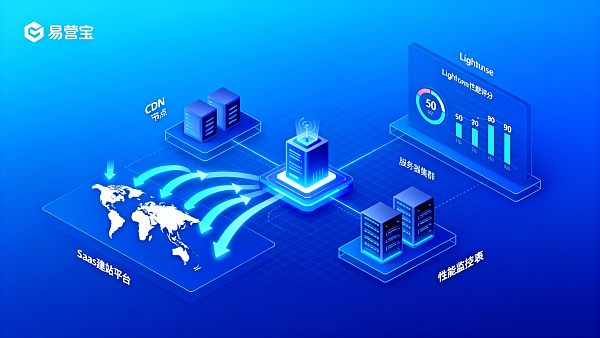
Core 0-to-1 principles: edge-first, minimal resources, automated operations. Key steps: 1) Global CDN with smart origin routing and HTTP/2/3 support; 2) Static optimization via Brotli/Gzip compression, WebP/AVIF images, lazy loading, and AI-generated multi-resolution assets; 3) Rendering strategies (SSR/SSG/pre-rendering) with critical CSS inlining; 4) Security/compliance: automated SSL, WAF, DDoS protection, and cross-border payment legal prep; 5) RUM/synthetic monitoring with performance dashboards; 6) Marketing system integration to align performance thresholds with AI ad platforms and multilingual campaigns.
IV. Budget Allocation Roadmap (Phased Timeline & Resource Planning for 0-to-1)
Adopt phased budgeting: 15%-25% in discovery (architecture design, CDN contracts); 40%-55% in development (resource compression, monitoring systems); 20%-30% post-launch for optimizations. Typical 8-16 week timelines include: requirements/baselining (2 weeks), architecture/internationalization prep (3-6 weeks), development/integration (3-6 weeks), and load testing (2 weeks). Prioritize automated testing tools, RUM, and log aggregation. Reserve budgets for multilingual content/AI-driven SEO to reduce later manual costs.
Supplement: Organizational & Process Optimizations
Appoint a Performance Owner to embed KPIs into sprint goals. Marketing teams must validate performance thresholds before large campaigns. Integrate AI acceleration data with ad platforms to form optimization loops—achieving higher conversions at lower CAC.
Conclusion & Next Steps: Transforming Performance Budgets into Growth Engines
For SaaS platforms, early-stage performance investment is both a technical necessity and a business decision impacting cross-border operations, UX, and long-term SEO. Through quantified targets, phased budgeting, edge acceleration, and pre-launch compliance prep (e.g., ICP filing), teams significantly reduce risks while improving post-launch ROI. Our global acceleration infrastructure and AI-powered marketing solutions help achieve optimal performance-traffic balance during 0-to-1. Contact us to implement these strategies or learn more about our ICP filing services.
- Website Builder Platform
- SSL Certificate
- Yiyingbao
- SEO
- Independent Website
- SEO Optimization
- cross-border e-commerce
- AI Website Acceleration Technology Enhances User Experience
- Global Market SEO Optimization Strategies
- SaaS Website Platform
- Cross-border e-commerce platform
- Multilingual Marketing System
- AI Smart Advertising Platform
- Digital Marketing Solutions
- Website Acceleration and Performance Optimization
- Cross-border e-commerce operation and promotion
Related Articles
 EasYingbao fully automated watermark + intelligent SEO manager, helping you capture inquiries more steadily!
 What metrics should be considered when selecting data analysis tools?
 Are e-commerce websites starting to "move on their own"? With AI-generated interactive code, this update from EasyCamp is a game-changer!



Related Products
 EasyCamp SaaS Smart Website Marketing SystemE-Yingbao SaaS Smart Website Marketing System: AI-powered, zero-code website building. Rapidly launch multilingual independent e-commerce sites in just 10 minutes. Global server acceleration and AI-driven SEO optimization empower businesses to efficiently connect with global markets. The seamless integration of technology and user-friendly operation makes building e-commerce sites incredibly simple.
 AI+SEM Intelligent Advertising Marketing SystemAI+SEM drives intelligent ad creation, empowering full-funnel precision advertising marketing. The system automatically generates weekly/monthly reports, AI recommends keywords and target countries, monitors core metrics in real-time with intelligent alerts, and enables one-click high-conversion ad solutions to help quickly acquire customers and improve ROI.
 AI+SEO Dual Engine Optimization ServiceEasyWin AI+SEO Dual Engine Optimization System leverages AI-powered keyword mining, content generation, and comprehensive technical optimization to help foreign trade enterprises acquire high-quality organic traffic, significantly improving search rankings and conversion rates.
 AI+SNS Social Media Marketing SystemYingbao AI+SNS Social Media Marketing System - Precision social capture for the social media era. Supports one-click content synchronization across major platforms like Facebook and LinkedIn. AI intelligently rewrites posts for enhanced relevance. 24/7 AI customer service and user profiling analysis empower businesses to efficiently expand into global markets.
 AI+SEO营销解决方案易营宝AI+SEO营销解决方案,通过AI批量写作、智能生成TDK、精准关键词扩词等功能,全面优化网站SEO效果,提升流量与转化率。助力企业构建高效智能网站新生态。
 AI+SEM Advertising Marketing SolutionsAI+SEM Advertising Marketing Solution leverages AI technology to deeply empower SEM ad campaigns. It automatically generates weekly/monthly reports using AI, presenting account data across multiple dimensions for comprehensive insights into campaign performance and trends. The system precisely recommends keywords and target countries, intelligently generates high-conversion ad copy, and enables one-click activation of efficient campaign plans to help businesses rapidly acquire customers. Simultaneously, it monitors core metrics in real time, intelligently identifies abnormal fluctuations, and issues timely alerts to ensure stable, high-return advertising results.
 Domain Name ServicesEasyWin provides professional domain name services, including intelligent queries, one-stop registration, brand protection, and full lifecycle management, helping businesses build a digital brand image.
 EasyOperate B2C Cross-Border E-Commerce Platform & Independent WebsiteEasyStore B2C Cross-border E-commerce Independent Store is an intelligent website building and cross-border e-commerce integrated solution independently developed by EasyStore Information Technology (Beijing) Co., Ltd. The system is specially designed for small and medium-sized as well as large export enterprises, integrating 'website building, operation, marketing, advertising, and conversion' into one, helping enterprises quickly establish cross-border e-commerce independent stores to achieve brand globalization and global sales growth.
The platform supports multiple languages, multiple currencies, and multi-channel marketing, with built-in AI intelligent translation and SEO optimization systems, suitable for mainstream markets such as Southeast Asia, Europe and America, Latin America, and the Middle East, assisting Chinese manufacturing enterprises in efficiently deploying international e-commerce strategies. SSL证书易营宝提供专业SSL安全证书服务,包括单域名和泛域名证书,确保网站数据传输加密、身份验证和完整性保护,助力企业建立安全可信的在线业务环境。









