









- China’s Ministry of Commerce Responds to Additional Charges on Low-Value Imports Imposed by the EUNov 06, 2026View details
- Two Internet Development Reports Released at the 2026 World Internet ConferenceNov 05, 2026View details
- Internet Business Revenue of Enterprises Above the Designated Size Reached RMB 1.716 Trillion in the First Three Quarters, with Profits Up 17.6%Nov 05, 2026View details
- Shopify's Third-Quarter Revenue and GMV Fall Short of Expectations, Sending Shares Tumbling Before the Market OpensNov 04, 2026View details
- Temu Sellers See a Decline in Traffic as the Platform’s Traffic Allocation ShiftsNov 04, 2026View details
- UK Regulator Requires E-Commerce Businesses to Clearly Display Total Prices Including Mandatory Delivery ChargesNov 04, 2026View details
How Can You Tell Whether a Lead from Export Marketing Is Qualified?
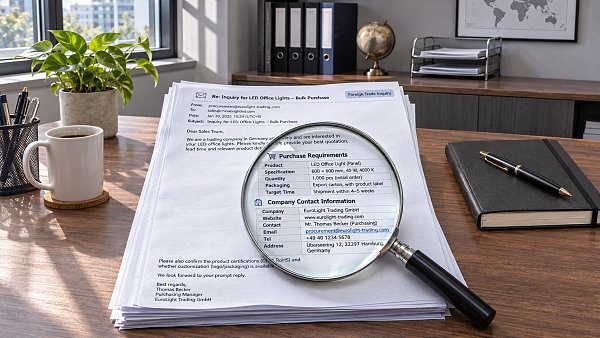
The promotional activities used to generate overseas trade leads may bring in a substantial number of inquiries, but which ones are worth pursuing? One email may say only “Please quote,” while another details purchasing specifications and delivery requirements. The first is not necessarily worthless, and the second does not necessarily lead to a sale. For business evaluators, the key is not to draw conclusions based on the length of an email or the customer’s tone, but to assess the purchasing needs, customer identity, and purchase intent to determine whether the opportunity merits further time and effort.
First, distinguish between a valid inquiry and an immediate sale
A valid inquiry generally meets one basic condition: the sender has a verifiable business background, the stated needs may match the company’s products or services, and they are willing to continue discussing a potential purchase. The inquiry may come from a purchasing manager, distributor, project lead, or an employee of a company conducting preliminary research.
Therefore, an unclear budget or distant purchasing timeline should not be grounds for immediately dismissing an inquiry. However, mass advertising, recruitment messages, obvious spam, and sales pitches wholly unrelated to the company’s business can be excluded from sales opportunities. For inquiries with an uncertain identity or incomplete information, it is safer to mark them as “pending verification” than to rush to classify them as valid or invalid.
When assessing inquiry quality, focus on four groups of information
1. How specific are the purchasing needs, and can your company meet them?
Start by reviewing the product, specifications, quantity, intended use, and target market the customer is asking about, then compare these with your product range, minimum order requirements, certification capabilities, and delivery capacity. A model number or application usually makes it easier to assess the fit. If the customer simply says, “Please send your product catalog,” you can first ask about the intended purchasing application rather than immediately sending all your pricing materials.
Also distinguish between “incomplete information” and “a poor fit.” An equipment distributor who cannot yet provide an exact quantity may still be gathering requirements from an end customer. But if the requested specifications, certifications, or delivery schedule clearly exceed your capabilities, explain this promptly to avoid wasting both parties’ time.
2. Can the customer’s identity be basically verified?
Check whether the sender’s email address, company name, website, social media profiles, and contact details corroborate one another. A company-domain email address, a clear company profile, and public information relevant to the business can serve as supporting indicators. Using a free email account does not necessarily mean an inquiry is invalid; some small-scale buyers and startups use personal email addresses.
If the company name clearly does not match the email domain, the website has no apparent connection to the purchasing activity, or the sender refuses to provide basic information about their identity, you can start by asking a brief verification question. Before arranging payment, shipping samples, or exchanging sensitive information, reconfirm the details through an official contact channel that has been verified to avoid losses from impersonation or phishing emails.
3. What stage of the purchasing process is the customer at?
The questions in an inquiry often reveal the customer’s priorities. Questions about product catalogs or standard specifications may indicate that they are still screening options. Further discussion of samples, certifications, trade terms, and delivery schedules usually suggests a more concrete project. These are indicators, however, not guarantees of a sale.
In your reply, you can naturally ask: “Which project will these products be used for?” “When do you expect to make the purchase?” or “Would you like to compare options first or arrange a sample?” If a customer is reluctant to disclose a budget, you could ask about their target price range or purchasing priorities. A willingness to provide more information and answer key questions is more useful for assessment than simply saying they are “interested.”
4. Is the contact involved in purchasing decisions?
Not every inquiry comes from the final decision-maker. Technical staff focus on specifications, purchasing specialists compare supplier terms, and distributors may request quotes on behalf of downstream customers. Do not abandon an inquiry just because the contact cannot make the final decision yet. Instead, learn about their role and whether technical, finance, or management staff will also be involved in the evaluation.
If the customer repeatedly asks for the lowest price but is unwilling to explain the intended use, quantity, or delivery requirements, keep your investment of time and resources in check. Start by providing a reasonable price range and the necessary conditions, then see whether they are willing to continue the discussion.
Turn your assessment criteria into actionable lead tiers for the team
Overseas trade lead generation can involve multiple channels, including website forms, advertising, social media, and email. Relying solely on individual salespeople’s experience can lead to inconsistent standards. The business team can use the following approach to establish an initial tiering system, then adjust it based on the industry and product:
- Priority follow-up: The needs match your products, the customer’s identity can be basically verified, and the purchase quantity, timing, or project background is relatively clear. Respond promptly with relevant information and confirm the technical requirements and next steps.
- Continue nurturing: The product direction is a match, but the purchasing timeline, budget, or contact’s role is not yet clear. Keep the conversation going with follow-up questions, relevant case studies, or product information, and agree on a date for the next contact.
- Pending verification: The needs are too vague, the contact details are questionable, or the customer’s background cannot yet be assessed. Verify their identity and intended use before deciding whether to invest resources in a quote, samples, or other activities.
- Exclude from sales opportunities: The inquiry is confirmed as spam or an unrelated sales pitch, or the stated needs clearly fall outside the company’s scope of business. Keep any necessary records to avoid confusing these messages with genuine opportunities.
Lead tiers are not permanent labels for customers. A contact conducting preliminary research may return months later with a clearly defined project. Conversely, a customer who initially appears to meet all the criteria may turn out to have no genuine purchasing plan after verification. Updating the status after every interaction is more reliable than assigning a score just once.
Use your reply to verify needs while making things easier for the customer
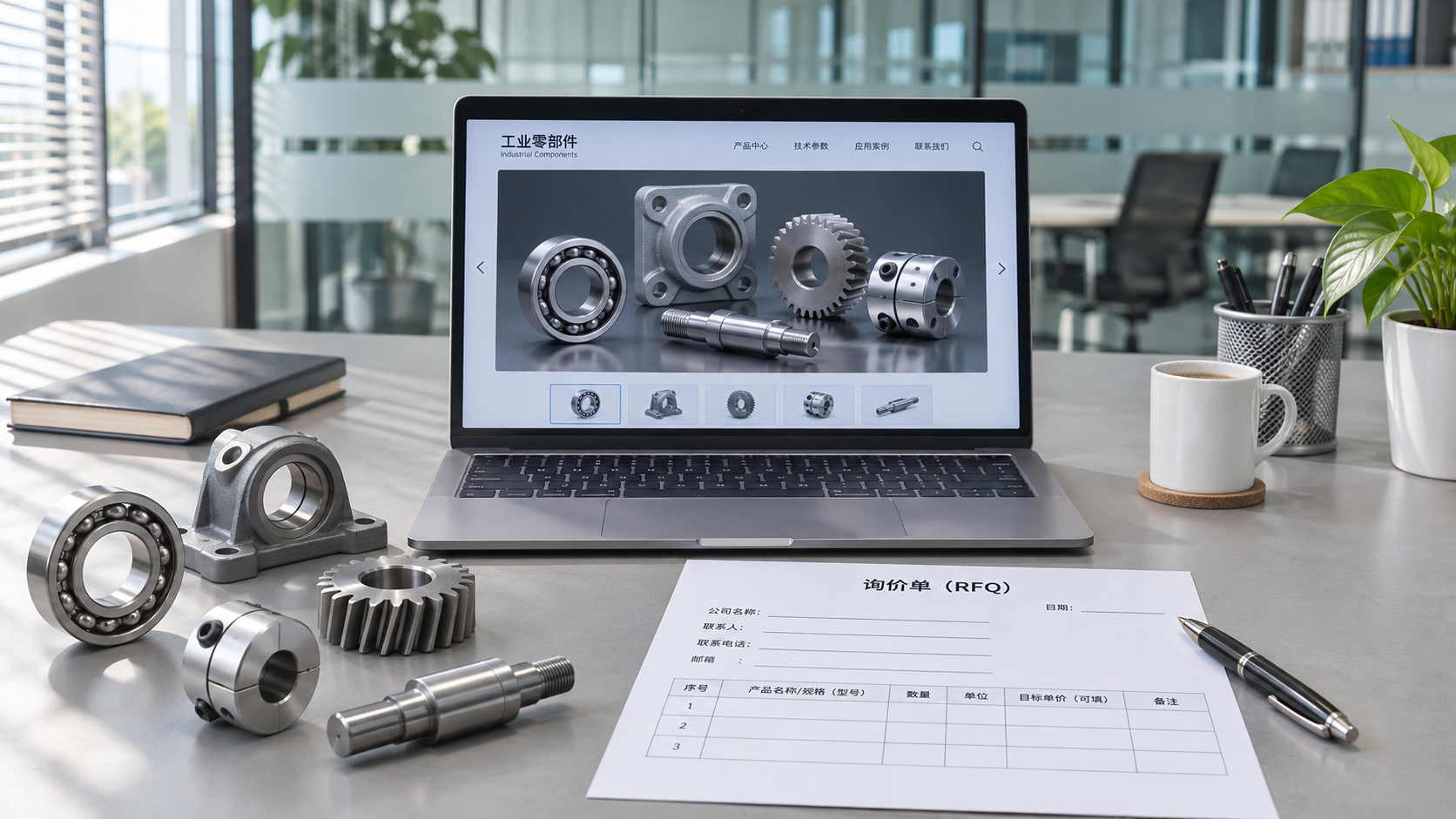
When an inquiry lacks information, first address the questions the customer has already asked, then raise two or three questions that are most important to your assessment. For example, if a customer requests a quote for industrial components, you can explain that you need the model, estimated quantity, and destination country to calculate the price, and ask about the product’s intended application. Asking too many questions or requiring a complete purchasing plan all at once may discourage genuine customers from replying.
For customers whose needs are relatively clear, show in your reply that you have read their requirements: confirm the specifications, explain what information you can provide, and propose the next step for a quote or technical confirmation. Once the customer responds, you can gradually clarify details such as certifications, packaging, and payment terms. Follow-up records should include key requirements, the contact’s role, outstanding questions, and agreed timelines to make it easier for the team to hand over the opportunity.
How can you use promotional data to improve inquiry quality?
When assessing the results of overseas trade lead generation, do not look only at the number of form submissions or the cost per inquiry. More useful comparisons include the number and proportion of valid inquiries by channel, promotional page, or advertising campaign, as well as how many subsequently progress to the quotation, sampling, or sales stage. Standardize the definition of a valid inquiry before compiling statistics, and specify the data period. For products with long purchasing cycles, allow enough time to observe subsequent conversions.
If a page generates many inquiries but the needs are often a poor match, first check whether the page clearly states product specifications, applications, minimum order conditions, and target markets. If customers commonly omit key information, you can add form options such as product category and intended use, but avoid requiring too many fields. Adjust advertising and social media lead-generation activities based on the reasons inquiries are invalid, rather than focusing solely on clicks and messages.
In practice, Yiyingbao’s services—including intelligent website building, multilingual website development, SEO, advertising, and overseas social media marketing—can be used to create promotional entry points and organize content across different channels. When evaluating solutions of this kind, companies should look beyond website development and lead generation to confirm whether inquiry sources can be tracked, form fields can be adjusted, and sales feedback can be sent back to the promotional team. This helps connect the information collected on the website with subsequent business assessments.
Ultimately, determining whether an inquiry is valid means assessing whether the conversation presents a genuine opportunity for cooperation that can be moved forward. By screening with clear criteria, verifying with well-judged questions, and feeding follow-up results back into promotional activities, the team can gradually focus its efforts on better-fit customers.
Related Articles
 How Can You Tell Whether a Lead from Export Marketing Is Qualified?
 What Is Overseas Search Lead Generation? The Path from Search Intent to Qualified Inquiries
 How to Plan the Inquiry Journey for a Cross-Border B2B Brand Website: From Product Page to Form
Related Products
 Yiyingbao SaaS Intelligent Website Building and Marketing SystemYiyingbao SaaS Intelligent Website Building and Marketing System, AI-powered no-code website building, rapid creation of multilingual B2B international websites in 10 minutes, global server acceleration, AI-powered SEO optimization, helping businesses connect efficiently with global markets. The perfect integration of technology and operation makes building an international trade website remarkably simple
 AI+SEM Intelligent Advertising Marketing SystemAI+SEM drives intelligent ad creation, empowering full-funnel precision advertising marketing. The system automatically generates weekly/monthly reports, AI recommends keywords and target countries, monitors core metrics in real-time with intelligent alerts, and enables one-click high-conversion ad solutions to help quickly acquire customers and improve ROI.
 AI+SEO Dual-Engine System Optimization ServicesYiyingbao’s AI+SEO dual-engine optimization system helps foreign trade enterprises acquire high-quality organic traffic through AI-powered keyword research, content generation, and comprehensive technical optimization, significantly improving search rankings and conversion rates.
 AI+SNS Social Media Marketing SystemYingbao AI+SNS Social Media Marketing System - Precision social capture for the social media era. Supports one-click content synchronization across major platforms like Facebook and LinkedIn. AI intelligently rewrites posts for enhanced relevance. 24/7 AI customer service and user profiling analysis empower businesses to efficiently expand into global markets.
 AI+SEO营销解决方案易营宝AI+SEO营销解决方案,通过AI批量写作、智能生成TDK、精准关键词扩词等功能,全面优化网站SEO效果,提升流量与转化率。助力企业构建高效智能网站新生态。
 AI+SEM Advertising Marketing SolutionsAI+SEM Advertising Marketing Solution leverages AI technology to deeply empower SEM ad campaigns. It automatically generates weekly/monthly reports using AI, presenting account data across multiple dimensions for comprehensive insights into campaign performance and trends. The system precisely recommends keywords and target countries, intelligently generates high-conversion ad copy, and enables one-click activation of efficient campaign plans to help businesses rapidly acquire customers. Simultaneously, it monitors core metrics in real time, intelligently identifies abnormal fluctuations, and issues timely alerts to ensure stable, high-return advertising results.
 Domain Name ServicesEasyWin provides professional domain name services, including intelligent queries, one-stop registration, brand protection, and full lifecycle management, helping businesses build a digital brand image.
 EasyOperate B2C Cross-Border E-Commerce Platform & Independent WebsiteEasyStore B2C Cross-border E-commerce Independent Store is an intelligent website building and cross-border e-commerce integrated solution independently developed by EasyStore Information Technology (Beijing) Co., Ltd. The system is specially designed for small and medium-sized as well as large export enterprises, integrating 'website building, operation, marketing, advertising, and conversion' into one, helping enterprises quickly establish cross-border e-commerce independent stores to achieve brand globalization and global sales growth.
The platform supports multiple languages, multiple currencies, and multi-channel marketing, with built-in AI intelligent translation and SEO optimization systems, suitable for mainstream markets such as Southeast Asia, Europe and America, Latin America, and the Middle East, assisting Chinese manufacturing enterprises in efficiently deploying international e-commerce strategies. SSL证书易营宝提供专业SSL安全证书服务,包括单域名和泛域名证书,确保网站数据传输加密、身份验证和完整性保护,助力企业建立安全可信的在线业务环境。









