









- Can the average annual growth rate reflect real opportunities in overseas markets?Oct 07, 2026View details
- Which customer acquisition channels will be affected by cross-border marketing trends in 2026?Sep 06, 2026View details
- Which homogenization risks should be considered in an analysis of the AI-powered website building industry?Aug 30, 2026View details
- How Will AI Marketing Trends 2026 Change Advertising Budget AllocationAug 28, 2026View details
- Is the EV SSL certificate market shrinking or upgrading? How should companies assess certificate procurement?Aug 11, 2026View details
- Why the old AMP SEO 2020 practices no longer work and what has changed in current optimization prioritiesAug 02, 2026View details
Where do the details that affect conversion often go wrong in product page translation?
Many companies understand product page translation as simply “replacing Chinese with English, French, or Spanish.” However, anyone who has actually worked on overseas customer acquisition knows that after traffic arrives, whether visitors continue reading, are willing to submit an inquiry, and develop trust often depends not on grammatical errors, but on smaller and more subtle issues in wording. For personnel responsible for daily website maintenance, product listings, and page updates, product page translation is not a language task, but a conversion task. Language is only the surface. What truly affects results is whether the information can be quickly understood by target customers, whether it matches the reading habits of local buyers, and whether it reduces communication costs.
Many pages “seem to be translated correctly,” yet inquiries remain low. The reasons are often concentrated in several recurring details: title wording, selling-point order, parameter presentation, industry terminology, the presentation of trust-related information, and the way action buttons are translated. These areas may not be the most prominent, but they are the most likely to directly affect conversion.
The title is not merely translated; it is the first gateway for filtering clicks and assessing value
Many product page translation failures begin with the title. A common Chinese product title format is “direct from manufacturer + model + multiple stacked function keywords.” This may be understandable in the domestic platform environment, but overseas visitors to an independent website will not interpret it in the same way.
In practice, there are three common problems.
One is overly long literal translation. The title is packed with materials, processes, applications, specifications, and every advantage the company wants to emphasize, eventually becoming an unreadable string of stacked keywords. In the first few seconds after entering the page, users are not slowly studying the grammar; they are deciding whether “this is the product I am looking for.” The longer the title, the easier it is for the core message to become unclear.
Another is misplaced priorities. What the company most wants to say is “how professional we are,” while what customers most want to confirm is “what this is, what applications it suits, and how it relates to common specifications.” If the title puts the company’s perspective first and the information buyers care about later, page dwell time is usually not ideal.
A third issue is vocabulary that does not match market conventions. The same product may have different names in different regions and industry segments. If translation pursues only literal accuracy while ignoring the search terms commonly used by buyers, the result may be “not incorrectly translated, but not how customers search for or recognize the product.”
A simple way to assess whether a title is effective is to remove the image and body text and look only at the title: Can an unfamiliar customer understand the product category, key application, and core specifications within three seconds? If not, the title most likely needs to be rewritten rather than polished.
If the selling points are in the wrong order, even accurate translation will struggle to convert
Many product pages have a typical problem: the original text is written according to the company’s internal understanding, and the translation simply copies that logic. For example, it may discuss the company’s strength first, followed by production experience and advanced equipment, and only explain what problem the product solves at the end. For overseas buyers, especially first-time visitors, this information order often does not work.
A product page is not a company profile page. Customers typically confirm three things first: whether the product can meet their intended application, whether the key specifications match, and whether supply is reliable. If the translation does not adjust the order, the page becomes a situation where “all the content is there, but the customer cannot find the key points.”
In practice, product pages that convert more effectively usually present the application scenarios, core performance, and specification range first, followed by certifications, lead times, packaging, customization capabilities, and other information. The point is not to delete all information, but to arrange it according to the buyer’s decision-making process.
This is also why some pages with little text generate a good number of inquiries, while others packed with content produce few results. Conversion is not determined by the amount of information, but by the order of information, which determines the efficiency of understanding.
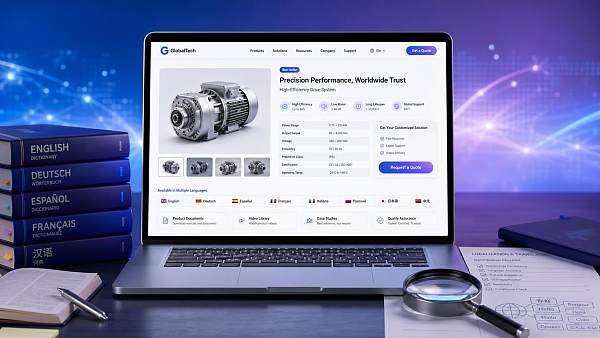
“Correct” terminology does not necessarily mean customers can understand it
In B2B foreign trade scenarios, terminology misuse is an extremely common problem in product page translation. The issue is not only incorrect professional terms; more often, the translation is simply “too much like a dictionary answer.”
Personnel responsible for website operations often encounter a situation where the vocabulary and grammar provided by machine translation or a general translator are not wrong, but the industry does not use those terms, or different countries have different conventions. This is particularly common in industries such as machinery, materials, electronics, chemicals, packaging, and industrial components. A terminology mismatch at even one level can lead to misunderstanding.
For example, some terms may be appropriate in technical documentation but sound stiff on a marketing-oriented product page. Some are suitable for communication between engineers but not for buyers making quick judgments. There are also Chinese concepts that are inherently ambiguous, and translating them directly can make customers even more confused.
The danger of these problems is that they do not necessarily make a page appear “wrong,” but they can make customers feel that it is “unnatural,” “unprofessional,” or “not written by someone who truly works in this industry.” For products with high transaction values and long decision-making cycles, this slight lack of trust can be enough to affect lead generation.
A more reliable approach is not to pursue terminology consistency alone, but to distinguish between scenarios: use the names commonly used in the market in titles, standard terminology in the specifications section, and wording that balances readability and professionalism in the body text. Only when translation reaches this level can it truly serve conversion.
Parameter information is easy to overlook, yet most likely to block inquiries
Many companies believe that customers do not submit inquiries because the copy is not attractive enough. In reality, the opposite is often true: when customers are preparing to communicate further, unclear parameter presentation discourages them.
Common problems include:
Units are not localized. The page retains only units customary in the domestic market, or mixes imperial and metric units, requiring customers to perform their own conversions.
Parameter names are inconsistent. Different expressions are used for the same item in different parts of the page, making customers question whether they refer to the same specification.
Ranges and limit values are confused. Data measured under test conditions, theoretical maximum values, and normal supply ranges are presented together without explaining the relevant conditions.
“Customization available” is written too vaguely. Customers do not know whether the customizable elements are dimensions, materials, interfaces, packaging, or appearance.
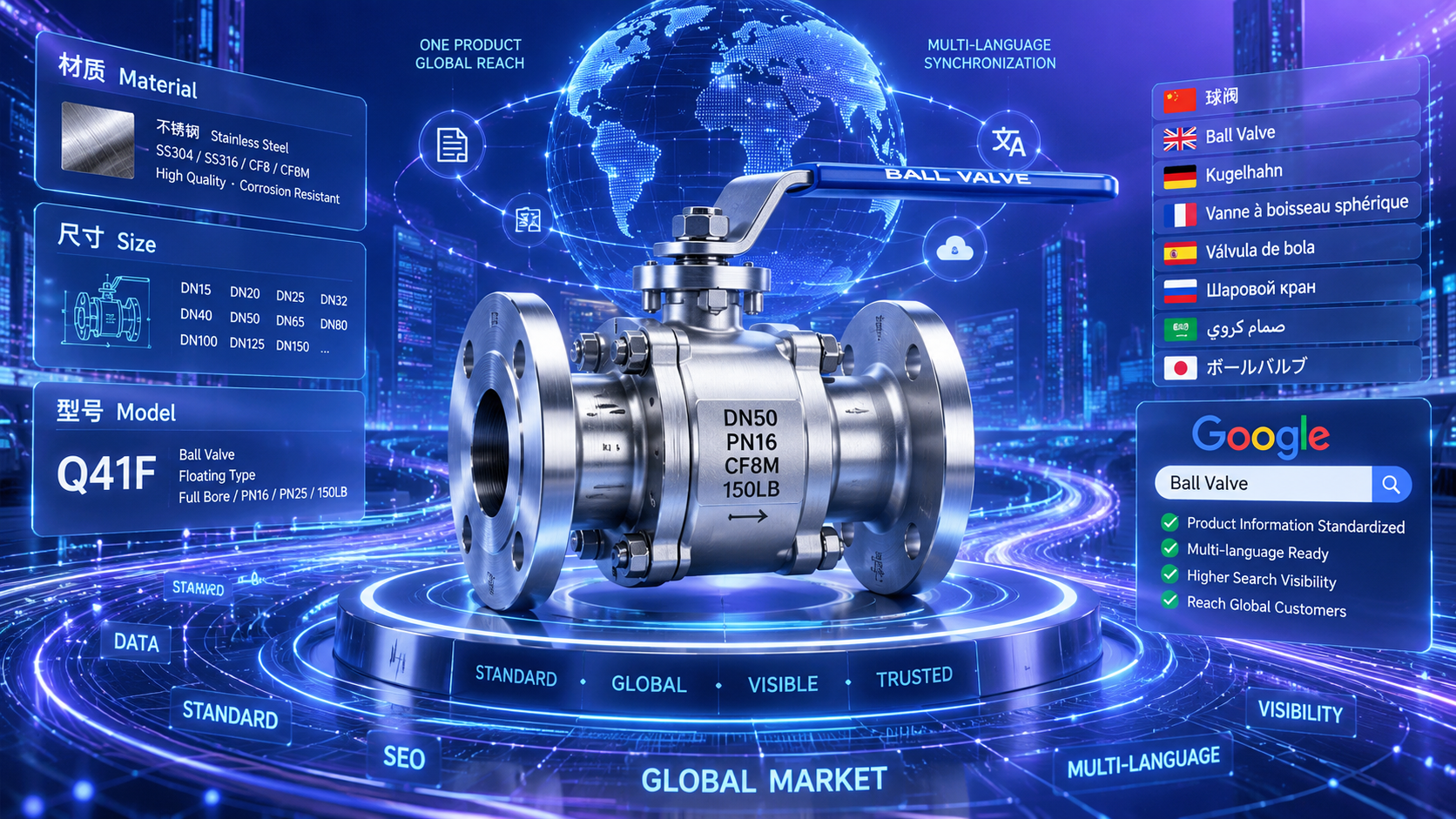
The most practical reminder for website operators is that product page translation cannot deal with sentences alone; it must also handle structured information. Specification tables, figure captions, download file names, and attachment descriptions are all part of the page. If the body text is translated well but the specifications section is confusing, conversion will still be affected.
Commands that are too “Chinese-style” tell users what the page says, but not what to do next
A common misunderstanding on many foreign trade website product pages is that button and form copy is translated into literal English that does not match overseas business communication habits. It may be too stiff, too pushy, or unclear.
“Contact Us,” “Submit,” and “Click Here” are certainly not wrong. However, if the entire page discusses customization, MOQ, delivery, and technical confirmation, and the button copy does not respond to the customer’s immediate intent, conversion will suffer.
What customers want to do varies at different stages. Some want a quotation, some want to confirm specifications, some want samples, and others want to download materials. If every action on the product page is represented by one generic button, different intentions are forced into the same exit, usually reducing the willingness to click.
For website operators, button translation and form fields deserve the same careful review. For example, does “Requirement Description” prompt customers to enter quantity, target market, and application scenario? Is “Email” prominent enough? Can “Upload Attachment” support communication involving drawings? Many conversion problems do not arise because customers lack interest, but because the page has not lowered the barrier to action.
If trust-related information is not translated properly, customers may wonder whether the company can truly deliver
A product page must answer not only “What is being sold?” but also “Why should I believe you can deliver it?” This is especially important in an independent website environment where customers are making first contact.
Common mistakes are not necessarily a complete lack of trust-related information, but rather that the information is present yet ineffective. For example, certification names are written vaguely, the applicable scope of testing standards is not explained, delivery times are expressed as ambiguous promises, and quality control is described only with generic wording such as “strict quality control.” Such translation is not wrong, but it is not persuasive enough.
A more effective approach is to translate trust-related information into evidence that customers can evaluate, rather than language of corporate self-assessment. Customers care more about which certifications are available, which markets they apply to, what documents can be provided, the usual delivery cycle, whether samples are supported, and how after-sales service is handled.
This is also consistent with the way many industry studies express their logic. For example, the value of research materials such as Research on How a Green Tax System Promotes Enterprise Innovation and Industrial Upgrading lies in providing a framework for judgment rather than merely accumulating viewpoints. The same applies to product page translation: only information that supports customer judgment can improve conversion.
Localization is not only about language; it also includes reading habits and risk perceptions
Customers in different markets do not focus on exactly the same points when viewing a page. North American customers often place greater emphasis on efficiency, clear specifications, and convenient communication. European customers may focus more on compliance, materials, sustainability, and rigorous documentation. Markets such as the Middle East, Southeast Asia, and Latin America may place greater emphasis on transaction flexibility, delivery information, and response speed.【To be verified: Specific differences need to be further segmented by industry and country】
Therefore, if product page translation only creates “multilingual versions” without considering which content should be emphasized in different regions, the results are usually limited. Not every market needs a completely different page, but at a minimum, the approach of applying one Chinese logic to every language version should be avoided.
At the operational level, the most direct optimization method is not to redo all pages at once, but to first focus on core products with high traffic and strong inquiry potential and review the following areas: title, above-the-fold selling points, specification table, FAQ, button copy, form prompts, certification descriptions, and application scenario descriptions. Many website problems are not complex; these key areas simply have not been reviewed from a conversion perspective for a long time.
Which pages deserve priority for modification
If you are responsible for daily updates, you do not necessarily need to completely overhaul everything immediately. Priorities can be determined as follows:
Pages with traffic but high bounce rates usually indicate that “visitors arrived but did not understand the content”;
Pages with relatively long dwell times but few inquiries usually indicate that “the information does not sufficiently support the next action”;
Landing pages from advertising campaigns with low conversion rates usually indicate that “the search terms, advertising promise, and page wording are inconsistent”;
Pages whose multilingual versions have good indexing but poor conversion usually indicate that “the translation is complete, but the localization is not.”
At this stage, the most important thing for website operators is not to pursue impressive copy, but to establish a proofreading checklist: Does the title use terminology familiar to the target market? Are the selling points arranged according to the customer’s decision-making order? Are the parameters clear and consistent? Does the CTA correspond to a real action? Is the trust-related information specific and verifiable? This type of review is often more effective than simply switching translation tools.
The quality of product page translation is ultimately measured by business results
The details that truly affect conversion are rarely mysterious. The problem is that many companies have long treated product page translation as content delivery rather than one link in the customer acquisition process. As a result, the page goes live, the grammar is checked, and even the keywords are included, but customers still do not stay.
For front-line website operators, the most valuable understanding is not that “translation must be accurate,” but that “translation must help customers make decisions.” When the title quickly makes clear what the product is, the selling points follow the buyer’s thought process, the terminology is both professional and natural, the parameters are easy to compare, the buttons guide the next action, and the trust-related information is sufficiently specific, product page translation can truly begin converting traffic.
If a company is optimizing a multilingual website, it can also consider page content together with broader market communication. Customers do not make decisions based on a single button; they build trust through the overall information experience. The approach reflected in Research on How a Green Tax System Promotes Enterprise Innovation and Industrial Upgrading—“moving from appearances to the basis for judgment”—is equally worth applying to website content optimization: do not merely change the wording; change the expressions that can influence decisions.
Related Articles

Related Products
 Yiyingbao SaaS Intelligent Website Building and Marketing SystemYiyingbao SaaS Intelligent Website Building and Marketing System, AI-powered no-code website building, rapid creation of multilingual B2B international websites in 10 minutes, global server acceleration, AI-powered SEO optimization, helping businesses connect efficiently with global markets. The perfect integration of technology and operation makes building an international trade website remarkably simple
 AI+SEM Intelligent Advertising Marketing SystemAI+SEM drives intelligent ad creation, empowering full-funnel precision advertising marketing. The system automatically generates weekly/monthly reports, AI recommends keywords and target countries, monitors core metrics in real-time with intelligent alerts, and enables one-click high-conversion ad solutions to help quickly acquire customers and improve ROI.
 AI+SEO Dual-Engine System Optimization ServicesYiyingbao’s AI+SEO dual-engine optimization system helps foreign trade enterprises acquire high-quality organic traffic through AI-powered keyword research, content generation, and comprehensive technical optimization, significantly improving search rankings and conversion rates.
 AI+SNS Social Media Marketing SystemYingbao AI+SNS Social Media Marketing System - Precision social capture for the social media era. Supports one-click content synchronization across major platforms like Facebook and LinkedIn. AI intelligently rewrites posts for enhanced relevance. 24/7 AI customer service and user profiling analysis empower businesses to efficiently expand into global markets.
 AI+SEO营销解决方案易营宝AI+SEO营销解决方案,通过AI批量写作、智能生成TDK、精准关键词扩词等功能,全面优化网站SEO效果,提升流量与转化率。助力企业构建高效智能网站新生态。
 AI+SEM Advertising Marketing SolutionsAI+SEM Advertising Marketing Solution leverages AI technology to deeply empower SEM ad campaigns. It automatically generates weekly/monthly reports using AI, presenting account data across multiple dimensions for comprehensive insights into campaign performance and trends. The system precisely recommends keywords and target countries, intelligently generates high-conversion ad copy, and enables one-click activation of efficient campaign plans to help businesses rapidly acquire customers. Simultaneously, it monitors core metrics in real time, intelligently identifies abnormal fluctuations, and issues timely alerts to ensure stable, high-return advertising results.
 Domain Name ServicesEasyWin provides professional domain name services, including intelligent queries, one-stop registration, brand protection, and full lifecycle management, helping businesses build a digital brand image.
 EasyOperate B2C Cross-Border E-Commerce Platform & Independent WebsiteEasyStore B2C Cross-border E-commerce Independent Store is an intelligent website building and cross-border e-commerce integrated solution independently developed by EasyStore Information Technology (Beijing) Co., Ltd. The system is specially designed for small and medium-sized as well as large export enterprises, integrating 'website building, operation, marketing, advertising, and conversion' into one, helping enterprises quickly establish cross-border e-commerce independent stores to achieve brand globalization and global sales growth.
The platform supports multiple languages, multiple currencies, and multi-channel marketing, with built-in AI intelligent translation and SEO optimization systems, suitable for mainstream markets such as Southeast Asia, Europe and America, Latin America, and the Middle East, assisting Chinese manufacturing enterprises in efficiently deploying international e-commerce strategies. SSL证书易营宝提供专业SSL安全证书服务,包括单域名和泛域名证书,确保网站数据传输加密、身份验证和完整性保护,助力企业建立安全可信的在线业务环境。









